Story audio is generated using AI
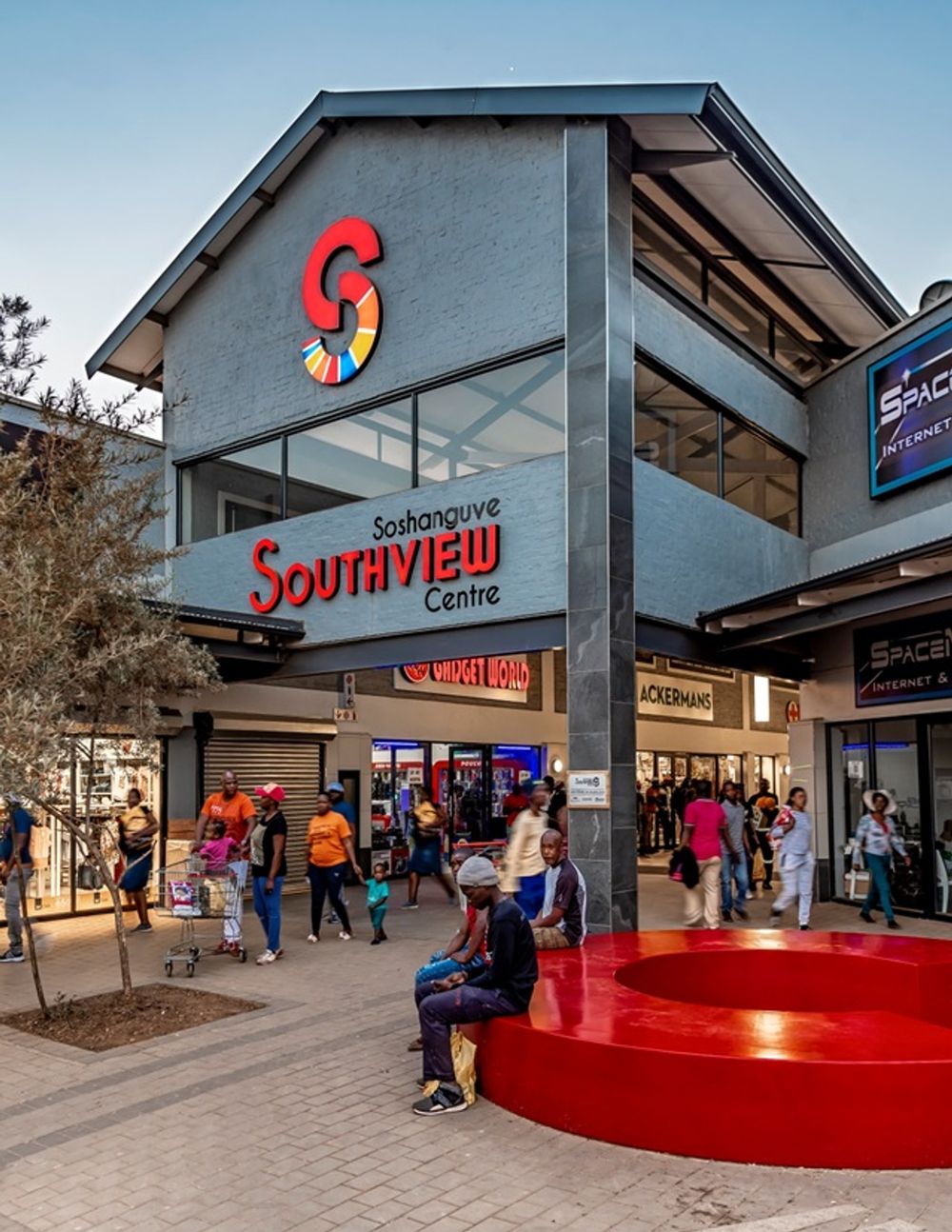
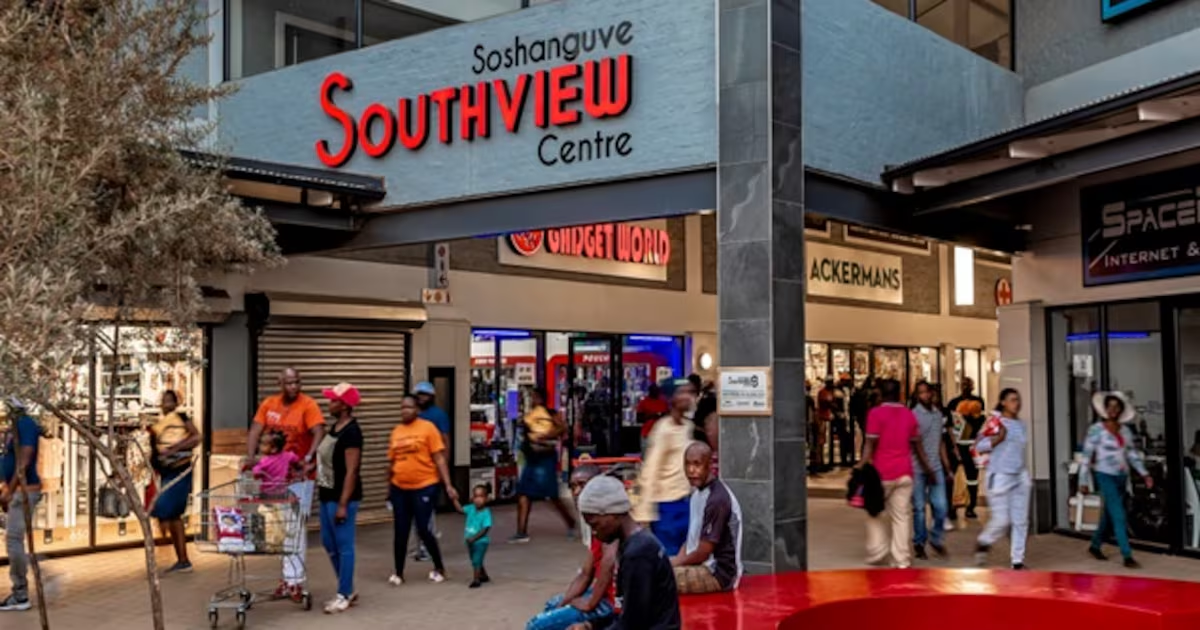
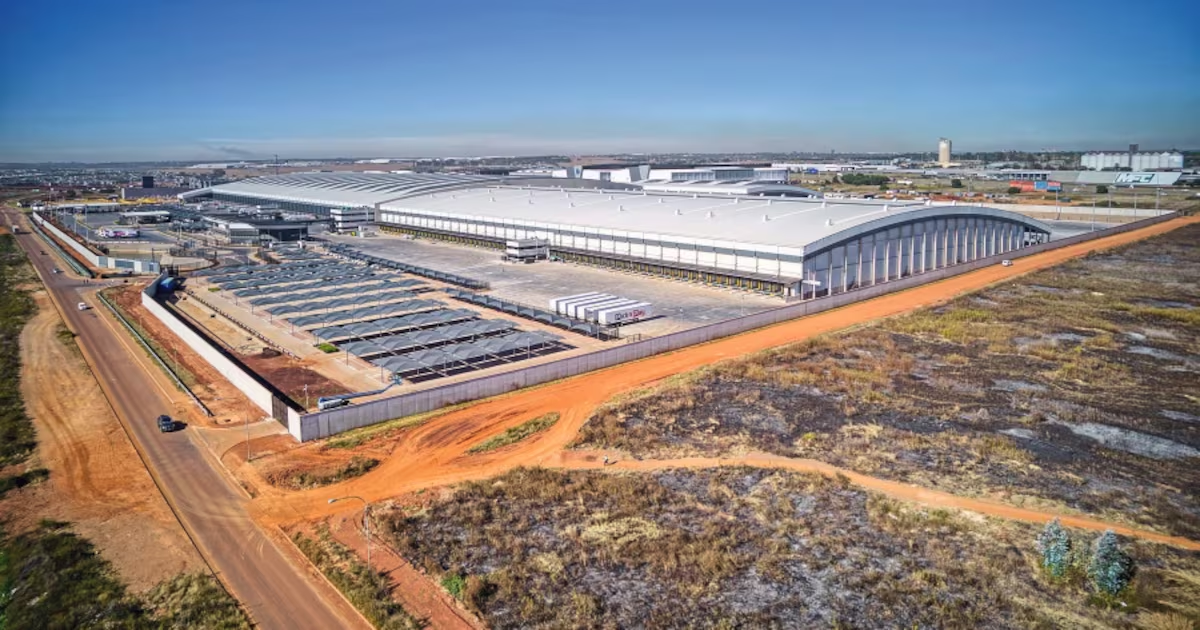
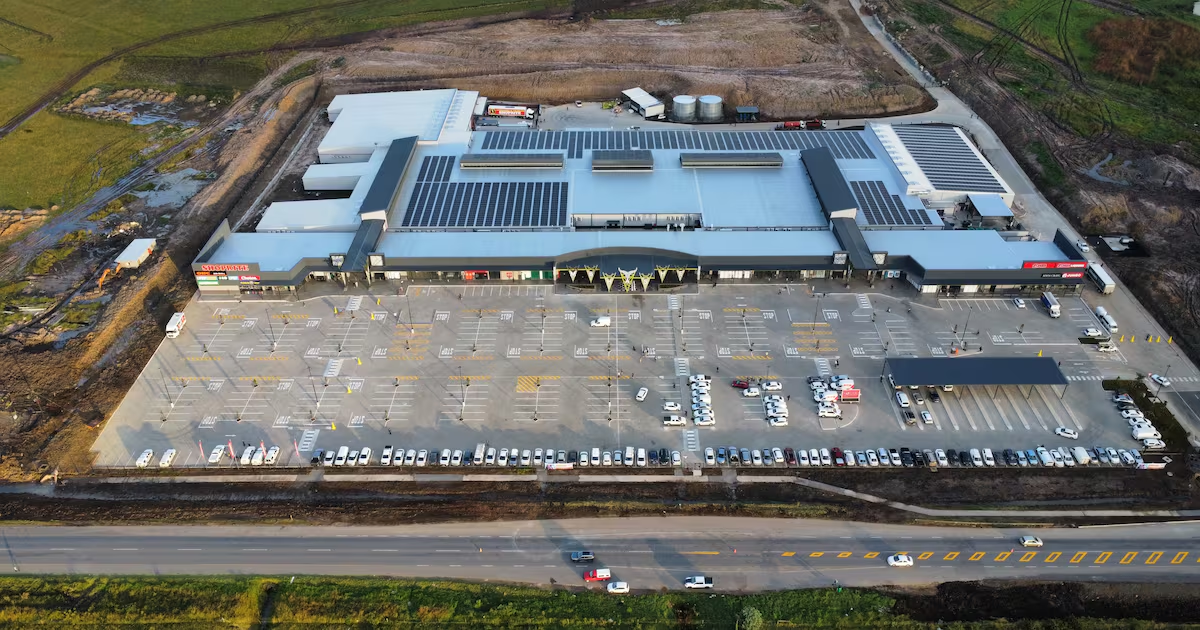
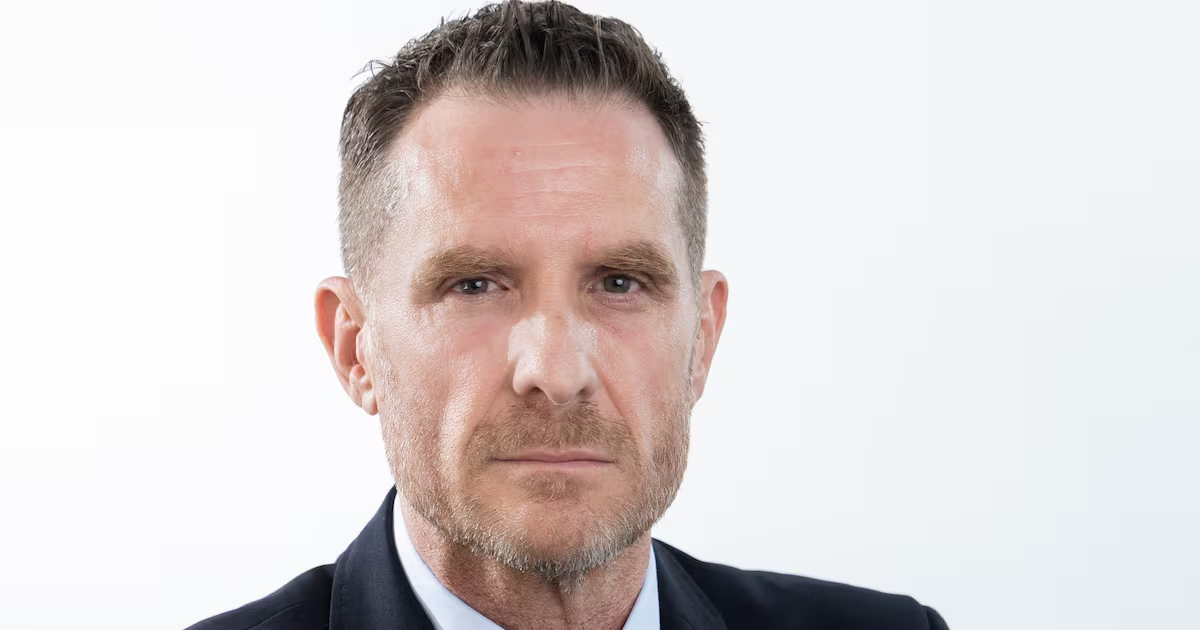
Fairvest is deepening its focus on community retail centres after reporting double-digit distribution growth and strong leasing performance, while continuing to expand its township fibre investment strategy.The JSE-listed real estate investment trust (Reit) reported interim results, with distribution per B share rising 12.3% to 25.94c, while A share distributions increased to 71.82c. Like-for-like net property income also grew 8% year-on-year.“We’ve got a very solid underpin of retail assets, with 70% of our income derived from retail,” Fairvest CEO Darren Wilder said.“If you look at the key metrics that we’re achieving on the retail business unit, it’s incredibly strong. That’s really delivering the core component of the results.” That retail strength was reflected in operational momentum across the portfolio, with like-for-like net property income supported by 240 new deals and 210 renewals over the period.Rental conditions also continued to improve, with reversions rising from 4.8% to 5.7%, while lease escalations held steady at 6.7% and portfolio weighted average lease expiry (Wale) at 29.4 months.Vacancies edged up from 4.1% to 5.1% but remained low overall, with tenant retention at 83.8%. Retail leasing drove activity, with 147 new leases across 27,017m², while office assets achieved higher pricing on new deals and industrial properties recorded rental reversions of 8.4%.Expenses rose 6.3% over the period, largely due to portfolio expansion, reflecting continued operational discipline.“The group’s portfolio continues to demonstrate resilient operating performance, supported by low vacancies, disciplined asset management and stable rental growth,” said Wilder.During the period, Fairvest disposed of a commercial property in Goodwood, Western Cape, for R65m while progressing the acquisition of the Jozini Mall and Tugela Ferry Mall in KwaZulu-Natal for R700.4m.The group said these moves align with its strategy of recycling capital from non-core assets into rural and non-metropolitan retail centres close to commuter nodes and transport links. Total capital expenditure for the period was R126.9m, including R18.4m invested in solar initiatives.Wilder said Fairvest has long targeted underserved retail markets, typically focusing on assets below 25,000m² that sit outside the appetite of both private investors and large funds.“In property you make your money when you buy the asset, so we buy well, and that gives you your long-term growth,” he said.Beyond its property portfolio, Fairvest continues to scale its investment in Onepath, its township fibre infrastructure business.The infrastructure is leased to a network operator providing connectivity in township communities, generating an increasingly meaningful dividend stream, which rose to R37.8m from R3m a year earlier.“Globally, we see the fibre business underpinning large Reits across the world. A digital fibre business is not linked to any economic cycle at all. People buy fibre because they want to be connected,” Wilder said, adding that this stability makes it an attractive long-term investment for Fairvest.During the period, Onepath invested a further R667.4m into fibre networks, taking total investment to R1.2bn. The infrastructure is aimed at improving connectivity in communities surrounding the group’s shopping centres while also supporting local economic activity and strengthening long-term retail demand.Wilder said that while retail property remains the core growth engine of the business, Fairvest will continue to scale its Onepath investment.After the period end, Fairvest raised R900m through a book build, which will be used to partly fund the acquisition of the Muller Group malls, support further investment in Onepath, and reduce debt ahead of pending asset transfers.The group also maintained a conservative balance sheet, with a loan-to-value ratio of 26.6%, supported by strong liquidity and nearly R927m in cash and undrawn facilities, providing flexibility for future growth and acquisitions.“While the macroeconomic environment has become more uncertain, solid property fundamentals, combined with conservative balance sheet management, position the group for sustained growth,” Wilder said, noting the group’s resilient operational performance.Looking ahead, Fairvest expects distributable earnings per B share to grow 11% to 13% in the 2026 financial year, to between 53.4c and 54.4c, while A share distributions will rise by the lesser of 5% or CPI.