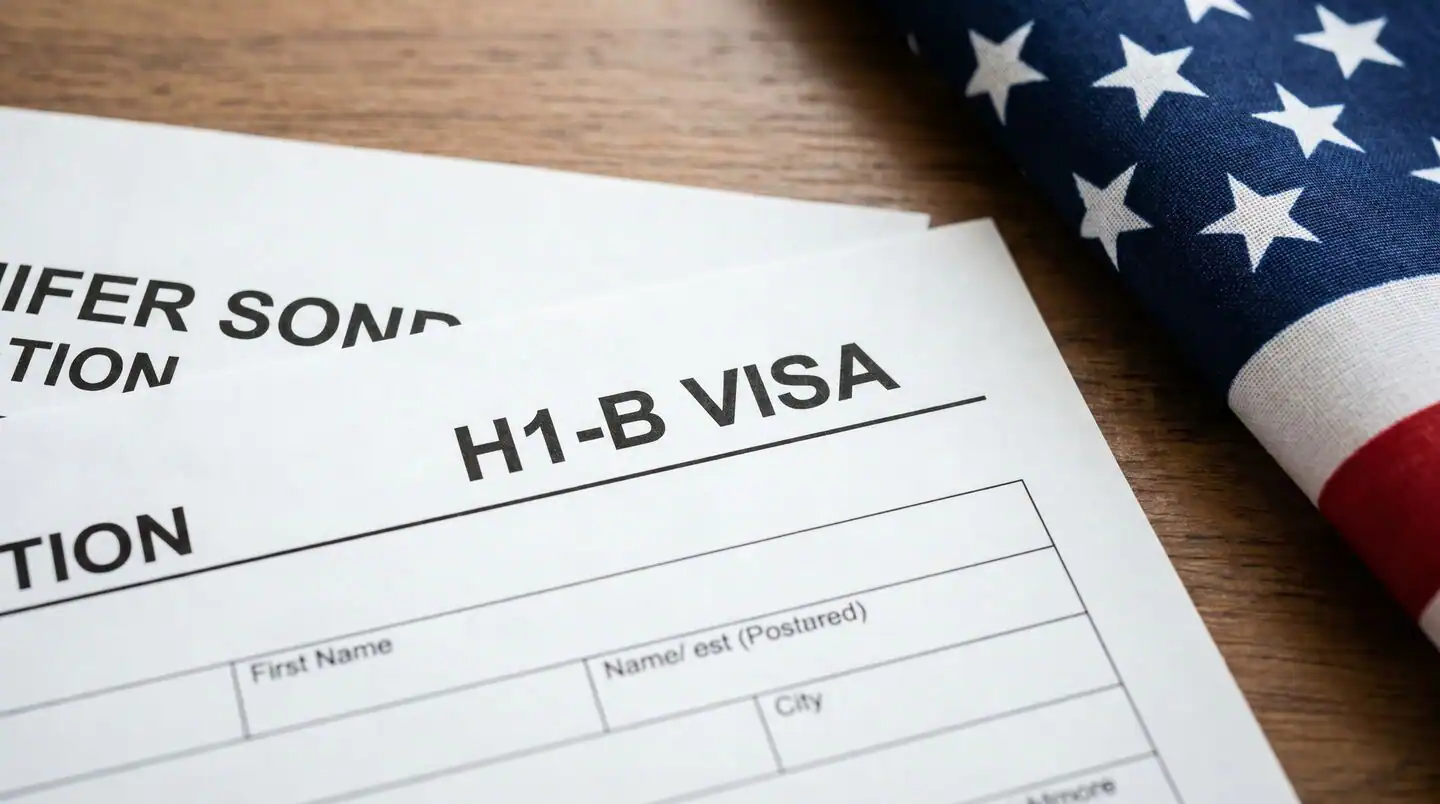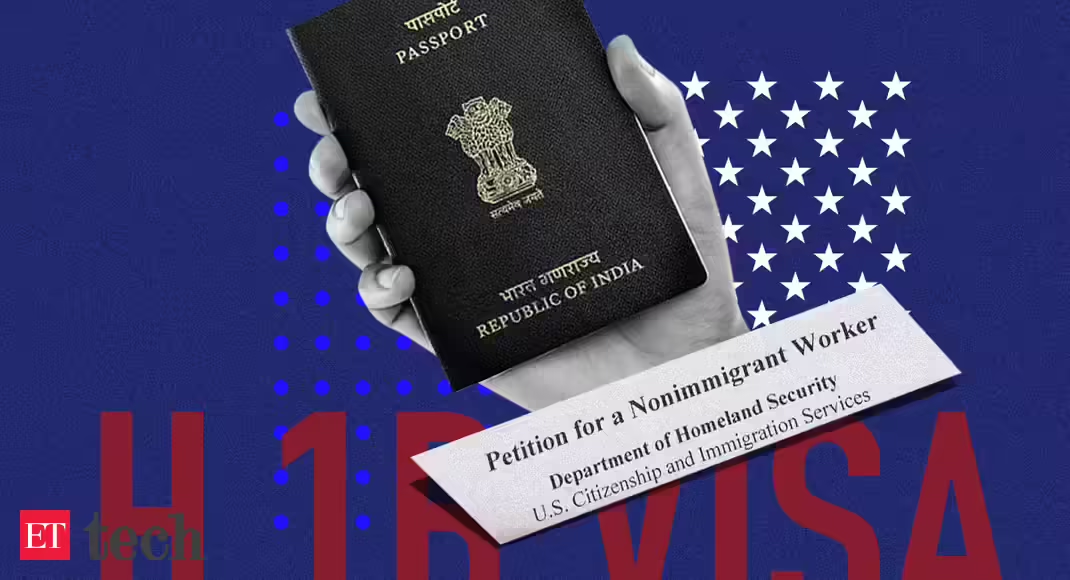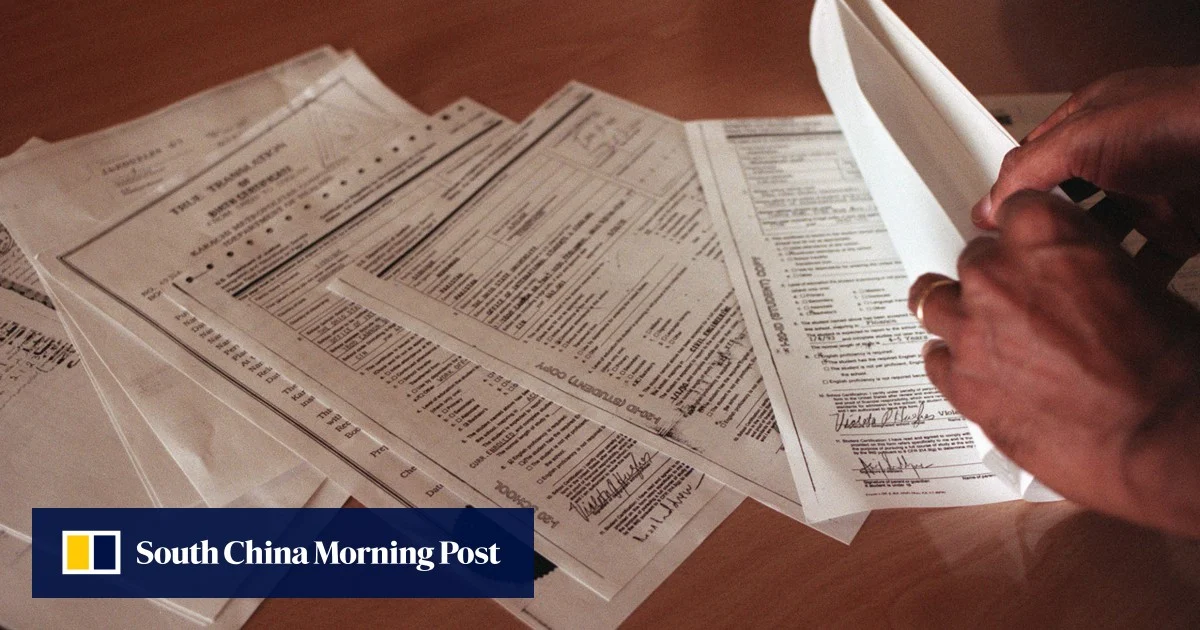
US demand for H-1B visas has slumped to a seven-year low amid steeper costs and Trump-era policy shifts. This and more in today’s ETtech Top 5.Also in the letter:■ How new-age firms use AI■ ETtech Done Deals■ India Inc rejects AI-aided applicantsH-1B pool shrinks 39% in FY27 after Trump-era changes H-1B visa registrations fell 38.5% this year to a seven-year low.Driving the news: The US Citizenship and Immigration Services (USCIS) received 211,600 eligible registrations for FY27, far below last year's 343,981 applications.Why it matters: Companies are becoming more cautious about sponsoring foreign workers as visa costs rise, rules tighten, and selection processes mostly favour higher-paid applicants.Tell me more:USCIS says a greater share of selected applicants now have advanced degrees and command higher wages.About 71.5% of selected applicants had a US master’s degree or higher, up from 57% last year.Only 17.7% of registrations were filed under the lowest wage category.The share of Indian applicants wasn’t disclosed, but Indians made up roughly 70% of all H-1B approvals in FY25.Zoom out: The decline follows several policy shifts under US President Donald Trump, including a $100,000 fee for new H-1B visas from September 2025 and a wage-based selection system that favours highly paid, highly qualified workers.Flipkart overhauls Shopsy to take on Meesho, Amazon Bazaar in value commerce Balaji Thiagarajan, chief technology and product officer, FlipkartFlipkart is sharpening its play in value commerce, leaning on its wide reach in smaller towns and pincodes to go beyond quick commerce rivals.Revamping Shopsy: The Walmart-owned ecommerce major is retooling Shopsy, its hypervalue platform, to go after shoppers hunting for low-priced, mass-market products – and to square up against Meesho and Amazon Bazaar. Quote, unquote: “We are only at the very beginning of this journey. When the opportunity is that big and growing at that rate, a lot of players will find success, and that is perfectly fine,” Flipkart’s chief technology and product officer, Balaji Thiagarajan, told ET.Number-wise: The refreshed app will lean on personalised feeds, videos and SuperCoins to keep users hooked. Shopsy has notched over 450 million app downloads and delivers across 20,000 pin codes.Segment watch: Meesho still dominates the segment with its low-priced catalogue and a zero-commission model for sellers. The recently listed firm clocked over 250 million annual transacting users and 2.6 billion orders in FY26.Amazon, meanwhile, has bulked up its own value play. Bazaar now offers products across 1,800 categories priced under Rs 1,000.Pine Labs’ Q4FY26 revenues up 17% to Rs 700 crore, net profit at Rs 59 crore Amrish Rau, CEO, Pine LabsDigital payments processor Pine Labs has reported its first full-year profits in fiscal 2026, with operating revenue growing 17% in the March quarter.Driving the news: Pine Labs closed FY26 with an operating revenue of Rs 2,710 crore and a net profit of Rs 112 crore. This is a major swing from a loss of Rs 145 crore last year. In the March quarter, the company reported healthy revenue and net profit growth primarily driven by international business and growth in merchant services.Looking at the numbers: In the March quarter of FY26:Revenue: Up 17% to Rs 700 croreAdjusted Ebitda: Rs 559 croreProfit after tax (PAT): Rs 59 crore, versus loss of Rs 29 crore a year agoInternational business:Revenue contribution up at 15%Business operational in 22 countriesWhat this means: Pine Labs joins the likes of Paytm, which reported full-year profits in the last financial year. At a time when payment margins are under severe stress and overall macro-economic headwinds are strong, brands like Pine Labs, with its diversified offerings and sturdy fundamentals, can be in a better place.Listed new-age companies use AI to tune their daily ops engine India’s listed new-age companies are pushing AI deep into the plumbing of their businesses – far beyond chatbots and recommendation carousels.For instance:Delhivery said it has rolled out LLMs and multimodal AI across voice, vision, location intelligence and real-time transaction processing.Nykaa offers an AI-powered skin scan that helps customers identify skin concerns and receive tailored product recommendations.Lenskart said AI-driven scheduling and shorter eye-test cycle times helped stores handle higher footfall without adding headcount. What this means: AI is shifting from a product feature to a core operating lever for internet companies under pressure to prove profitable growth. By lifting conversion rates, cutting failures, and automating repetitive work, companies are trying to make each transaction more efficient and scalable.Biotech startup StrainX Bioworks raises $13 million from Prime Venture, Leo Capital, others Akshay Mittal and Alok Malaviya, founders, StrainX BioworksStrainX Bioworks, which specialises in synthetic biology and precision fermentation, has raised $13 million in a funding round led by Prime Venture Partners and Leo Capital.Round details: Good Startup, Sparrow Capital, Sun Icon Ventures, Dholakia Ventures and WindT Angels also came on board.Use of funds: StrainX plans to step up R&D, expand its scientific and engineering teams, and accelerate commercialisation through large-scale fermentation projects and global partnerships.Tell me more: Founded by IIT Delhi alumni Akshay Mittal and Alok Malaviya, StrainX spent the last two years in stealth, building a biotechnology platform that spans strain engineering, fermentation, scale-up and product development.Yes Madam raises Rs 50 crore from Info Edge’s growth fund Home salon and wellness platform Yes Madam has raised Rs 50 crore in its first institutional round from Info Edge’s newly launched B8 Fund-I, backed by founder Sanjeev Bikhchandani.Fund use: Yes Madam says the capital will fuel expansion into new cities, strengthen its partner network, upgrade technology systems and enhance the customer experience—while keeping profitability and operational efficiency in focus.Corporate India closing interview doors to prying AIs Companies across India are ramping up efforts to spot job applicants using AI tools to cheat in online interviews.What’s happening? Firms including Deloitte, Deutsche Bank, Scaler and Meesho are watching for cues such as overly polished answers, unnatural pauses, weak reasoning and an inability to explain how conclusions were reached.They’re also rolling out stricter checks and advanced monitoring tools to better test real problem-solving skills and curb interview malpractice.Background: Interview intelligence platform InCruiter reviewed over 20,000 interview recordings and found that nearly one in three candidates used AI tools during live interviews.“Interview malpractice is no longer limited to proxy candidates or external assistance. We are witnessing candidates using hidden browser tabs, second monitors with ChatGPT running, and voice cloning software to bypass evaluations," said Anil Agarwal, cofounder of InCruiter.Yes, but: Deepti Sagar of Deloitte said AI-assisted cheating is unlikely to slow remote and digital hiring, which remains critical to accessing diverse talent pools.
H-1B chill sets in; Flipkart doubles down on Shopsy
US demand for H-1B visas has slumped to a seven-year low amid steeper costs and Trump-era policy shifts. This and more in todays ETtech Top 5.
1,071 words~5 min read