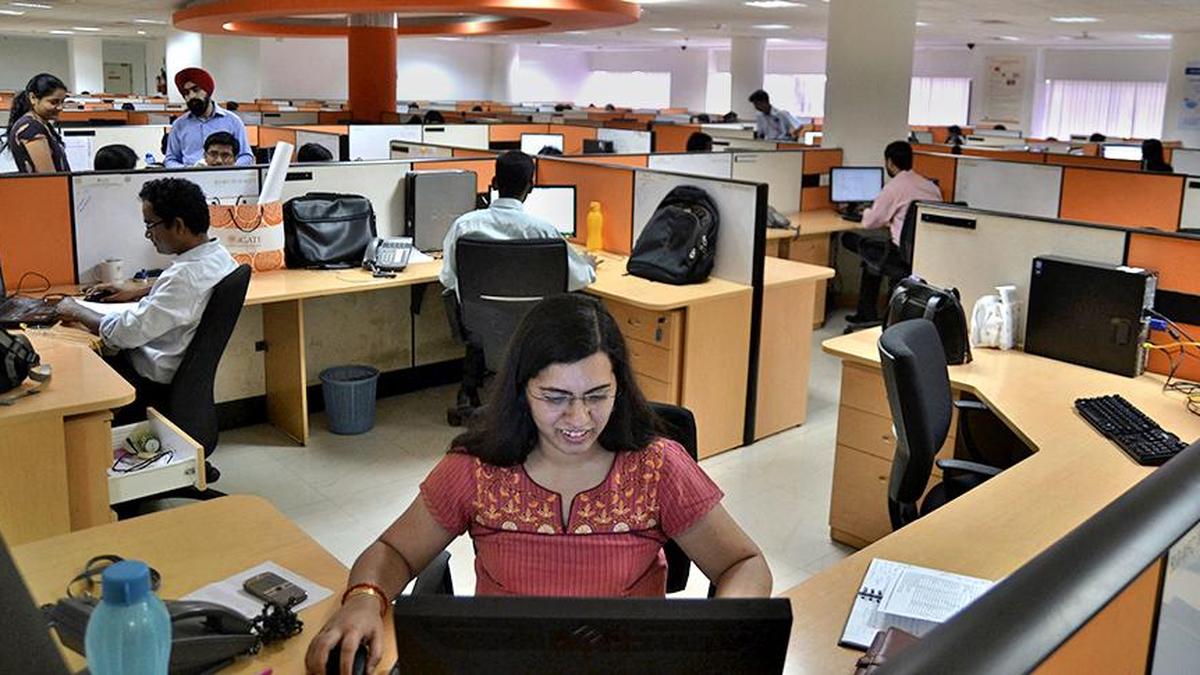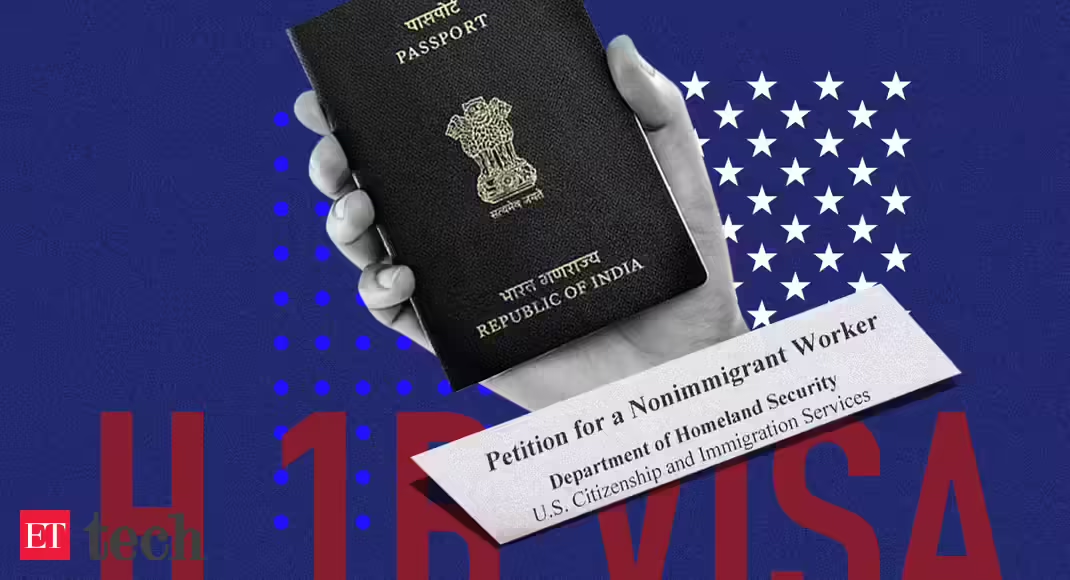
India’s tech hiring has fallen to its lowest level in more than two years. This and more in today’s ETtech Top 5.Also in the letter:■ Nvidia's Computex reveals■ EV sales rebound■ SoftBank set to top ToyotaIndia tech jobs decline: AI, US immigration impact recruitment India’s technology job market is at its softest in over two years. Active openings fell to 93,000 in June, down 14% month-on-month and 17% year-on-year, according to a monthly job report by specialist hiring firm Xpheno.Data decoded: Open roles declined month-on-month across all major tech cohorts in June, including IT services, global capability centres (GCCs), funded tech startups and software product firms.GCCs were the lone outlier on a year-on-year basis, with openings up 31%.Entry-level opportunities (up to two years’ experience) have shrunk to 10,000, from 13,000 the previous month.Talent in AI, GenAI, data, cloud, cybersecurity and product engineering remains in short supply. Why the fall: Industry experts describe the current phase as a cyclical pause rather than a collapse. Traditional IT services and routine engineering roles are under pressure as clients push for AI-led productivity gains and move from headcount-based billing to outcome-based engagement models.Also Read:India’s tech sector grows with fewer freshers as AI reshapes hiringIndia's chip startups cross from prototype to production Indian semiconductor startups are moving from lab to fab. Several are running customer pilots and lining up for large-scale output, with most targeting full commercial production by the end of 2027 or earlier.For instance: Netrasemi has already pushed its flagship chip into production, with commercial volumes expected by mid-2027.PeakXV-backed Mindgrove, which builds chips for biometrics, motor controllers and industrial electronics, is aiming for a commercial launch by the end of this year.Agnit has three pilots underway with defence customers and expects to ship 5,000–10,000 chips over the next six to nine months.Policy helping pace: Government initiatives are compressing the journey from paper design to production. The India Semiconductor Mission, design-linked incentive, and PLI schemes are helping firms move beyond prototyping to sampling and volume ramp-up much faster than before.According to estimates, India’s semiconductor market is valued at over $60 billion in 2025 and is projected to nearly triple to about $180 billion by 2034.Threats remain: Startups remain heavily dependent on imported components, largely from China. Supply disruptions linked to the Gulf conflict have tightened the availability of critical materials.Even before the conflict, chipmakers often had to switch materials mid-production, opting for safer, more readily available alternatives based on partners' advice rather than the technically ideal choice.Nvidia launches PC chip to bring AI directly to personal computers Jensen Huang, CEO, NvidiaNvidia CEO Jensen Huang opened the Computex trade show in Taiwan on Monday with a flurry of announcements. The show runs from June 2-5.Major announcements: Nvidia unveiled the RTX Spark PC chip, developed with MediaTek, as part of a three-year partnership with Microsoft to bring AI agents to PCs and “reinvent” them for the AI era.It introduced the Vera CPU, optimised for AI agents, with OpenAI, Anthropic and SpaceX among its early adopters. Huang said Vera opens up a $200 billion market opportunity.Nvidia also said that it is working with China's Unitree to standardise a version of its H2 robot and plans similar partnerships in the US, Europe and South Korea.On AI and jobs: Huang pushed back against fears that AI will wipe out software engineering roles, arguing that AI will instead boost productivity and ultimately expand hiring.What else? The announcements come just days after Huang unveiled plans to invest around $150 billion annually in Taiwan, which he called the centre of the AI revolution. Interestingly, Huang was born in Tainan, a city in southern Taiwan.Also Read: US takes step to halt Nvidia AI chip shipments to Chinese firms outside ChinaElectric two-wheeler sales cross 150,000 in May amid fuel price rise India's electric two-wheeler (e2W) market regained momentum in May after a sharp slowdown in April, according to Vahan data.What's happening? Registrations rose to 150,796 units in May from 148,137 in April.The recovery follows a steep 22% month-on-month drop in April, down from a record 192,000 units in March, when manufacturers deployed heavy discounts, cashback offers, and aggressive financing schemes to boost FY26-end sales.By the numbers:TVS Motor: 41,558 units from 37,661 in AprilBajaj Auto: 38,012 units from 32,883Ather Energy: 27,525 units from 27,024Hero MotoCorp: 18,261 units from 15,230Ola Electric: 14,752 units from 12,166What changed: Higher petrol and diesel prices in May, following disruptions in global crude markets linked to the West Asia conflict, have made EVs more attractive, particularly for daily commuters and fleet operators looking to lock in lower running costs.At the same time, e2W makers are grappling with rising raw material prices and persistent supply chain strains linked to ongoing geopolitical tension, squeezing margins even as volumes recover.SoftBank dethrones Toyota as Japan’s most valuable company Masayoshi Son, CEO, SoftBank GroupSoftBank is has overtaken Toyota as Japan's most valuable company, driven by investor exuberance over AI.Market snap:SoftBank shares jumped as much as 14% in Tokyo trading.The stock has been gaining since reports surfaced that portfolio companies OpenAI and SB Energy could pursue US listings.Toyota shares, in contrast, fell as much as 4.9%.Why it matters: The divergence underlines how aggressively investors are backing businesses seen as central to the AI boom. SoftBank has positioned itself as one of the biggest financial beneficiaries of that trend.Meanwhile, Toyota and the wider auto sector are battling macroeconomic uncertainty and geopolitical risks, which are weighing on sentiment.SoftBank’s market cap closed at 48.8 trillion, while that of Toyota closed at 45.9 trillion. The only time SoftBank briefly pulled ahead of Toyota was during Japan's internet bubble in 2000.Also Read: SoftBank to spend $87.5 billion on AI centres in France: Masayoshi Son
Tech jobs go cold; Chip startups shift gear
Indias tech hiring has fallen to its lowest level in more than two years. This and more in todays ETtech Top 5.
942 words~4 min read