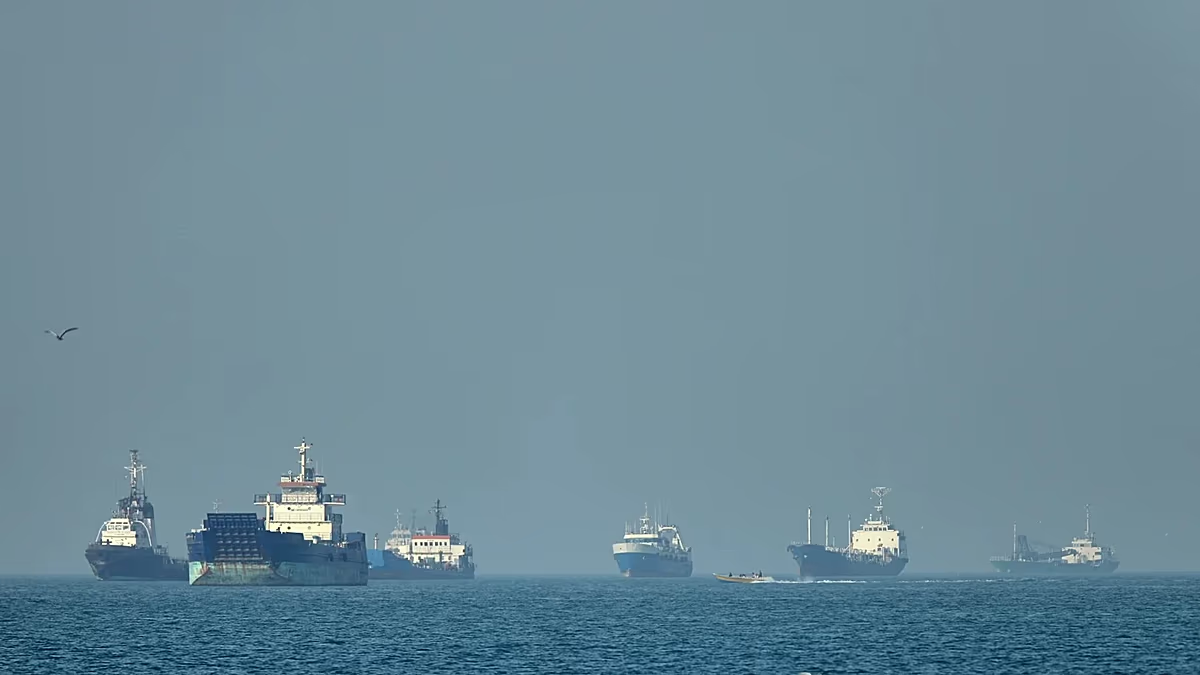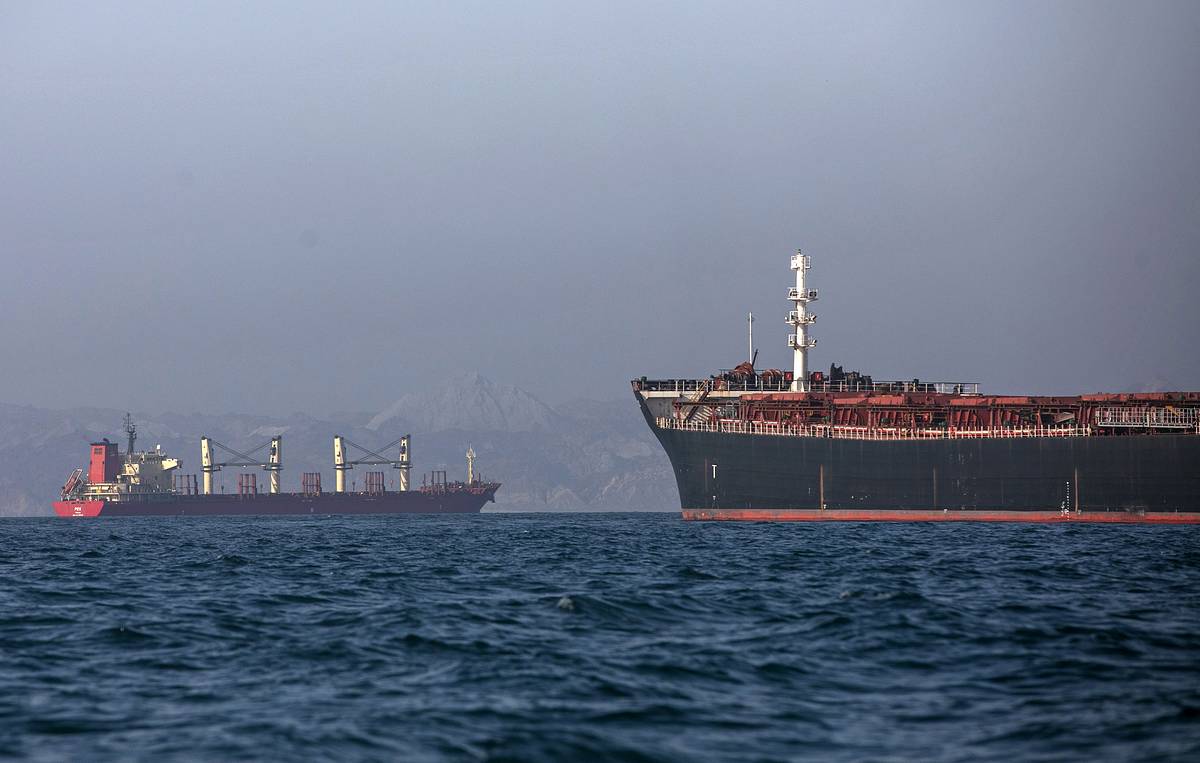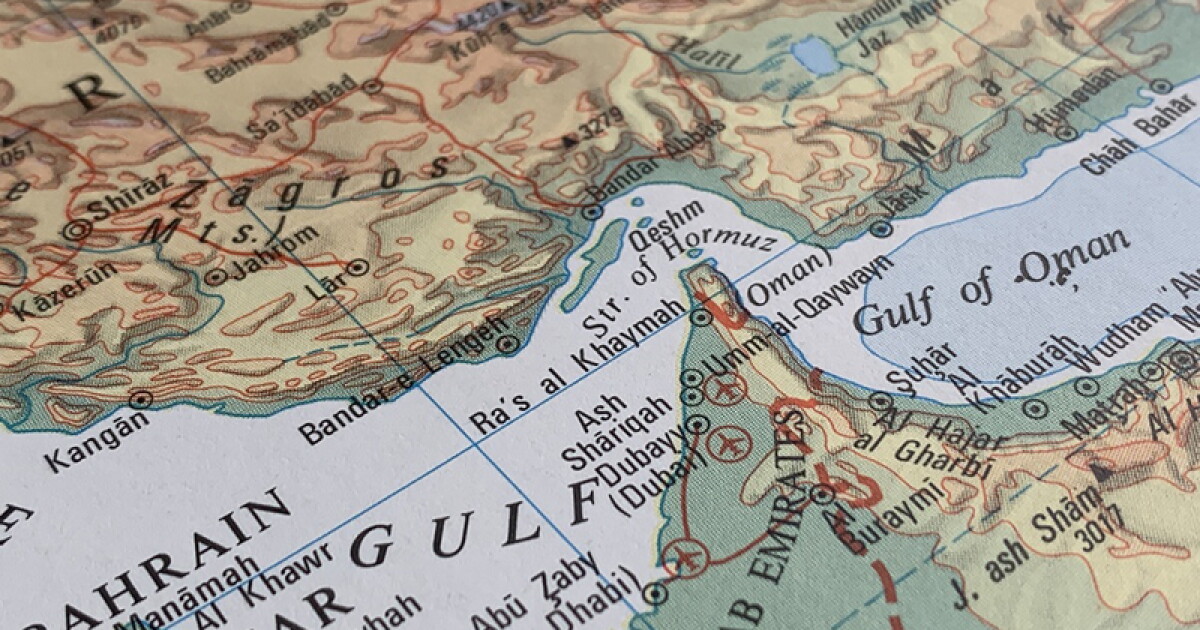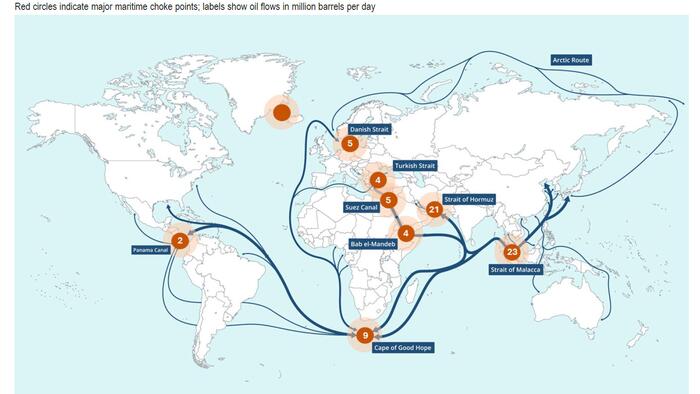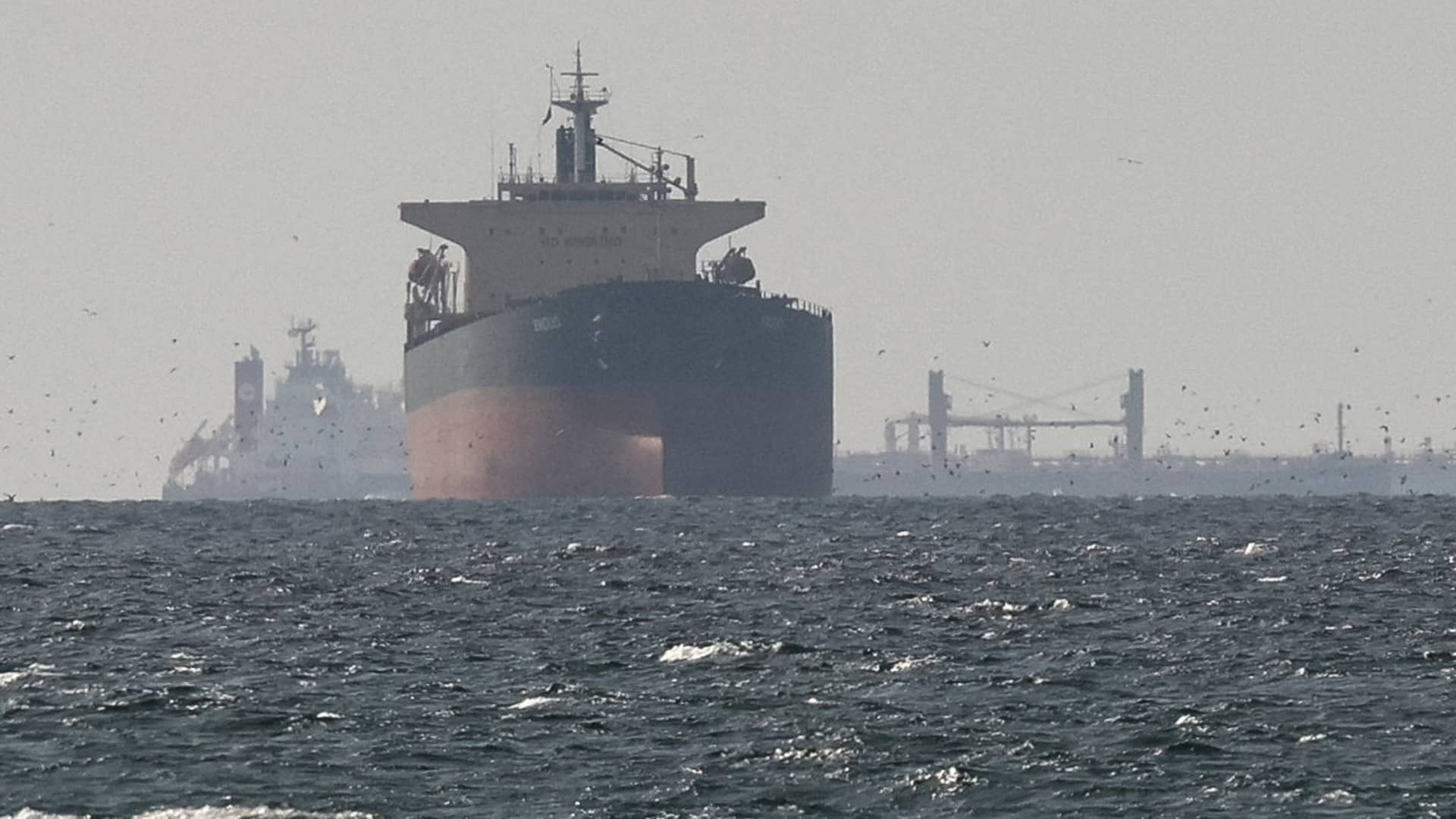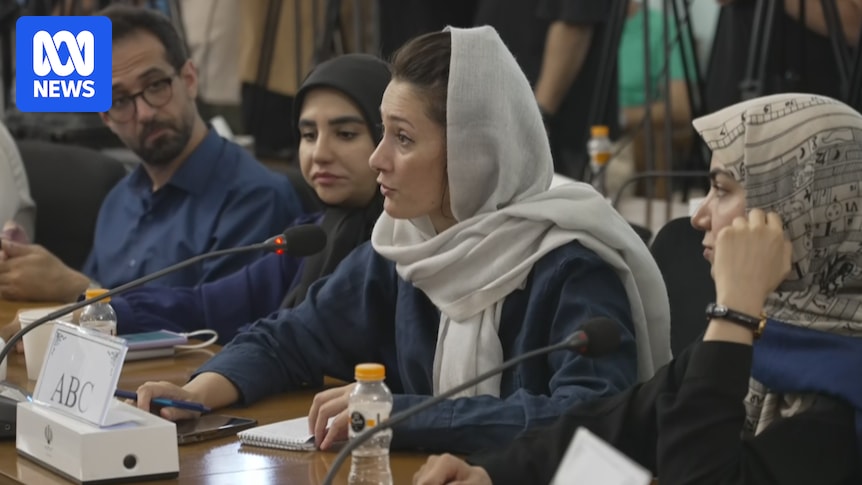
Responding directly to a question from the ABC, an Iranian official says while "there is no toll" on the Strait of Hormuz, the regime is working to regulate the waterway and it is likely ships wishing to cross will be required to make some form of payment.At a press briefing in Tehran, the regime issued its first direct response to statements from the United States over the weekend that suggested a deal to end the war was close and would include opening the Strait of Hormuz. Iran did say a framework to end the war with the US had been reached, but warned an agreement was not imminent and its nuclear program was not part of current negotiations. The ABC was in the room for the briefing and was permitted to ask a question — one we were required to submit in advance.We asked:"We would like to know under what conditions will Iran agree to open the Strait of Hormuz? Will there be tolls imposed on ships? Will there be different conditions for different countries?"Foreign ministry spokesman Esmail Baghaei responded:"There is no toll. We need to pay attention to the words we use. We're not after money. Iran and Oman need to create protocols for the safe passage of ships and this will be based on international laws. It's both for the benefit of our country and also for all countries around the world. "It's only natural that the services we provide, like navigation and the preservation of the ecosystem of the Strait, the Persian Gulf and the Sea of Oman will have costs. These should not be considered tolls. Iran and Oman are being responsible in our efforts and I hope we will reach a conclusion soon."Foreign ministry spokesman Esmail Baghaei says any charge for crossing the Strait of Hormuz should not be considered a toll. (ABC News: Daniel Pannett)According to state media, Iranian and Omani officials have met to discuss the future of the Strait of Hormuz, the narrow body of water between the two nations that 20 per cent of the world's oil and gas shipments must cross before making onward journeys to customers around the globe.Mr Baghaei said Iran was not worried about negotiations regarding the Strait of Hormuz, saying the regime had shown its power over the waterway and that it would not back away from exerting its influence. He added it was up to the nations on either side of the strait to manage it. Not Iran's job to respond to every Trump post: BaghaeiMonday's press briefing was held inside the Ministry of Foreign Affairs building under minimal security, with about 50 reporters, camera operators and photographers granted access to the room. The ABC was the only Western media present, sitting among other foreign press representatives from China, Lebanon and Türkiye as Mr Baghaei answered questions for about an hour.Overwhelmingly, the impression the foreign ministry was attempting to project was Iran as the steady, more considered party in its negotiation with the US.When asked why Iran had not responded to US President Donald Trump's posts on Truth Social, Mr Baghaei said it was not the Islamic government's job to respond to every tweet that the president put out. He said Iran's negotiators were working towards an agreement that was beneficial to the Iranian people and not wasting their time. The Ministry of Foreign Affairs building under minimal security. (ABC News: Daniel Pannett)Earlier, US Secretary of State Marco Rubio said there was a "pretty solid thing on the table" in terms of opening the Strait of Hormuz and entering into "a very real, significant, time-limited negotiation on the nuclear matter", but comments from Mr Baghaei would suggest otherwise. He said a conclusion had been reached on many topics, but that did not mean they were close to signing an agreement.The potential memorandum of understanding between the two nations, which was circulated over the weekend, contains 14 points and is focused on ending the war and the US naval blockade of Iranian ports, in exchange for Iran taking steps to ensure safe transit through the Strait of Hormuz.At present, the talks are not on the nuclear issue, which will be negotiated over a 60-day period if the framework accord is agreed, Mr Baghaei said.Iran claims 'legal right' over straitAfter Israel and the US began pounding Tehran in late February and killed then-ayatollah Ali Khamenei, the regime effectively closed the strait, using its Islamic Revolutionary Guard Corps (IRGC) to prevent ships attempting to make the crossing and strangling global oil trade in the process. Mr Trump is under pressure to open the strait, but over recent weeks Iran has moved to formalise its control of the waterway. The regime has launched what it is calling the Persian Gulf Strait Authority (PGSA) through which shipping companies can apply for permission to cross the Strait of Hormuz. Iran has also issued new maps of the Persian Gulf, Strait of Hormuz and the Gulf of Oman indicating where it intends to exercise its control. As a coastal state with territorial waters covering the Strait of Hormuz, Iran says it has a "legal right" to manage the waterway. "Iran's management of Hormuz Strait ends 50 years of insecurity in the Persian Gulf," Iranian news agencies quoted Mohsen Rezaei, military adviser to Iran's supreme leader, as saying.International law does grant coastal states some rights over their territorial waters, but it also says these nations cannot hamper innocent passage. "The coastal states have rights to regulate innocent passage through their waters, including when their waters are on international straits," said associate professor of international law at Flinders University Hossein Esmaeili.He said coastal states could not "charge for innocent passage" but under the law of the sea they could regulate that passage, including the design of sea lanes, the system for safe navigation and pollution control. "Occasionally, countries may say, 'Oh you're passing here … you have to contribute … an environmental charge or something like that,'" Dr Esmaeili said. "That is a separate thing, but not a toll." Since Iran effectively closed the strait, only a trickle of vessels has passed through compared with about 125 to 140 daily before the conflict began.The strait's closure has caused a spike in oil prices and triggered an energy crisis, which has driven up costs of fuel, fertiliser and food.
At a Tehran press conference, we asked the regime directly 'will there be tolls?'
While on assignment inside Iran, our reporter asked a foreign ministry official about the regime's plan for the Strait of Hormuz. The spokesperson responded that "there is no toll" but also signalled crossing the strait will not be entirely free.
1,054 words~5 min read