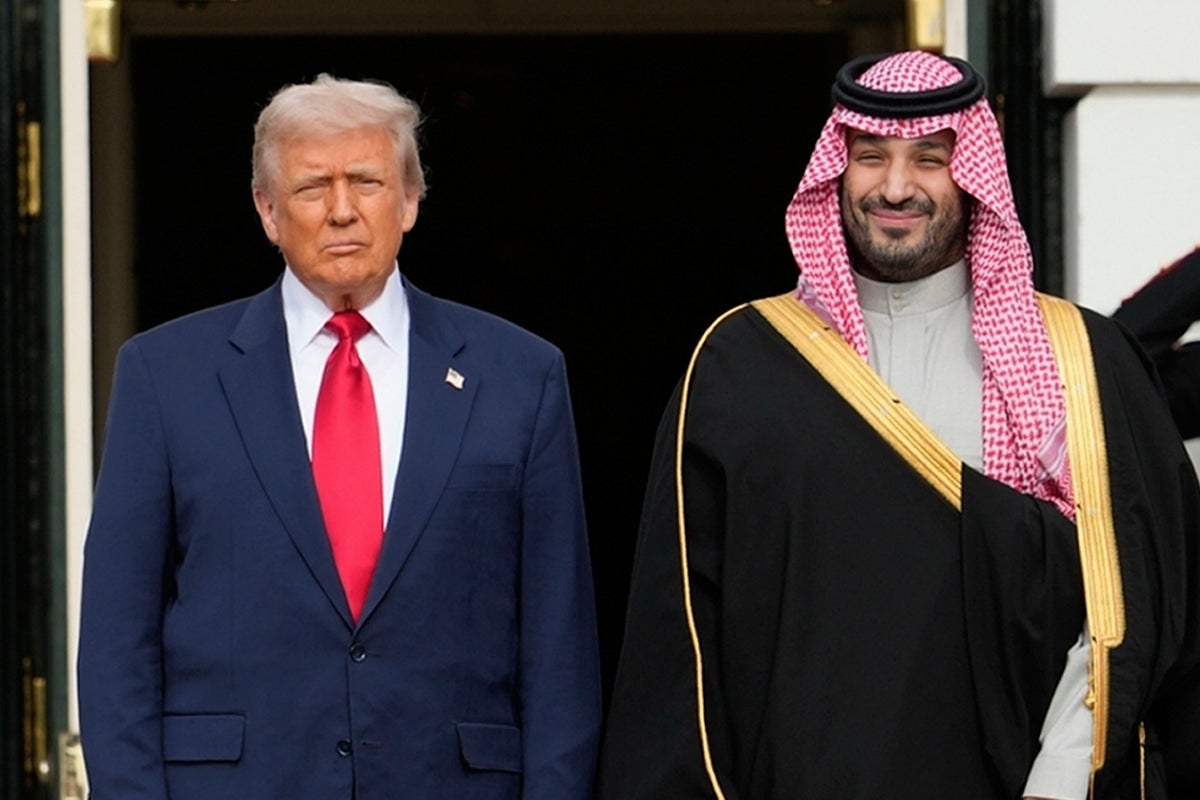
Skip to Content News Archives Economy Energy Oil & Gas Renewables Electric Vehicles Mining Commodities Agriculture Real Estate Mortgages Mortgage Rates Finance Banking Insurance Fintech Cryptocurrency Work Wealth Smart Money Wealth Management Investor Personal Finance Family Finance Retirement Taxes High Net Worth FP Comment Executive Women Puzzmo Newsletters Financial Times Business Essentials More Innovation Information Technology FP500 Podcasts Small Business Lives Told Tails Told Shopping Financial Post Store Obituaries Place a Notice Advertising Advertising With Us Advertising Solutions Postmedia Ad Manager Sponsorship Requests Classifieds Place a Classifieds ad Working Profile Settings My Subscriptions Saved Articles My Offers Newsletters Customer Service FAQ News Economy Energy Mining Real Estate Finance Work Wealth Investor FP Comment Executive Women Puzzmo Newsletters Financial Times Business Essentials HomeNewsPMN BusinessSaudi Crown Prince MBS scores unexpected wins during Iran warSaudi Arabia is earning billions in added oil revenue and building on ambitions to become a trading hubAuthor of the article:Last updated 8 minutes ago You can save this article by registering for free here. Or sign-in if you have an account.Crown Prince and Prime Minister of the Kingdom of Saudi Arabia Mohammed bin Salman looks on during a meeting with U.S. President Donald Trump (not pictured) in the Oval Office of the White House in Washington, D.C. on Nov. 18, 2025. Photo by Brendan SMIALOWSKI /AFP via Getty ImagesAt a time when the Iran war is upending energy flows and roiling economies across the world, Saudi Arabia is scoring billions in added oil revenue and building on ambitions to become a trading hub.Subscribe now to read the latest news in your city and across Canada.Exclusive articles from Barbara Shecter, Joe O'Connor, Gabriel Friedman, and others.Daily content from Financial Times, the world's leading global business publication.Unlimited online access to read articles from Financial Post, National Post and 15 news sites across Canada with one account.National Post ePaper, an electronic replica of the print edition to view on any device, share and comment on.Daily puzzles, including the New York Times Crossword.Subscribe now to read the latest news in your city and across Canada.Exclusive articles from Barbara Shecter, Joe O'Connor, Gabriel Friedman and others.Daily content from Financial Times, the world's leading global business publication.Unlimited online access to read articles from Financial Post, National Post and 15 news sites across Canada with one account.National Post ePaper, an electronic replica of the print edition to view on any device, share and comment on.Daily puzzles, including the New York Times Crossword.Create an account or sign in to continue with your reading experience.Access articles from across Canada with one account.Share your thoughts and join the conversation in the comments.Enjoy additional articles per month.Get email updates from your favourite authors.Create an account or sign in to continue with your reading experience.Access articles from across Canada with one accountShare your thoughts and join the conversation in the commentsEnjoy additional articles per monthGet email updates from your favourite authorsSign In or Create an AccountorEven as the war has slowed economic growth and driven a jump in defence and logistics spending, surging oil prices combined with contingency planning have bolstered revenue. Simultaneously, the kingdom’s Red Sea coast has emerged as a vital corridor to bypass the Strait of Hormuz, which has been all but closed to commerce since the war began.“Saudi Arabia has shown it is the indispensable Red Sea backstop,” said Hesham Alghannam, a Riyadh-based scholar at the Malcolm H Kerr Carnegie Middle East Center.Breaking business news, incisive views, must-reads and market signals. Weekdays by 9 a.m.By signing up you consent to receive the above newsletter from Postmedia Network Inc.A welcome email is on its way. If you don't see it, please check your junk folder.The next issue of Posthaste will soon be in your inbox.We encountered an issue signing you up. Please try againThat’s turning the Gulf nation into a key transit route for supply chains across the peninsula, a potential boost for Crown Prince Mohammed bin Salman’s US$1.3 trillion economy. Despite those gains, the kingdom faces rising competition. Alternative trading routes are also developing on the eastern coast of the United Arab Emirates as well as in Oman. And both the United Arab Emirates and Qatar have been ramping up their own energy flows.Saudi Arabia’s revenue from oil exports jumped to a more than three-year high of US$24.7 billion in the first full month of the war in the Middle East. That’s partly because a decades-old contingency plan, the East-West pipeline, allowed it to bypass the Strait of Hormuz.Meanwhile, a vast network of Saudi highways enabled thousands of trucks to ferry fertilizers and consumer goods across the Gulf through its Red Sea ports.Still, economic growth has slowed in non-oil sectors. The International Monetary Fund in April lowered its projection for the kingdom’s expansion by 0.9 percentage points to 3.1 per cent for 2026, though that reduction was the second lowest among the Gulf countries, trailing only Oman.Senior U.S. officials said Sunday that the United States and Iran are closing in on a deal that would reopen the Strait of Hormuz, although President Donald Trump insisted he would not “rush” into an agreement.Representatives for the Saudi government didn’t respond to a request for comment.“For Saudi Arabia, each month of fighting costs about 1.5 per cent of GDP in extra spending,” Ziad Daoud, chief emerging markets economist for Bloomberg Economics, wrote in May. “For most of its neighbours, the bill is probably higher.”The UAE, the region’s second largest economy, is making investments of its own, setting up an alternative export hub on its east coast and accelerating construction of a pipeline to its Fujairah port on the Gulf of Oman to double crude export capacity. A spokesperson for the UAE pointed to comments from officials highlighting the pipeline expansion and efforts to bolster other areas like supply chains.Nearby, Oman has launched a new trade corridor with the UAE’s emirate of Sharjah. Omani ports, which benefit from shipping through the Arabian Sea, have become increasingly important to the Gulf.Meanwhile, Saudi Arabia is re-purposing parts of its Neom project in its northwest. A new strategy could entail an expanded logistics role for Neom, with its port being promoted as a hub used by European companies to access the UAE, Kuwait and Iraq, according to people familiar with the matter.Neom has in recent years been scaling back its original plans to build a planned desert megacity.Saudi Arabia’s US$1 trillion wealth fund is also considering consolidating transport and supply-chain assets to create a logistics giant that can attract foreign investment.“This war is accelerating Saudi Arabia’s plans to become a key logistics hub between Asia, Africa, and Europe, a title that has been indisputably held by Dubai’s Jebel Ali port for decades,” according to Albert Vidal Ribe, an analyst at the International Institute for Strategic Studies. Dubai’s Jebel Ali is among the largest container ports worldwide.Saudi Arabia’s main equities index is now up about about three per cent since the war started on Feb. 28, compared with drops of around 10 per cent and seven per cent for Dubai and Abu Dhabi respectively.That’s buoyed confidence among firms looking to list in the kingdom, and a number of companies are pressing on with preparations to go public in what has so far been a muted year for Gulf initial public offerings.While Saudi Arabia has benefited from geography, it’s also prepared for decades for the possibility of Hormuz closing. The East-West pipeline was commissioned during the 1980s Iran-Iraq war, which saw attacks on ships in the strait.Even those efforts may not be enough to counter all the regional threats that have been on show in recent years.Accessing ports in the Red Sea isn’t without risk. Houthi militants in Yemen have carried out attacks that have plagued shipping in the area in recent years. The Houthis have avoided attacks on the Saudis during the Iran war.Some of the traffic to the kingdom’s ports may last longer term because Iran will retain the ability to threaten transit through Hormuz, said Rudolph Lohmeyer, senior partner at the consultancy Kearney.“This diversification away from the Strait of Hormuz is going to endure,” he said.—With assistance from Anthony Di Paola. Join the Conversation This website uses cookies to personalize your content (including ads), and allows us to analyze our traffic. Read more about cookies here. By continuing to use our site, you agree to our Terms of Use and Privacy Policy.
Saudi Crown Prince MBS scores unexpected wins during Iran war
Saudi Arabia is earning billions in added oil revenue and building on ambitions to become a trading hub via its Red Sea coast. Read on.
1,390 words~6 min read