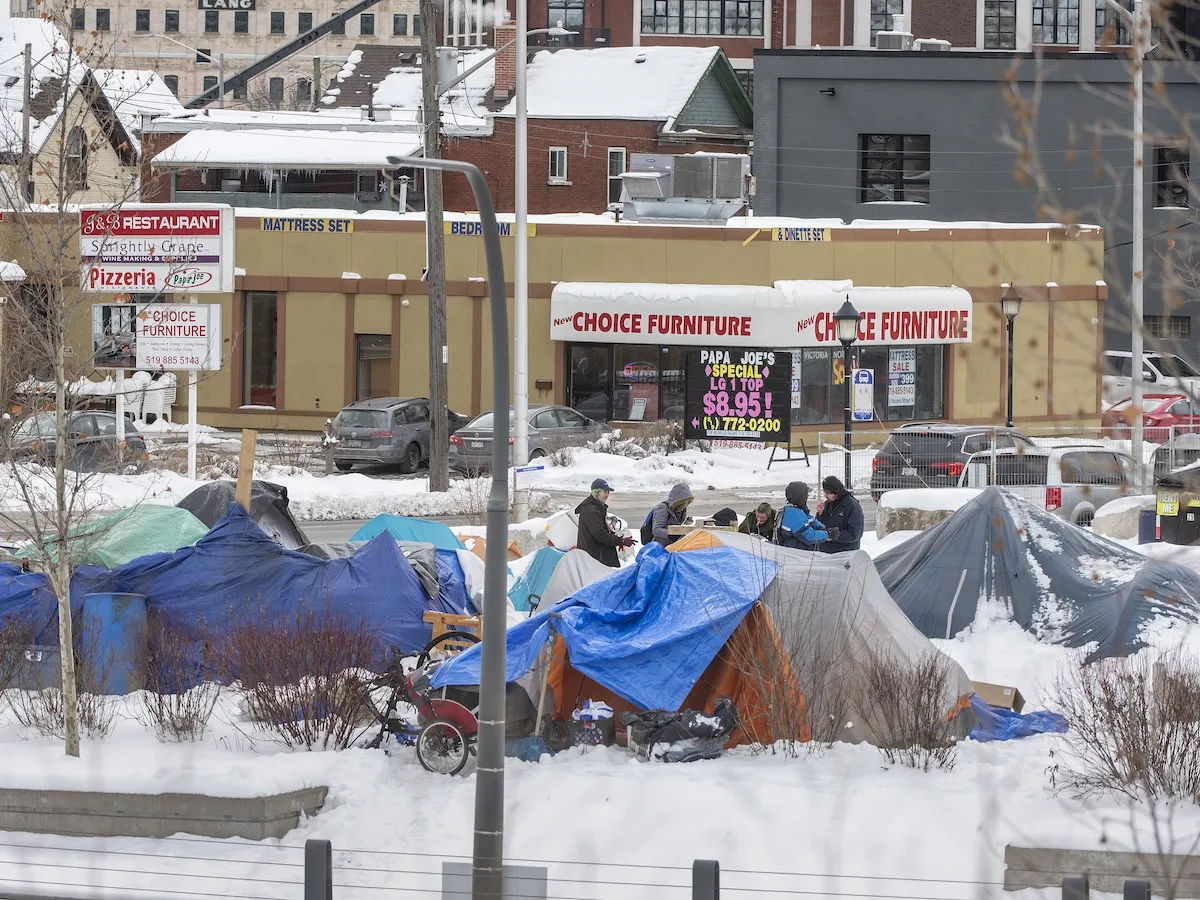
Skip to Content Subscribe Our Offers My Account Manage My Subscriptions FAQ Newsletters Canada Canadian True Crime Canadian Politics Health World Israel & Middle East Financial Post NP Comment Longreads Puzzmo Diversions Comics NP News Quiz New York Times Crossword Horoscopes Life Eating & Drinking Style Sponsored Play for Ontario Travel Travel Canada Travel USA Travel International Cruises Travel Essentials Culture Books Celebrity Movies Music Theatre Television Business Essentials Advice Lives Told Tails Told Shopping Buy Canadian Home Living Outdoor Living Tech Style & Beauty Kitchen & Dining Personal Care Entertainment & Hobbies Gift Guide Travel Guide Deals Savings National Post Store More Sports Hockey Baseball Basketball Football Soccer Golf Tennis Driving Vehicle Research Reviews News Gear Guide Obituaries Place an Obituary Place an In Memoriam Classifieds Place an Ad Celebrations Working Business Ads Archives Healthing Epaper Manage Print Subscription Profile Settings My Subscriptions Saved Articles My Offers Newsletters Customer Service FAQ Newsletters Canada World Financial Post NP Comment Longreads Puzzmo Diversions Life Shopping Epaper Manage Print Subscription HomeNP CommentBen Woodfinden: A judge just hallucinated that homelessness is the same as race or sexCanada's cities will become ungovernable if this ruling standsLast updated 23 minutes ago You can save this article by registering for free here. Or sign-in if you have an account.A homeless encampment in Kitchener, Ontario at the corner of Victoria Street and Weber Street, Monday January 31, 2023. Photo by Peter J. Thompson /National PostLast week, an Ontario Superior Court judge ruled that the Region of Waterloo cannot clear a 30-person tent encampment from a parking lot in downtown Kitchener, even though the region owns the lot. The municipality has been trying to do so as part of its plans to build the Kitchener Central Transit Hub, which will eventually connect local and regional bus and light rail services, along with VIA Rail (the kind of integrated transit infrastructure Canadian cities are constantly told they need more of).Enjoy the latest local, national and international news.Exclusive articles by Conrad Black, Barbara Kay and others. Plus, special edition NP Platformed and First Reading newsletters and virtual events.Unlimited online access to National Post.National Post ePaper, an electronic replica of the print edition to view on any device, share and comment on.Daily puzzles including the New York Times Crossword.Support local journalism.Enjoy the latest local, national and international news.Exclusive articles by Conrad Black, Barbara Kay and others. Plus, special edition NP Platformed and First Reading newsletters and virtual events.Unlimited online access to National Post.National Post ePaper, an electronic replica of the print edition to view on any device, share and comment on.Daily puzzles including the New York Times Crossword.Support local journalism.Create an account or sign in to continue with your reading experience.Access articles from across Canada with one account.Share your thoughts and join the conversation in the comments.Enjoy additional articles per month.Get email updates from your favourite authors.Create an account or sign in to continue with your reading experience.Access articles from across Canada with one accountShare your thoughts and join the conversation in the commentsEnjoy additional articles per monthGet email updates from your favourite authorsSign In or Create an AccountorPeople have been living in tents on the site since 2021. The region has spent three years trying to clear them through the courts. It passed a bylaw. When the bylaw was challenged, it amended it. It removed the $5,000 fines for people who refused to leave. It created a transition policy to help residents find alternative housing. It offered individualized housing plans to every resident. None of it was enough. To use its own land, the judge ruled, the region must first provide an alternative legal encampment site or a formal “tenting protocol” with equivalent services.This newsletter from NP Comment tackles the topics you care about. (Subscriber-exclusive edition on Fridays)By signing up you consent to receive the above newsletter from Postmedia Network Inc.We encountered an issue signing you up. Please try againThe absurdity of the decision is obvious to any sensible observer, but the case is just the latest in a disturbing trend in how this country is governed. Buried in the 88-page decision is yet another instance of an Ontario court overturning settled law to invent a new constitutional right, and in the process imposing a policy outcome that no elected government has voted for and no majority of Canadians has ever endorsed.The number of cases where courts use the Charter to invent new rights and impose the policy fever dreams of out-of-touch progressive activists has become impossible to ignore.The crux of the decision begins at paragraph 204 of the ruling. There, Ontario Superior Court Justice Michael R. Gibson declares that homelessness should be recognized as an “analogous ground” under Section 15 of the Charter, meaning a protected characteristic alongside race, sex, religion, and disability. Homeless people, Gibson writes, possess a “constructively immutable characteristic” and constitute a “discrete and insular minority.” Faced with the awkward fact that homelessness, unlike race or sex, is not actually permanent, he concedes (he has to) that homelessness is transitory. He then asserts this does not matter, because such characteristics are, “while they last,” beyond an individual’s conscious control.Read that twice. Homelessness is immutable, except that it isn’t, but it should be treated as though it is. The judge has redefined “immutable” to mean its opposite. The reasoning would not survive a first-year constitutional law tutorial, and yet there it sits, in a published Superior Court ruling, as the basis for a substantial expansion of equality rights in Canadian law.This argument has been tried before and lost. In the 2014 case, Tanudjaja v. Canada, the attempt to establish homelessness as an analogous ground failed at the Ontario Court of Appeal. Then, three years ago, in an earlier litigation over the Waterloo camp, before the region amended its bylaws, a different judge rejected the Section 15 claim explicitly. Although that earlier judge ruled the homeless camp could not be dismantled because of Section 7 of the Charter, which protects security of the person, he found that the bylaw did not discriminate against homeless people on any enumerated or analogous basis. Justice Gibson has now overridden all of that. If the ruling stands, every municipal bylaw in Canada that differentially affects homeless people (encampment clearances, park rules, public-space regulations, loitering provisions) becomes a potential equality-rights violation.And this is not an isolated mistake. Last summer, a different Ontario Superior Court judge struck down provincial legislation removing bike lanes from three Toronto streets, on the grounds that removing the lanes violated cyclists Section 7 rights to life and security of the person. A de facto constitutional right to bike lanes, found by a single judge, against the explicit will of an elected legislature. The pattern across both rulings is strikingly similar. Identify a sympathetic group. Connect their circumstances to a Charter provision. Then tell elected officials what they may or may not do, or what they must affirmatively provide, regardless of what voters and their representatives have decided. Notice that the Charter’s text is endlessly elastic in the direction of the activist class’s preferred outcomes, and remarkably inflexible in any other direction.What has happened, slowly and then quickly, is that a particular reading of the Charter has captured much of the legal academy and the bench. On this reading, the Charter does not merely constrain government action that violates clear individual rights. It empowers courts to assess the substantive outcomes of any law, identify groups disadvantaged by those outcomes, and order remedies that turn out to look identical to progressive social policy. More bike lanes. More tenting protocols. More positive obligations imposed on public bodies. More constraints on resource development. The Charter’s framers in 1982 did not intend this. The text does not require it. No Canadian government has ever been elected on a platform of delegating social policy to the courts. But this is what we have, because the people who decide what the Charter means have decided it should be so.There is a remedy. Section 33 of the Charter (the notwithstanding clause) was designed for exactly this kind of judicial overreach. Both Section 7 and Section 15 fall within its scope. The Region of Waterloo cannot invoke it on its own; but the Ontario legislature can. Thirteen Ontario mayors have been asking Ford to do precisely that since October 2024, when the mayors of Sudbury, Cambridge, Guelph, and ten other municipalities signed a joint letter requesting that the province invoke Section 33 to allow encampment clearances, following earlier court rulings. Ford declined and tried a softer route: the Safer Municipalities Act and $75.5 million for homelessness prevention. The judiciary responded by going further still, inventing a new analogous ground and demanding tenting protocols as the price of regional governance. The case for Section 33 was strong then. It is overwhelming now.That the notwithstanding clause is widely treated by the legal commentariat as illegitimate to invoke is itself part of the problem. The clause exists for moments like this. Decades of constitutional commentary, much of it produced by the same legal class now driving the expansion of Charter rights from the bench, have insisted that using Section 33 is undemocratic, anti-rights, even authoritarian. The result is a Charter in which one half (the rights provisions, indefinitely expandable by judges) is treated as sacred, whilst the other half (the democratic override) is treated as a constitutional taboo. Nobody voted for the judge who wrote paragraph 204. Nobody can vote him out. But Ontarians did vote for the legislature that can override him.Decisions like this are likely to continue until somebody with political authority decides that the democratic legitimacy of elected legislatures is worth defending against a judiciary that has, quietly and with the full approval of most of the legal class, made itself this country’s most consequential legislature.National Post Join the Conversation This website uses cookies to personalize your content (including ads), and allows us to analyze our traffic. Read more about cookies here. By continuing to use our site, you agree to our Terms of Use and Privacy Policy.
Ben Woodfinden: A judge just hallucinated that homelessness is the same as race or sex
Canada's cities will become ungovernable if this ruling stands
1,670 words~8 min read