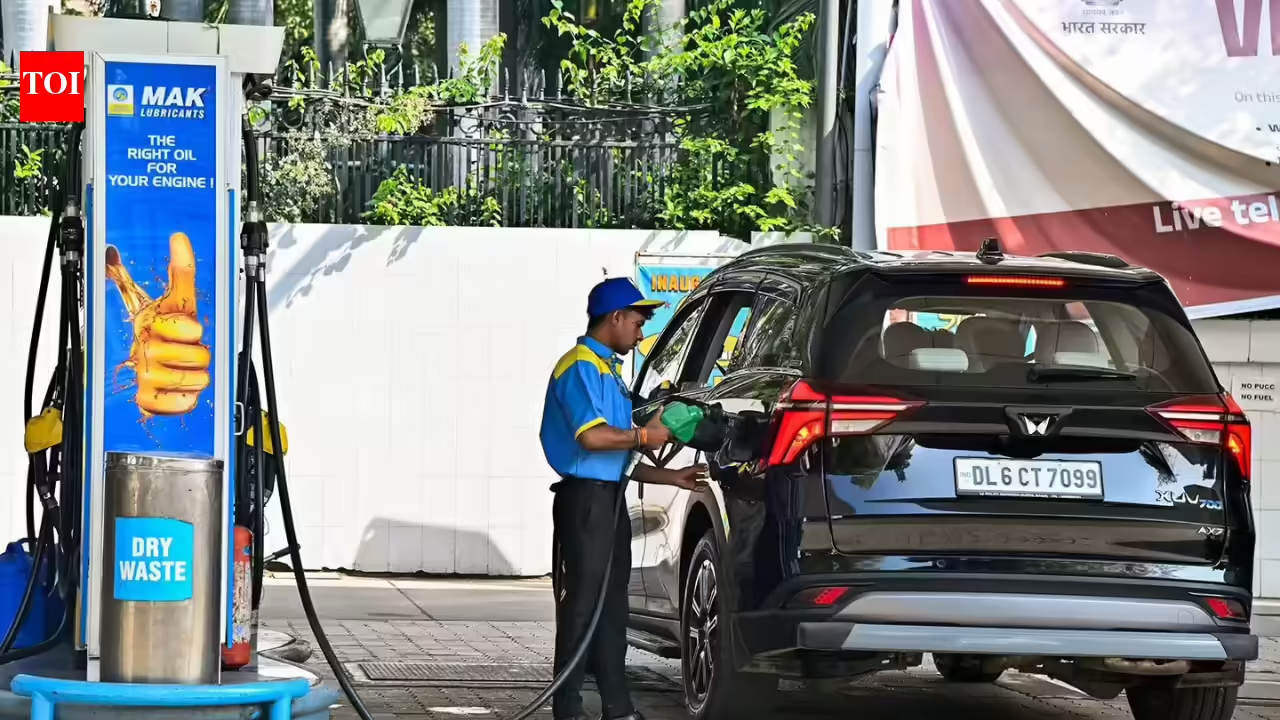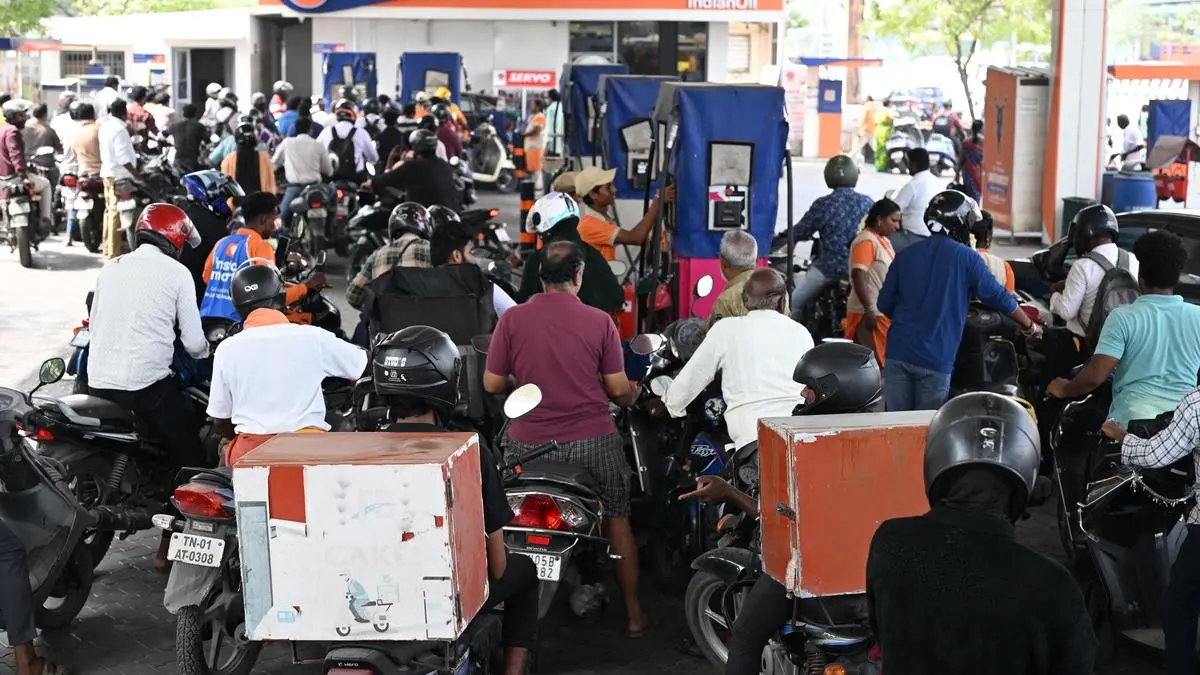
Even as the Centre said it has taken a ₹30,000-crore revenue hit in FY26 through excise duty cuts on petrol and diesel, states have continued to see strong growth in collections from sales tax/VAT on petroleum products, with most refraining from lowering local levies despite the recent spike in crude prices.Monthly indicators compiled by the Comptroller and Auditor General of India show that, barring Kerala, states recorded growth of up to 58 per cent in collections under “sales tax/taxes on sales, trade etc” during April. A significant portion of this revenue comes from VAT and sales tax on petrol, diesel and aviation turbine fuel (ATF).Since the onset of the West Asia conflict, no state or Union Territory has reduced VAT on petrol and diesel. On ATF, only Maharashtra and Delhi have lowered taxes, according to officials. Petroleum taxes remain among the largest contributors to states’ own tax revenues, accounting for as much as 40 per cent in some cases.Tamil Nadu collected around ₹5,000 crore under “taxes on sales, trade etc” in April, according to CAG data. As per the Petroleum Planning and Analysis Cell of the Oil Ministry, the state imposes a combination of ad valorem and specific levies, 13 per cent plus Rs 11.52 per litre on petrol and 11 per cent plus ₹9.62 per litre on diesel. Gujarat collected over ₹2,600 crore during the month, with taxes including 13.7 per cent VAT on petrol and 14.9 per cent on diesel, besides cess and VAT on town rates.Central government sources said the Union government has reduced excise duty on petrol and diesel four times over the past four years, including during the Russia-Ukraine conflict and disruptions around the Strait of Hormuz, and absorbed a revenue impact of nearly ₹30,000 crore in the latest reduction alone.“When crude rose in 2022 and again in 2026, the central excise duty on petrol and diesel was cut. The reduction was direct, transparent, on-budget, and visible at the pump within a day. The exchequer accepted the loss of revenue. No bond was issued, no obligation was deferred, no future taxpayer was committed to repaying anything,” a source said.Another source said the Centre had also imposed an export levy on diesel and ATF on March 27 to prevent domestic supplies from being diverted to overseas markets amid elevated international prices. “The export levy contributed to the SAED cut being a net protection of the Indian consumer rather than a revenue giveaway to refiners,” the source said.Officials also argued that retail fuel prices had remained broadly stable over the past four years despite volatility in global crude markets. They pointed out that the retail price of petrol and diesel in Delhi had moved by under one per cent in either direction over the four years from February 2022 to February 2026, against the Brent benchmark that has moved sharply in both directions across the same period. According to them, the cumulative increase of ₹4.74 per litre in petrol and ₹4.82 in diesel through revisions on May 15, 19 and 23 marked the first significant upward movement in pump prices in nearly four years.Published on May 24, 2026
States hold fuel VAT rates, see up to 58% rise in sales tax revenue
States experience up to 58% sales tax revenue growth from fuel VAT, despite central excise duty cuts on petrol and diesel.
521 words~2 min read