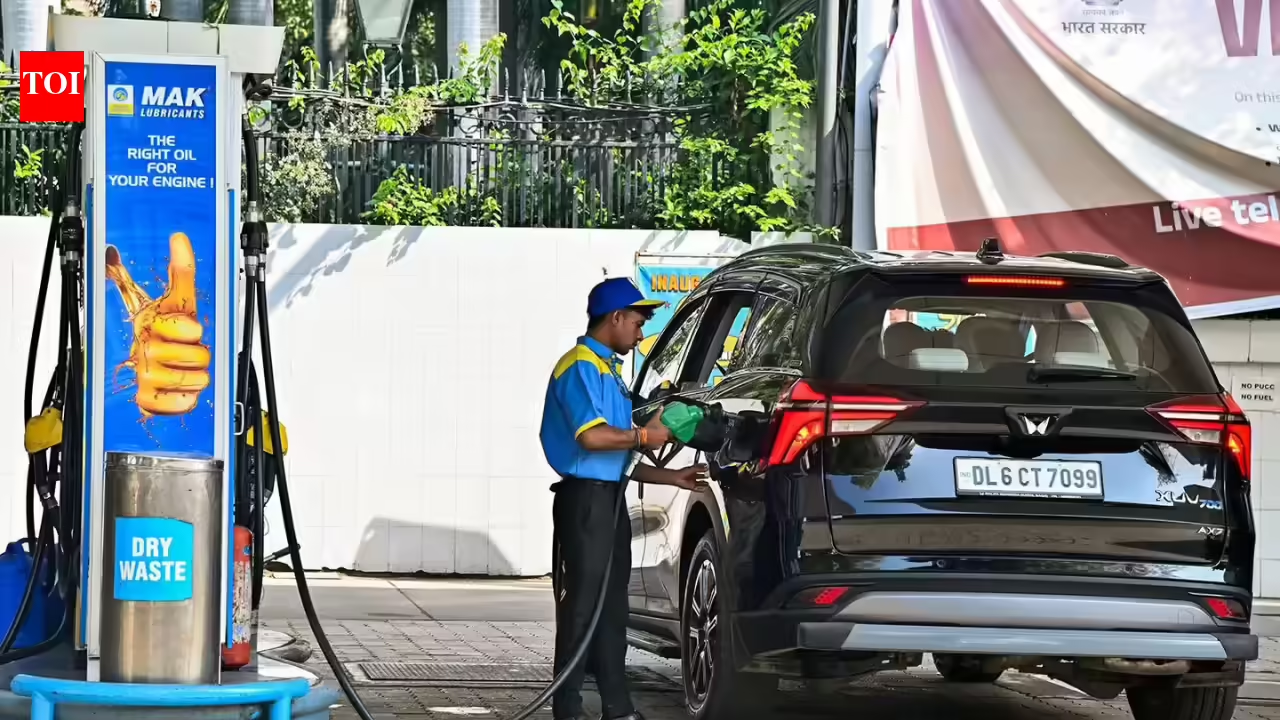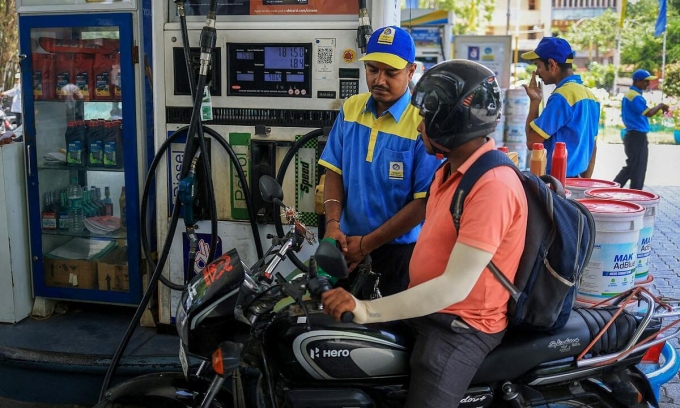
A businessline analysis shows Maharashtra, Uttar Pradesh and Gujarat collected the highest fuel tax revenues in absolute terms during FY26, while Gujarat derived the highest share of its own tax revenue from petroleum products.
| Photo Credit:
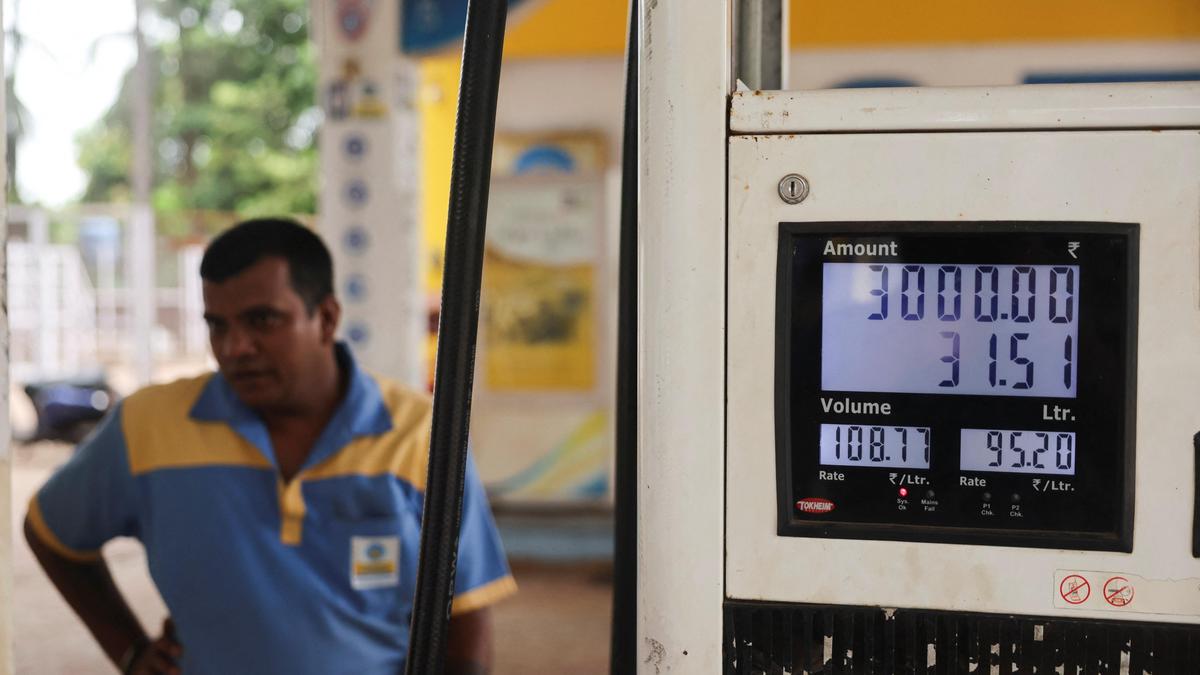
Retail fuel prices in India have inched up yet again, with petrol becoming costlier by ₹2.61 per litre and diesel by ₹2.71 per litre from May 23, 2026. This is the fourth hike in the last 10 days, bringing the cumulative total close to ₹7.Such increases typically raise concerns over inflation and increased transport costs, dampening demand. While the Centre has reduced the excise duty it charges on petrol and diesel by Rs 10 towards the end of March, States have not made any similar cuts this year, yet.Given the large variation in the sales tax and VAT rates charged by States on the sale of petrol and diesel, and the high tax rates in some States, there is room to lower taxes in some regions to provide some relief to consumers.Maharashtra and Uttar Pradesh lead in absolute fuel tax collectionsBusinessline analysis of state-wise collection of taxes on petroleum products of the top 11 States and Union Territories of India, ranked according to their GSDP, reveals that in absolute terms, fuel taxes form a significant chunk of the State’s Own Tax Revenue (SOTR).Data from PPAC for the first nine months of FY26, up to December 2025, shows Maharashtra earning the highest sales tax and VAT revenue from petroleum products at ₹27.5 thousand crores. Uttar Pradesh followed with ₹23.2 thousand crores, while Gujarat collected ₹21.6 thousand crores.Southern states remained major recipients of fuel taxation. Karnataka earned ₹19.5 thousand crores, marginally ahead of Tamil Nadu’s ₹19.2 thousand crores. While Andhra Pradesh earned ₹12.2 thousand crores and Telangana earned ₹12.1 thousand crores from fuel taxes, this underlines the continuing importance of petroleum consumption to state finances.Share in SOTRThe share of taxes on petroleum products in States’ own tax revenue (SOTR) shows a large variation across States and Union Territories. The share appears to be influenced by a variety of factors, including the level of consumption, tax rates, the degree of industrialisation in the region, and other sources of tax revenue.Of the 11 States and UTs analysed, Gujarat gets the highest share of SOTR from petroleum products at 18.6 per cent. Gujarat is home to some of the world’s largest refineries and is a highly industrialised state. Even with low tariffs on petrol and diesel, revenue from petroleum product taxes accounts for a significant share of its SOTR.This contrasts with Delhi, where tax on petroleum products now accounts for only 6.6 per cent of SOTR in FY26. Delhi, on the other hand, is less industrialised and earns more revenue from other sources, such as SGST, given its consumption-led economy.According to Manoj Mishra, partner at Grant Thornton Bharat, “petroleum continues to remain one of the most fiscally significant and resilient tax bases given its deep linkage with transport, logistics, manufacturing and overall economic activity. Since state VAT on petroleum products is largely ad valorem, higher crude-linked retail prices can continue to support state revenues even during inflationary periods unless states voluntarily recalibrate VAT rates. Therefore, while petroleum’s share in SOTR may be declining structurally due to revenue diversification, it continues to remain a critical fiscal stabiliser for states during commodity and inflation shocks.”Large variation in tax ratesThe retail selling price of petrol on May 25 was ₹102.12, ₹111.21, ₹113.51 and ₹107.77 in Delhi, Mumbai, Kolkata and Chennai, respectively. The difference is primarily due to the variation in tax rates charged by Indian States and UTs.The top 11 States and UTs analysed for this study can be divided into three buckets based on their levy on petrol and diesel. States that levy very high taxes, such as Telangana, Andhra Pradesh, Rajasthan, Karnataka, Maharashtra, and Madhya Pradesh, fall into the first bucket. Telangana charges 35.2 per cent VAT on petrol and 27 per cent VAT on diesel. Andhra Pradesh follows closely with a multi-layered structure that includes 31 per cent VAT on petrol, along with an additional ₹4 per litre VAT and a ₹1 per litre road development cess. Tax levies on petrol in Karnataka, Rajasthan, Maharashtra, and Madhya Pradesh also effectively exceed 30 per cent.In the second bucket are states with tax rates that are neither too high nor too low. Tamil Nadu and West Bengal fall in this category. TN follows a mixed structure, charging a 13 per cent ad valorem tax plus ₹11.52 per litre specific tax on petrol, and an 11 per cent ad valorem tax plus ₹9.62 per litre specific tax on diesel. West Bengal levies a higher rate of 25 per cent, or ₹13.12 per litre, as sales tax, in addition to a cess component.The third bucket includes states which have relatively lower tax rates, below 20 per cent. These are Uttar Pradesh, Gujarat and Delhi. Uttar Pradesh uses a hybrid formula of percentage tax or fixed per-litre levy, whichever is higher. Gujarat and Delhi continue to maintain relatively lower effective tax rates compared to several southern and western states.With consumers bearing the brunt of ongoing retail price increases, it may be time for States to review their fuel tax rates, especially those in the first bucket.(With inputs from Anu Keerthana, an intern)Published on May 25, 2026