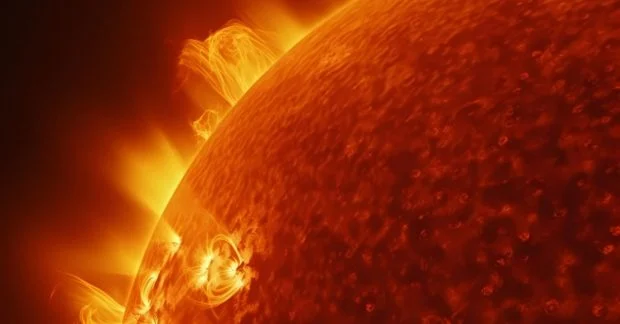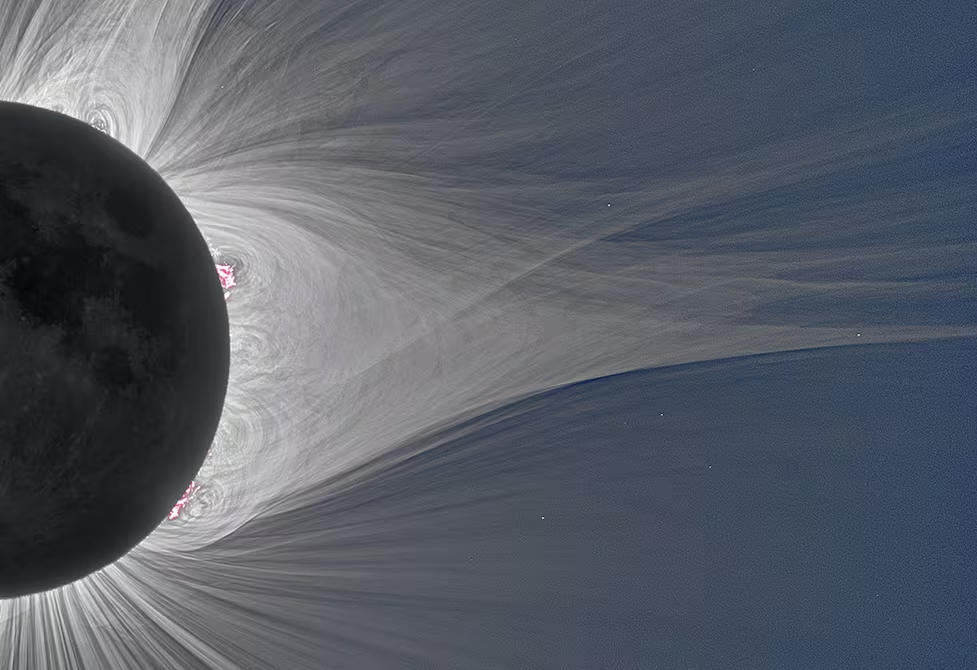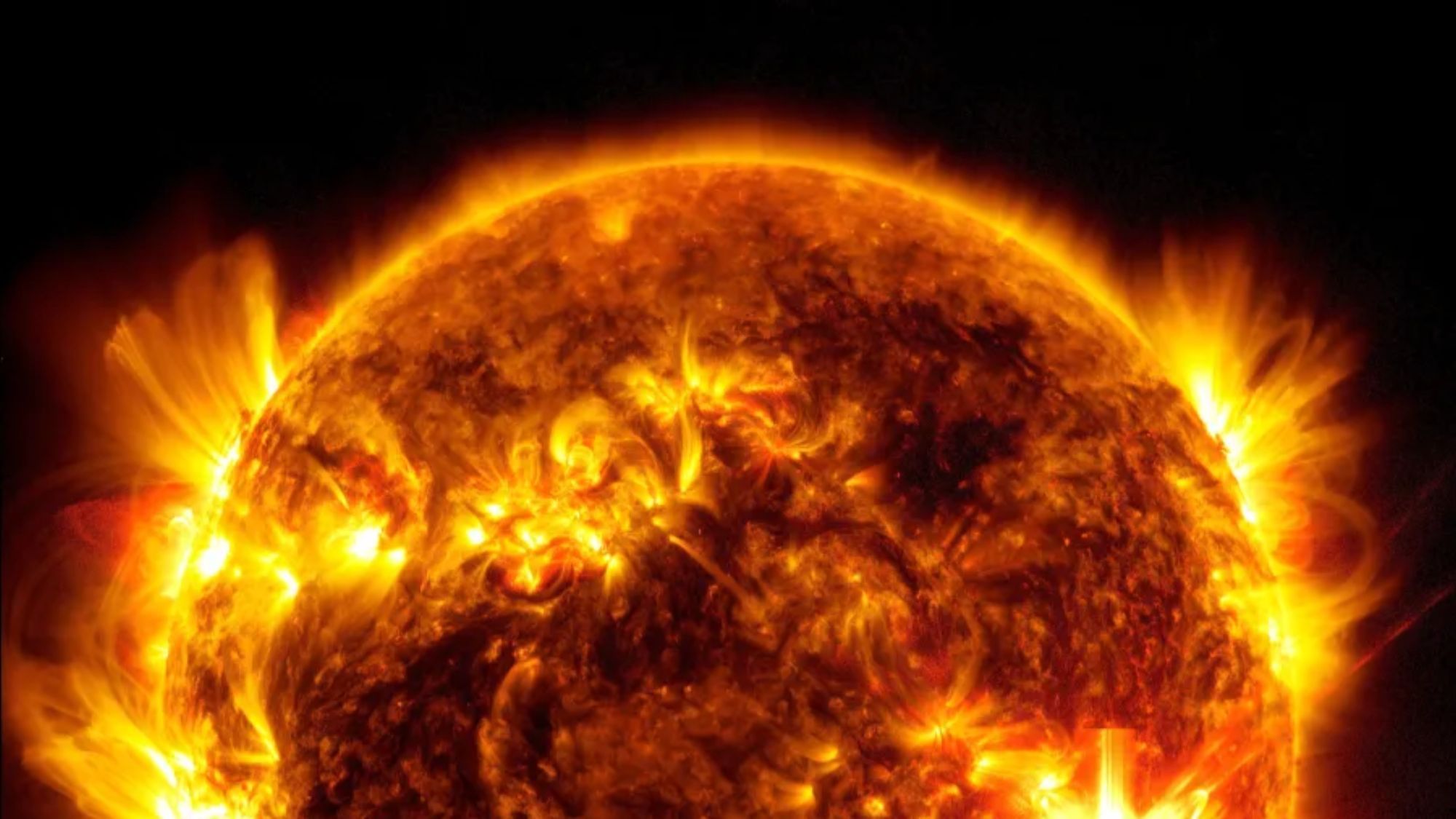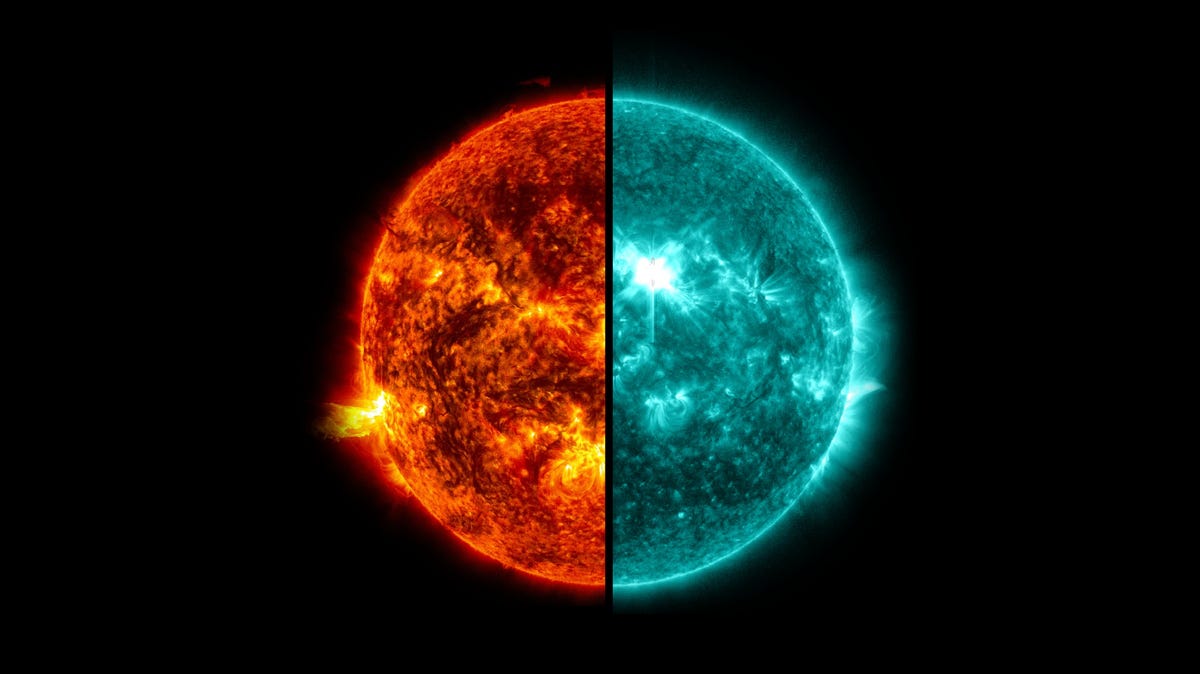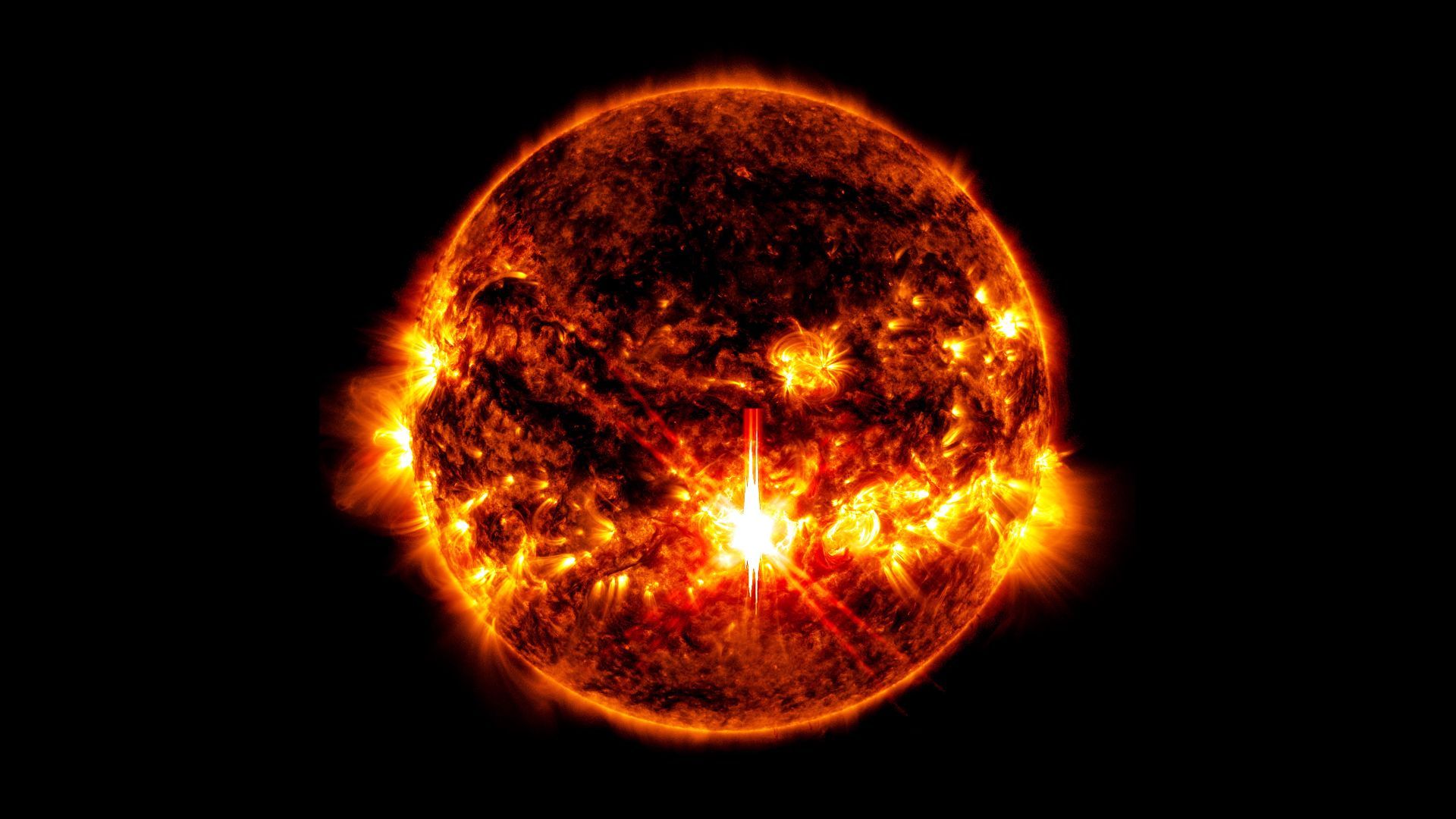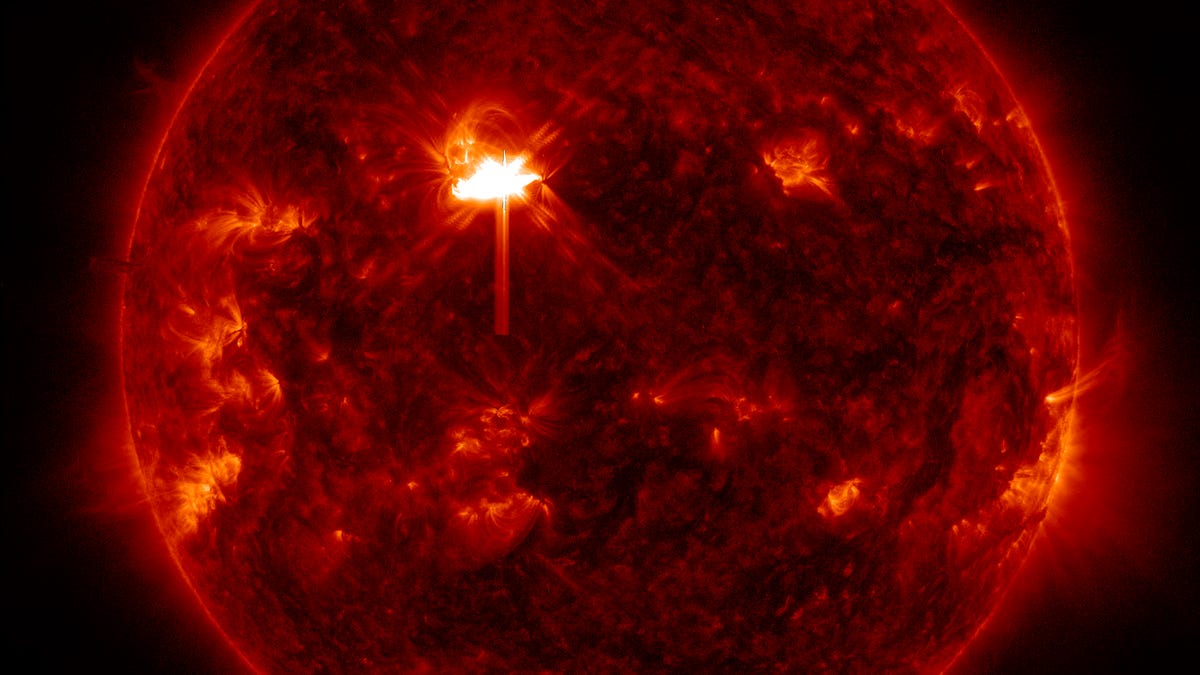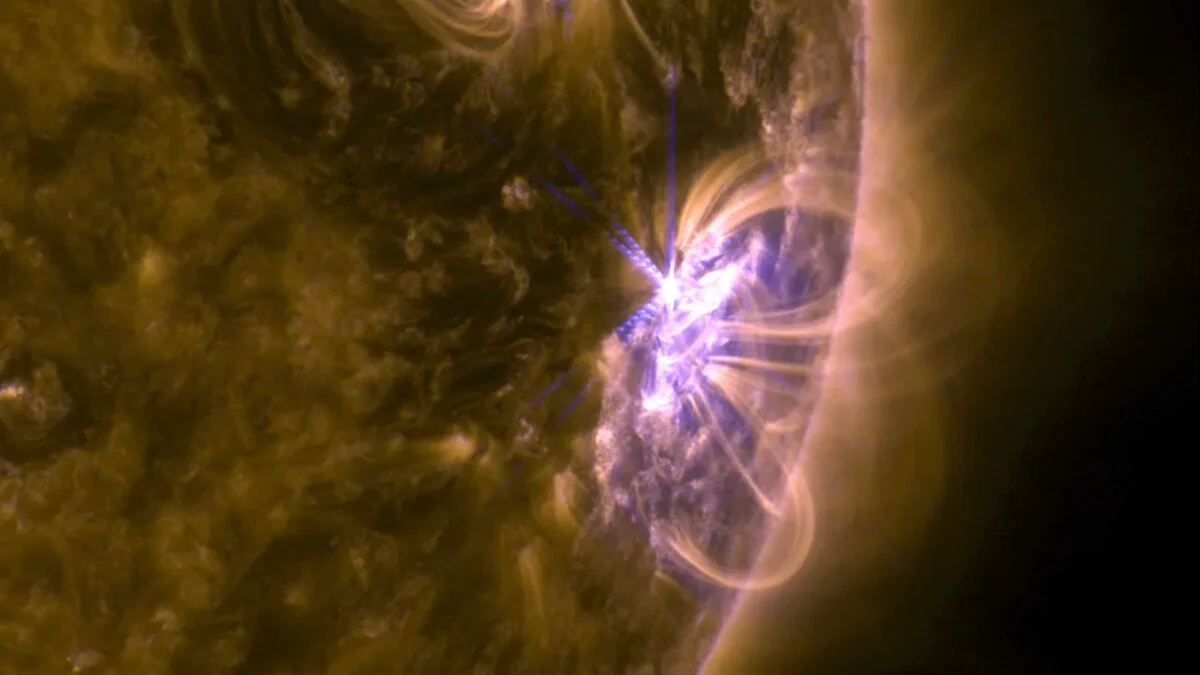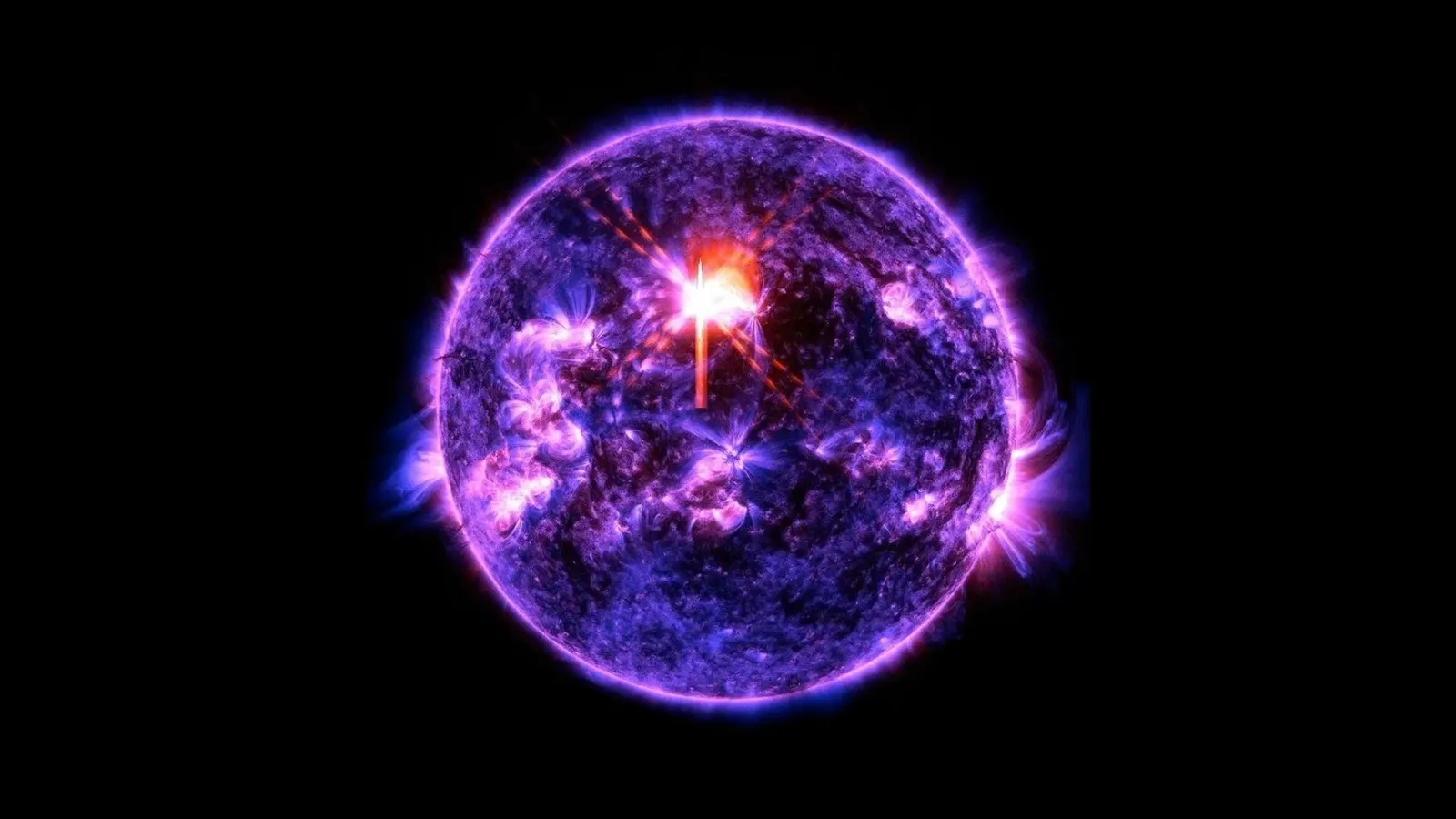
NASA’s Solar Dynamics Observatory captured this image of a solar flare — seen as the bright flash toward the upper middle — on Feb. 4, 2026.NASA/SDOScientists studying nearly 50 years of solar activity data say there is a heightened risk for extremely powerful solar eruptions known as “superflares” — events capable of disrupting satellites, power grids and communications systems, and potentially endangering astronauts. The research, published in the Journal of Geophysical Research: Space Physics, proposes a forecasting system for “S-class” solar flares, defined as solar eruptions exceeding X10 intensity on the standard scale.The biggest solar flare recorded so far in 2026 is a massive X8.3-class solar flare on Feb. 1.ForbesBiggest Sunspots In Years Turn Toward Earth — Expect Northern LightsBy Jamie CarterOverdue For An 'S-Class’ Solar FlareThe sun is currently waning from its “solar maximum” period — the peak of its roughly 11-year cycle when its magnetic activity intensifies. Scientists at NOAA and NASA estimate the solar maximum occurred in October 2024. Sporadic intense magnetic activity is often observed in the two years following solar maximum.The study suggests the sun may be overdue for an “S-class” solar flare during the current Solar Cycle 25. Researchers analyzed data collected between 1975 and 2025 from the Geostationary Operational Environmental Satellites and identified 37 S-class superflares across previous solar cycles. According to the study, every solar cycle since the late 1970s has produced at least one Earth-directed superflare — except the current one.MORE FOR YOUThe findings were published by an international team led by scientists at the National Autonomous University of Mexico.A geomagnetic storm lights up the night sky above the Bonneville Salt Flats on May 10, 2024 in Wendover, Utah. Places as far south as Alabama and parts of Northern California were expected to see the aurora borealis, also known as the northern lights from a powerful geomagnetic storm that reached Earth. (Photo by Blake Benard/Getty Images)Getty ImagesA New Way To Forecast Solar StormsRather than attempting to predict the exact moment a flare will erupt, researchers developed a probabilistic system designed to identify time periods and regions on the sun where extreme flares are more likely to occur. The team discovered two recurring solar rhythms — cycles lasting roughly 1.7 years and seven years — linked to massive oscillations in the sun’s plasma (called magneto-Rossby waves). When both cycles align in a positive phase, the probability of an S-class flare increases sharply.Using machine learning, the scientists identified two primary windows during Solar Cycle 25 when an S-flare is most likely — one spanning mid-2025 through mid-2026 and another forecast for early-to-mid 2027. The first period is associated primarily with the sun’s southern hemisphere, while the second shifts toward northern solar latitudes.Major solar flares occur rapidly and unpredictably, making them difficult to forecast. This new method attempts to give space weather operators and satellite managers one to two years of advance warning of extreme events.ESA's Sun-explorer Solar Orbiter ESA/MedialabHidden Superflares On Sun’s Far SideAlthough so-called superflares are rare, they do occur. During research for the study in May 2024, scientists detected several enormous flares erupting on the far side of the sun, hidden from Earth’s direct view. Among them were estimated X11.1 and X16.5-class eruptions — powerful enough to qualify as S-class superflares. Because the eruptions occurred on the sun’s far side, Earth avoided any impacts.May 2024 was a landmark month for space weather, seeing a G5-rated geomagnetic storm on May 10-11 — the strongest since 2003 — that caused global aurora. Space weather forecasters were unable to give a precise prediction in advance. The researchers say those events demonstrate that Solar Cycle 25 still contains enough magnetic energy to generate even stronger eruptions.ForbesSplashdown! NASA’s Artemis II Returns To Earth After Moon MissionBy Jamie CarterRisks For Earth And Space MissionsSolar superflares are among the most dangerous forms of space weather. A direct hit from a powerful eruption could damage satellites, interfere with GPS systems, disrupt radio communications, and potentially trigger large-scale electrical outages.The researchers also suggested heightened solar activity could influence future human spaceflight planning. With NASA’s Artemis II mission — during which four astronauts traveled around the moon — now complete, that danger looks to have passed. The next test flight is Artemis III, a mission to test docking NASA’s Orion spacecraft with a Blue Origin or SpaceX lunar lander in Earth orbit ahead of a lunar landing. It’s scheduled for 2027, but will likely drift. Artemis IV, expected to deliver astronauts to the moon’s south pole, is scheduled for 2028–2029.Wishing you clear skies and wide eyes.
Scientists Warn The Sun Could Be About To Produce A ‘Superflare’
Scientists studying 50 years of solar data warn Earth may be entering a heightened risk period for rare “superflares” capable of disrupting technology worldwide.
755 words~3 min read