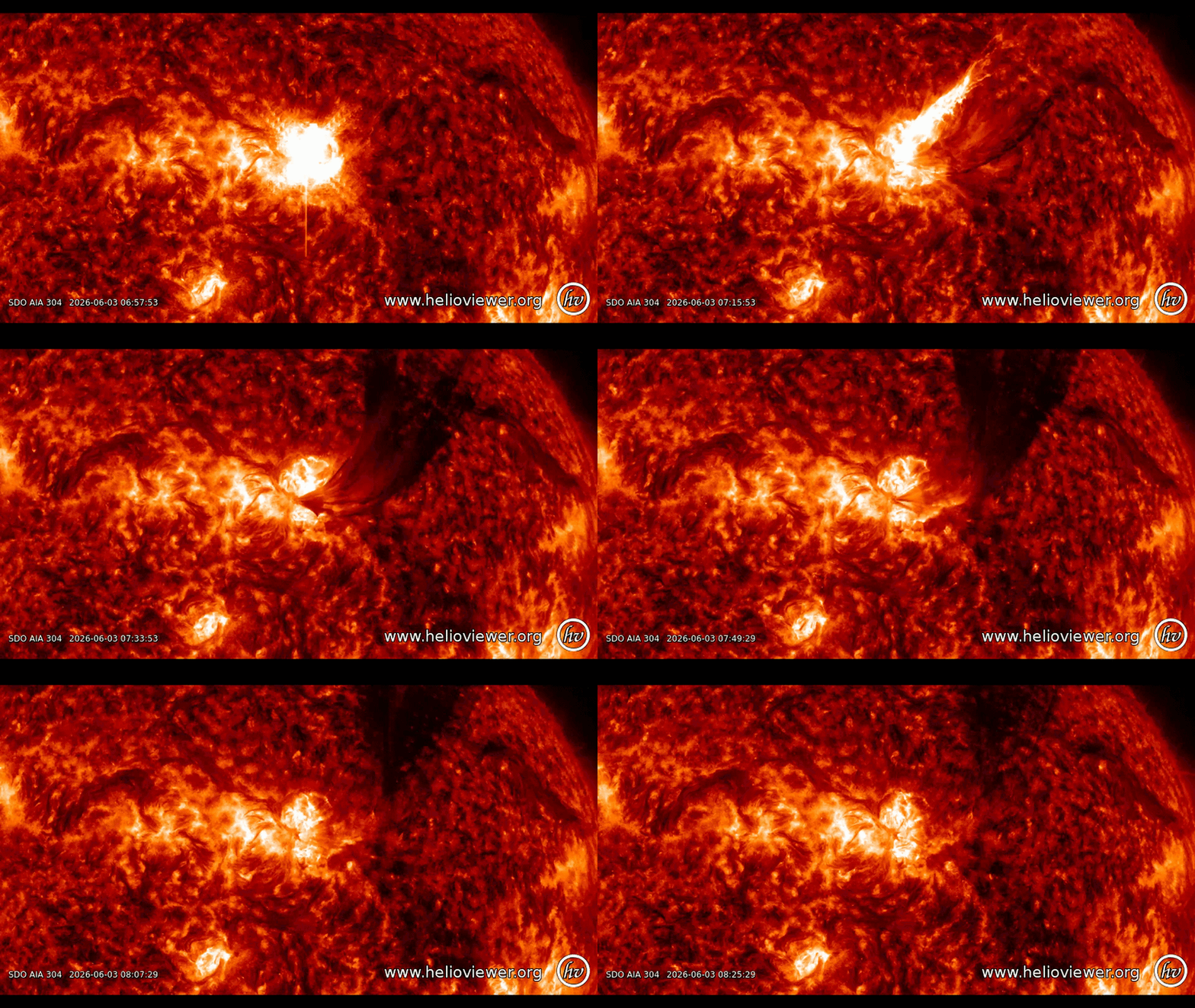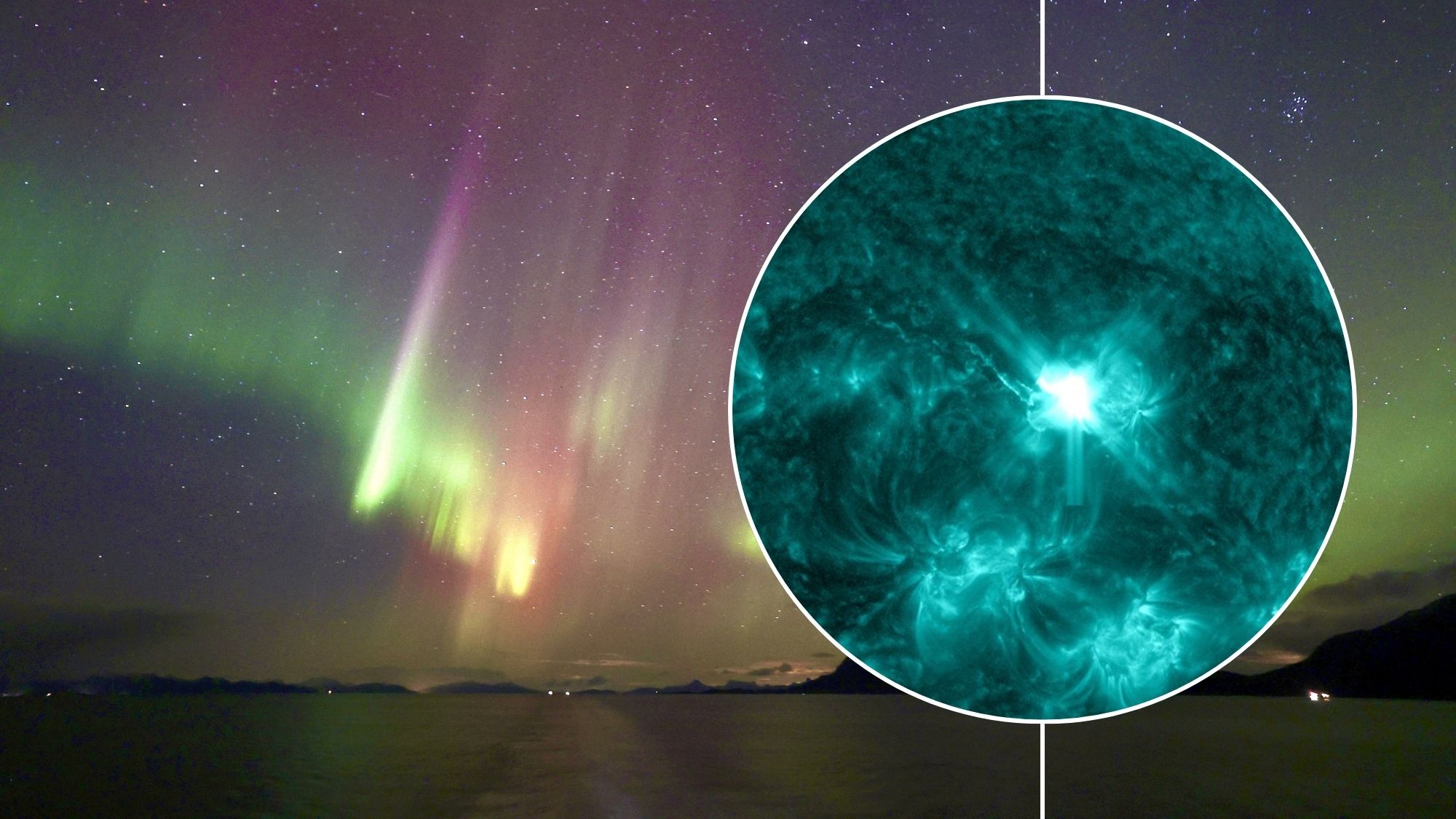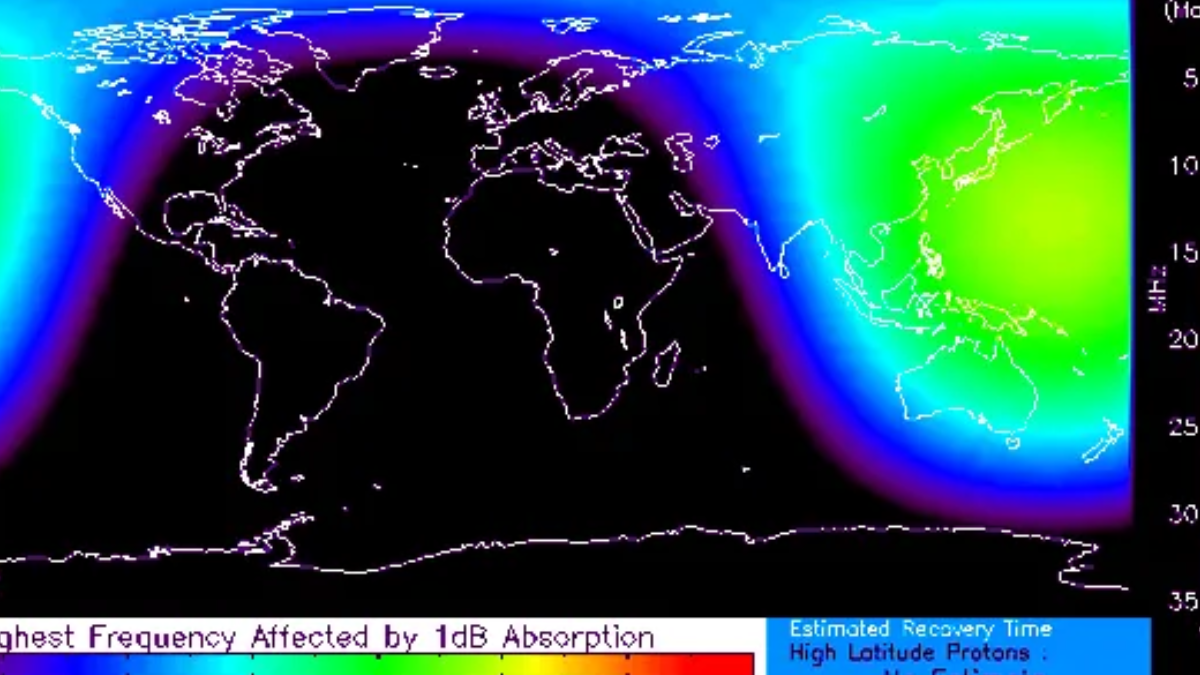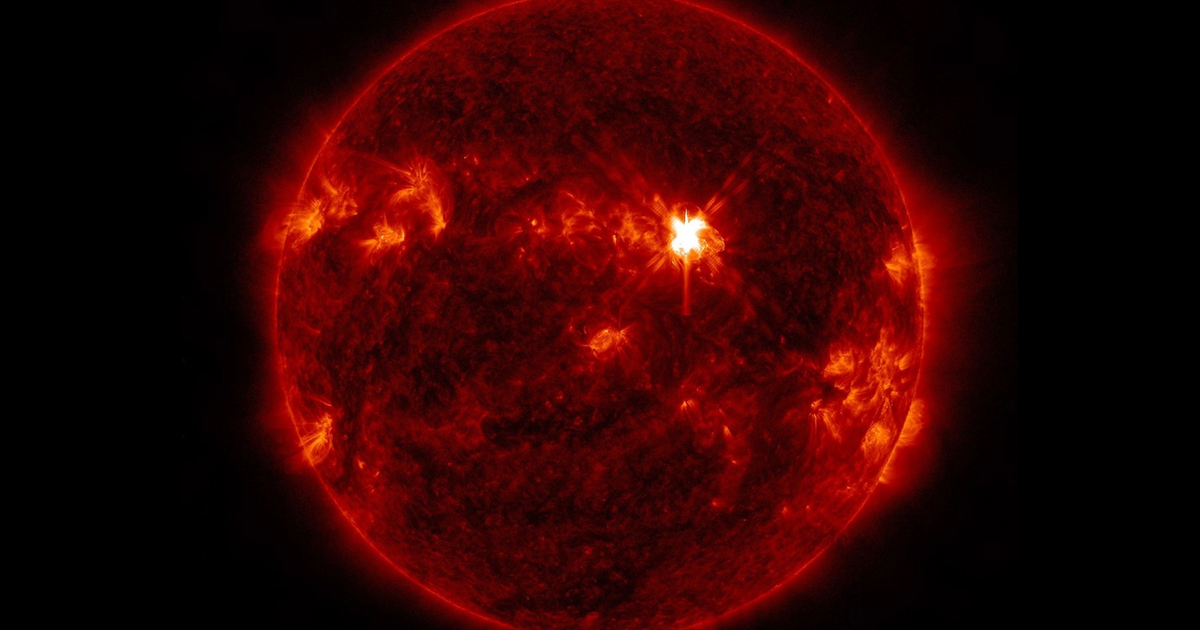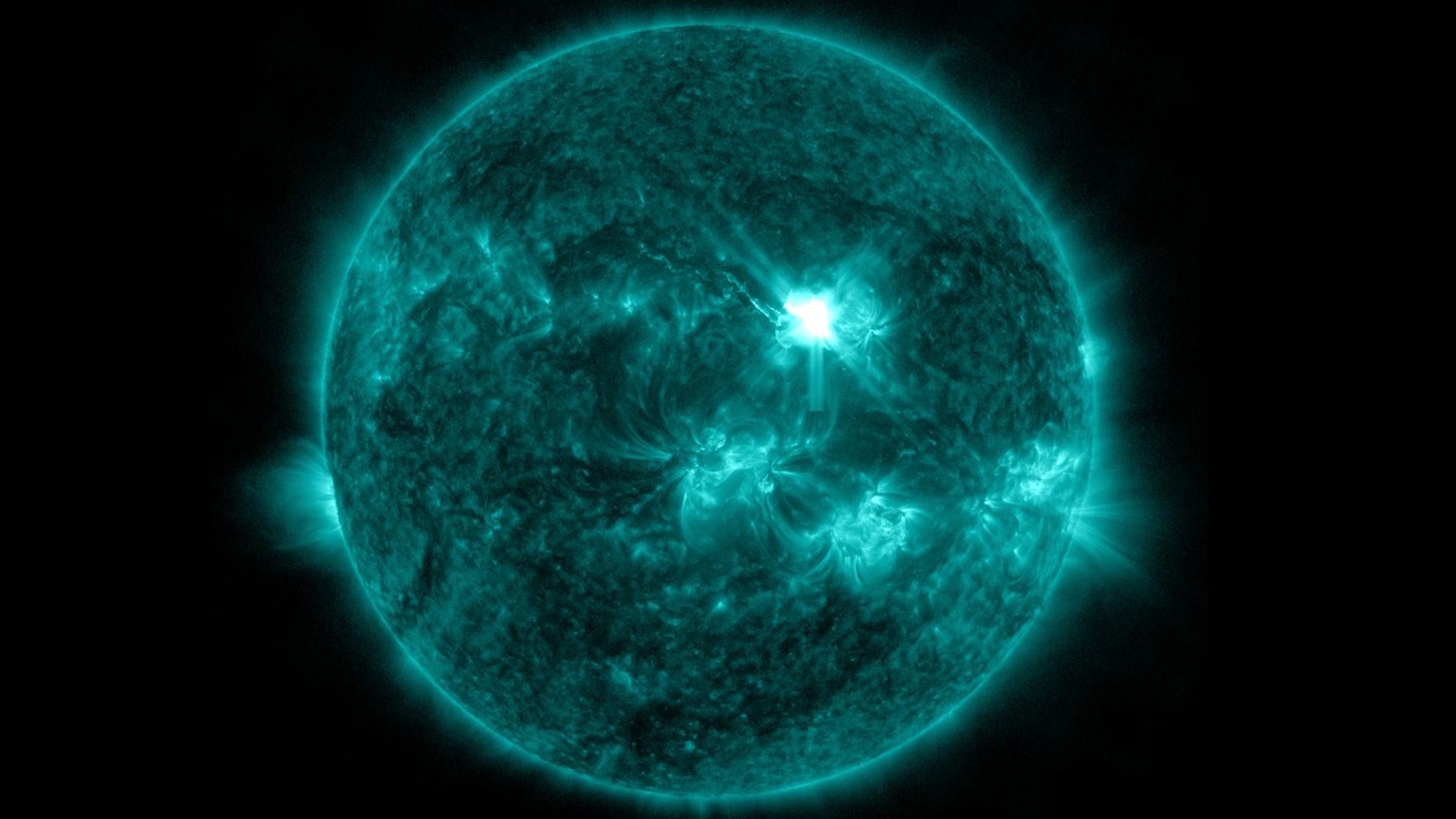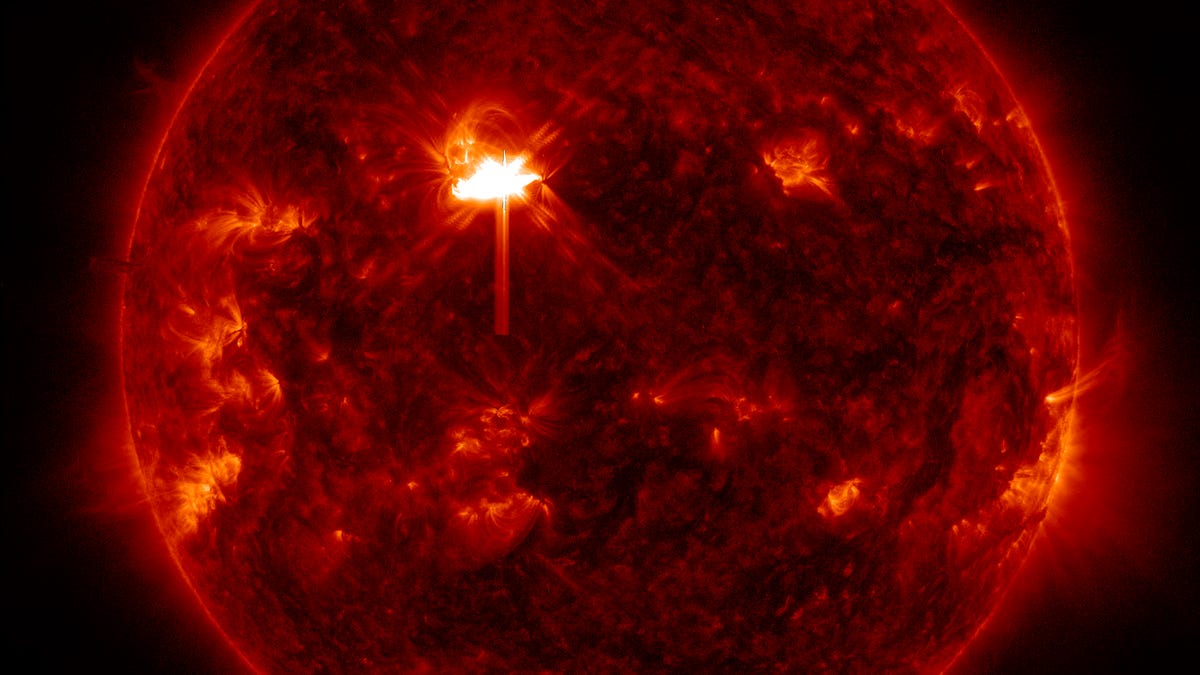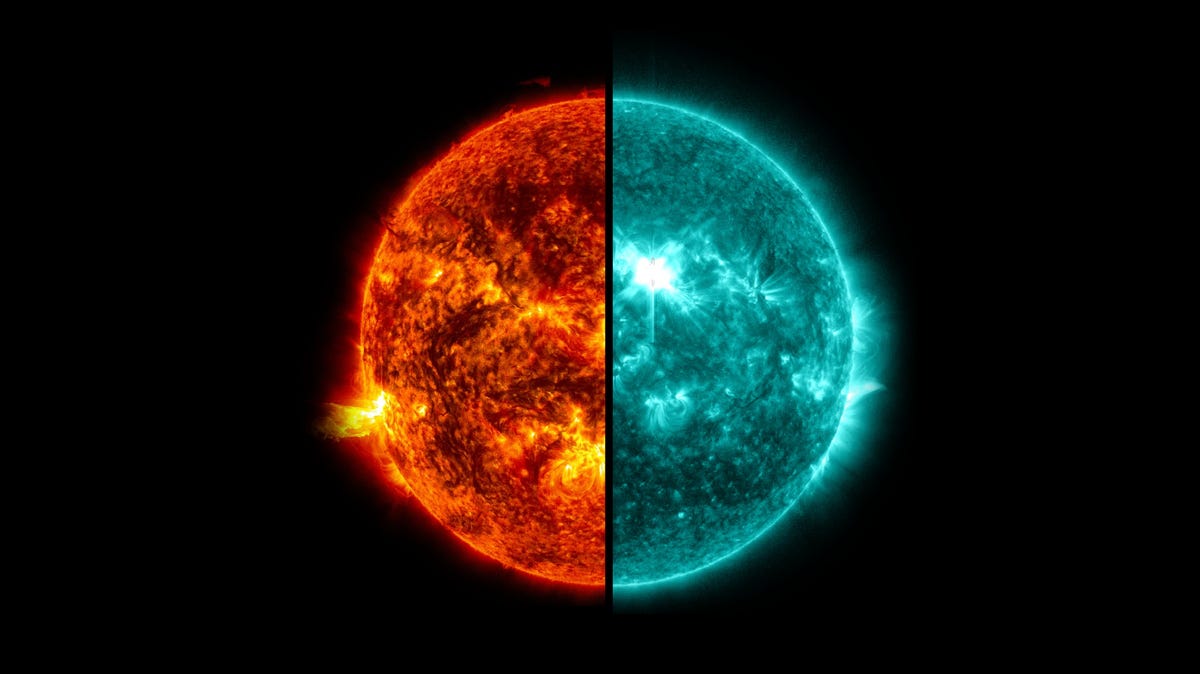
After weeks of reduced activity, the sun erupted with three powerful flares on a single day. That could send solar flares toward Earth, impacting electronics and making it possible to view the northern lights.
These blasts of solar radiation, known as coronal mass ejections, or CMEs, came from the AR4168 sunspot region on Aug. 3-4, according to Space.com and EarthSky. It fired its most powerful outburst, an M4.4-class flare, on Aug. 5. Space.com reports that the explosions could provide an opportunity to view the northern lights in northern Maine and Michigan on Aug. 8.
Unable to view our graphics? Click here to see them.
Although no significant "space weather" effects have been verified so far, one flare might have sent a small burst in Earth's direction. Space physics student and aurora chaser Vincent Ledvina posted on X that it has a 12% chance of impact and could arrive around midnight Coordinated Universal Time on Aug. 7, according to Space.com.
The Earth's atmosphere and magnetic field shield us from most of the sun's radiation, so solar flares are unlikely to harm people or animals directly on the surface. But the bursts can cause problems with technology and infrastructure.