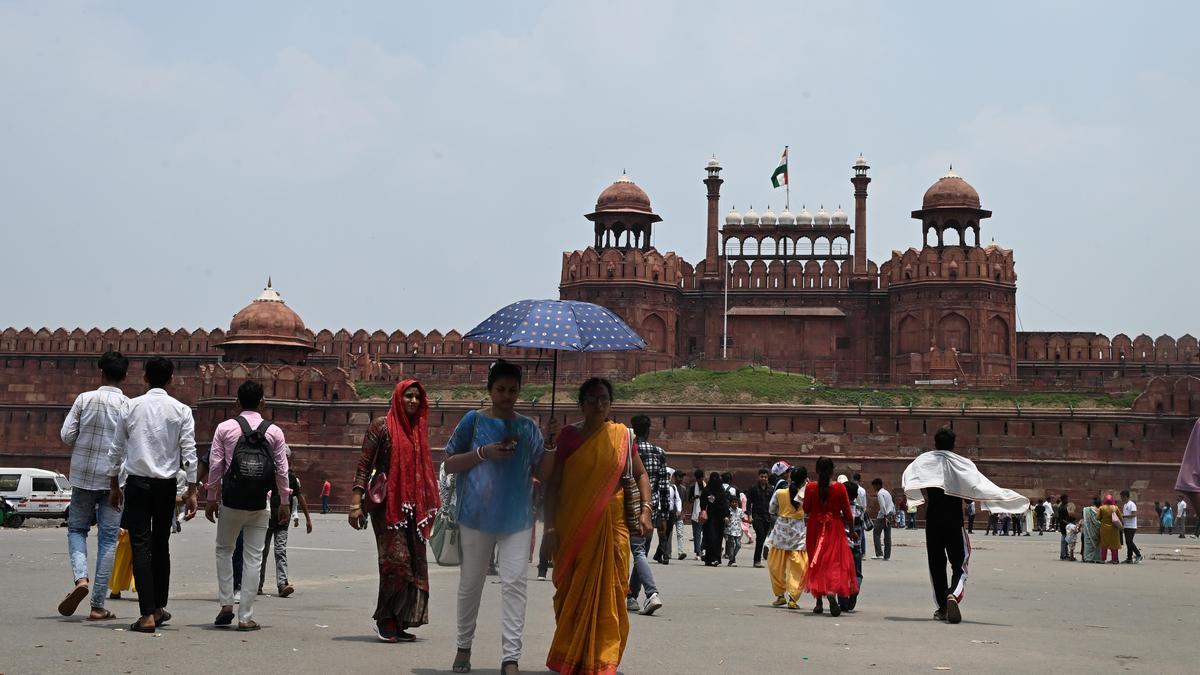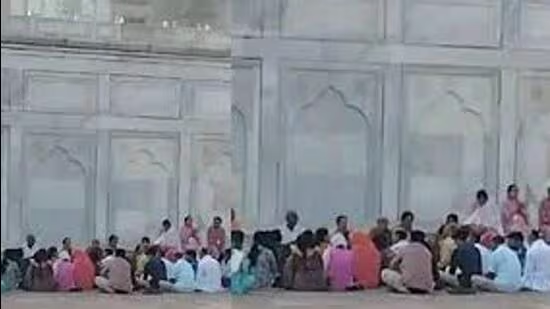
The Archaeological Survey of India’s circular in December on tourist guides at Red Fort has opened a larger debate: who gets to interpret the past?The circular states that only guides licensed by the Ministry of Tourism and endorsed by the Archaeological Survey of India may offer services inside the Red Fort. The rationale is that visitors deserve accurate information, accountability and professional standards.But Delhi’s monuments have been more than tourist attractions. They have served as open classrooms where historians, teachers, students and passionate citizens have conducted heritage walks to understand the city’s layered history. These heritage walks are often more about engaging with architecture, politics, memory and culture.The Archaeological Survey of India circular is an attempt to regulate whose interpretation and voices are allowed to reach the public. It ties in with the broader Hindutva project of selectively appropriating historical episodes and recasting history to suit its narrative, which is then widely amplified on social media, through popular literature and state-supported institutions.Professional historians emphasise the value of academic training. Historical scholarship requires methodological discipline, source criticism and intellectual rigor. But public history has never been the exclusive domain of those with formal degrees or government licences.Some of the most influential interpreters of Indian history have emerged from outside the discipline. Jawaharlal Nehru, trained in natural sciences and law, wrote The Discovery of India, a work that continues to shape understandings of India’s civilisational past. Its television adaptation, Bharat Ek Khoj, introduced generations of Indians to historical inquiry.Sohail Hashmi became one of Delhi’s most respected heritage activists without a formal degree in history. His work demonstrates that interdisciplinary scholarship and long engagement with historical spaces can enrich public understanding in ways that traditional institutions alone cannot.The same openness is visible within academia. At the National History Conference in Delhi in April, public figures invited to panel discussions included politicians such as Manoj Jha, Salman Khurshid and Shashi Tharoor, journalist Rajdeep Sardesai, and S Saadatullah Husaini, the president of the socio-religious organisation, the Jamaat-e-Islami Hind.The real problem arises when this openness is applied selectively. Non-historians, whose interpretations align with dominant intellectual currents, are welcomed and celebrated.Others, advancing equally well-sourced but ideologically different arguments, are dismissed as proponents of non-scholarly interpretations disseminated through informal channels, rather than being engaged with on their evidentiary and scholarly merits.This politics of convenience allows institutions and opinion-makers to champion pluralism in theory while narrowing the range of acceptable interpretations in practice. History becomes less a forum for debate and more a gatekeeping mechanism that determines which voices are legitimate and which are excluded.The widespread proliferation of “WhatsApp University knowledge” certainly requires scepticism and rigorous fact-checking. But its popularity also signals a wider desire to participate in historical discussions. Many turn to alternative platforms because they feel excluded from academic and cultural institutions.This is a crisis of misinformation but also shows why historical debate must be democratised.All interpretations do not deserve equal acceptance, and evidence, methodology and intellectual honesty are essential. But a rigorous history is achieved through wider public engagement, robust scholarship and debating competing claims.The ASI circular makes a valid point. Visitors to monuments must not be misled by fabricated narratives. Licensed guides are trained and can be held accountable in ways that informal interpreters such as heritage walk leaders often cannot. In a country where historical distortions circulate widely, some regulation is understandable.But regulation should not erase intellectual pluralism. History flourishes through contestation, scrutiny and plural voices, rather than administrative licensing or academic affiliations alone. Neither a single academic orthodoxy nor the state should have the sole authority to tell India’s past.More than licensed guides or tourist management, the Red Fort circular raises the question if India trusts its citizens to engage critically with multiple interpretations of their own history.Instead of regulating who has the right to tell history, the best path forward is to keep history open for all who approach it with interest, evidence and respect for the truth.Aeshvarya Thakur is an architect, writer and sociological researcher whose work spans architecture, heritage and politics of cultural representation.
ASI circular on tourist guides begs a question – who has the right to tell India’s history?
By restricting Red Fort to government-licensed guides, the Archaeological Survey of India is trying to control whose interpretations can reach the public.
674 words~3 min read