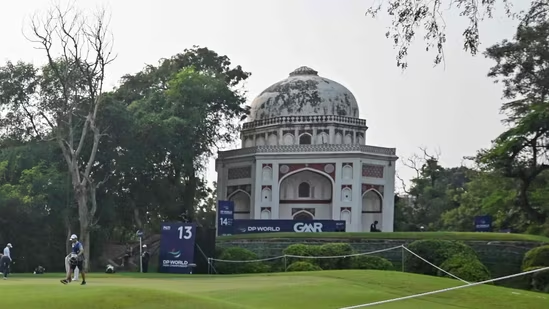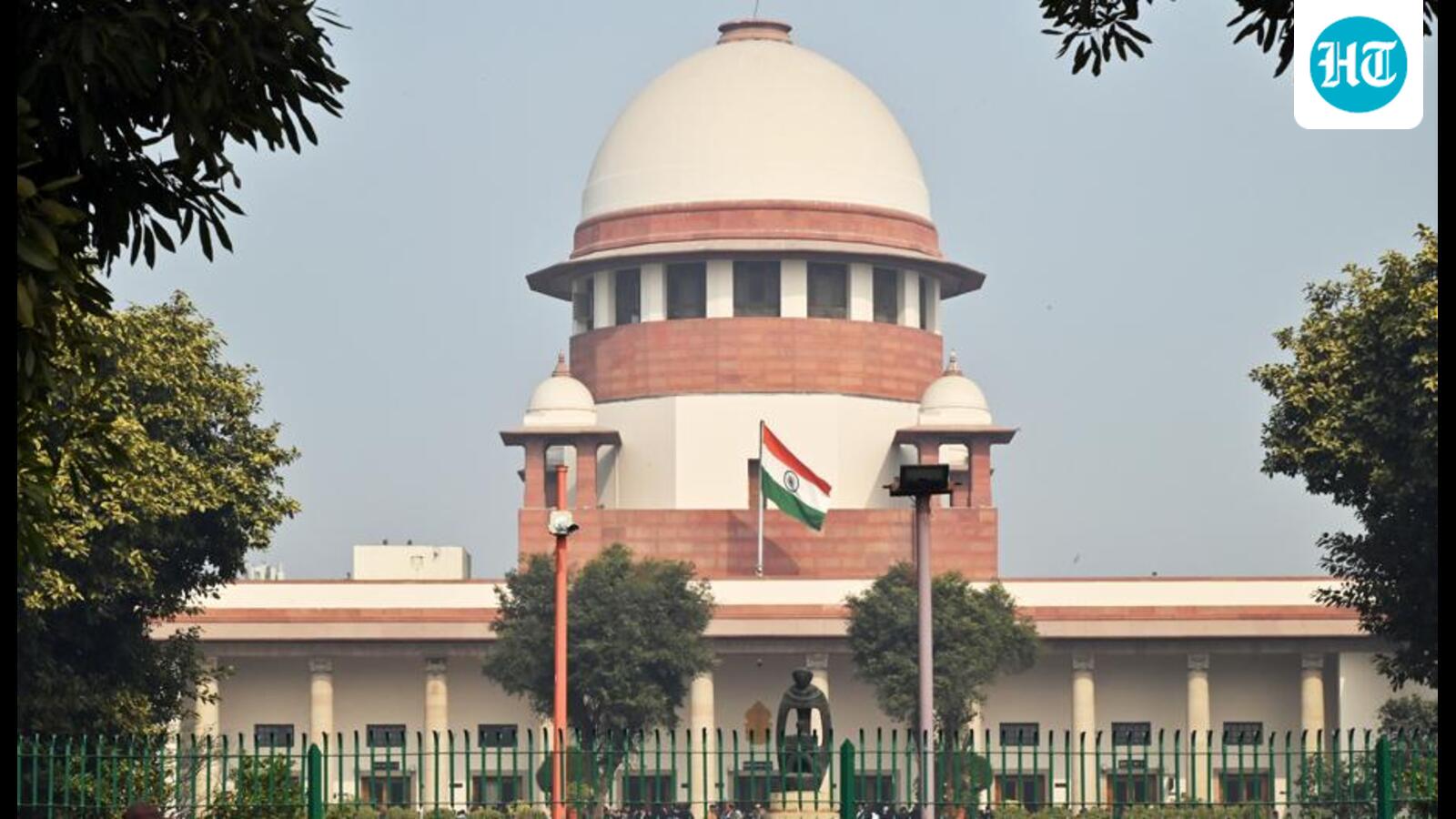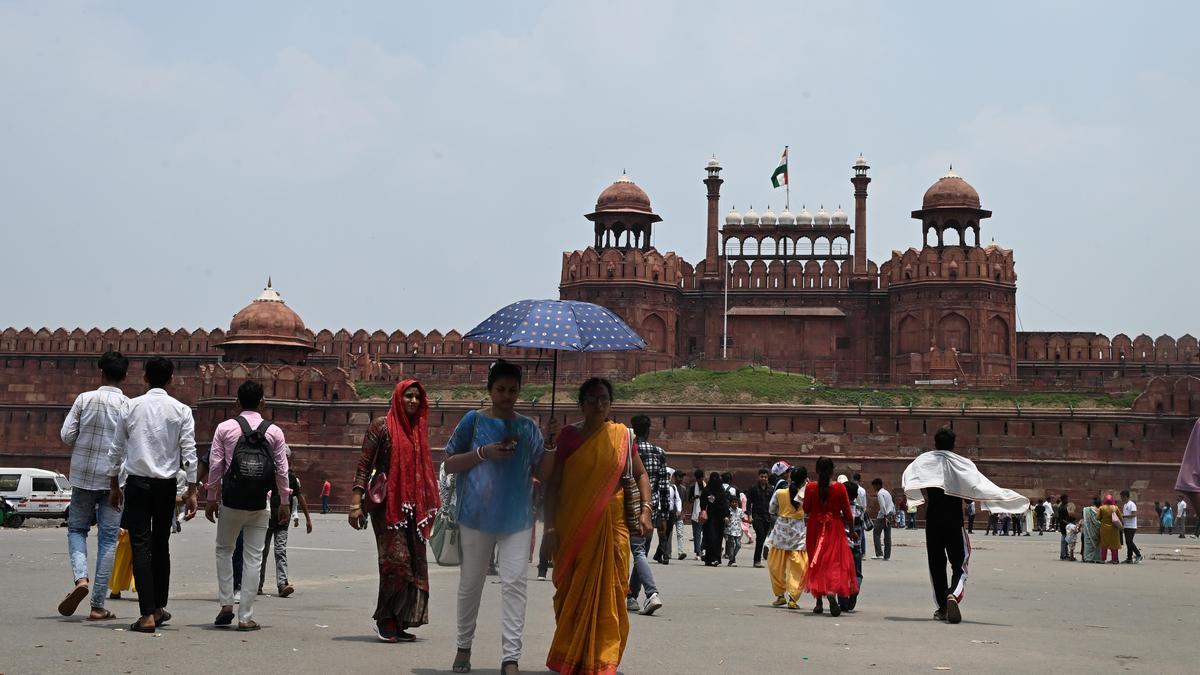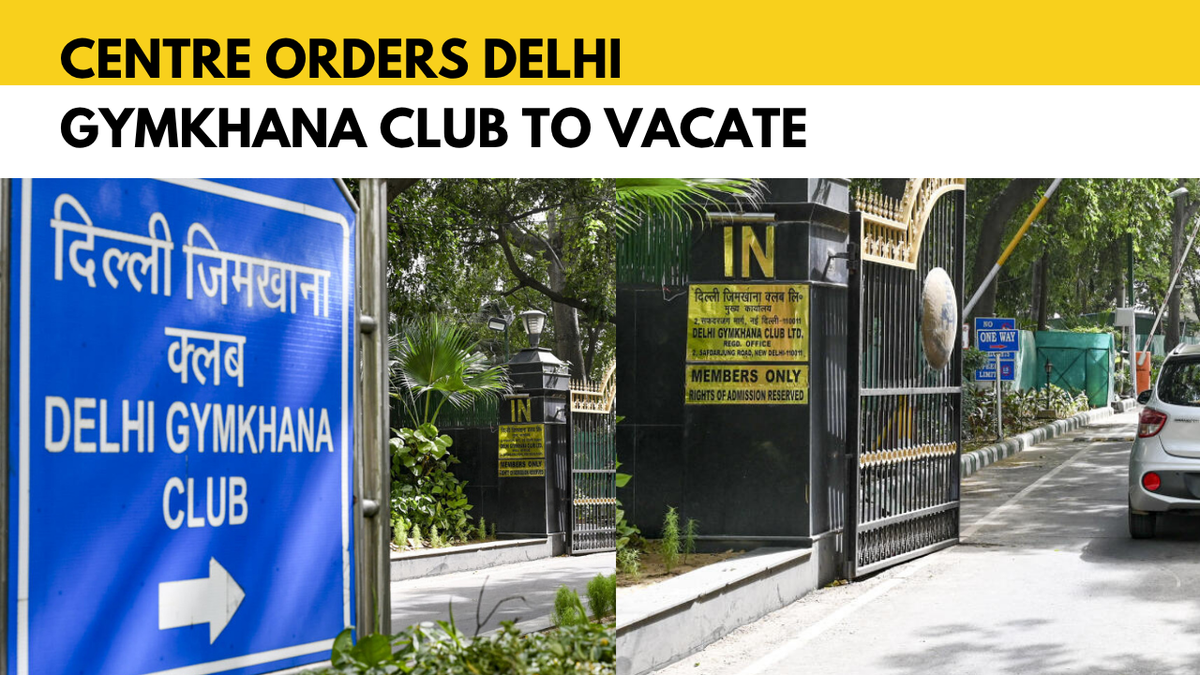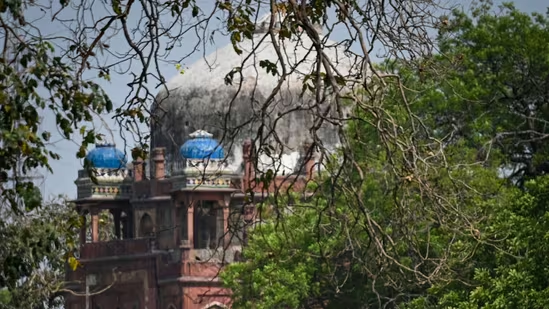
By the entrance gate of the Delhi Golf Club (DGC), pressed against its compound wall, stand two Mughal-era mausoleums that are at the heart of a legal battle that has once again pushed the Archaeological Survey of India (ASI), and its director general, Yadubir Singh Rawat, 67, to the headlines.ASI director-general Yadubir Singh Rawat battles encroachments, religious disputes and controversies surrounding the hosting of events at Delhi's ancient monuments (Sanchit Khanna/HT )From encroachments to religious disputes to controversies surrounding the hosting of events in ancient monuments, ASI is suddenly everywhere in the news. A sampling: on May 15, the Madhya Pradesh High Court ruled that the Bhojshala in Dhar was a Hindu temple based on ASI’s 2189-page report that relied heavily on Ground Penetrating Radar (GPR) technology.Court rulingsOn May 28, the apex court — hearing a petition by Rajeev Suri on neglected heritage structures — issued a personal notice to Rawat for what it described as a “callous and casual approach,” citing ASI’s failure to enforce the 100-metre prohibited zone around the monuments inside DGC. Heritage activists have long alleged the tombs remain effectively off-limits since the only entry runs through the club’s members-only gate with no separate public access point.Rawat's responseIn an interview, Rawat defended his organisation’s record on both fronts.“We have written multiple letters to the DGC asking them not to create any obstruction for people visiting the tombs. A guard is posted there. The tomb is open — anyone prevented from entering can complain directly to ASI. We have also done multiple restoration works there in the past,” he said.“On the court’s notice, we will file a comprehensive affidavit. All correspondence with the club will be placed on record, boundaries will be marked, and we will clearly set out which structures fall within the prohibited zone, what can be retained within permissible limits, and which ones need to be removed or demolished.”And on disputed religious sites, even as he acknowledged the limitation of technology, he cited the importance of physical evidence. “We use GPR, LiDAR, photogrammetry — but even with all these tools, you cannot get a completely accurate picture of what is beneath. The only way to get something completely conclusive and watertight is actual excavation,” he said.As far as Bhojshala is concerned, “the evidence is not just from the radar,” he added.“We found 94 sculptures, inscriptions in Sanskrit, Pali and Brahmi — ‘Om Namah Shivaya’, ‘Om Saraswatyai Namah’, an inscription naming King Naravarman of the Paramara dynasty. The findings document themselves.”On Kashi’s Gyanvapi, another disputed religious structure, Rawat was more cautious. “The structure the Hindu side calls a Shivling, and which the Anjuman Intezamia Masjid Committee maintains is a stone fountain used for ablution before namaz — that determination can only come after the court gives us directions. We will work within whatever the court orders.”But he admitted that ASI is being drawn into dealing with more such disputes.He pointed to the Jama Masjid within the Rudramahal complex in Vadodara, where a medieval mosque stands on 11th-century Hindu temple ruins, as an example of a long-pending case now seeing fresh movement. Rawat confirmed ASI received a request following a 2009 court order that referred the matter to the home ministry. “The ministry of home affairs has asked us to restore the site. One portion is already with ASI, the remaining structure is with a trust. We have asked for Section 144 to be lifted and full access to the entire structure. Without that, restoration cannot begin,” he said.Concerts and eventsAs far as events are concerned, Rawat said ASI receives continuous requests for private concerts, weddings and corporate functions at iconic sites. In July 2025, the Delhi government proposed opening 70-80 Delhi government-protected heritage monuments including Ghalib Haveli, Dara Shikoh Library, Maqbara Paik and Lodhi-Sayyid era tombs as wedding and event venues.That proposal does not cover ASI centrally protected monuments — over which the UT’s government has no jurisdiction. Even at Humayun’s Tomb, a centrally protected site, ASI scrapped a plan to host commercial events, extending visiting hours to 9 pm instead as an alternative.What ASI does permit and has expanded are sound and light shows at some monuments—Purana Qila’s Ishq-e-Dilli, Red Fort and Qutub Minar in Delhi, Golconda Fort in Hyderabad, Chittorgarh Fort in Rajasthan and at 12 new sites approved by the ministry of culture including Leh Palace, Shore Temple in Tamil Nadu and Raigad Fort in Maharashtra.There are 414 ASI monuments nationally that are actively encroached, Rawat said, adding that ASI has been trying to resolve the issue.
Have repeatedly told Delhi Golf Club not to obstruct tomb visitors: ASI chief
ASI director-general Yadubir Singh Rawat has been battling demands of access to ancient monuments their use as commercial venues | India News
755 words~3 min read