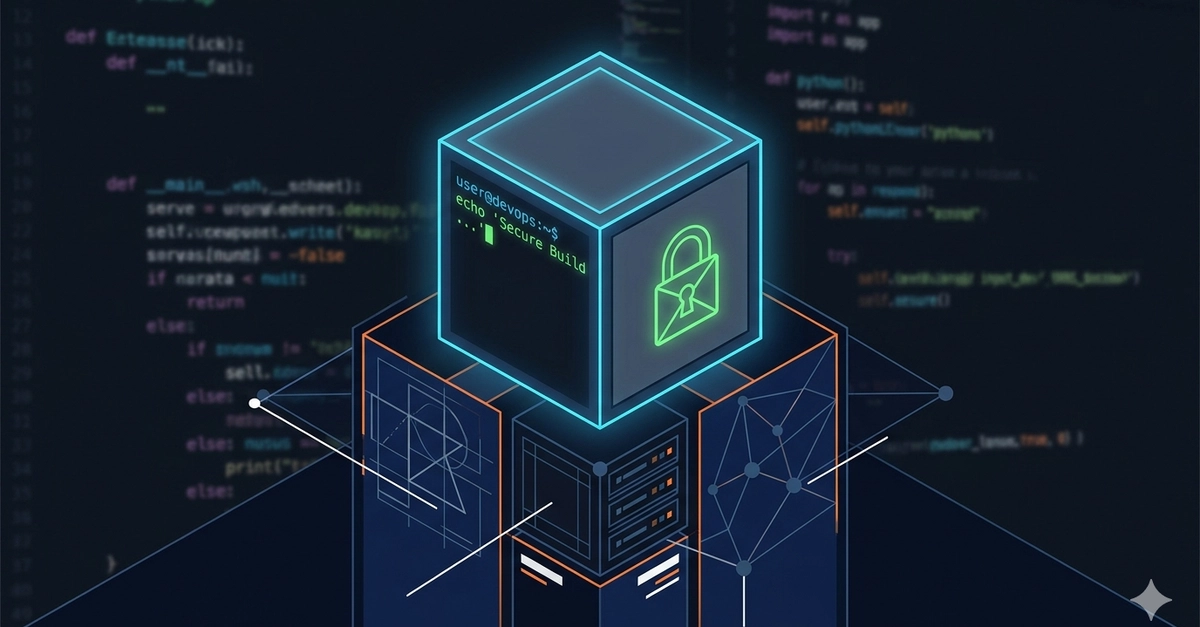
While the tech world is hyping up consumer benchmarks from Google I/O, backend engineers are missing the real architectural leap. Google quietly solved the ultimate agentic nightmare—untrusted code execution—by baking native, ephemeral, and air-gapped Linux sandboxes straight into their SDK. Here is a look at the DevOps infrastructure you no longer have to build yourself.📝
The Core Problem: The Architectural Nightmare of Untrusted Code To appreciate Google's update, we must look at the current state of building code-executing AI agents
[1].If you tell a model to "analyze this CSV and generate a chart," it cannot just output text [1]. It needs to write Python code, install libraries, and run the script [1].For a backend engineer, letting an LLM execute arbitrary code on a server is the ultimate security nightmare. Building a secure, in-house environment to handle this introduces three massive architectural roadblocks.1. The Container Lifecycle Trap (Docker Management)Managing Docker containers programmatically at scale is a DevOps quagmire.The Reality: You must build a custom queue system to spin up containers on demand.The Friction: Containers must be provisioned instantly to avoid killing user experience.The Payload: Keeping a pool of warm containers active destroys your cloud budget.The Cleanup: You have to write complex garbage collection logic to ensure dead containers are completely wiped and destroyed after every session.