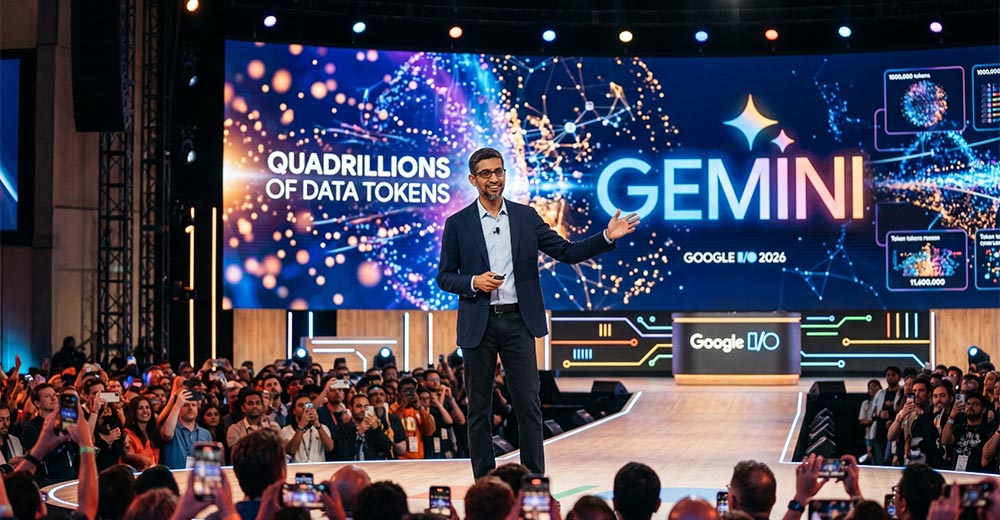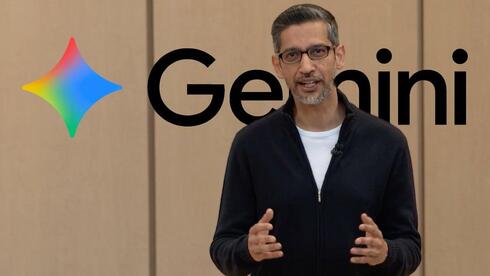
Google unveils Gemini agents and a generative search overhaul in a direct push against OpenAI and Perplexity, risking ad revenue, publisher ties, privacy and margins as it tries to preserve its internet dominance Google’s annual developer conference, Google I/O 2026, will be remembered as the turning point when the tech giant stopped defending itself against the AI revolution and decided to lead it, even at the cost of temporarily damaging its most valuable asset: search.The shift from the era of chatbots that mostly “answer questions” to the era of autonomous agents operating in the background 24/7, such as Gemini Spark, alongside a major upgrade to the long-standing search engine, signals a new strategy from Mountain View: an all-fronts offensive against OpenAI and Perplexity AI.3 View gallery Google CEO Sundar Pichai (Photo: Google)The announcements of Spark and Gemini Omni reveal Google’s strongest card in the AI war: its system-wide integration. While competitors like OpenAI must reach users through external apps or partnerships, Google controls the content and productivity pipelines of billions of people through Gmail, Google Calendar, Google Docs, the Google Chrome browser and the Android operating system.On one hand, this represents a dramatic leap in user experience and productivity. The ability to assign an agent a complex task such as comparing vendors and scheduling a meeting, then closing the laptop while the system completes the work end to end, is the realization of the AI vision.The Omni video model, functioning as a “super-agent” orchestrating other models and enabling dynamic editing, shows that Google has cracked the architecture needed to turn AI from a passive assistant into an independent worker.However, alongside the technological excitement, the move carries significant risks. First, the issue of reliability and hallucinations in AI models has not been fully solved. When a chatbot makes a textual mistake it may cause inconvenience, but when an autonomous AI agent places the wrong order or executes an action on behalf of a user, it can lead to real financial and legal damage.3 View gallery Gemini Spark (Photo: Google)Google stressed that sensitive actions such as payments and file deletion will require explicit user approval, but the line between full automation and human “bottlenecks” that degrade the experience remains blurred.Beyond that, the always-on architecture behind systems like Spark requires massive computing and energy resources. Wall Street analysts are already raising concerns about potential pressure on tech companies’ profit margins due to the operational costs of such models, especially while services are currently offered for free.There is another issue. Unlike Anthropic and OpenAI, Google does not broadly allow external API access. This means that in AI, it has created a closed-garden model, similar to Apple, where only its own models and services benefit from the most advanced capabilities, all under Google’s terms.The most dramatic shift comes from search itself, the economic engine that has powered Alphabet Inc. for the past 25 years. The move to Generative UI, personalized interfaces and finished answers such as interactive fitness plans instead of blue link lists, is nothing short of a seismic change.Here lies Google’s biggest strategic downside: cannibalization of its advertising model. Fewer clicks to external websites mean less exposure to ads through Google Ads, the company’s primary revenue source.Analysts argue that Google has been pushed into a corner: it is forced to destroy the old internet model before its competitors do it first. This is a classic “innovator’s dilemma”, the business theory describing the paradox in which successful companies fail precisely because they manage their business too well.Moreover, the move is expected to deepen tensions between Google and publishers and content creators online. If the new search experience delivers final answers and eliminates the need to visit websites, what incentive will content producers have to continue creating high-quality information that feeds those same models?3 View gallery Google's new vision for search (Photo: Google)It is increasingly clear that the industry understands Google is leveraging its scale advantage. While Perplexity offers fast, focused AI search and OpenAI focuses on advanced multimodal capabilities, Google is offering a holistic platform embedded in everyday life.Providing these tools for free and at scale is an aggressive move designed to crush agile startups before they can establish a stable business model. In other words, Google is using its size to strangle competition before it can fully emerge.Google proved at Google I/O that it is no longer in defensive mode. The shift to intelligent agents and the transformation of search are bold moves that could dramatically improve end-user productivity, but they come with a heavy price: complex privacy risks, massive infrastructure costs and a direct threat to the economic model that powers the web.The coming months, as these systems roll out to mass users, will determine whether this calculated gamble preserves Google’s crown as the king of the internet or opens the door to a broader restructuring of the tech world.
Google I/O 2026: tech giant launches autonomous AI era, transforming search at cost to core business
Google unveils Gemini agents and a generative search overhaul in a direct push against OpenAI and Perplexity, risking ad revenue, publisher ties, privacy and margins as it tries to preserve its internet dominance
808 words~4 min read