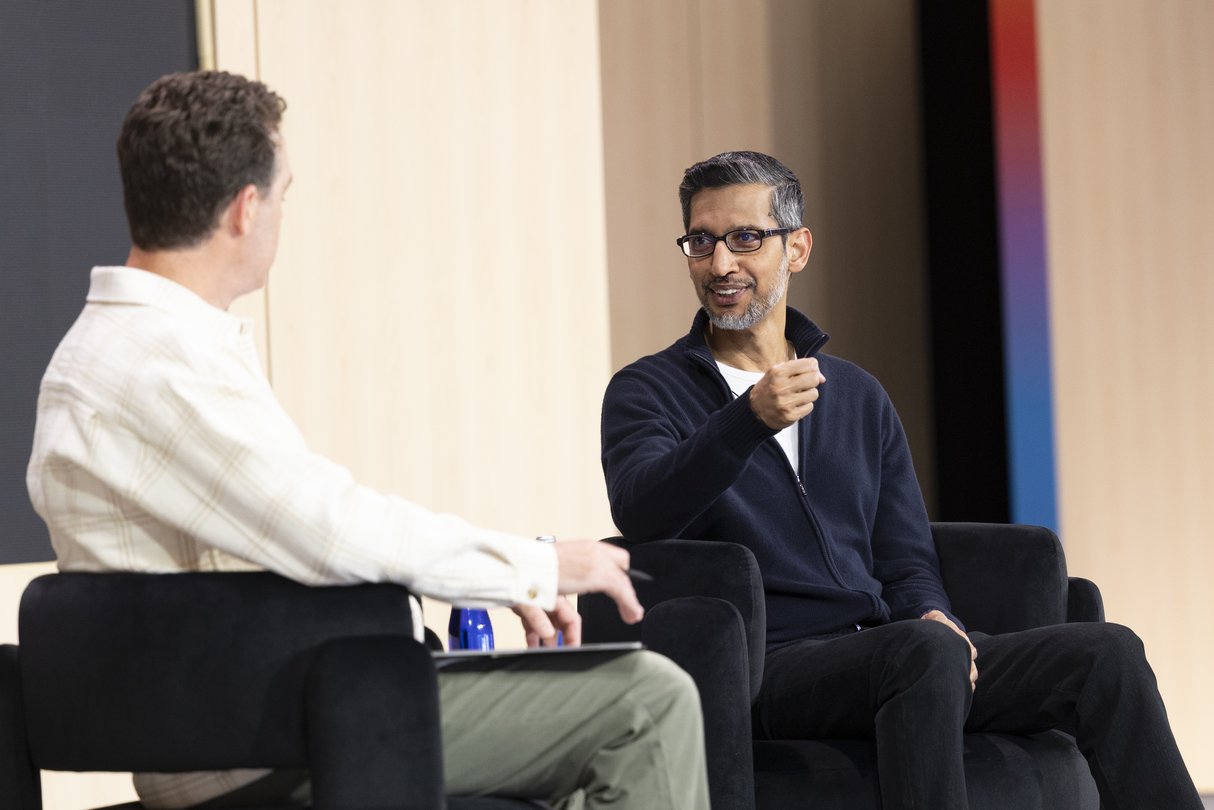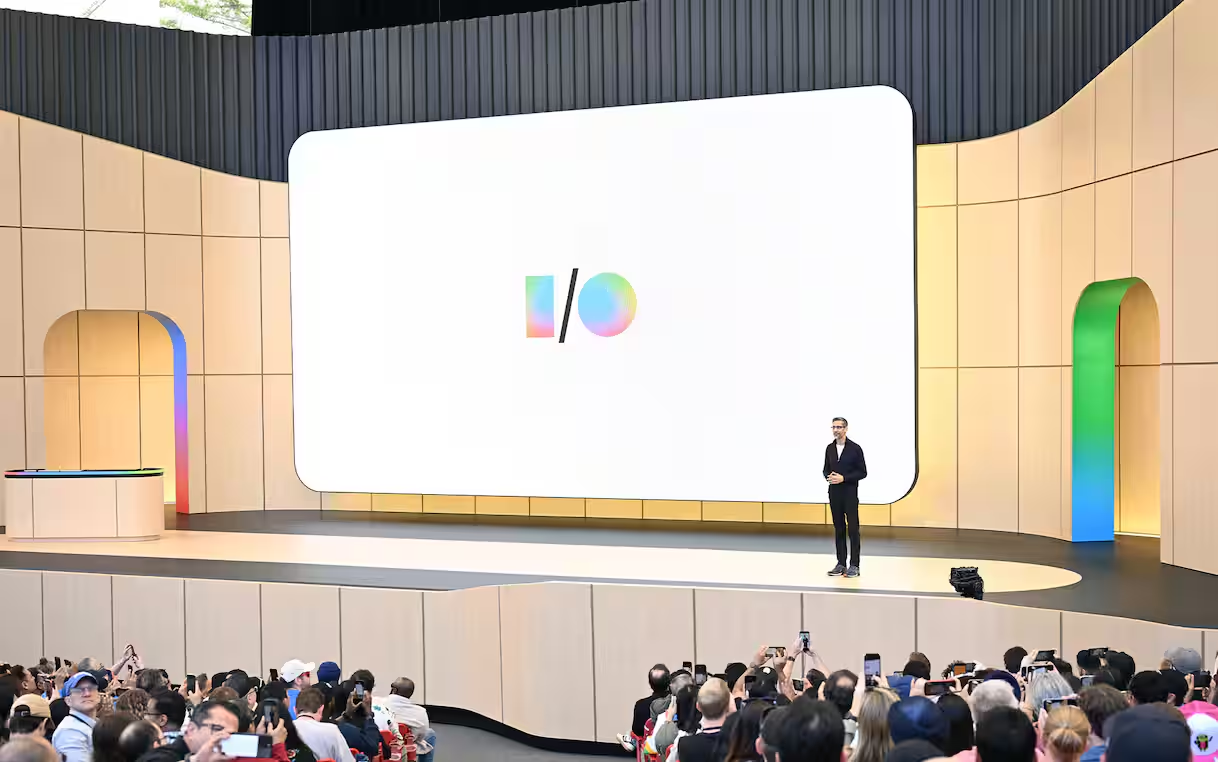
Google used I/O 2026 to demonstrate how deeply AI is being woven into nearly every layer of its ecosystem — from search and productivity tools to commerce, development platforms, and wearable computing.
CEO Sundar Pichai used the keynote to mark 10 years since the company declared itself an “AI-first” organization. Today, that strategy has evolved from a long-term vision into the foundation of nearly every major Google product initiative.
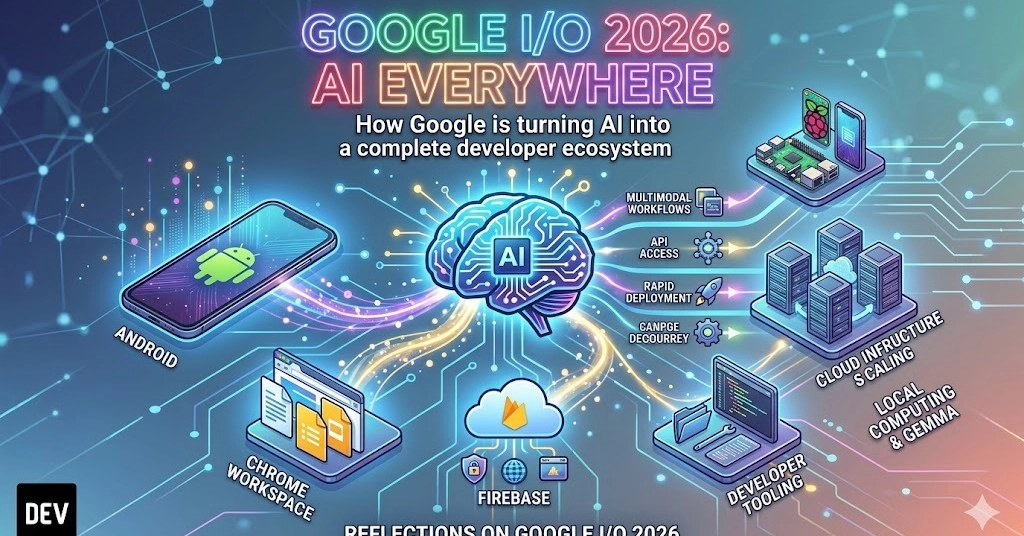
Google is no longer simply adding AI features to products; it is building a full-stack AI ecosystem spanning hardware, models, software, and services. From custom silicon to foundational models, the company is assembling one of the industry’s most formidable AI platforms.
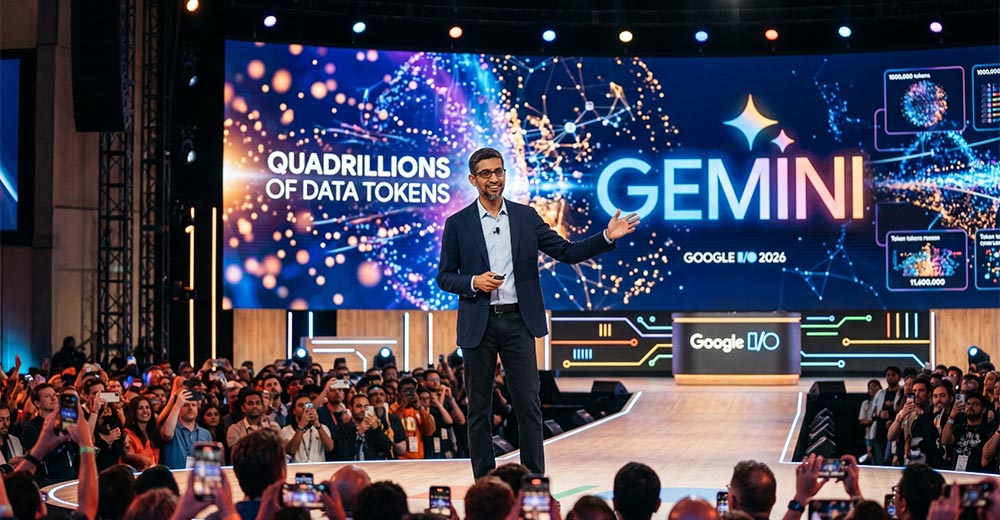
The sheer scale is staggering. The company has moved from processing 9.2 tokens initially to quadrillions of tokens today. The developer community has swelled to 8.5 million users. Five of Google’s flagship products now boast over 3 billion users each, with Search alone bringing AI benefits to 3.5 billion people.
To power this, Google is aggressively expanding its infrastructure, scaling its capital expenditure from $31 billion to roughly $90 billion. A vast portion of this investment is poured directly into developing its proprietary TPU 8t and 8i silicon, enabling it to distribute training seamlessly across the largest cluster on the planet — over 1 million TPUs.