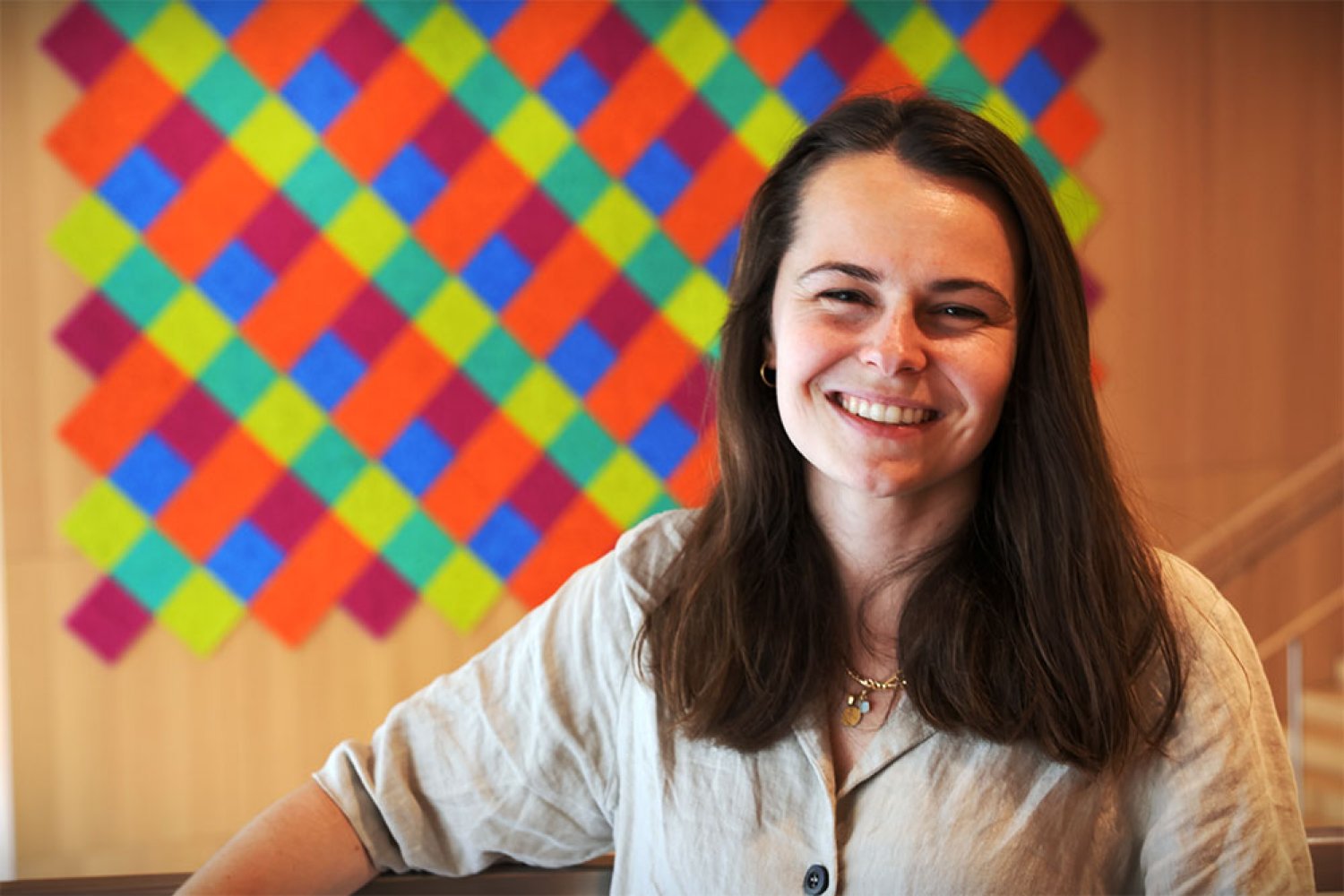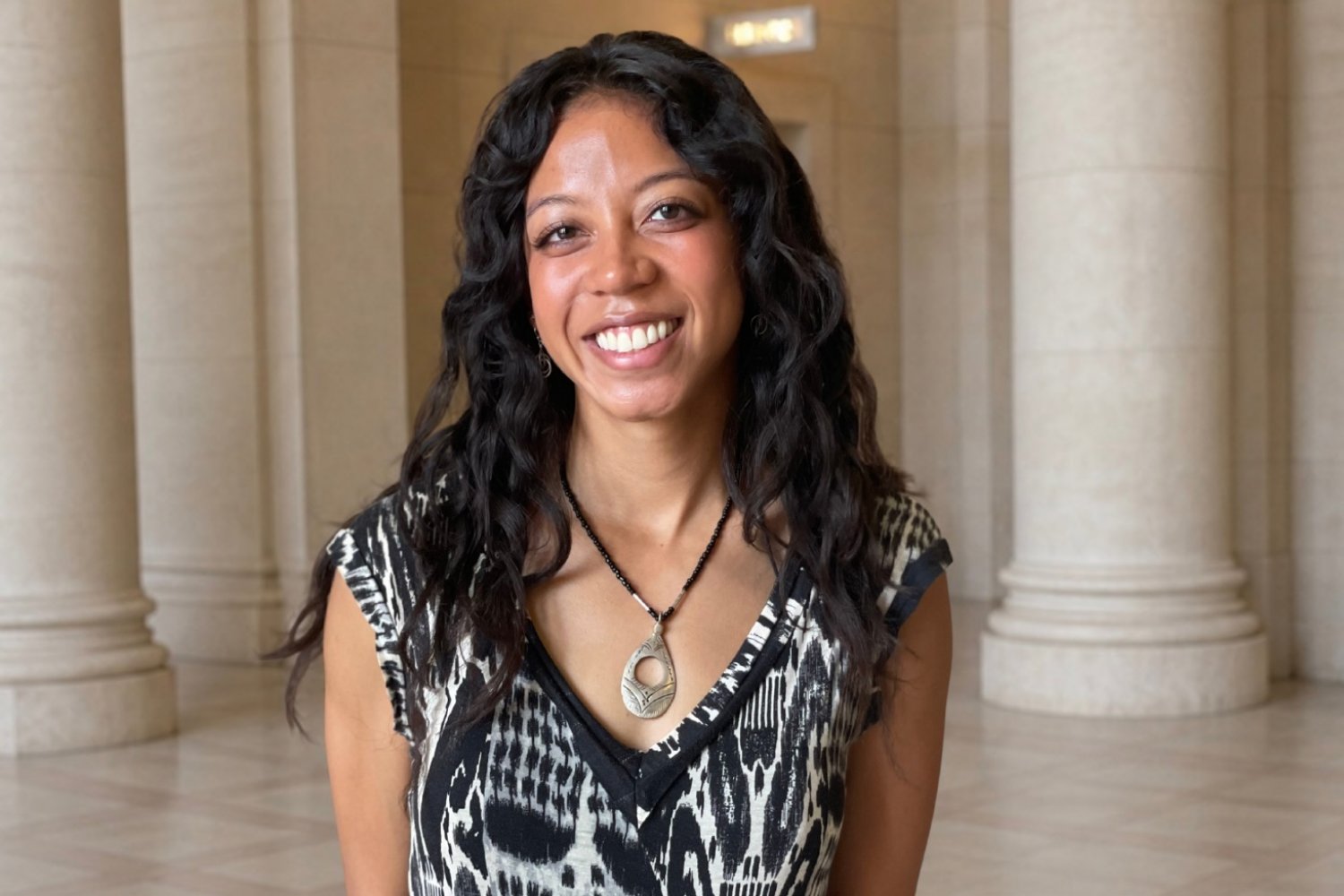
Madison Davis, A.B./S.M. '26 in computer science (Eliza Grinnell/SEAS)
Madison Davis was sitting in her high school physics class one day when her teacher brought in and took apart a computer from the 1960s. She'd always been interested in computers, and by middle school was already learning how to code and program. But she’d never thought about the hardware – the guts of the computer that actually make it function.“It blew my mind, because I had no idea that's what existed inside a computer,” she said. “So going into college, one of the things I wanted to focus on was how we bridge that software-hardware gap.”Bridging that gap became a guiding focus as Davis pursued an AB/SM combined degree in computer science and studied economics at the Harvard John A. Paulson School of Engineering and Applied Sciences (SEAS). She joined clubs such as the Harvard Undergraduate Aerospace Collective (HUAC), Harvard Undergraduate Robotics Club (HURC) and Harvard Computer Society Product Lab. She has been a teaching fellow in “CS1410: Computer Hardware;” and pursued internships at tech companies, including Apple, where she designed software tools to help its various hardware teams. She will be returning for a full-time position after graduating.“With these clubs, you weren't just always doing computer work,” she said.” You had to understand the firmware implications. You had to understand the design and the costs of shipping things. It felt very akin to what you would experience in the real world.”Growing up in the Chicago suburb of Burr Ridge, Davis has always pushed herself academically, earning valedictorian honors from her high school, Saint Ignatius College Prep. Though there were several strong universities much closer to home, she chose Harvard for its mix of academic rigor and familiar-feeling campus. She took her first first graduate-level CS course in the fall of her sophomore year so she could enroll in the combined AB/SM.“I came into Harvard with a clear goal of going into computer science,” she said. “The concurrent Master's program was a good way to kill two birds with one stone. I found as I took more of those graduate classes that they were super worthwhile and rewarding. They were practical and answered a lot of questions that I always had, and offered a lot more breadth of content versus just taking the undergraduate courses.”It didn’t take long for Davis to begin exploring the full computer science curriculum at SEAS, as well as its clubs. She joined HUAC and the Product Lab in the spring of her freshman year, and eventually took on larger leadership roles in both: she’s the bus computing team lead with HUAC, designing the software that integrates with all of the different mechanical and electrical components of the club’s cube-shaped satellite. The club recently achieved a major milestone, as their CubeSat became the first Harvard student-built satellite to launch into orbit. Davis turned her work with the CubeSat into a senior project advised by Woodward Yang, Gordon McKay Professor of Electrical Engineering and Computer Science.“It's eight years of work, and hundreds of people that have been involved in it,” said Davis, who traveled to Florida to watch the launch. “I wasn't just interacting with computer scientists all day. I was learning a lot from people with physical sciences backgrounds like biology or physics as well as mechanical engineering and electrical engineering. You had to learn on the fly in a timed manner, because you had to hit the deadlines to complete the actual satellite.”