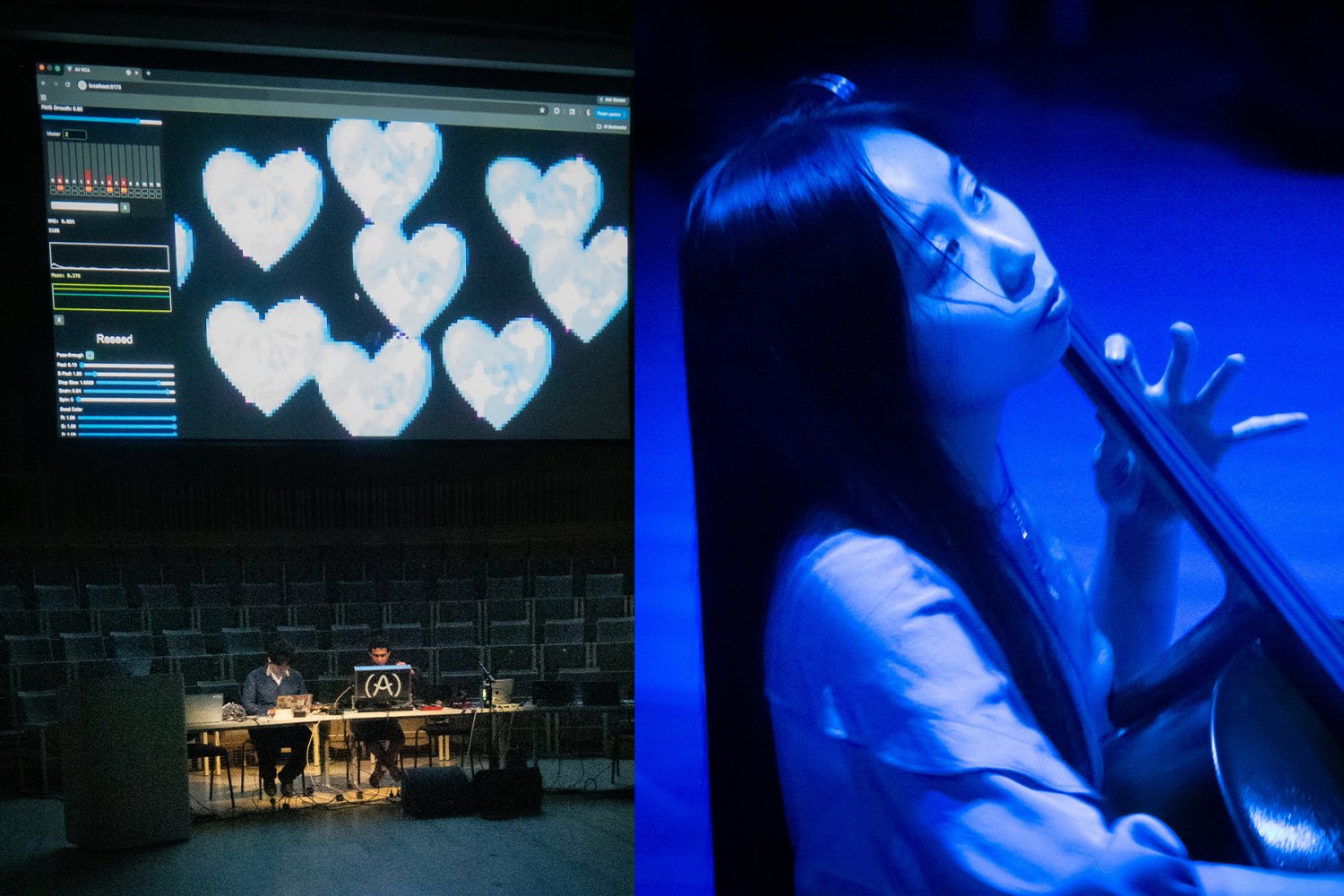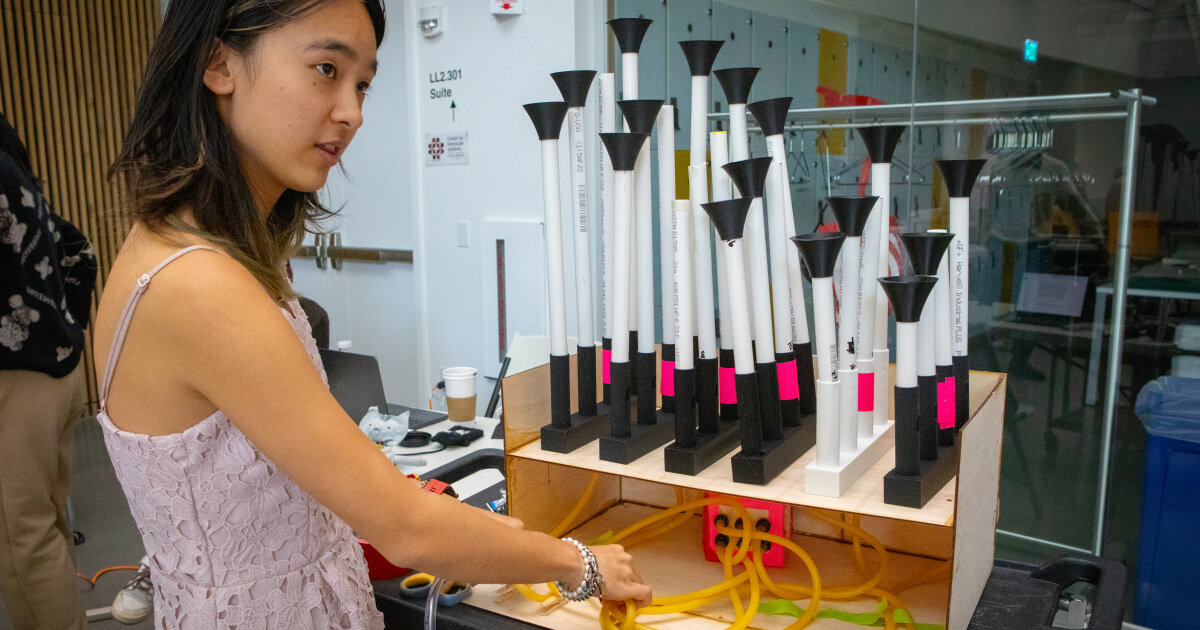
A Harvard student plays "Accordion to Plan," by Mike Thomas and Leyna Blume (Eliza Grinnell/SEAS)
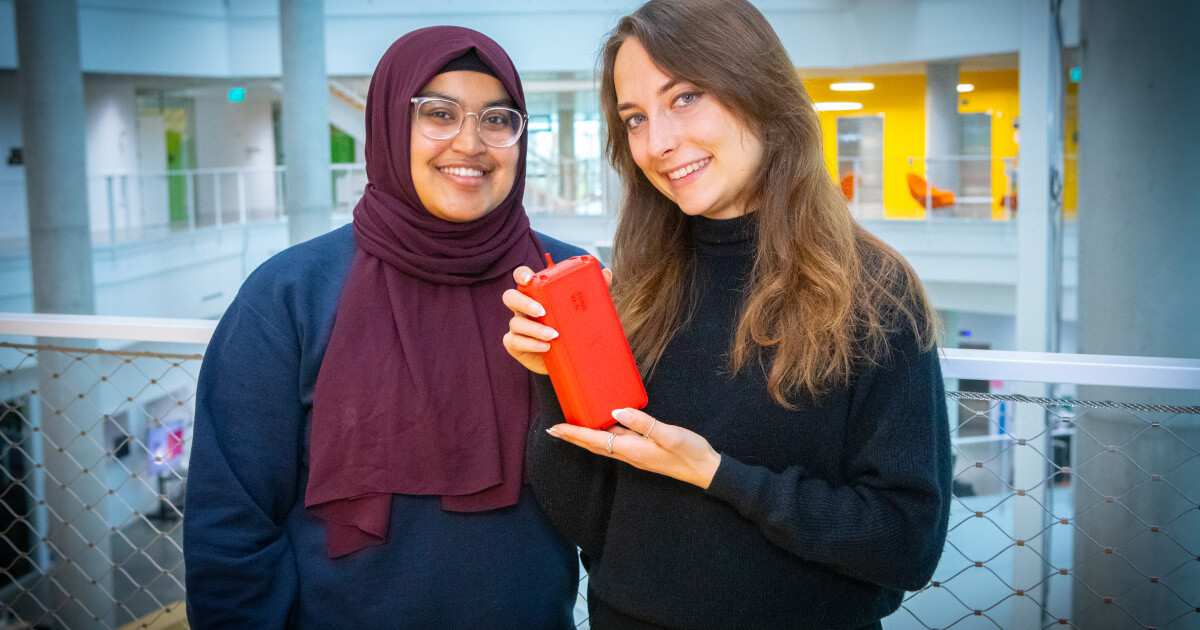
A distance tracker, an algorithm, pressure sensors — as students in “GENED1080” learned, anything can become a musical instrument with a bit of engineering know-how.“Creativity is the core of the class,” said instructor Robert Wood, Harry Lewis and Marlyn McGrath Professor of Engineering and Applied Sciences. “Students come with all sorts of backgrounds and interests and things they’ve been exposed to, and I see that come through in their projects. Somebody might already play an instrument and want to go deeper, but they might also take something else from their lives, like a video game or a sport, and then want to instrument that. The course is flexible enough to hopefully allow them to do that.”The annual festival for “GENED1080: How Music Works: Engineering the Acoustical World” is the culmination of a course that brings engineering and non-engineering concentrators alike to the Harvard John. A Paulson School of Engineering and Applied Sciences (SEAS). Taking place at the Science & Engineering Complex, students filled the lowest atrium with a mix of electronic sounds, percussion and acoustic music.“Coming from an electrical engineering background, most of my labs have been focused on replicating predefined circuits,” said Grace Hur, a sophomore electrical engineering concentrator. “I really enjoyed the creative component of this course, where we could get our hands dirty with actually prototyping things that we wanted to make.”Hur and Cassidy Crabb, a sophomore studying economics and theater, dance and media, co-created “Kart-Tune.” They took a white plastic steering wheel game controller used in the “Mario Kart” video game series, then programmed it to play a range of pitches depending on how the wheel is spun.