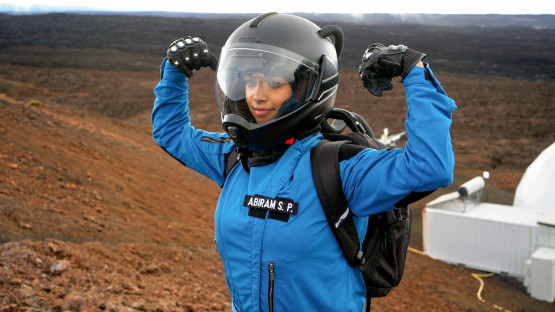
The massive steel tubes at NASA’s Kennedy Space Center towered into the sky, but 7-year-old Priya Abiram had no idea what they were. “They’re rockets,” she remembered her dad telling her. “They’re the hardest things that humans have ever built, and it is even harder to fly them.”Fifteen years after that vacation in Florida where she started dreaming of space, Abiram ’25 is graduating with her M.Eng in aerospace engineering and heading for a career in the space industry, advancing the understanding of how human bodies work in space and how to build systems to keep them alive. She serves as the director of research at the nonprofit Operation Period, where she and her colleagues plan to fly a device that simulates a uterus to space to study how microgravity impacts fluid movement, menstrual flow dynamics, and the performance of pads and tampons. Abiram is working toward a future where periods are no longer taboo and when long-duration space flight without suppressing menstruation is commonplace. As humans explore space and possibly one day live on other planets, space travel must be designed for all bodies, she said. “Space systems are built around this default human body,” she said. “I want to be able to change what it means in terms of not only accessibility to space, but also on Earth. Women’s health has been on the back burner for so many years.”Journey to spaceAbiram has had her license to fly a plane solo before she could drive a car. In ninth grade, she joined the Civil Air Patrol, the volunteer auxiliary of the U.S. Air Force. That opened doors to learning how to fly. She also became cadet commander of her unit, leading 120-plus students. She created an aerospace research program there, with modules in space medicine, model rocketry, aviation and robotics. The program expanded nationwide among other units.
Grad hopes to advance women’s health in space | Cornell Chronicle
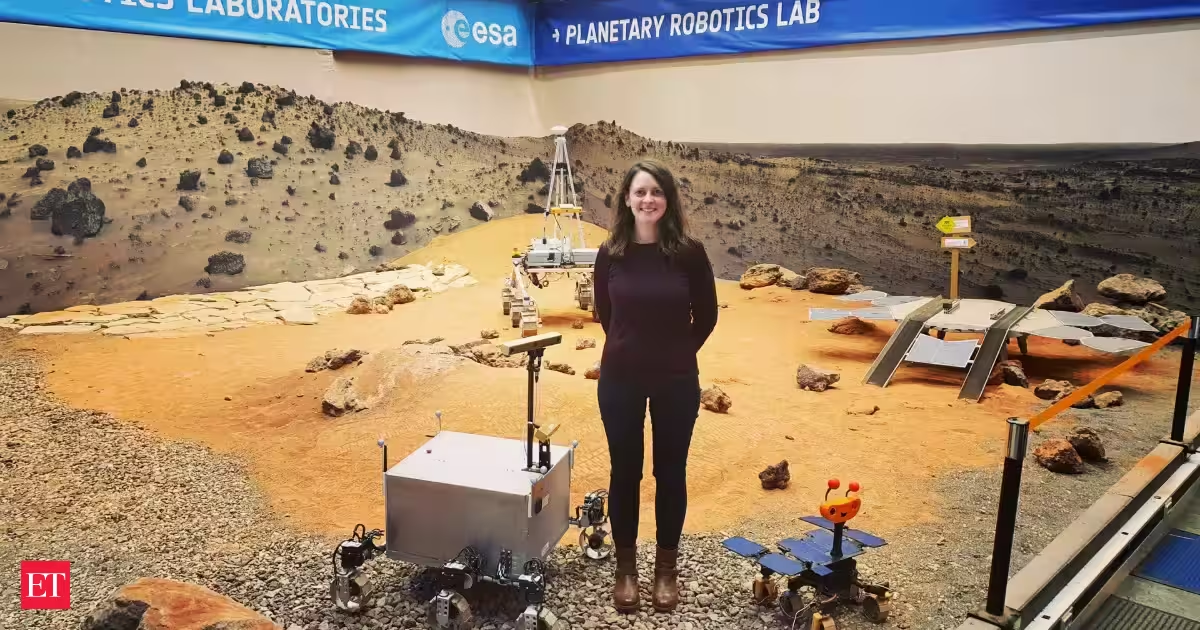
Duffield Engineering graduate Priya Abiram ’25 is working toward a future where space travel is designed to support all bodies.
978 words~4 min read