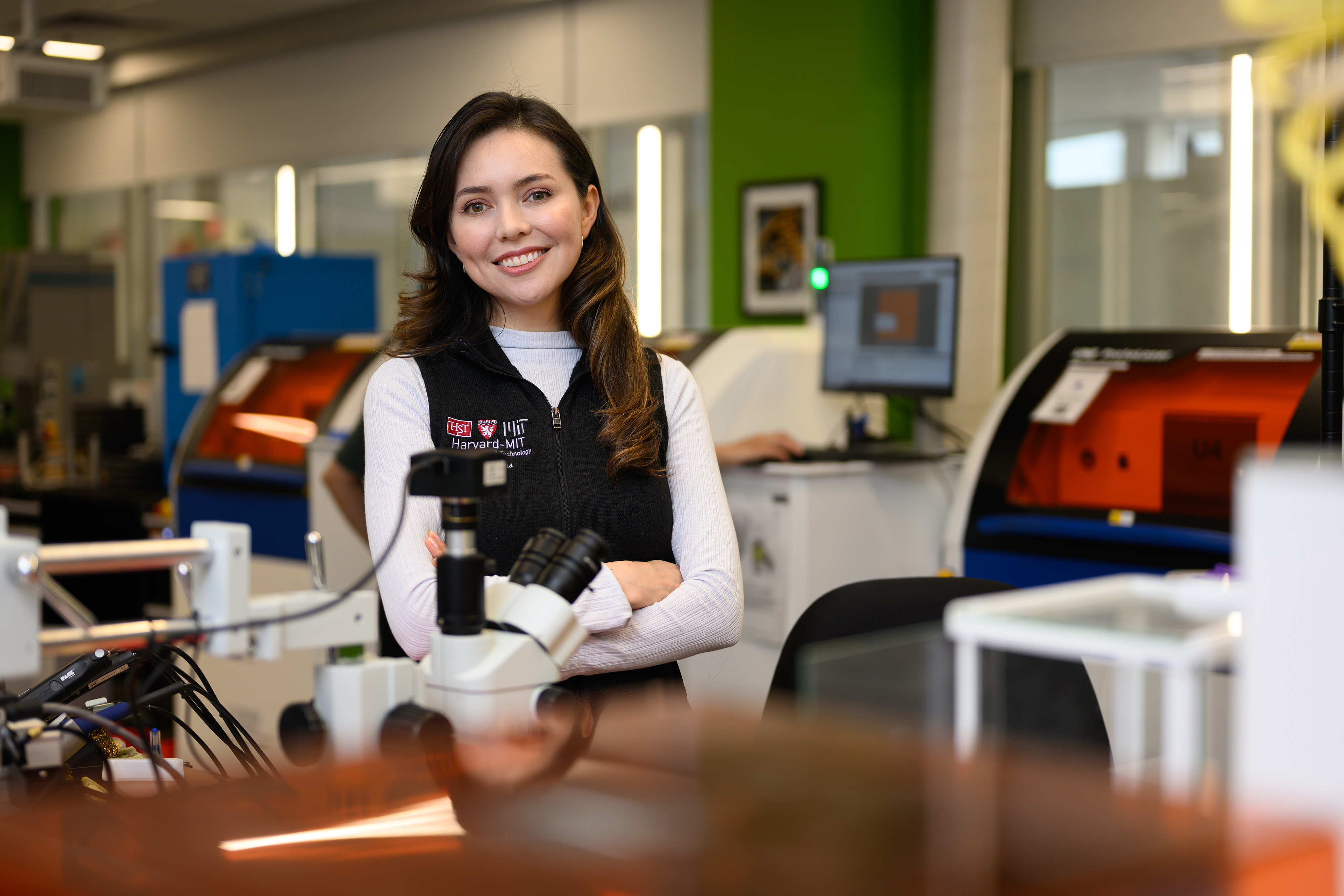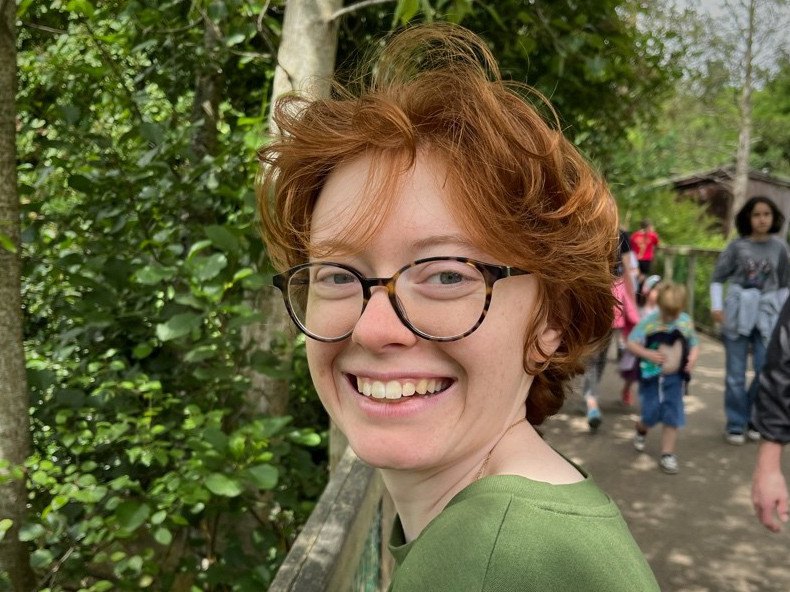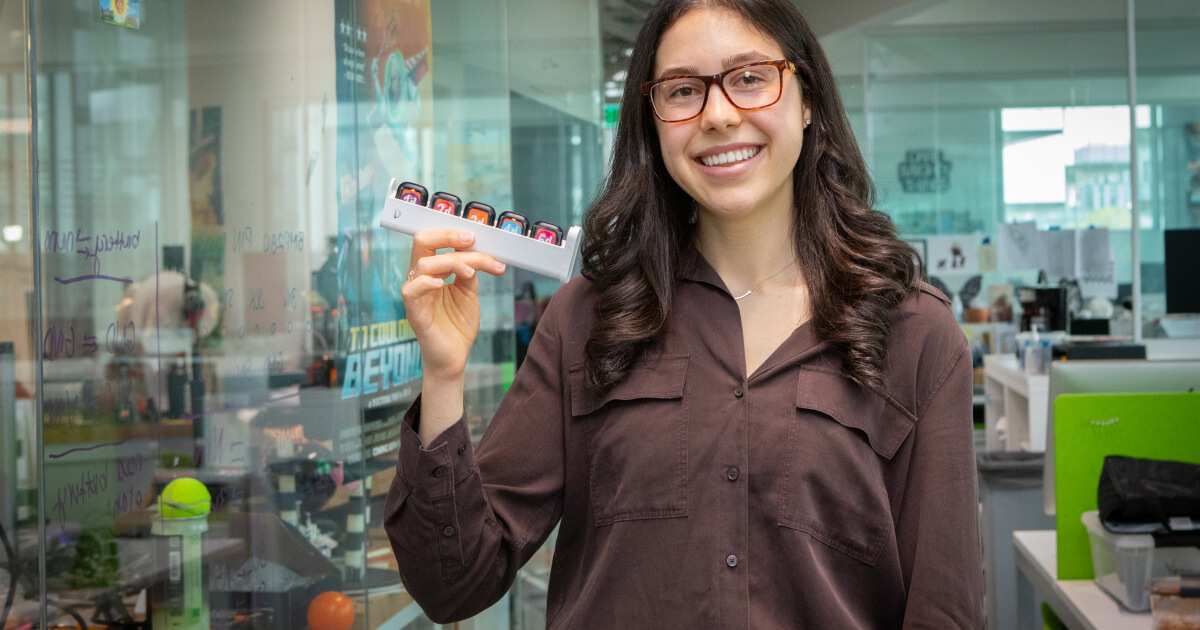
Alissia Di Maria, S.M. '26, in data science (Eliza Grinnell/SEAS)
As a neuroscience major and computer science minor at McGill University, Montreal native Alissia Di Maria approached human health from a range of lenses. She analyzed health biometric data from older adults to identify profiles associated with early-onset dementia; decoded brainwave recordings of mice navigating their environment to better understand our own spatial memory systems; and classified stages of sleep from raw brain signals to uncover the biological patterns hidden within them.From those three experiences, Di Maria came to a clear realization: understanding human health starts with understanding data. “That process of going from a raw signal to something biologically meaningful showed me that there are patterns in our biology that can be decoded using computation and math, which made me then ask how much more we can uncover about our own physiology, and at what scale,” she said. “The value isn’t just in collecting the data – it's in decoding it and putting it to practical use.”To take that question further, Di Maria came to the Harvard John A. Paulson School of Engineering and Applied Sciences (SEAS), where she joined the data science master’s degree program. Throughout her degree, Di Maria has turned her interests in health and data into research opportunities with both the Data to Actionable Knowledge Lab (DtAK) and Harvard Biodesign Lab at SEAS. “Having done research throughout undergrad, I knew I wanted to be in a place with a strong research culture that pushed independent thinking, and SEAS had that,” she said. “The breadth of problems that were being explored across engineering and data science, and the flexibility to follow your own curiosity, was really exciting to me and made the program stand out. It was the opportunity to build on the technical skills I developed at McGill, work with real-world data on problems that matter, and be surrounded by people from different backgrounds who I could learn from and who were genuinely passionate about what they do.”At the Harvard Biodesign Lab, run by Conor Walsh, Paul A. Maeder Professor of Engineering and Applied Sciences, Di Maria worked with post-stroke patients. Paralysis on one side of the body is a common consequence of stroke, and recovery is slow. Occupational therapists typically see patients once a week and rely on self-reporting to understand what’s happening in between, which is often unreliable. “We continuously monitored participants at home using Apple Watches on each wrist,” she said. “My role was to build algorithms that quantified functional versus passive arm use throughout their day, and detected when they were doing their prescribed exercises and for how many reps.” The project brought Di Maria face to face with the people behind the data. “We had one participant who was convinced they had never used their affected arm, but the data told a different story,” she said. “When we told them they were using it more than they thought, that was incredibly motivating for them. I saw how empowering continuous monitoring can be.”