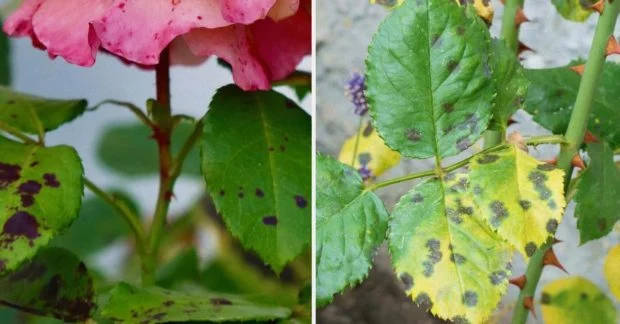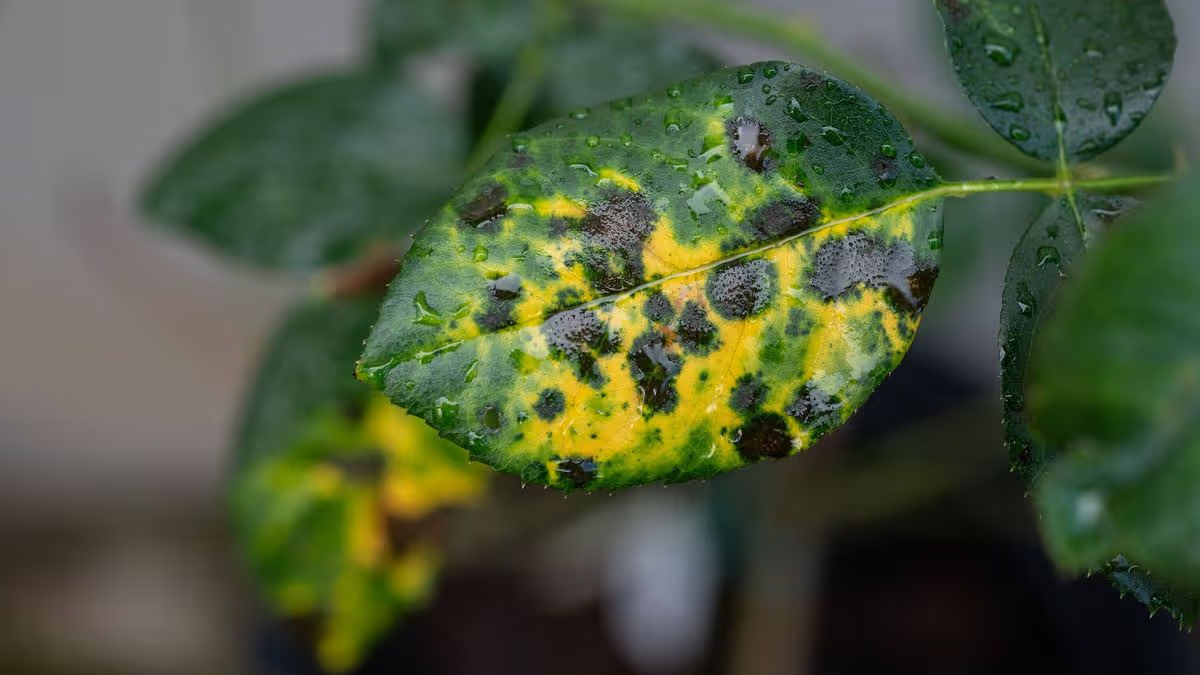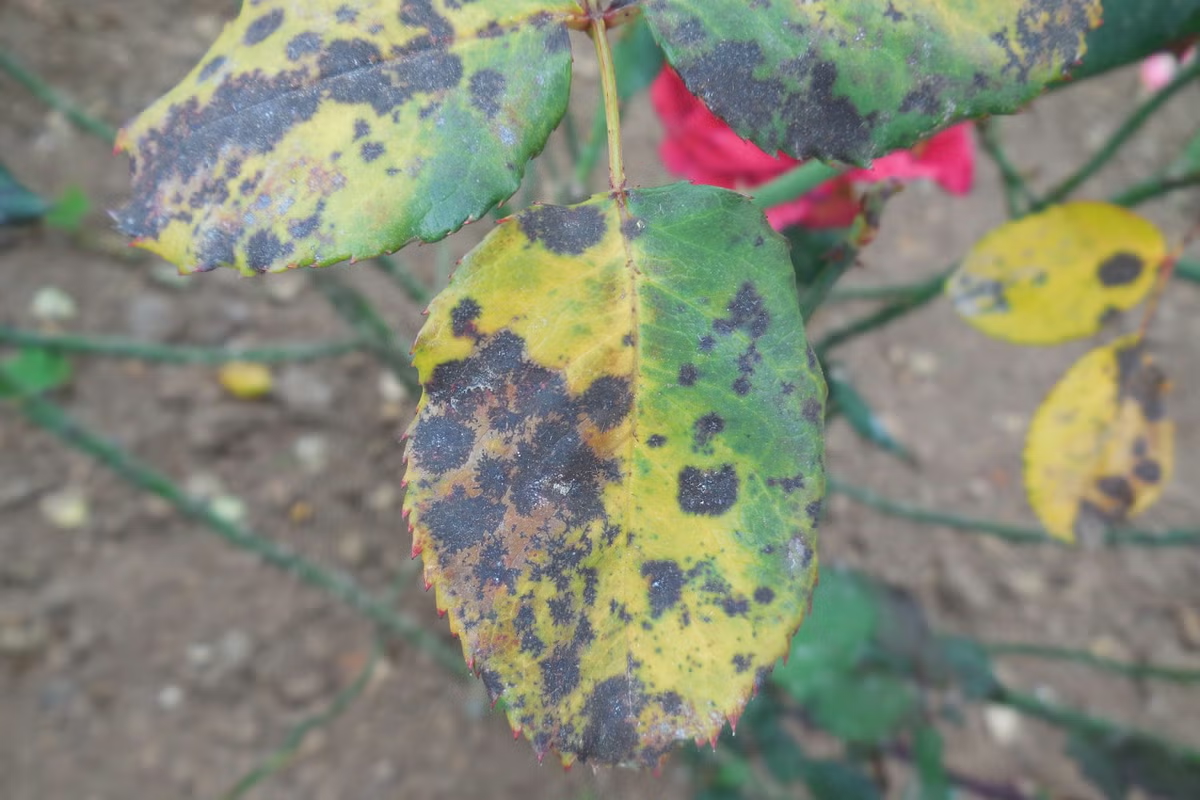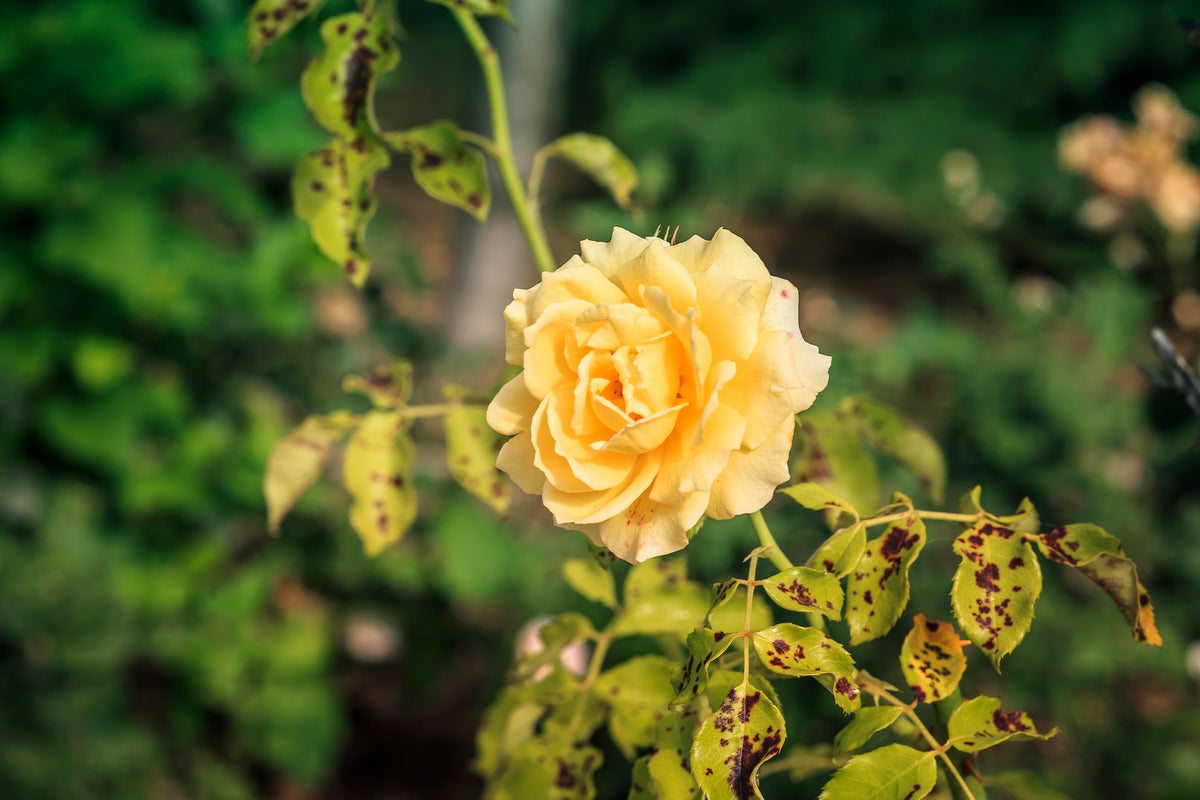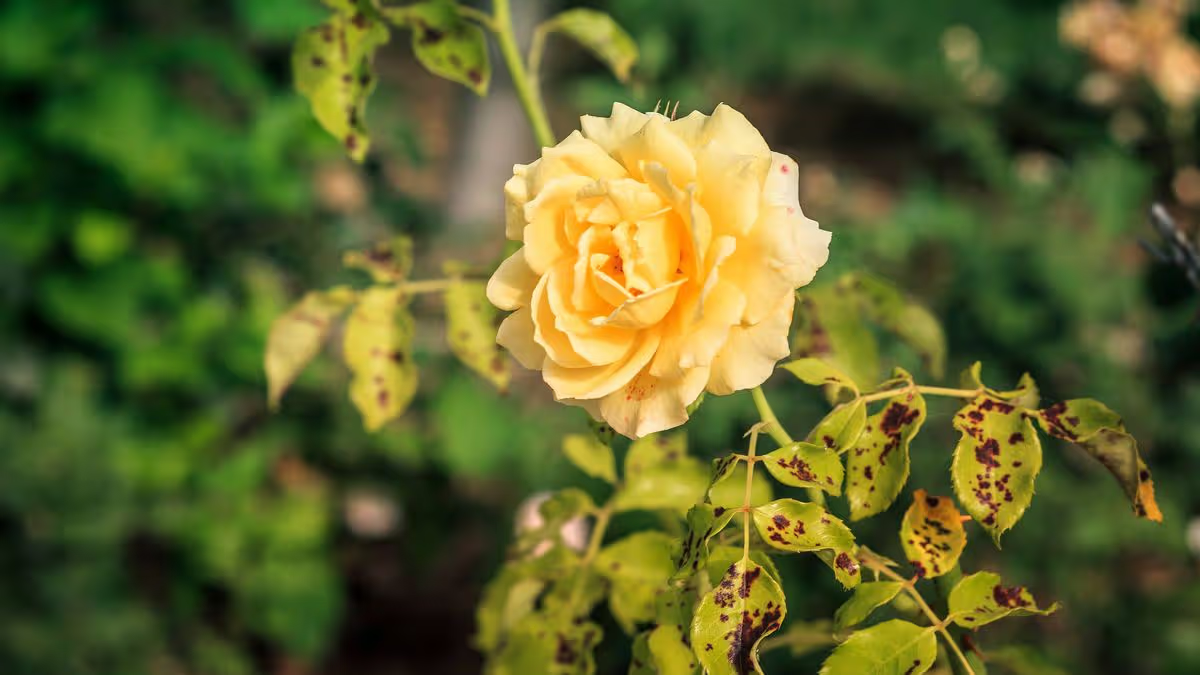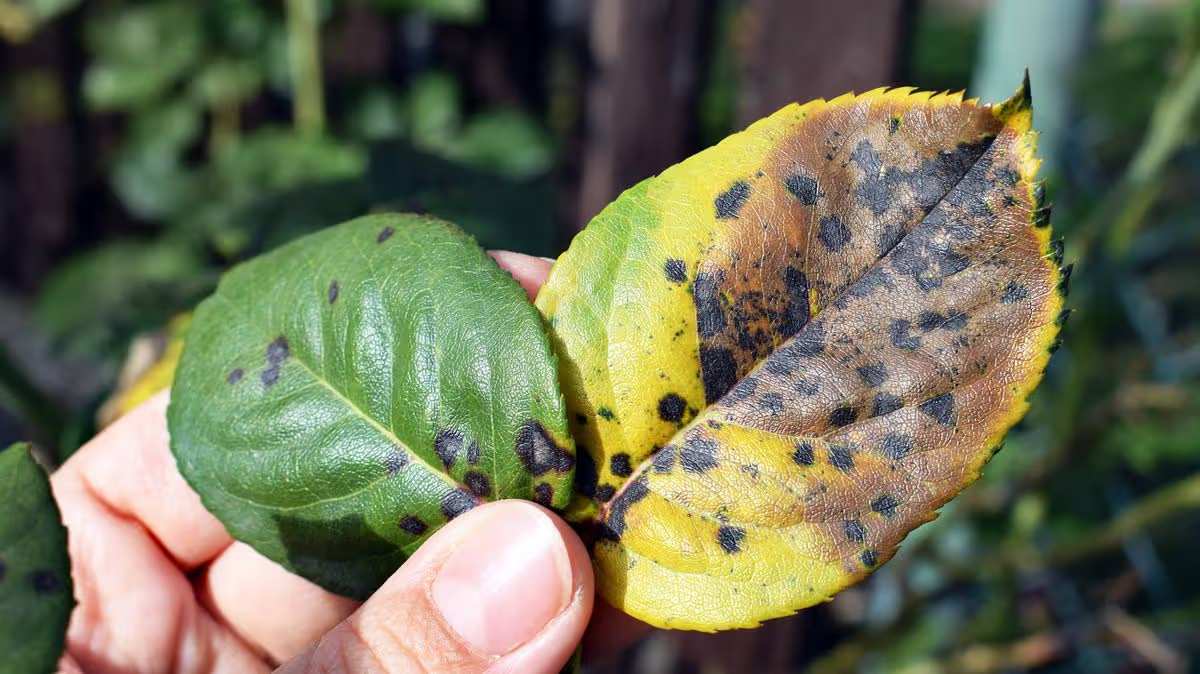
Black spot is a common fungal disease that affects roses, but there is a natural method to prevent it – and you'll find it in the fridge08:29, 23 May 2026Gardeners are starting to reap the rewards of their efforts as their roses swell and begin to blossom, though they ought to be aware that spring can prove a particularly tricky time for these cherished flowers. Roses are notably vulnerable to a fungal condition called black spot during this season, as the spores typically thrive when the soil heats up yet stays damp from springtime weather.This condition derives its name from the most distinctive sign: large, blotchy, dark patches on rose leaves that ultimately fall off, transmitting the infection across the garden. Black spot alone is unlikely to destroy roses completely, but it undermines the foliage so the plant cannot capture enough energy, rendering it considerably more exposed to pests and other ailments.It will prevent roses from flowering adequately, leaving you with a sparse and lifeless-looking plant that is also more likely to die back in summer as it battles to handle the hotter conditions.How do you help keep roses healthy in spring?Thankfully, Joe, a gardener and founder of In the Wild Garden, has shared that there is a natural yet remarkably effective approach to ward off black spot on roses, or even help combat it, by spraying them with milk.Joe said: "Mix up a solution of one part milk (full-fat milk) to two parts water in a spray bottle. Spray the remaining leaves of the plant with this solution, and repeat every week."It may seem strange, but when milk is exposed to sunlight, it produces compounds that are toxic to fungal spores, stopping them from spreading further, reports the Express.Milk also forms a thin film on a leaf's surface, making it significantly more difficult for spores to attach themselves to the plant, acting as a protective barrier against infection.Using milk can help ward off black spot in spring, or slow the disease's progression if caught early enough, giving the plant a much greater chance of recovery.How to use milk to stop black spot diseaseThe easiest and most effective method of keeping black spot out of your garden is to maintain a tidy outdoor space.Black spot spores spread through decaying foliage, so make sure you're regularly clearing away leaves and any other debris from around the base of your roses.Mulching your roses will also go a long way towards preventing black spot, as spores tend to splash up onto the plant during rainfall. Covering the soil with compost or wood bark will help stop the infection in its tracks.Next, apply the milk solution to your roses once a week. Simply combine one part milk with two parts water in an empty spray bottle. Use it to mist the leaves, aiming to lightly coat the plant rather than saturating it.Be sure to inspect your plant at least once weekly for any signs of black spot. Should you spot it, strip the plant of all its leaves, dispose of them in a bin, and carry on applying the milk solution.It's important to remember that milk can create an unpleasant smell, and you should steer clear of spraying it during the afternoon when the sun is strongest, as this will leave a sharp, sour odour lingering across your garden.A more sensible method is to apply the spray in the morning, enabling the leaves to dry more quickly; alternatively, you could opt to apply it later in the evening if you prefer.Joe added: "One word of warning would be to do this in the evening, as the smell of milk in the garden on a hot day is not great."Article continues belowThat said, make sure your roses are completely dry afterwards if you apply the solution in the evening, as leaving the plant wet overnight might attract slugs or other unwelcome pests.
Roses will be free of black when sprayed with kitchen staple
Black spot is a common fungal disease that affects roses, but there is a natural method to prevent it – and you'll find it in the fridge
647 words~3 min read