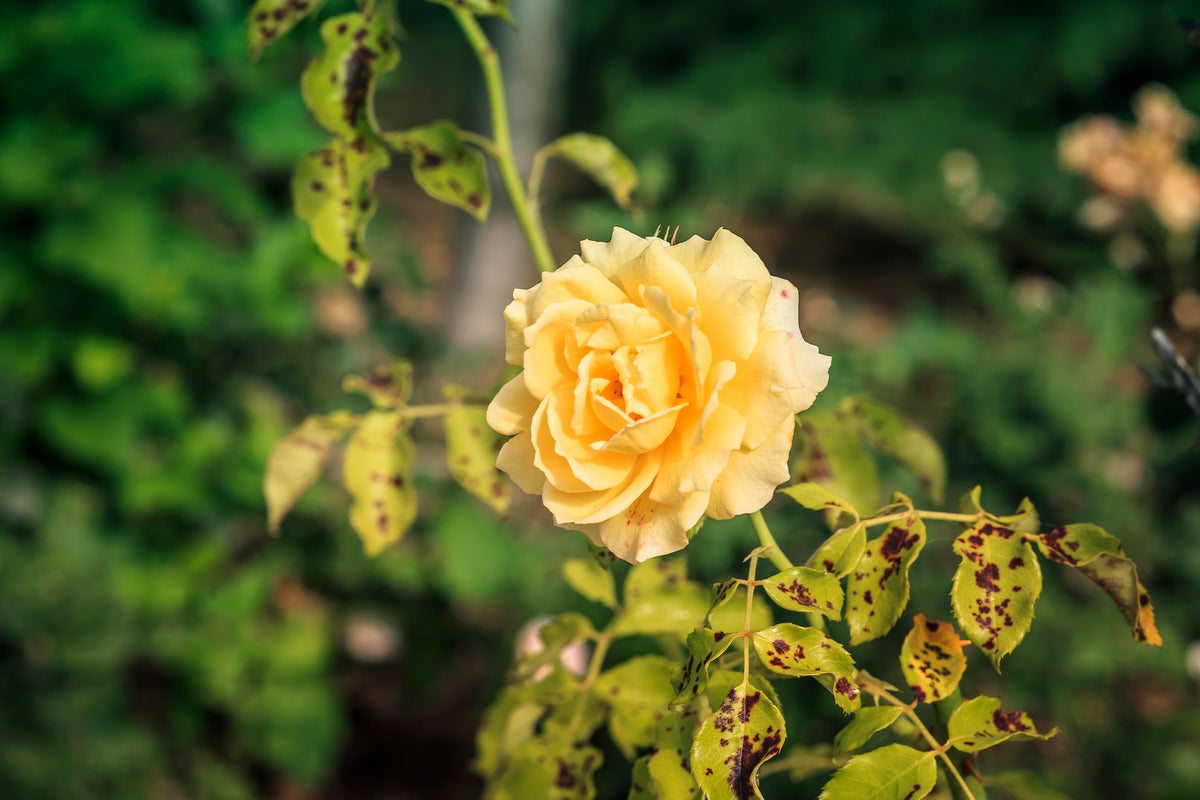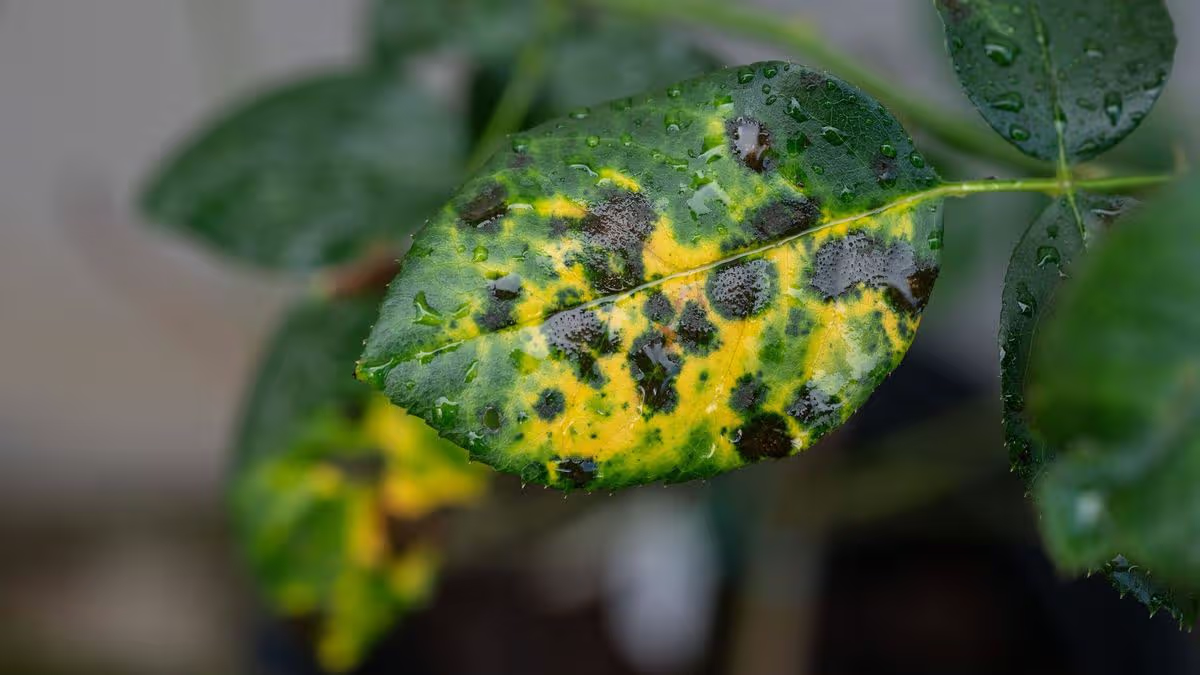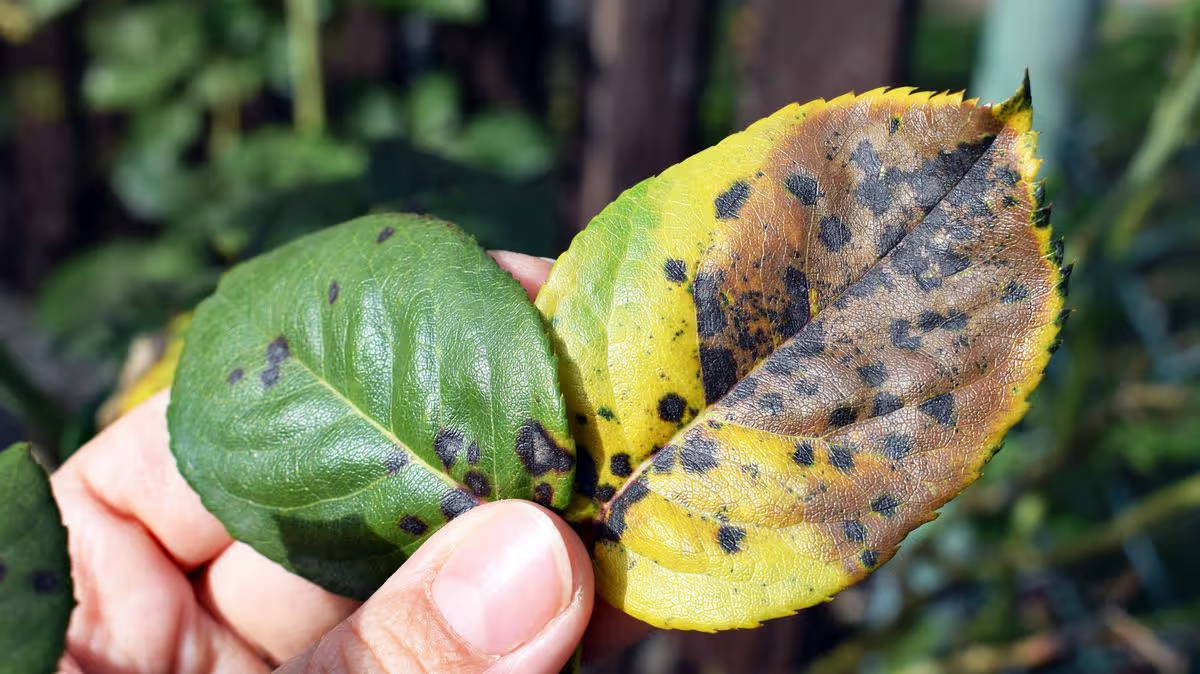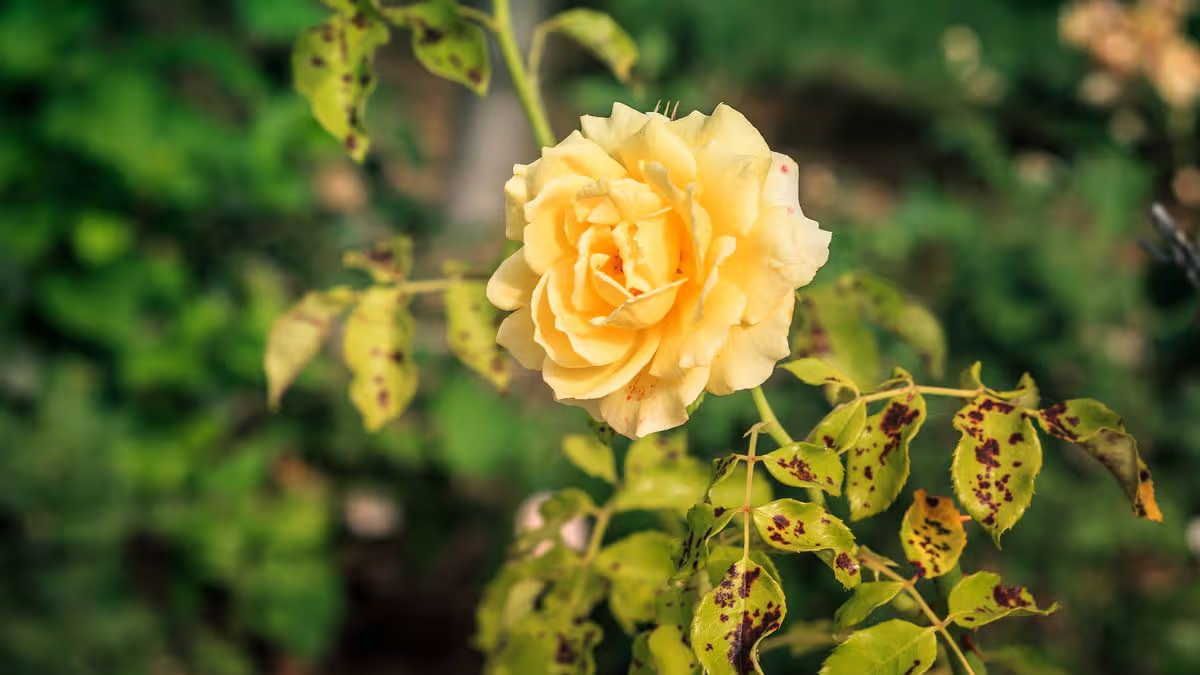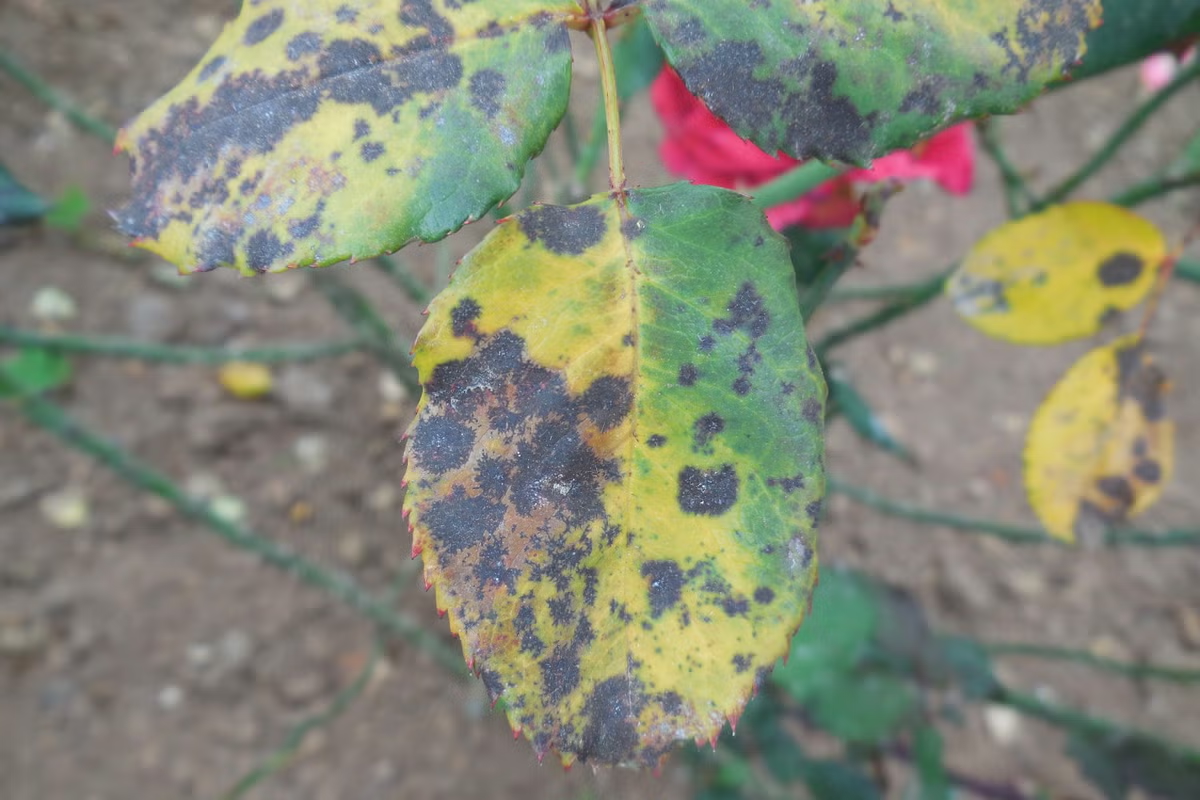
Stay up to date with notifications from The IndependentNotifications can be managed in browser preferences.Jump to contentThank you for registeringPlease refresh the page or navigate to another page on the site to be automatically logged inPlease refresh your browser to be logged inAllNewsSportCultureLifestyleSymptoms of Black Spot disease appear on a rose plant in Tamil Nadu, India (AP)Black spot disease, caused by the fungus Diplocarpon rosae, is a common and often fatal threat to roses, leading to black spots on foliage, diminished blooms, and weakened plants. Effective management involves pruning and disposing of all infected leaves and branches in sealed bags to prevent reinfection, avoiding humid conditions during this process. Fungicides containing mancozeb are highly effective for treatment, while environmentally friendly options include Neem oil and copper fungicide, applied after initial clean-up. Preventive measures for future seasons include applying fungicides like Neem oil or potassium bicarbonate in spring, using a baking soda solution, or companion planting with onions or tomatoes. Best practices such as ensuring adequate plant spacing for air circulation, deep watering at the roots with a soaker hose, and selecting disease-resistant rose varieties are crucial for long-term prevention. In fullHow to treat roses with black spot disease – and protect them from infectionMore bulletinsThank you for registeringPlease refresh the page or navigate to another page on the site to be automatically logged inPlease refresh your browser to be logged in
What to do if your garden roses have black spot disease
Stay up to date with notifications from The IndependentNotifications can be managed in browser preferences.Jump to contentThank you for registeringPlease refresh the page or navigate to another page on the site to be automatically logged inPlease refresh your browser to be logged inAllNewsSportCultureLifestyleSymptoms of Black Spot disease appear on a rose plant in Tamil Nadu, India (AP)Black spot disease, caused by the fungus Diplocarpon rosae, is a common and often fatal threat to roses, leading to black spots on foliage, diminished blooms, and weakened plants. Effective management involves pruning and disposing of all infected leaves and branches in sealed bags to prevent reinfection, avoiding humid conditions during this process. Fungicides containing mancozeb are highly effective for treatment, while environmentally friendly options include Neem oil and copper fungicide, applied after initial clean-up. Preventive measures for future seasons include applying fungicides like Neem oil or potassium bicarbonate in spring, using a baking soda solution, or companion planting with onions or tomatoes. Best practices such as ensuring adequate plant spacing for air circulation, deep watering at the roots with a soaker hose, and selecting disease-resistant rose varieties are crucial for long-term prevention. In fullHow to treat roses with black spot disease – and protect them from infectionMore bulletinsThank you for registeringPlease refresh the page or navigate to another page on the site to be automatically logged inPlease refresh your browser to be logged in