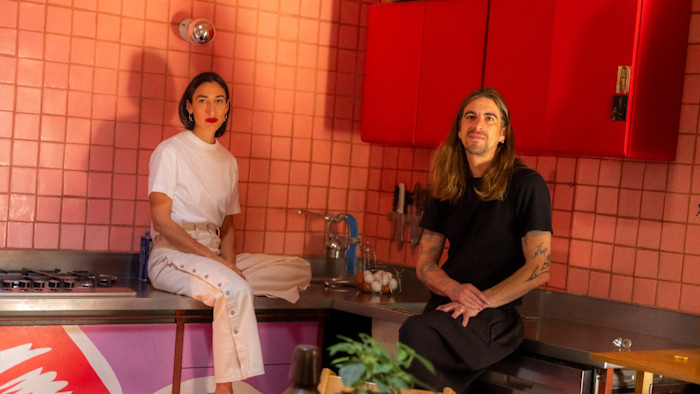
Isabel Abascal and Alessandro Arienzo live towards the end of a narrow street in Mexico City’s Escandón district, demarcated only by a dark-red door in front of a plain white wall. There is little to suggest what lies beyond. Inside, however, the house opens into a dynamic sequence of space: low passages and cavernous rooms give way to sunlit rooms of unexpected height and inner courtyards engulfed by greenery.
Once a ruin, the house is part old structure, part new addition, where time-worn walls frame a profoundly personal space of surfaces animated by children’s drawings. Shelves are dotted with curios gathered from travel, work tools are tucked into corners and the kitchen bears the unmistakable traces of frequent, convivial gatherings.
A tall bookcase stretches up in the double-height Espacio Caramelo socialising area, named after the floor colour © Maureen M Evans
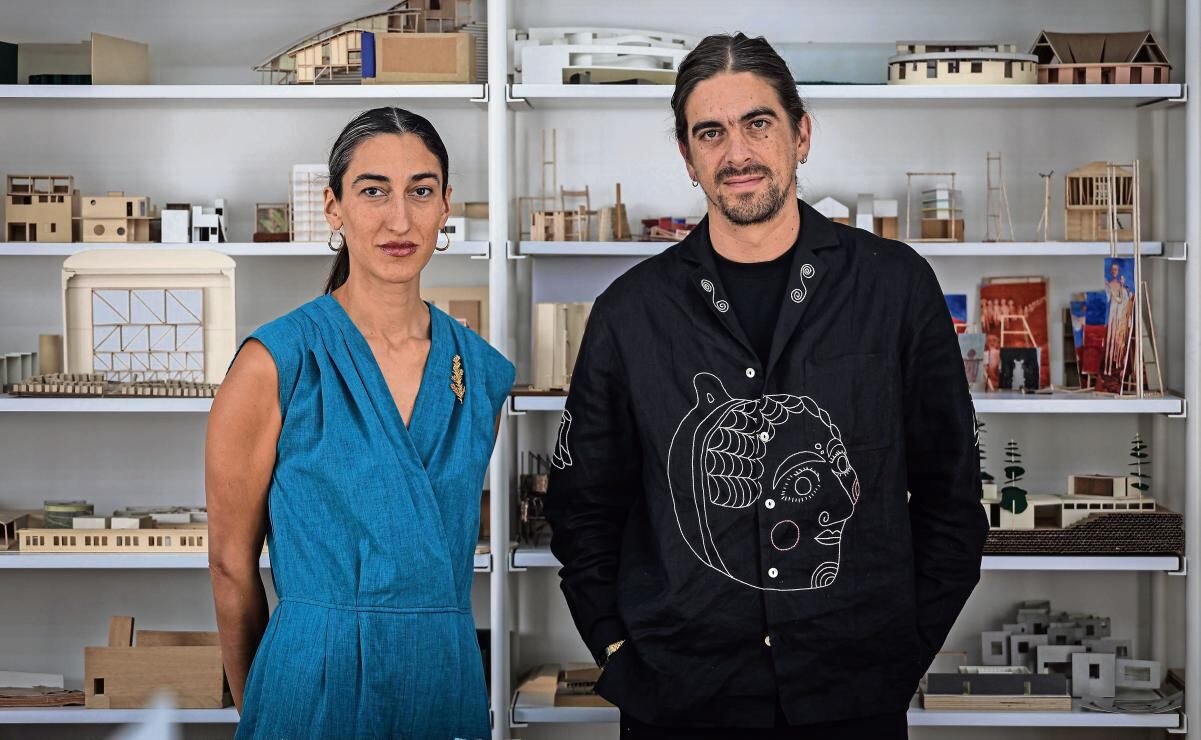
Arienzo says their architecture is about ‘learning to pay attention to our surroundings, and trying to capture those sensations’ © Maureen M Evans
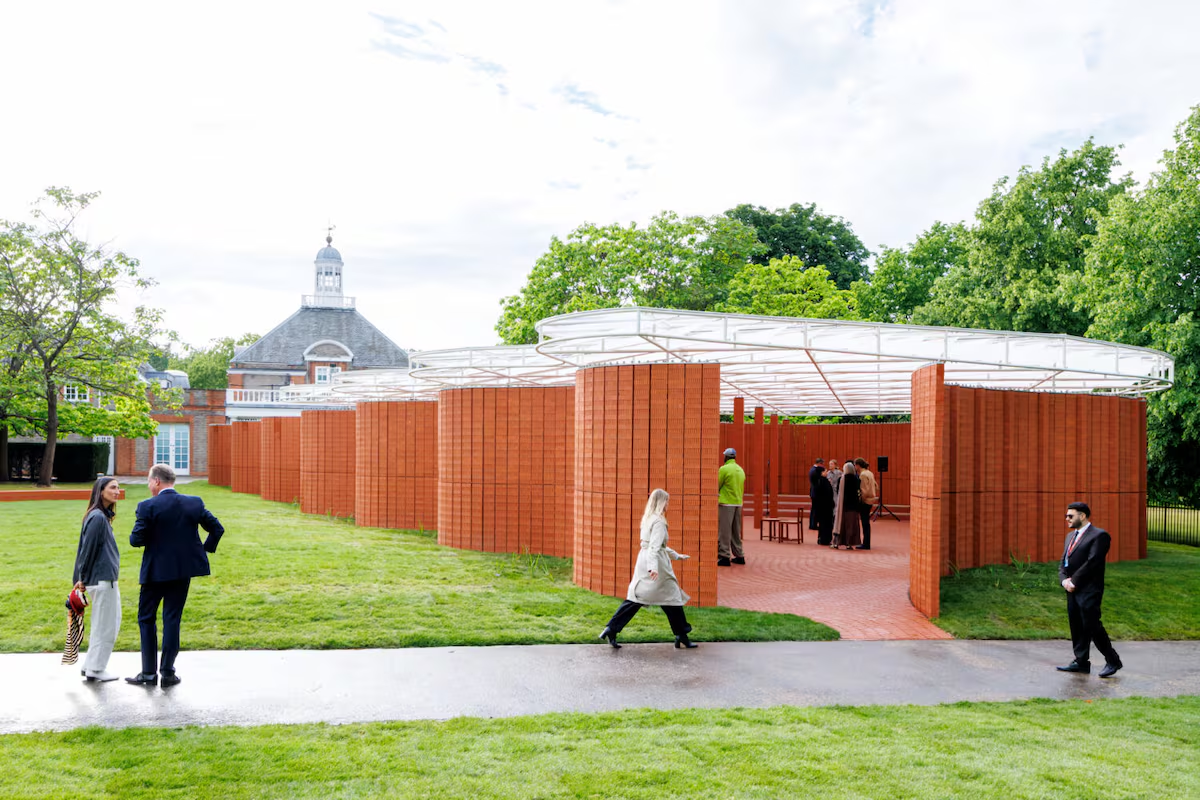
Moving through these shifting atmospheres, one can begin to understand the sensibility of the architects and co-founders of Lanza Atelier, established in 2015. Their projects range from furniture – like the Steps Table, a dining set that ascends like a staircase – to exhibition design, including Bárbara Sánchez-Kane’s solo show at the Collegium museum and the Kosovo Pavilion at the 2026 Venice Biennale. Their residential work, such as the Forest House, also in Mexico City, is defined by a gestural, winding wall that delicately balances nature and domesticity.