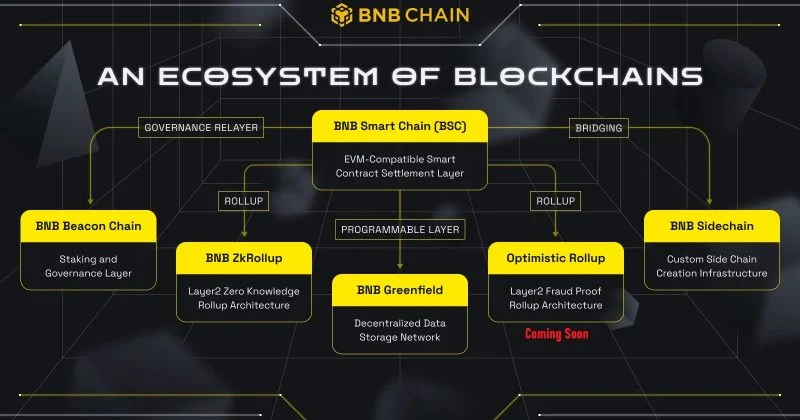
BNB Smart Chain has successfully tested a migration to post-quantum cryptography across its transaction and consensus layers, replacing key elliptic-curve cryptographic systems with quantum-resistant alternatives standardized by NIST, according to a recent report.
The upgrade replaced ECDSA transaction signatures with ML-DSA-44, also known as Dilithium2, and substituted BLS12-381 consensus aggregation with pqSTARK proofs. The project did not include peer-to-peer handshake encryption or KZG commitment systems, which remain under consideration for future upgrades.
The work comes as blockchain developers prepare for the long-term possibility that quantum computers could eventually break widely used elliptic-curve cryptography through Shor’s algorithm. BSC said the migration effort was precautionary and not tied to any immediate security threat.
NIST formally standardized ML-DSA under FIPS 204 in August 2024, establishing the first production-ready post-quantum signature framework adopted in the report.
BSC selected ML-DSA-44 from among three standardized parameter sets, citing lower signature size and faster verification speed as the main reasons for the choice. The report said larger variants would create substantially more network overhead while offering limited practical benefit under current threat projections.