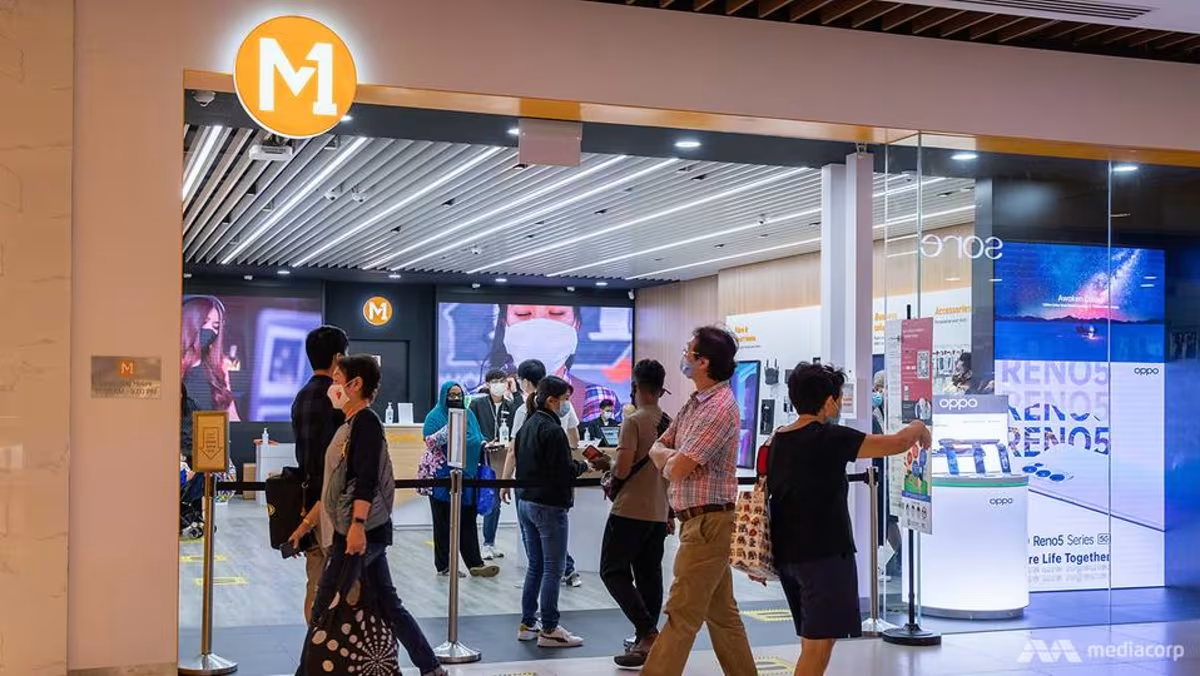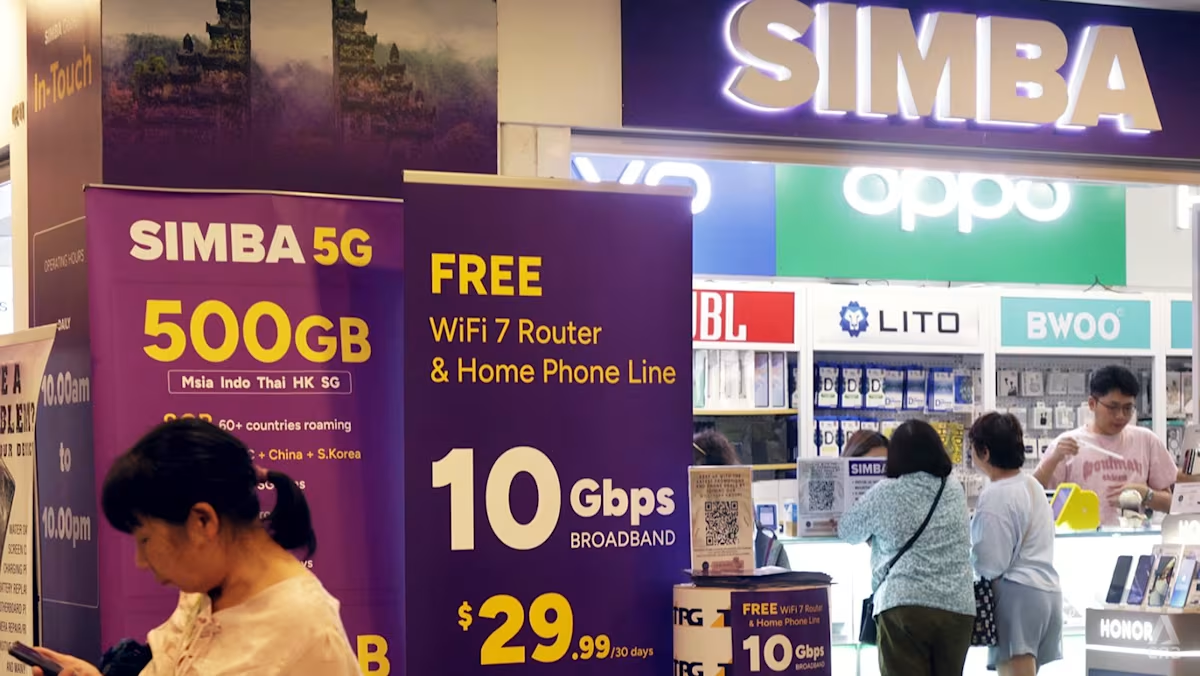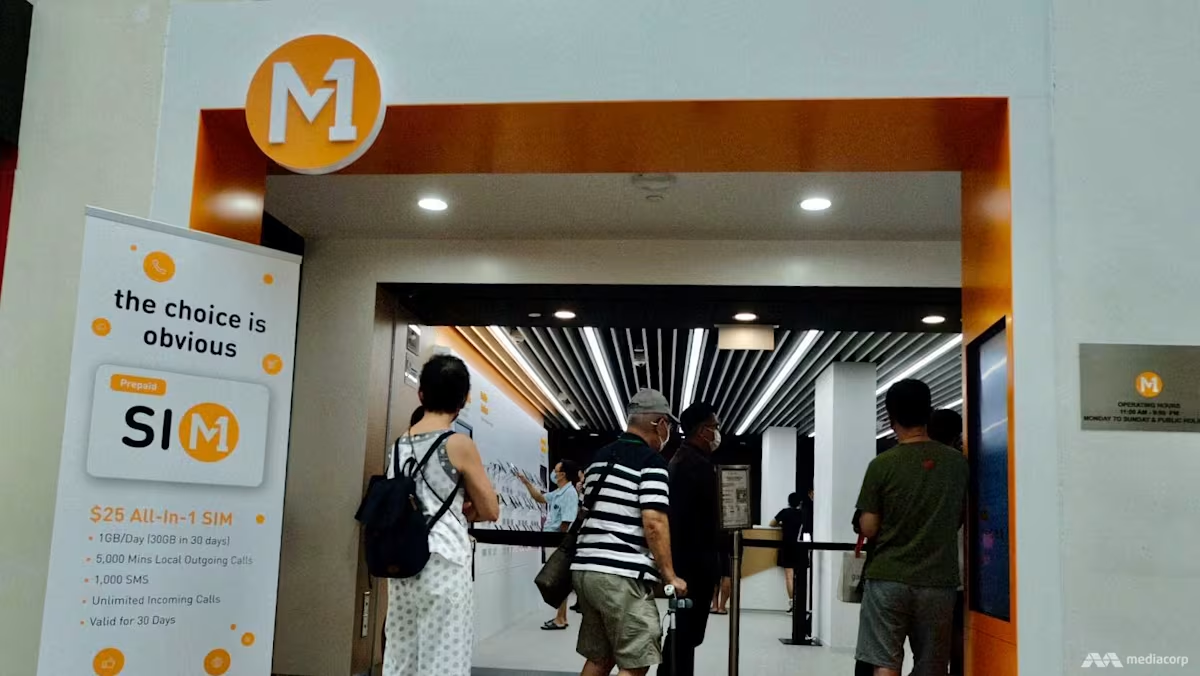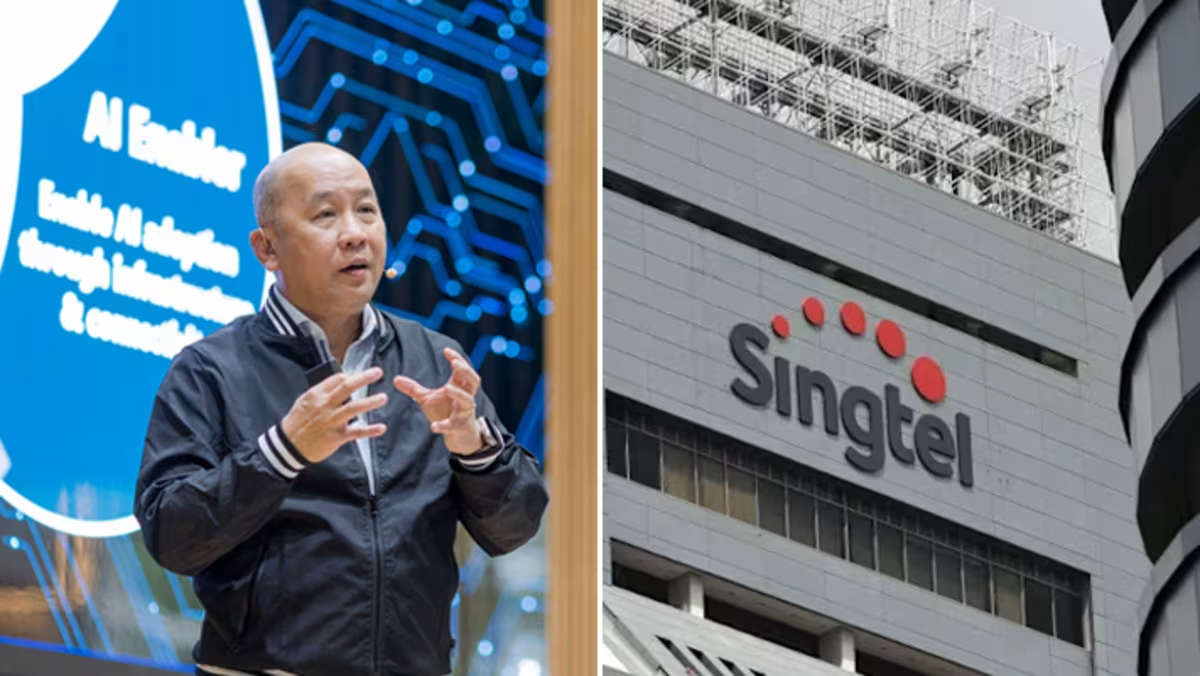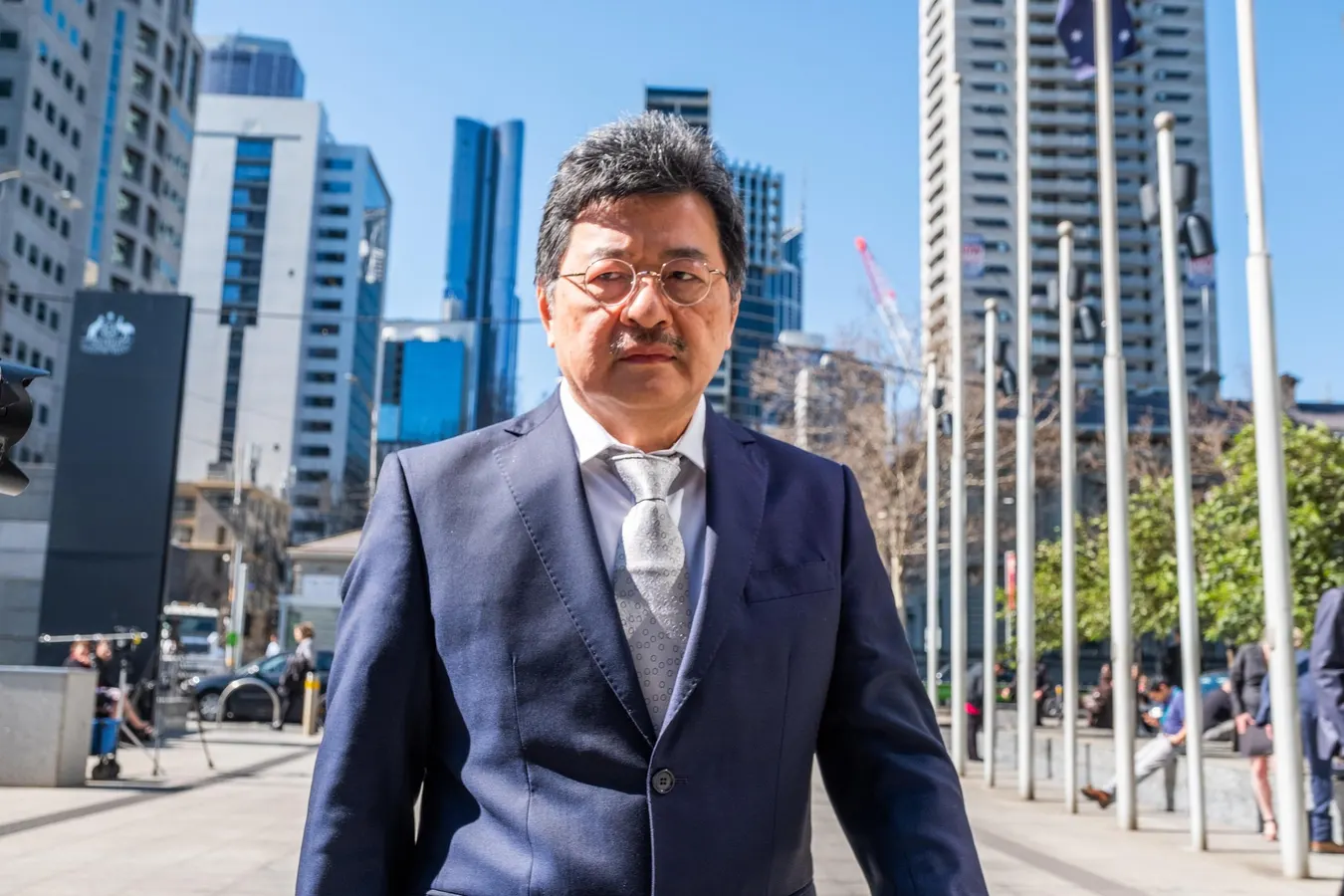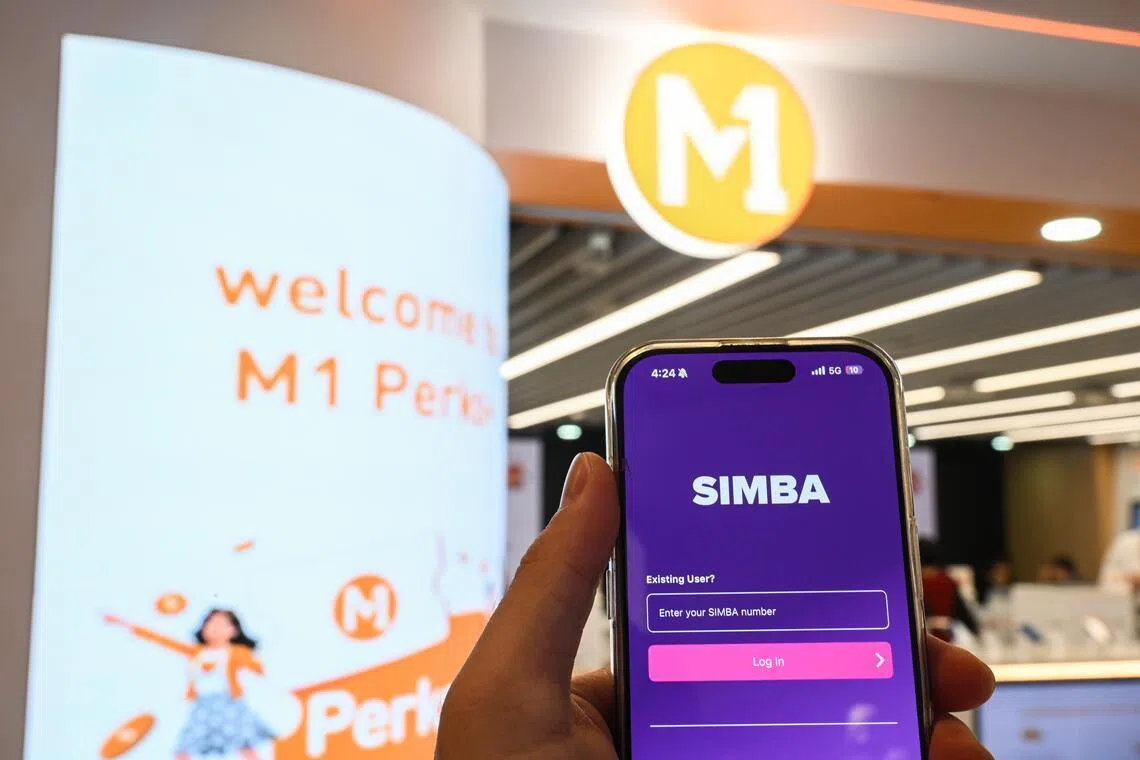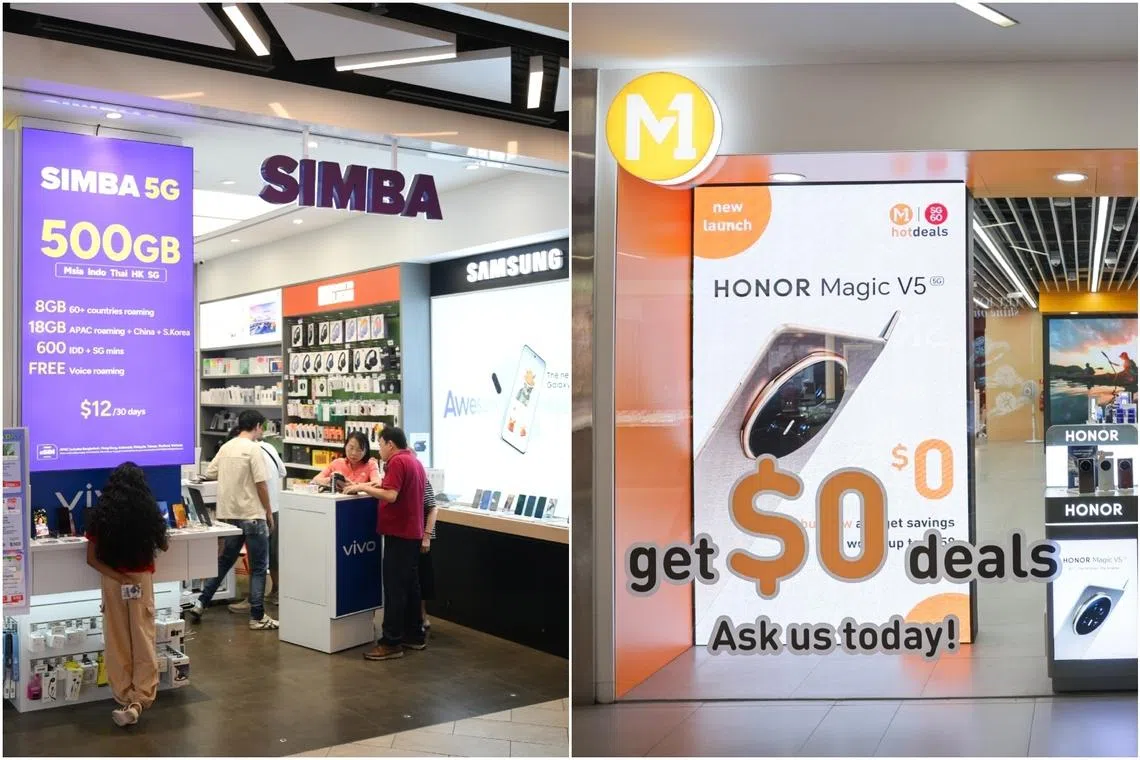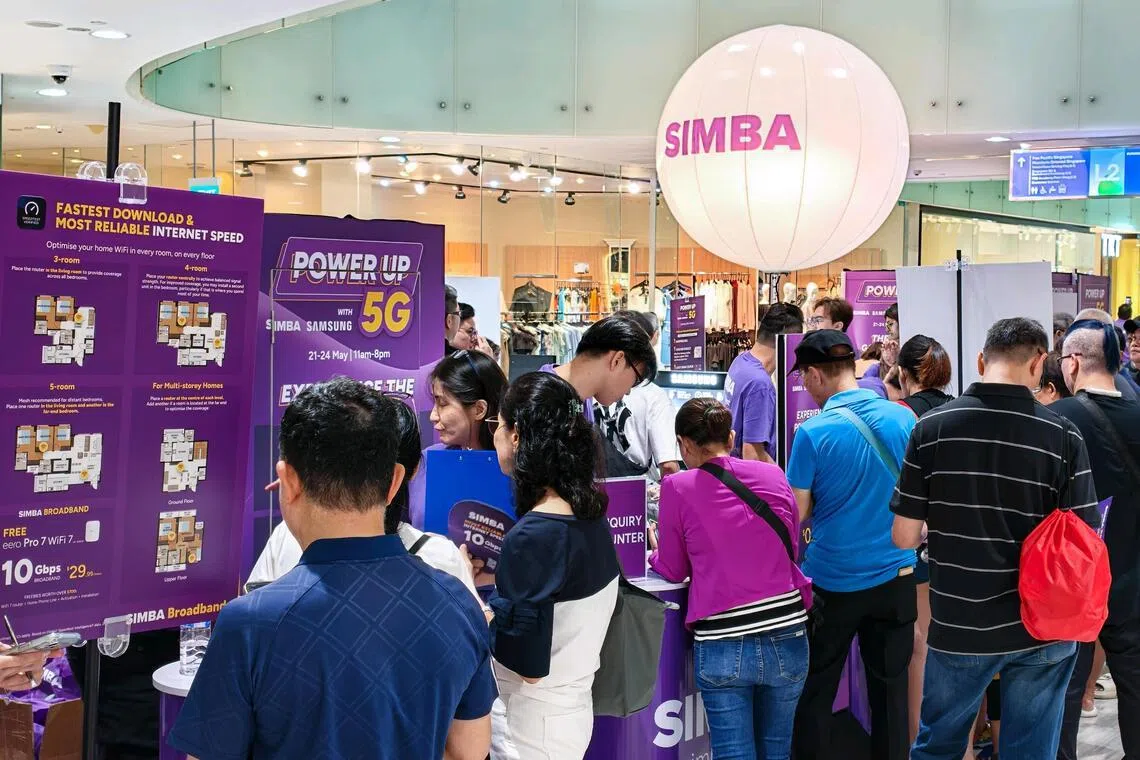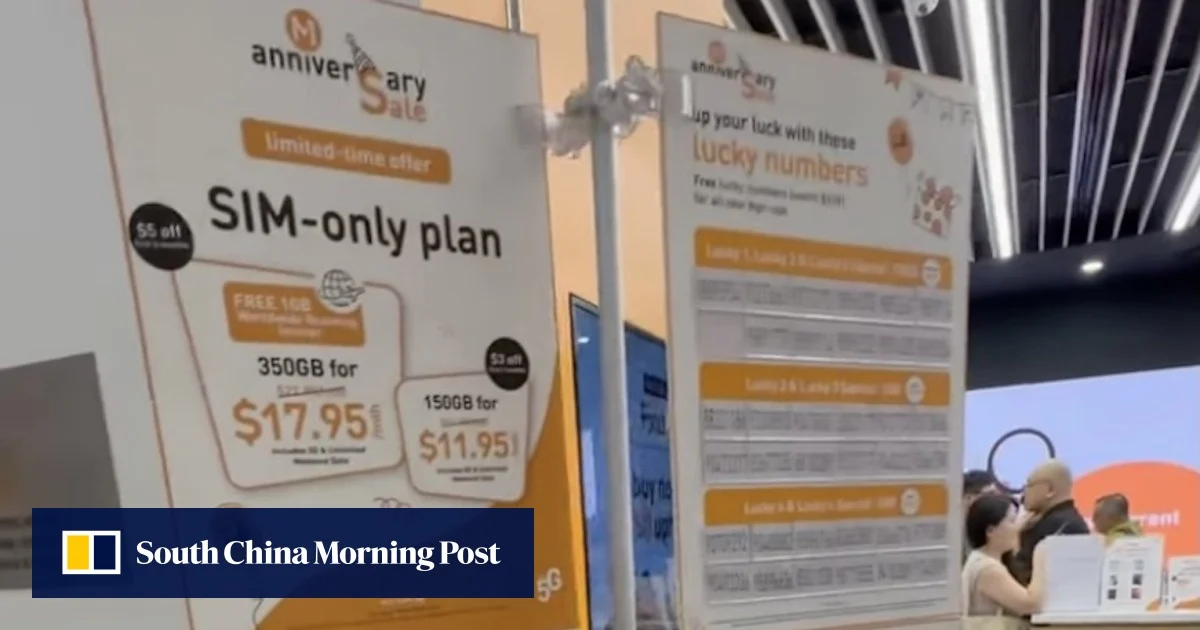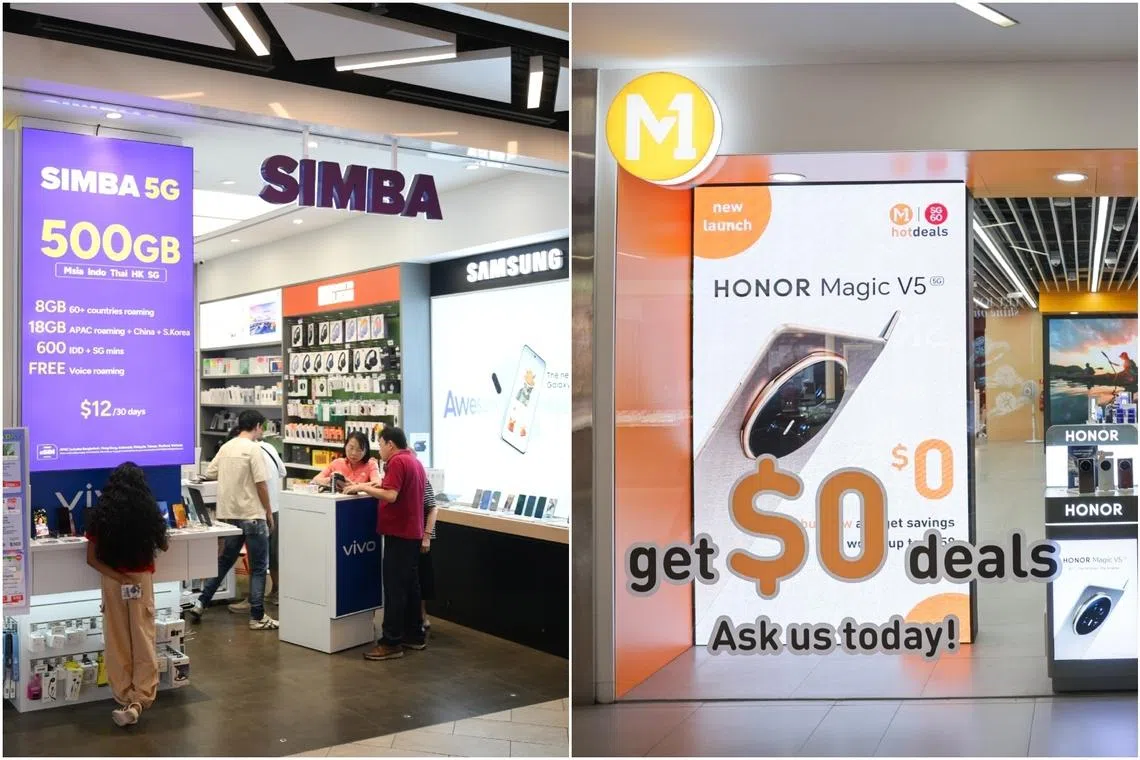
SINGAPORE - The much-anticipated Simba Telecom-M1 merger is dead.May 21 was the contractual deadline by which regulatory approvals had to be satisfied for the $1.43 billion proposed deal to go through. But regulatory review suddenly paused on May 18, with the Infocomm Media Development Authority of Singapore (IMDA) saying it needed to investigate allegations that Simba had used certain radio frequencies to provide mobile services without authorisation.On May 22, Simba’s Australia-listed parent firm Tuas issued a statement to confirm that the deal is off.The unexpected collapse of what would have marked Singapore’s first major telco consolidation after decades of market deregulation has now exposed consumers to the ongoing fallout. M1 customers have every reason to be concerned. Following the scrapped sale, M1 is back in majority shareholder Keppel’s hands. The asset manager moved back plans to sell M1 by one to two years, and launched a 90-day plan to whip M1 into shape through aggressive cost cuts and automation.The impact on M1’s 2.29 million mobile subscribers will depend entirely on how the plans are rolled out. Keppel did not answer questions about job cuts during its media and analyst briefing on May 18. But it did outline where streamlining will take place. First, the telco, which is already using artificial intelligence to generate advertising campaigns and achieve massive savings, will accelerate such efforts.Second, AI agents have replaced customer relationship management tools, which cost twice as much. More AI agents are expected to replace more expensive tools.Third, M1’s service offerings will be streamlined to keep costs down. ST understands that managing a vast portfolio of telecommunications products is more expensive because it introduces complexity in billing, customer support, sales and marketing.Fourth, M1 is looking to reduce capital expenditure over a period of time as its 5G network has already been completely deployed. “There will be no more capex required for 5G deployment, it’ll be more on operations and maintenance,” M1’s chief executive, Mr Manjot Singh Mann, said on May 18.Given the telco’s AI makeover, it is natural to wonder if human support will still be available, and how this will affect service quality and wait times for technical help. But if well executed, it could mark a new era of efficiency for M1 that could lift the overall consumer experience.Another valid question is whether M1 will discontinue cheaper legacy plans and force customers to switch to higher-priced subscriptions. M1’s strategy to hold back on capital expenditure also raises valid concerns about potential surfing slowdowns, weak coverage and connections stability.Simba’s more than 1 million customers are not any better off.If Simba’s goal in pursuing M1 is to acquire mobile airwaves for reliable, high-capacity mobile surfing, then failing to secure these airwaves would naturally limit the telco’s ability to deliver network improvements.Despite having launched its 5G network, Simba’s capacity is nowhere close to those of its rivals – M1, StarHub and Singtel. For instance, in a crowded train during peak hours, Simba users may see the 5G logo and five bars of signal and yet have trouble streaming videos or surfing the internet at higher speeds.This is because Simba does not have enough mid-band frequencies (between 2.1 GHz and 3.5 GHz in Singapore’s context) to provide the necessary capacity for delivering reliable 5G services that can support millions of users. These airwaves are important, as they enable signal coverage across all of Singapore with minimal 5G infrastructure. However, these frequencies are limited in supply. A substantial portion of the 3.5 GHz band was already allocated in 2020 when IMDA awarded 5G licences, with Singtel receiving part of it and the remainder shared between StarHub and M1. Simba had none of the premium airwaves from the 2020 contest. But later in 2021, it won a small slice of the 2.1 GHz radio frequency band through an airwave auction, allowing it to build a nationwide 5G network at last. Still, the slice is too small to significantly boost its capacity for future growth.M1’s mobile airwaves are meant to plug the capacity gap. But now that the deal is off, Simba’s options are limited to two:- pay more for the rights to convert its existing 4G airwaves to deliver 5G services, or - install a lot more equipment to transmit 5G signals using other radio frequencies. This second option is time-consuming, expensive to equip and likely to spark public fear over radiation.It is difficult to predict what lies ahead. The May 21 contractual deadline was extended once from March 26. Simba has yet to announce its next steps, possibly because it is busy with IMDA’s probe and internal investigations into the allegations.Meanwhile, the sector is still looking to consolidate to ease the current price war and boost average revenue per user (ARPU), which has been falling over the past five years from intense price undercutting and aggressive roaming and data bundling. ARPU is a key metric showing how much revenue a company gets from each customer.Singapore is back to having four full-fledged telcos competing in a market of about 6 million people, with over 10.5 million active mobile connections. This translates to around two lines per person, and spells a saturated market.Singtel has the lion’s share commanding about half the mobile market. StarHub, M1 and Simba share the rest. Simba may have the smallest share, but it is growing the fastest. Its $5 mobile plan for senior citizens is extremely popular.Simba has been able to hold ARPU at just under $10 consistently since 2020, when it started a price war with its fuss-free generous 50GB plan for $10 a month. Unheard of at that time, the move forced incumbents to slash prices, remove hidden fees and roll out more generous data allowances. The ARPU of other telcos has since fallen by up to 30 per cent to a range between $20 and $30.Today, the low-price trend continues, with more undercutting by mobile virtual network operators, which leased network capacity from full-fledged telcos instead of building their own infrastructure. There are over 10 of these virtual telcos. Circles.Life, the first virtual telco to launch in 2016, is still aggressively marketing value-for-money plans. Its latest 5G plan is priced at $10 a month, and comes with a whopping 1TB of mobile data and complimentary premium subscriptions to the latest AI models including Claude, Gemini, ChatGPT and Perplexity.With these ultra-affordable bundles, it is hard for consumers to complain about price or value. But a price war is not sustainable. Keppel has maintained that consolidation is necessary for Singapore’s overcrowded telco market to prevent a destructive price war. The asset manager is not closing the door on Simba just yet, but it is exploring other suitors for M1. Deeper spending cuts will ensue. But what does that mean for the customer? StarHub chief executive Nikhil Eapen had said in January 2026 that a prolonged price war would deter telcos from increasing investments in critical areas such as cybersecurity and innovation. Such spending is critical in light of the March 2025 discovery of cyber espionage group UNC3886’s attack on all four local telcos, the operators of critical services infrastructure.Recent telco outages also prove that cheap rates cannot make up for unreliable service. To stand out, providers must prioritise continuous network upgrades and redundancy.For the consumer, a race to the bottom could spell creeping fees for paper billing or service activation, or worse still, network congestion, poor service and delayed access to next-generation services.
Simba-M1 merger is off, but industry consolidation will come
Consolidation is necessary for Singapore’s overcrowded telco market to prevent a destructive price war. Read more at straitstimes.com. Read more at straitstimes.com.
1,232 words~6 min read