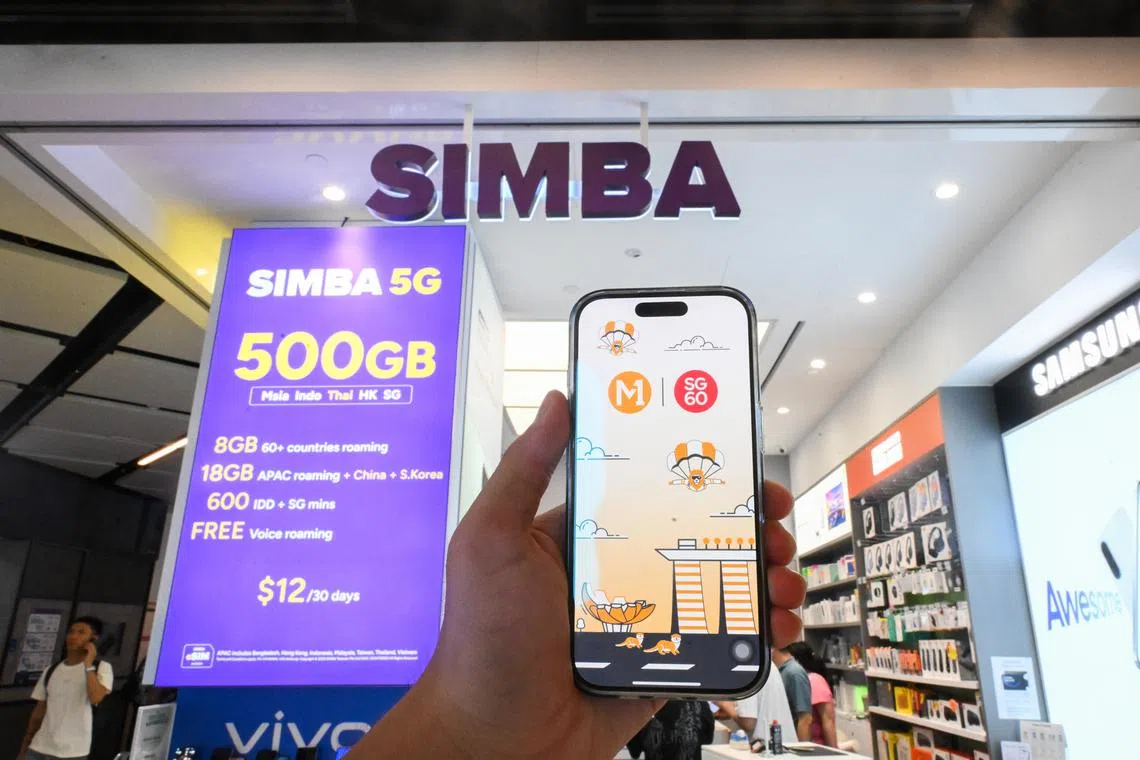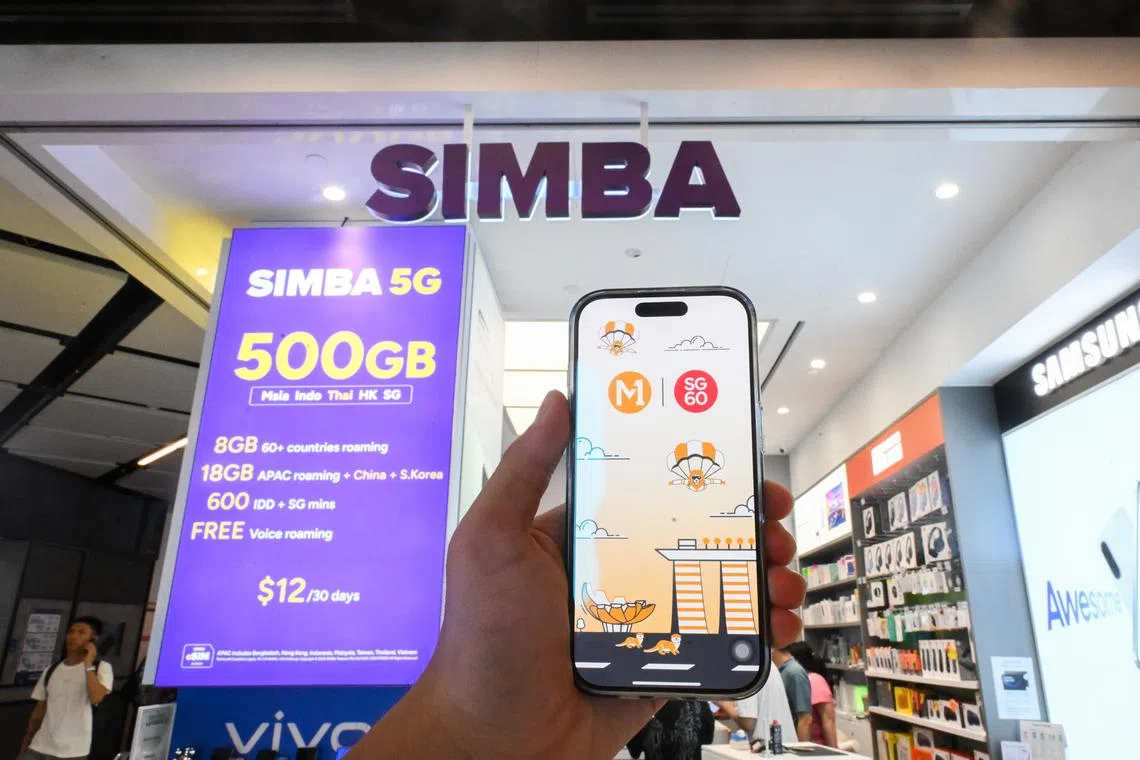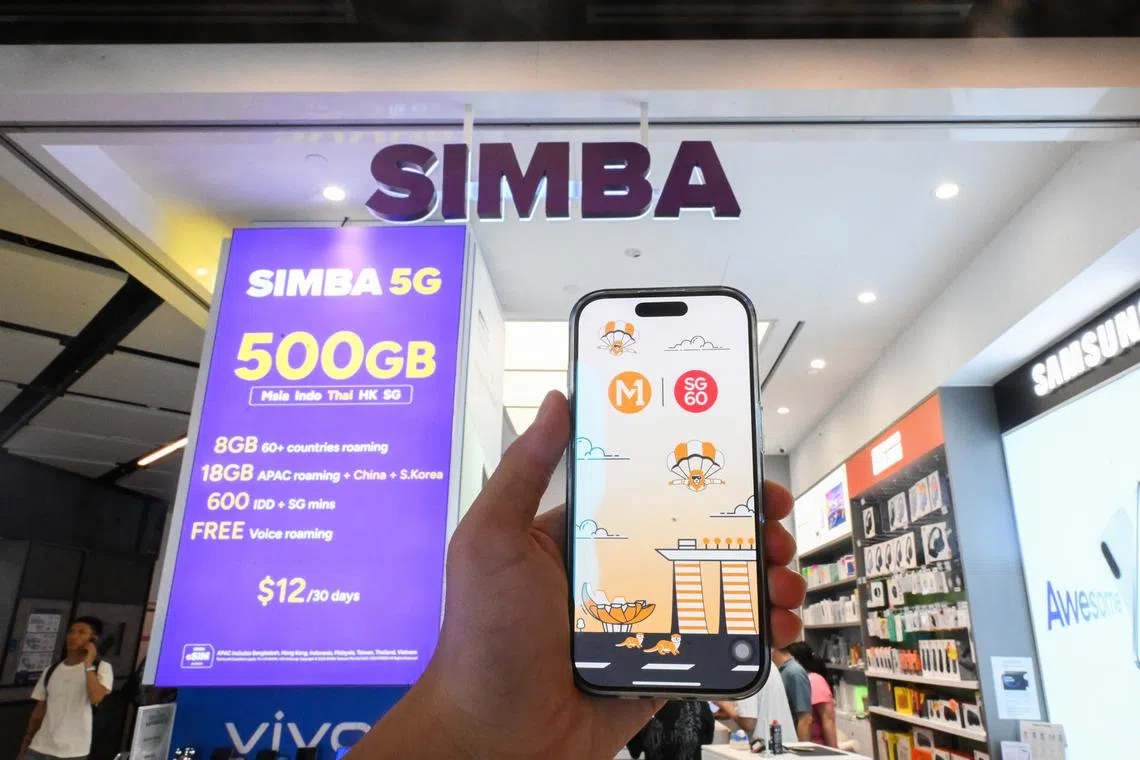
SINGAPORE: Singapore is investigating whether telecommunications company Simba complied with regulations governing the use of radio frequency bands.The Infocomm Media Development Authority (IMDA) said on Monday (May 18) that while reviewing the telco's proposed acquisition of M1, it found that Simba could have been using radio frequency bands that it had not been assigned to provide mobile services.Radio frequencies, though invisible, are essential for wireless communication. Their use is tightly managed in Singapore and around the world, requiring coordination across national, regional and international levels.CNA looks at what radio frequency bands are, how they are allocated and why their use is closely regulated.What are radio frequency bands?
Radio frequencies are part of the electromagnetic spectrum that allow devices to communicate wirelessly.They underpin modern life, enabling everything from mobile phone calls and internet access to satellite communications and defence systems. Different bands are suited for different users. Lower-frequency bands, for instance, operate at a slower speed. They cover larger distances and can travel through barriers more easily. Higher-frequency bands can carry more data but over shorter ranges.Because of their wide-ranging applications, from telecommunications and broadcasting to aviation and scientific research, radio frequencies are often described as a public resource.However, they are also finite, with many services competing for a share to support their applications.“It is limited in supply - a scarce resource,” said Ms Asha Hemrajani, a senior fellow at the S Rajaratnam School of International Studies. “Hence, they (radio frequency bands) are not usually given away just like that.”Why are radio frequencies regulated?Without coordination, signals operating on the same frequency in the same area can interfere with each other.Such interference can cause a whole host of problems, including signal loss, slower data speeds and even complete network failure.To prevent this, governments and regulators allocate specific frequency bands for different uses and users. This helps ensure that systems - from mobile networks to radar and satellite communications - can function reliably.Spectrum management also supports broader policy goals, such as expanding connectivity and encouraging competition.How are radio frequency bands assigned to telcos?The management of the radio frequency spectrum is coordinated on international and regional levels to prevent interference across national borders.International standards are set by the United Nations’ International Telecommunication Union (ITU) in its Radio Regulations, which outline how spectrum is shared among services such as mobile communications, broadcasting, meteorological tracking, space research and Earth exploration.The regulations are reviewed and updated every four years. ITU’s member states, including Singapore, are expected to apply the guidelines on a national level.National regulators then allocate specific bands to operators, typically through methods such as auctions or competitive evaluations. In auctions, companies bid for the rights to use particular bands. In other cases, regulators may assess operators based on detailed proposals outlining network rollout plans, coverage commitments and service quality.Spectrum for mobile services is more commonly awarded through auctions, according to the Digital Regulation Platform, which provides data from ITU and the World Bank.It noted in April last year that spectrum assignments increasingly come with obligations - countries may require operators to meet coverage targets or deploy networks within a certain timeframe.For example, China has proposed requiring operators to achieve 90 per cent nationwide coverage within five years of assigning its 2 600 MHz band to them.In Germany, a five-year extension for operators of certain bands came with several obligations focused on expanding coverage for rural areas and requirements to promote competition.While there are radio frequency bands that are unlicensed, those used by mobile networks are all licensed and are specifically allocated to individual companies, said Ms Hemrajani.How is spectrum allocated in Singapore?In Singapore, IMDA manages and assigns radio frequency spectrum.Four telcos - Singtel, StarHub, M1 and Simba - are licensed to use specific radio frequency bands for mobile services.IMDA has allocated spectrum through auctions for earlier generations of mobile networks such as 3G and 4G. In 2017, the government earned S$1.14 billion (US$0.89 billion) from its 4G mobile services auction.For the first wave of 5G spectrum assignment, IMDA used a “call for proposal” approach, where operators submitted detailed plans for the bands involved. In April 2020, Singtel and a joint venture between StarHub and M1 were selected to roll out Singapore’s nationwide 5G networks.“Spectrum is a very precious resource for cities like Singapore,” said Ms Hemrajani, pointing to how mobile phone subscription is very high in the densely populated country. “You can think of spectrum as a fixed-size waterpipe ... The more people who demand water, the bigger the demand on the pipe, the less the allocation on the pipe per user,” she explained.“Mobile network operators want as much spectrum as possible in order to cater to all these mobile users surfing the internet, accessing e-government services or making phone calls.”While only four telco companies are licensed to use the spectrum for mobile services, people can still use other operators like Circles.Life and MyRepublic.These operators lease network capacity from Singtel, StarHub and M1 or have been launched as sub-brands of these companies.How might radio frequency bands be used outside authorised allocations? In some cases, the use of frequencies outside these allocations may occur due to technical issues such as equipment misconfiguration, Ms Hemrajani told CNA.There may also be arrangements between operators to share spectrum, although such agreements typically require regulatory approval.A more serious scenario would be when unassigned frequency bands are used by an “illegal spectrum squatter”.This can happen when "one operator is desperate in need of spectrum to cater to its subscribers and hence temporarily 'borrowed' spectrum from another operator that it had noticed was not being used at that location or time", Ms Hemrajani explained.Unauthorised use of spectrum - whether intentional or inadvertent - can lead to interference between networks. This may affect service quality, including slower data speeds or reduced coverage.Ms Hemrajani, who said she has investigated such cases, pointed to a case she worked on in Hong Kong, where a store’s shoplifting detection system illegally used a narrow part of the spectrum assigned to a mobile phone operator.“(We) had to advise them to stop so that the mobile network operator’s network quality would not suffer,” she said.