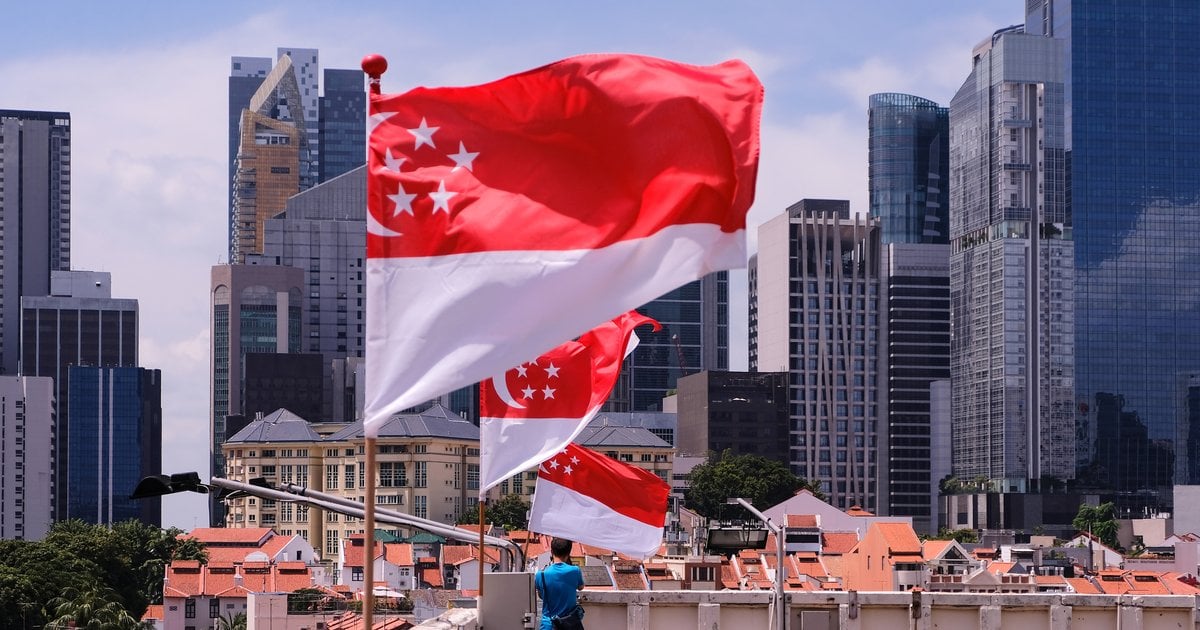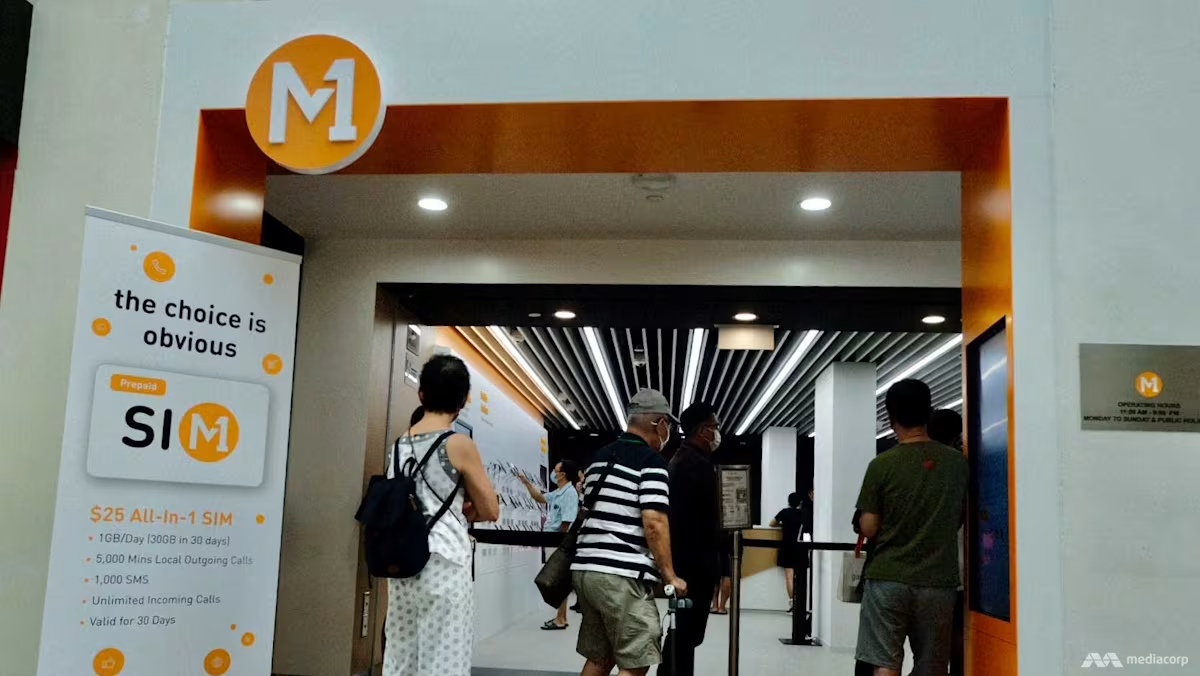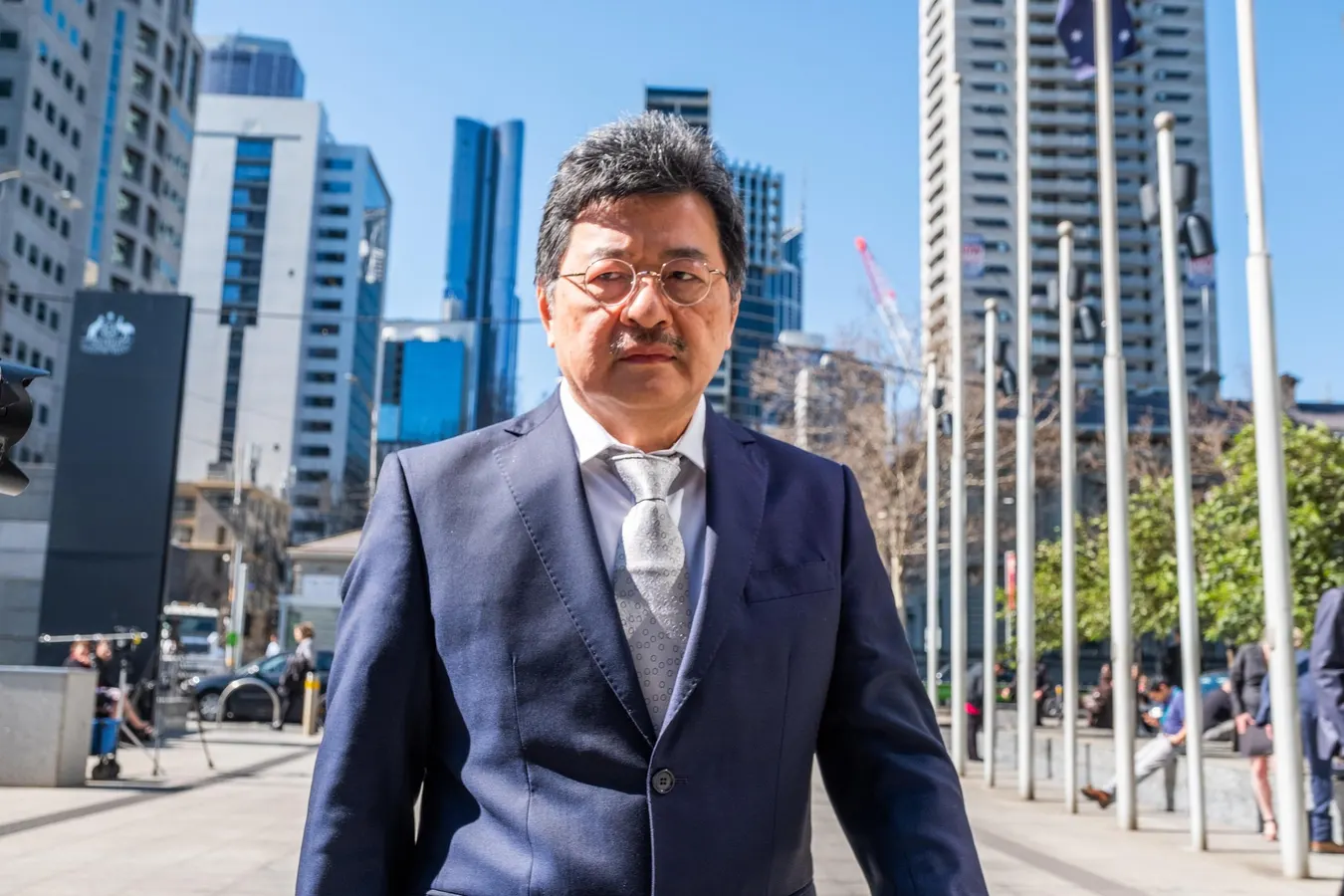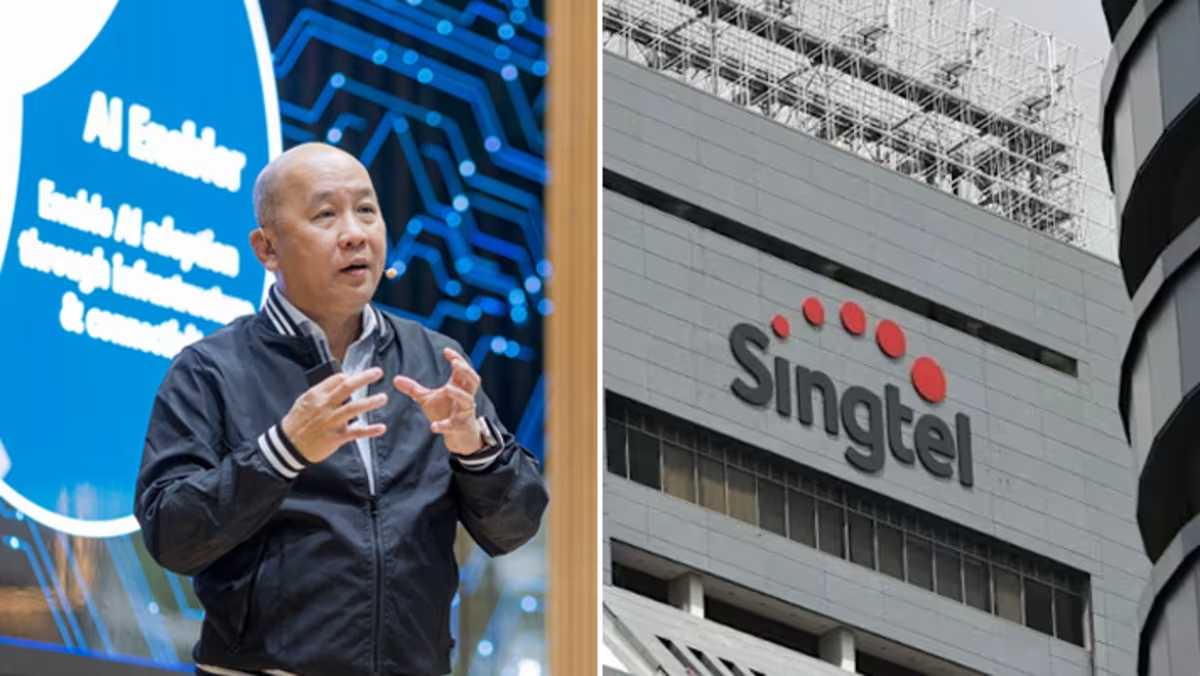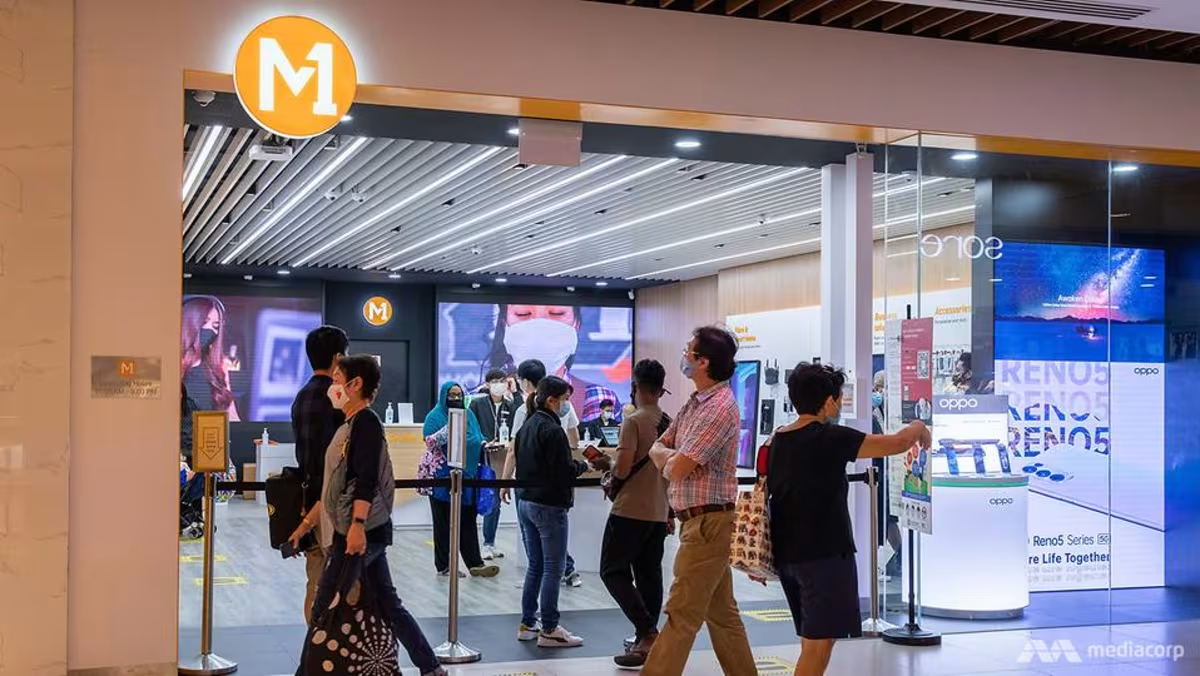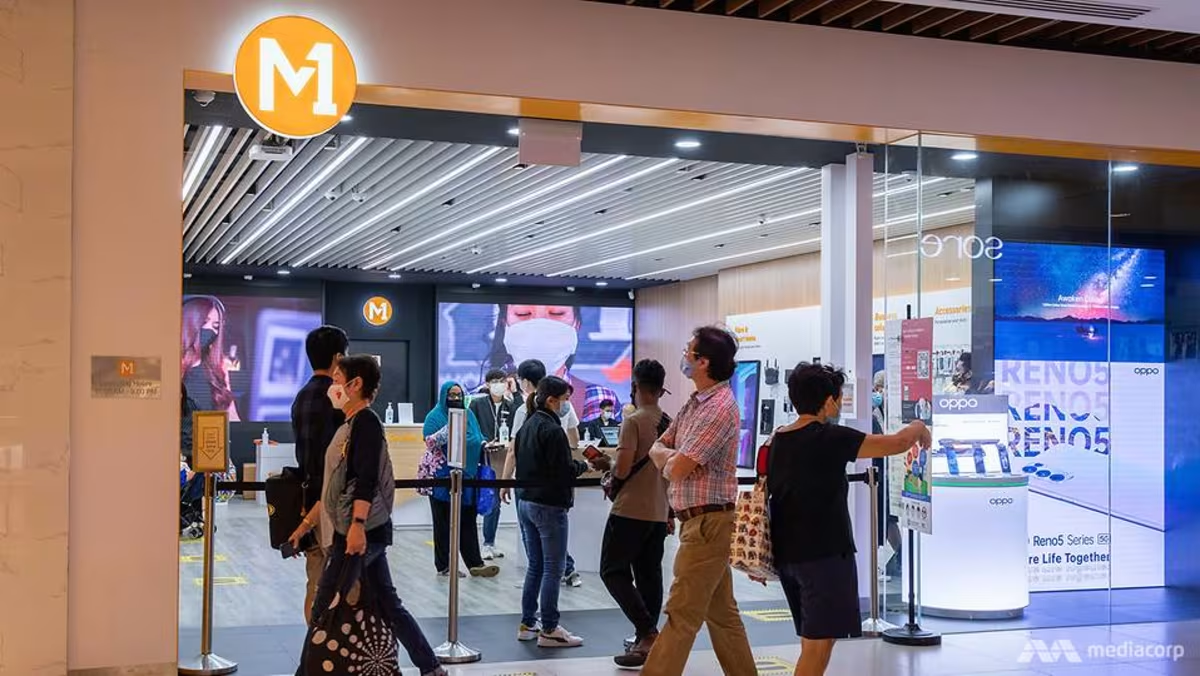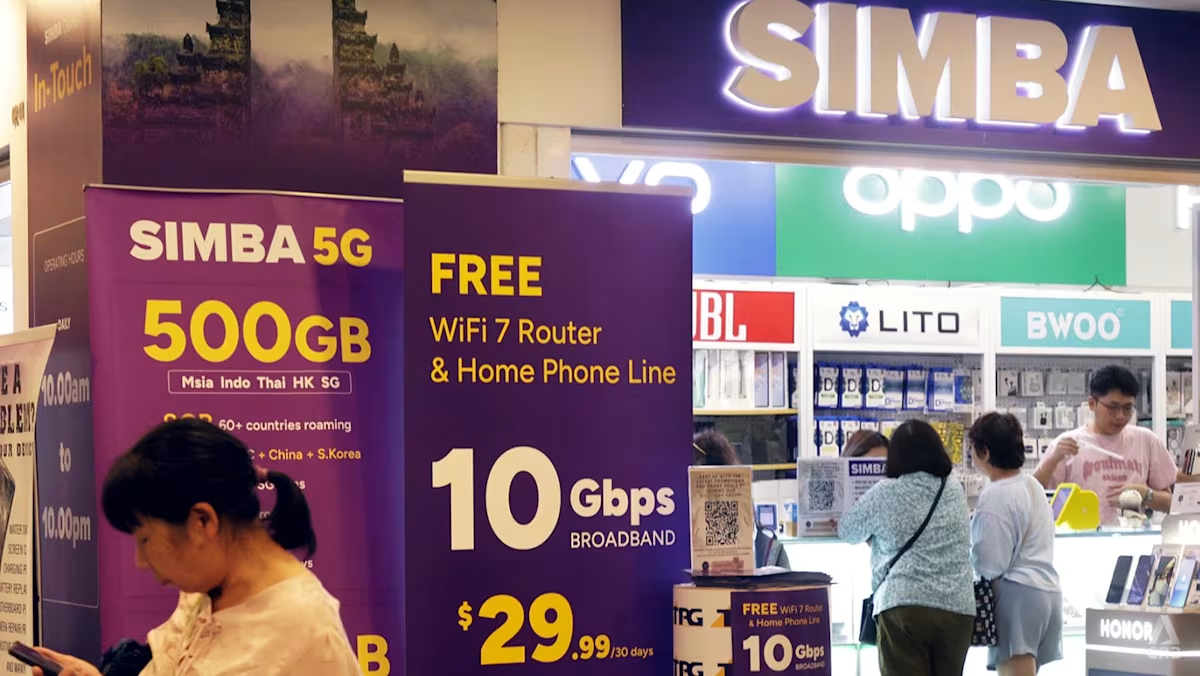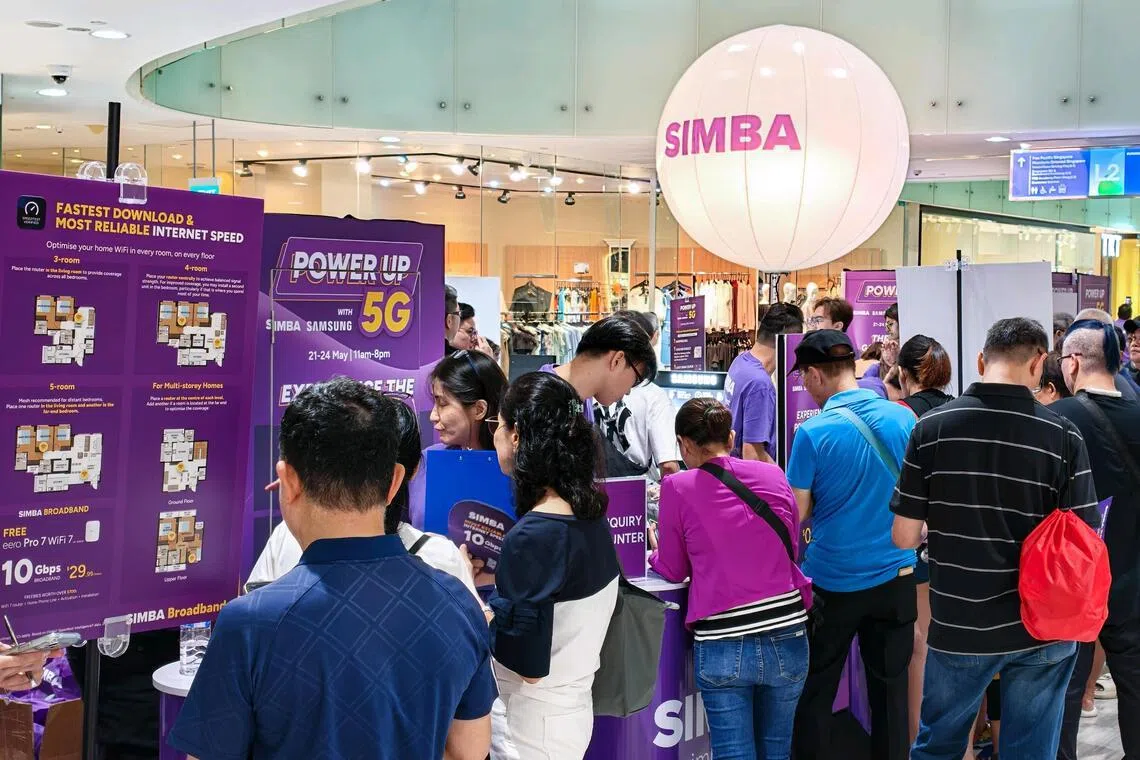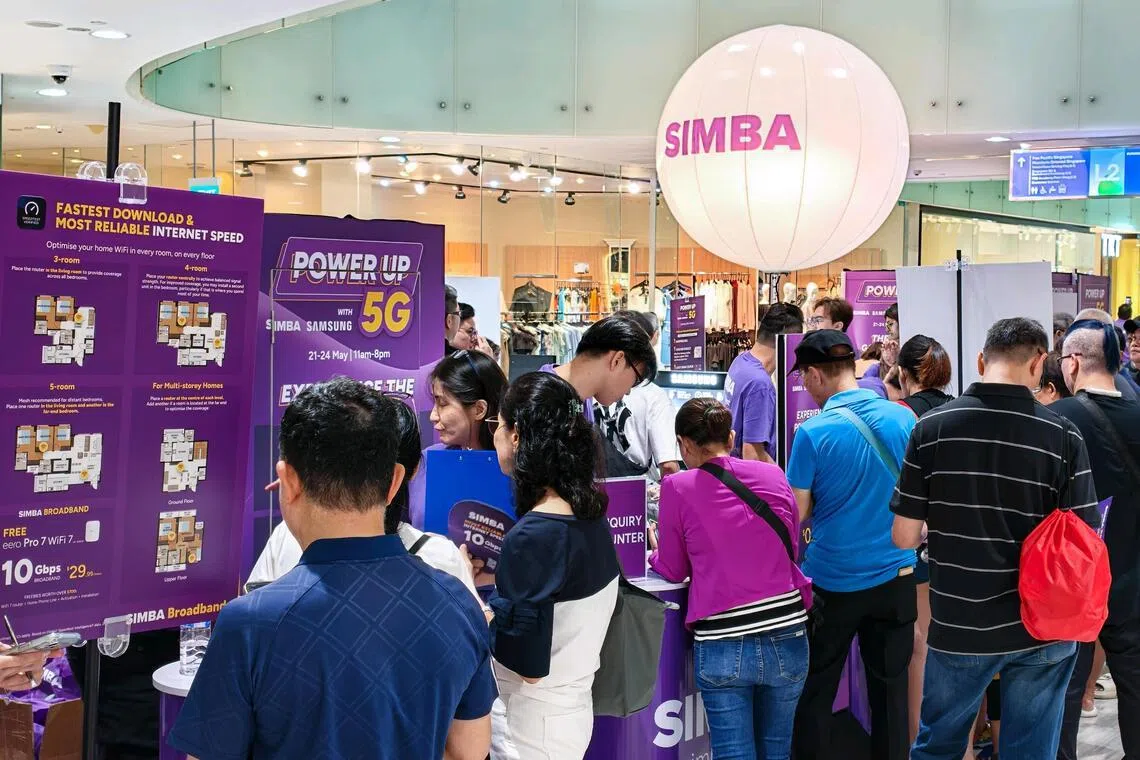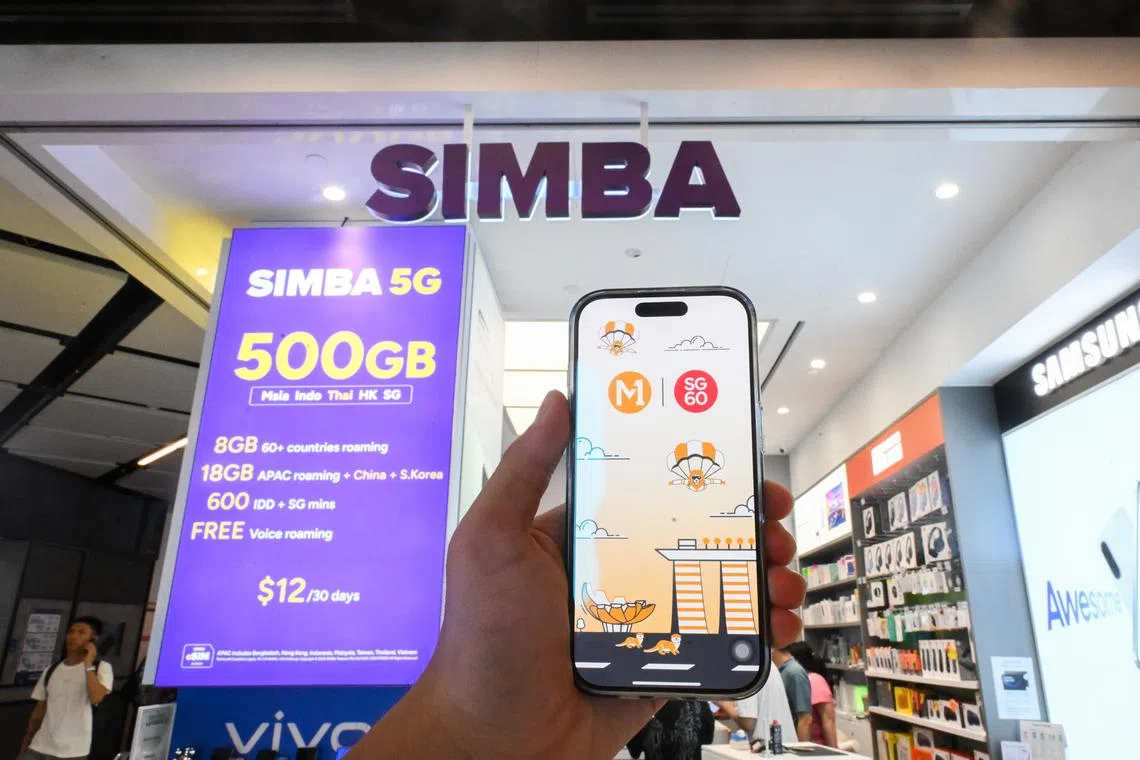
SINGAPORE - Singapore’s telco operators will likely face further cost pressures in the near term, after the Infocomm Media Development Authority (IMDA) on May 18 suspended its review of a proposed merger between M1 and Simba.The failed merger of M1 and Australia-backed Simba, Singapore’s third- and fourth-largest telcos, could also pose a setback to M1’s parent company Keppel’s asset-light transformation strategy. The sale of the telco would have unlocked around $1 billion for the asset manager.Analysts told The Straits Times that the telco industry would have benefited from market consolidation as it would have eased highly competitive pricing and helped the recovery of the telcos’ average revenue per user (ARPU), which has already been on a decline.But this deal is now likely dead in the water, with Keppel confirming in a briefing with the media and analysts on May 18 that it will allow the sale and purchase agreement between M1 and Simba to lapse upon reaching the long-stop date on May 21.This deadline had already been extended on March 26 when it was originally supposed to expire.A long-stop date is the contractual deadline by which conditions, including regulatory approvals, must be satisfied or waived, or the parties involved can walk away.Ms Chu Peng, an analyst at OCBC Bank, said the failed deal would preserve the current dynamic of a fragmented four-player structure that has long suffered from intense price competition, keeping margins under pressure and likely sustaining aggressive consumer pricing in the near term.“A merger would have been structurally positive for the industry. Without it, competition among the telco operators is unlikely to ease, which will continue to weigh on the earnings outlook of their Singapore telco businesses.”Mr Hussaini Saifee of Maybank added that the Singapore market is suffering from high single-digit to double-digit revenue declines, and therefore too small and crowded to sustain four telco players.Market recovery will be further delayed with the failed consolidation, he said.StarHub chief executive Nikhil Eapen had previously told ST in an interview in January 2026 that a prolonged cut-throat price war would deter telcos from increasing investments in critical areas such as cybersecurity and innovation.Shares of StarHub and Singtel briefly dipped by around 0.5 per cent and 0.6 per cent respectively after the market opened on May 18. By mid-day, Singtel’s counter had bounced back and climbed through the day to close 1 per cent higher at $4.87.StarHub meanwhile closed flat at $1.The merger between M1 and Simba was first announced in August 2025 but subject to a prolonged review by IMDA afterwards.The regulator had been evaluating whether the consolidation would significantly lessen competition or raise public interest concerns. The review also includes ensuring that the operation of critical telecoms infrastructure meets the stringent cybersecurity requirements necessary in a heightened cyber risk landscape, IMDA said.Simba’s alleged breach of the Telecommunications Act 1999 and the conditions of its facilities-based operations licence is also unprecedented, analysts noted.Mr Robson Lee, director of law firm Legal Solutions, said this is the first reported incident of such a nature by a telco operating in Singapore.“Without firmer details of the conditions that Simba had allegedly breached, it would be difficult to determine the consequences and potential penalties meted out.”It is also unclear if the breach was done by Simba’s officers or the company as an entity, he added.In a statement on May 18, Keppel chief executive Loh Chin Hua said the company will now embark on a 90-day plan to enhance M1’s efficiency by reducing technology platform and network costs and using AI for automation. He said the company will share more details about these plans in its results briefing for the first half of the 2026 financial year, which is expected to take place in July.Keppel will remove the proposed divestment of its stake in M1 from its announced monetisation for 2025, while its target to divest $2 billion to $3 billion of non-core assets in 2026 - announced during its first quarter business update in April - will remain unchanged.Responding to an analyst’s question during Keppel’s briefing, Mr Loh said the company’s objective is to “strengthen M1 and make it more valuable and attractive”, so that it will receive the optimal valuation when it divests the telco.M1’s operations will not have an impact on Keppel’s earnings, he added. But the one-off special dividend of 7 to 11 cents arising from the sale of M1 to Simba would now be deferred until it has divested the telco.“We hope to bring other monetisation targets forward to this year to fill the gap,” he added.M1 chief executive Manjot Singh Mann said that following the complete deployment of its 5G network, the telco will now be looking to reduce its capital expenditure over a period of time to focus more on operations and maintenance.In the meantime, the failed M1 sale to Simba could put a dent on Keppel’s business, analysts said.Mr Nicholas Yon, manager at brokerage firm Lim and Tan Securities, said Keppel would now be under pressure to turn M1 around in the face of increased competition from Simba, setting them back on their monetisation goals.While the merger was also meant to share infrastructure costs between the two merged telcos, he believed that M1 would now have to increase its Capex spending in order to compete with incumbents Singtel and StarHub.OCBC’s Ms Peng said the suspension of the merger is likely to disappoint investors who will be missing out on a chunk of the special dividends payout. But progress on its $3 billion divestment target should help cushion this absence in the interim.In their note on May 18, CGS International’s analysts Lim Siew Khee and Meghana Kande downgraded their rating for Keppel from “Add” to “Hold”. They noted that while Keppel could see assets under management (AUM) growth in FY2026, downside risks include slower-than-expected asset monetisation impacting dividend payout and a weaker integrated power business.Other assets that Keppel could potentially divest include condominium development Keppel Bay Plot 6, commercial building Keppel South Central, as well as Rigco Holding which holds 13 legacy offshore drilling rigs.Keppel’s shares shares tumbled when trading opened on May 18 and were already down 4 per cent at $10.18 at 9.28am. The counter closed 2.1 per cent lower at $10.38.Following the expiry of the long-stop date, Keppel would be free to start negotiations with other potential buyers for its divestment of M1.Mr Loh confirmed at the briefing that it had been in serious discussions with at least two bidders. StarHub, the second-largest telco, had been rumoured for some time to be in the running to acquire M1 before Simba closed the deal with Keppel.Some analysts say it is possible that StarHub could restart negotiations again, as a successful acquisition would allow it to compete on a more equal footing with Singtel, which has the largest market share at around 45 per cent.Mr Yon said that a merger between M1 and Singtel is highly unlikely due to Singapore’s antitrust laws forbidding market leaders making such big moves, though exceptions have been made in other industries in the past.He cited the case of leading steel fabricator BRC Asia acquiring its rival Lee Metal Group for $199.3 million in 2018, which was approved by the Competition and Consumer Commission of Singapore.A StarHub-M1 merger could spell further trouble for Simba. Its market share would be significantly dwarfed by the two incumbents, posing a risk to its long-term viability, he noted.On the Australian Stock Exchange, shares of Simba’s parent company Tuas plunged as much as 72.1 per cent from last week’s close of A$6.10 (S$5.58) to A$1.98. The counter later closed 62.8 per cent down at A$2.27.Tuas had reported a 26 per cent increase in its revenue at $78.1 million, and 27 per cent EBITDA growth at $42.1 million for the first half of the financial year ended Jan 31, 2026. It attributed its growth to a “rapidly expanding subscriber base” for its mobile and broadband business.It said in its report that it would continue to strengthen Simba’s positioning across both mobile and fibre broadband segments, with a Capex of $50 million to $55 million.The telco did not respond to ST’s queries.
Failed Simba-M1 deal could pose setback to Keppel
The failed M1-Simba merger signals further cost pressures for Singapore telcos and a setback for Keppel's strategy. Read more at straitstimes.com. Read more at straitstimes.com.
1,352 words~6 min read