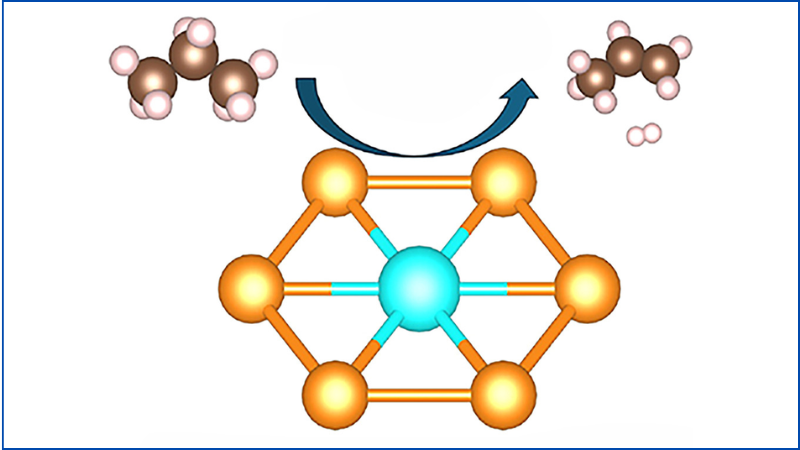
Polypropylene is a lightweight and durable plastic found in common household products from food containers to storage bins. The conventional methods of producing its raw material, propene, however, rely on high energy input or costly platinum catalysts and often result in inconsistent yields.
Now, UCLA chemical engineers have mapped out a promising method to improve the conversion of propane gas into propene, the world’s second most widely produced plastic precursor, after ethylene.
Using computer simulations, the researchers found that an emerging class of chemical catalysts known as single-atom alloys could make the process more efficient, increasing yield while reducing energy use and material costs. A study describing their findings was published April 1 in the journal Chem Catalysis.
Propene is primarily produced through steam cracking and fluid catalytic cracking — industrial processes that heat hydrocarbons to temperatures exceeding 800 degrees Celsius to “crack” them into smaller molecules. While effective, these methods are energy intensive and produce a mixture of chemical byproducts.
An alternative method, known as propane dehydrogenation, operates at lower temperatures, around 600 degrees Celsius, and produces both propene and high-purity hydrogen. However, the process relies on platinum catalysts, which are costly and prone to “coking,” the buildup of carbon that clogs the catalyst surface, leading to performance degradation and periodic shutdowns for cleaning.