Policymakers and industry leaders in the US are striving for energy security amidst a global increase in energy consumption and global movement away from fossil fuels. The petrochemical industry, one of the most energy-intensive, faces growing pressure to adopt new and more sustainable technologies.
A decision-making tool from researchers at Carnegie Mellon can help individual industries like petrochemicals find their optimal decarbonization strategies.
In Industrial & Engineering Chemistry Research, Ana Inés Torres, Ignacio Grossmann, Sampriti Chattopadhyay, and their collaborators from Shell introduce a framework based on a multiperiod mixed-integer linear programming (MILP) model. It predicts the optimal technology switch strategy for an oil refinery to implement decarbonization technologies. “A company can use our framework to find the best way to transition a refinery toward decarbonization,” says Chattopadhyay, a Ph.D. student in chemical engineering.
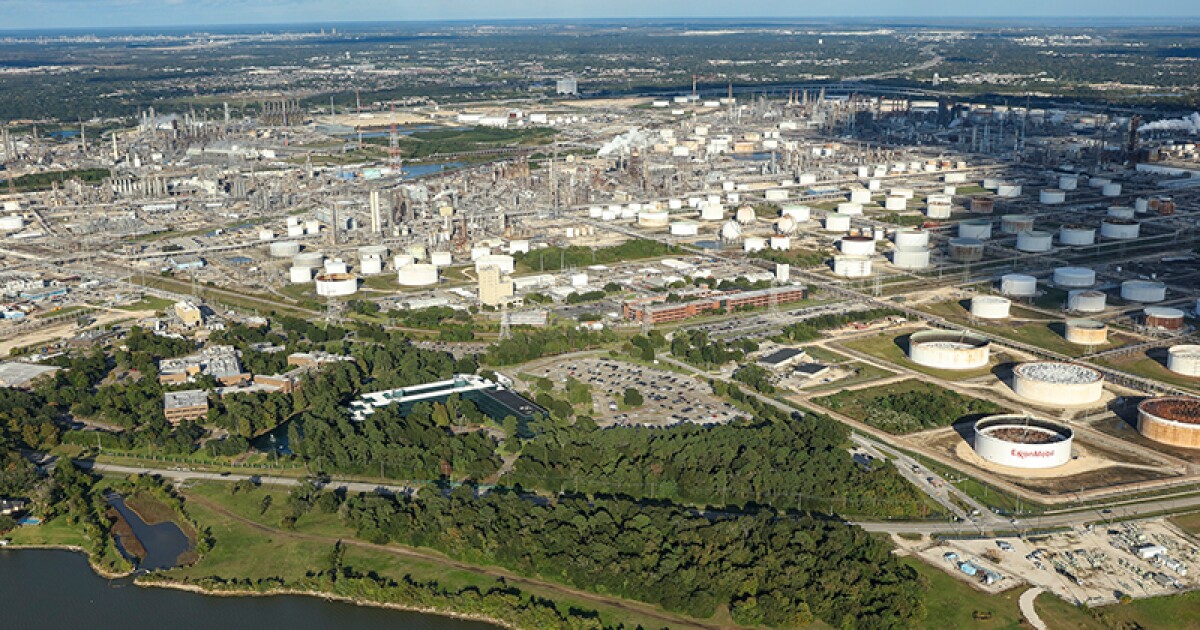
Within the US industrial sector, decarbonizing oil refineries is uniquely challenging because of their high efficiency and varied configurations, processes, and energy inputs. Torres, associate professor of chemical engineering, Grossmann, professor of chemical engineering, and Chattopadhyay based their framework on production capacity, plant structure, location, and availability and cost of renewable energy sources. Their approach minimizes cost while considering emissions restrictions.