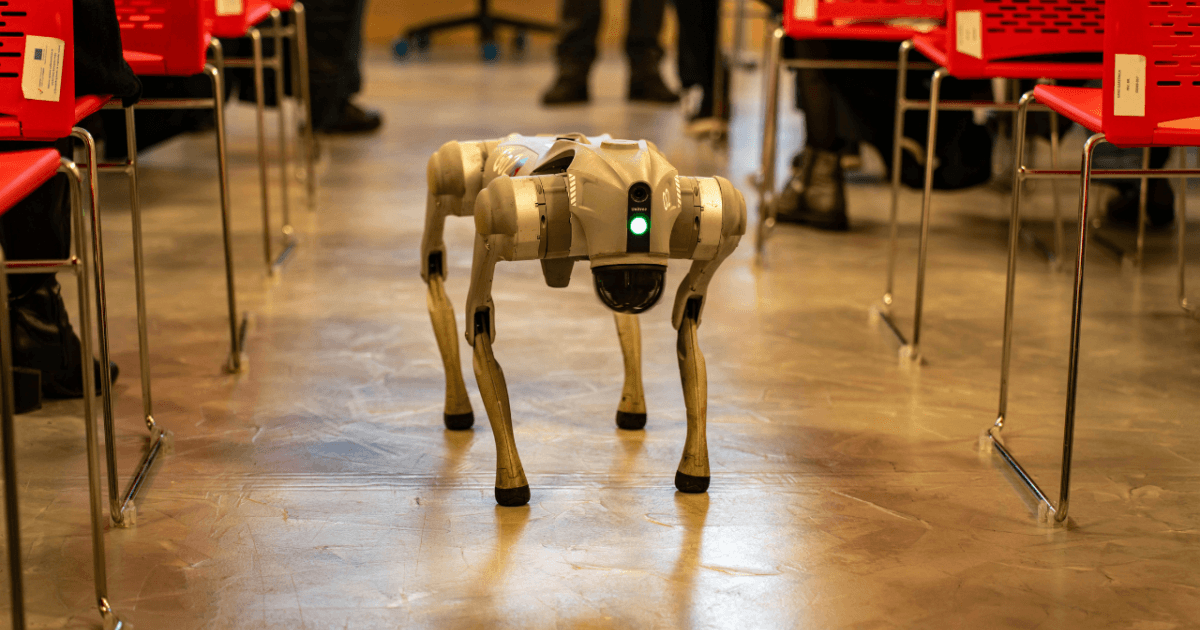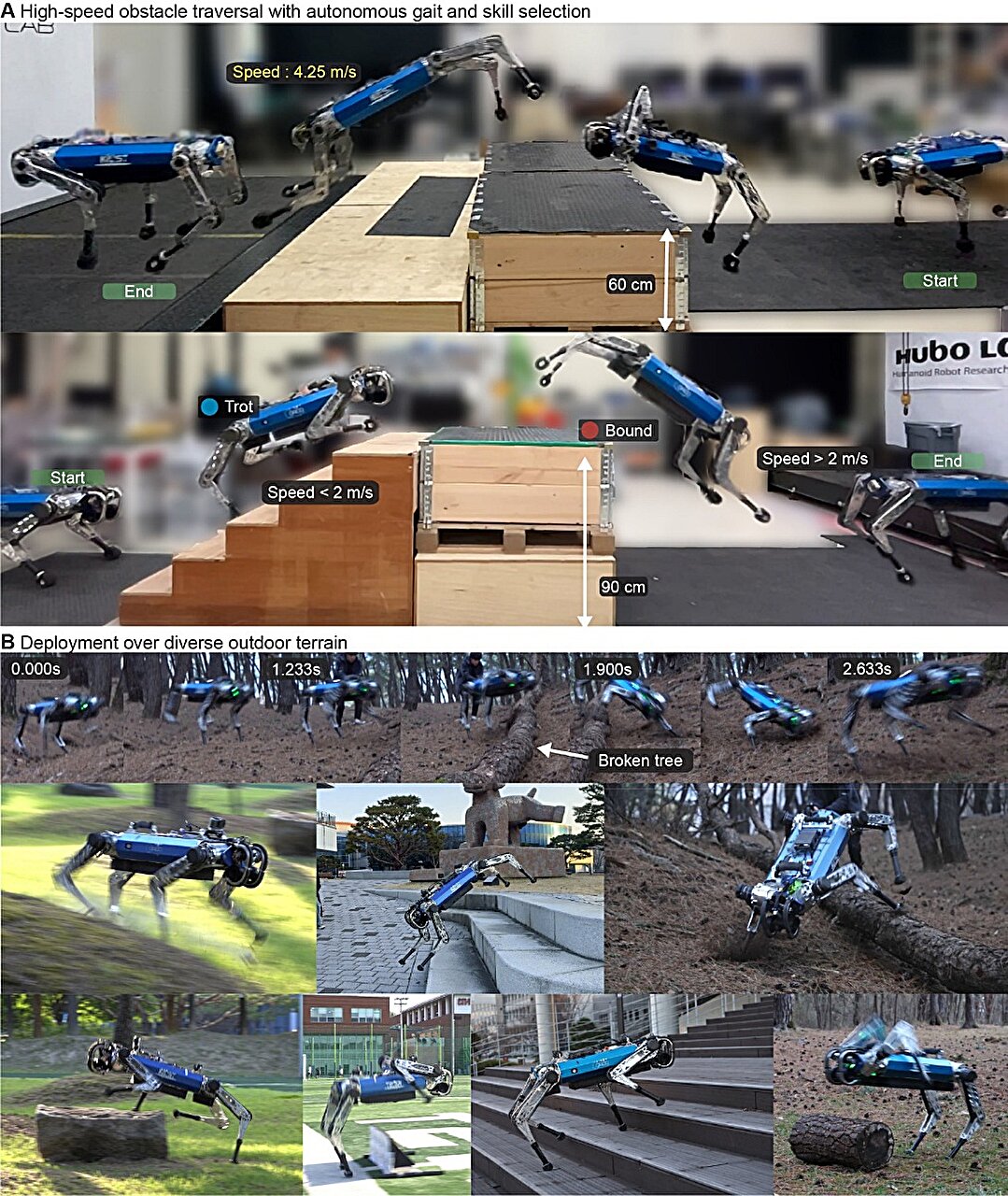
Carnegie Mellon University’s Robomechanics Lab and FieldAI have been awarded a Small Business Technology Transfer grant from the U.S. Army to develop new technology that will enable quadruped robots to move safely, efficiently, and reliably through muddy and deformable terrain.
The project combines FieldAI’s expertise in deploying general-purpose robotics with Aaron Johnson’s leadership in legged locomotion and terramechanics. Together, the team will develop new software and hardware that allow four-legged robots to sense, adapt, and maintain traction in mud without requiring a preexisting model of the terrain.
While quadruped robots have made rapid progress in navigating tricky terrain, muddy environments remain difficult due to their unpredictability. Acting like a solid under low stress but flowing like a fluid when stress increases, mud is extremely difficult to model.
“The core problem is that there isn’t one ‘right’ way to walk in mud,” said Johnson, professor of mechanical engineering at Carnegie Mellon. “The strategy that works in one patch can fail a few steps later. We’re building a control system that lets robots recognize the differences and respond immediately. This is a fundamental shift from how locomotion is typically engineered.”