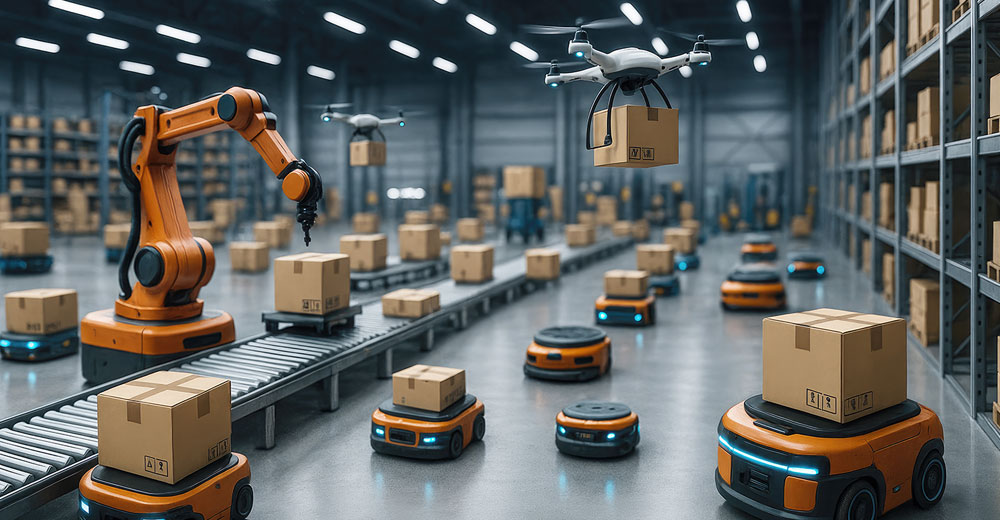
As robots move into shared spaces, coordination failures can quickly become safety risks and operational bottlenecks. For these systems to operate safely at scale, they need a shared way to communicate location, intent, and behavior.
To address this need, Andrew Singletary, CEO of 3Laws, is leading an industry working group with Daniel Theobald, creator of the MassRobotics AMR Interoperability Standard, to develop an interoperability model for heterogeneous robotic systems.
The goal is to move robotics from experimental deployments to a reliable, scalable enterprise utility that organizations can deploy without heavy integration. Updating interoperability standards can turn disconnected machines into a coordinated robotic workforce.
Singletary explained that the original standard focused mainly on sharing state and status information between mobile robots. Integrating robots from different manufacturers, however, requires a significant step forward, as these machines must work together and dynamically adjust their behavior based on what others are trying to accomplish.
“One of the major goals of the new framework is to add intent communication. Instead of just broadcasting status, we want robots to signal what they are trying to do,” he told TechNewsWorld.