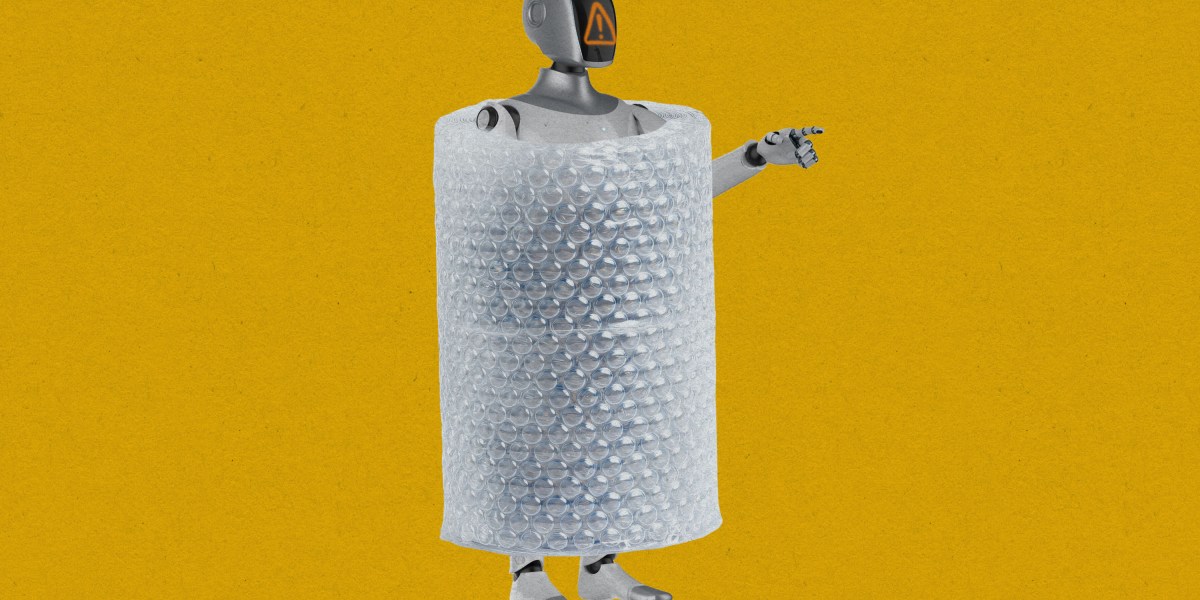
Humanoid robots pose unique safety risks. That's driving a push for new standards before they start sharing our workplaces and homes.
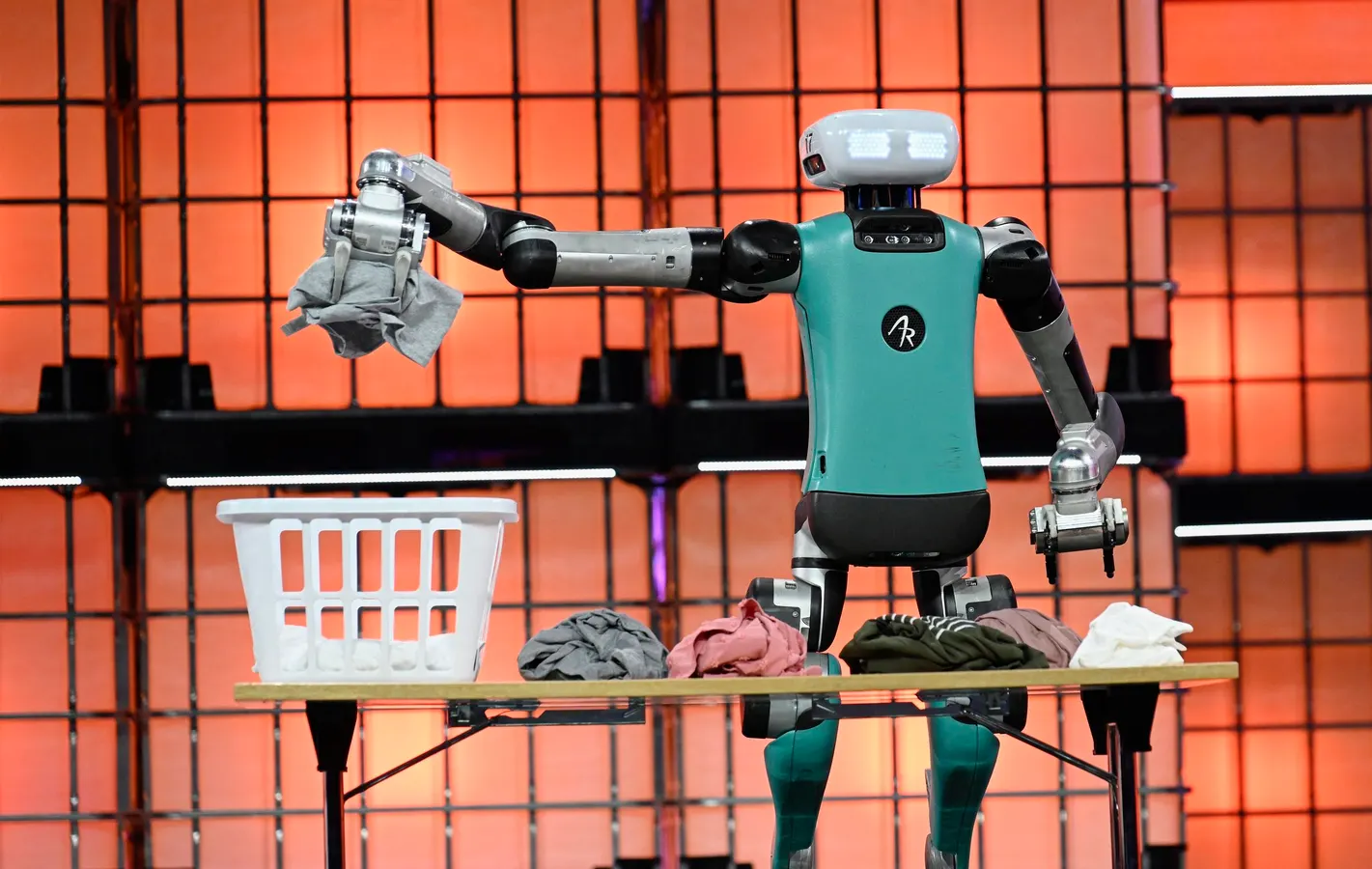
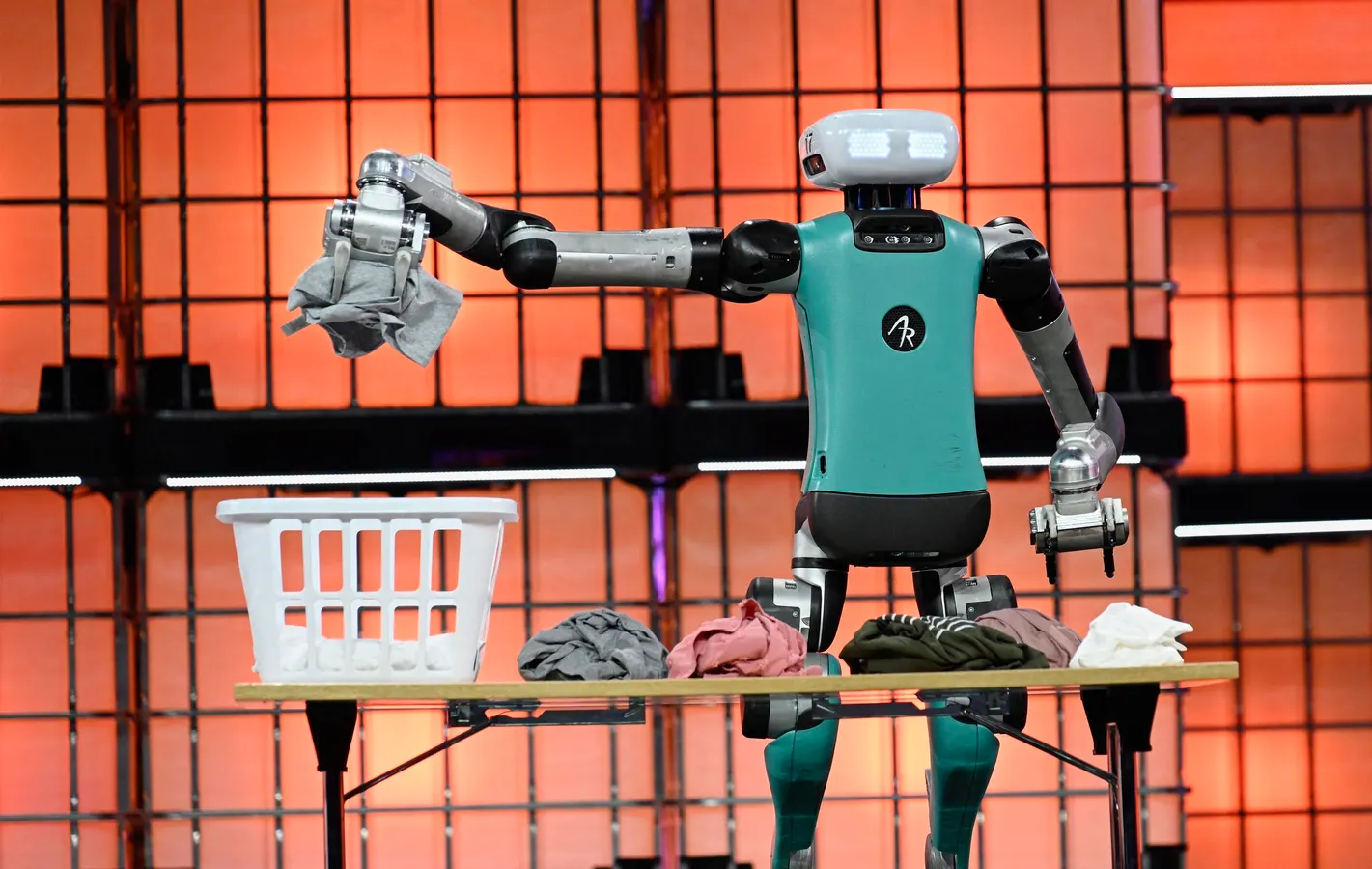
Last year, a humanoid warehouse robot named Digit set to work handling boxes of Spanx. Digit can lift boxes up to 16 kilograms between trolleys and conveyor belts, taking over some of the heavier work for its human colleagues. It works in a restricted, defined area, separated from human workers by physical panels or laser barriers. That’s because while Digit is usually steady on its robot legs, which have a distinctive backwards knee-bend, it sometimes falls. For example, at a trade show in March, it appeared to be capably shifting boxes until it suddenly collapsed, face-planting on the concrete floor and dropping the container it was carrying.
The risk of that sort of malfunction happening around people is pretty scary. No one wants a 1.8-meter-tall, 65-kilogram machine toppling onto them, or a robot arm accidentally smashing into a sensitive body part. “Your throat is a good example,” says Pras Velagapudi, chief technology officer of Agility Robotics, Digit’s manufacturer. “If a robot were to hit it, even with a fraction of the force that it would need to carry a 50-pound tote, it could seriously injure a person.”