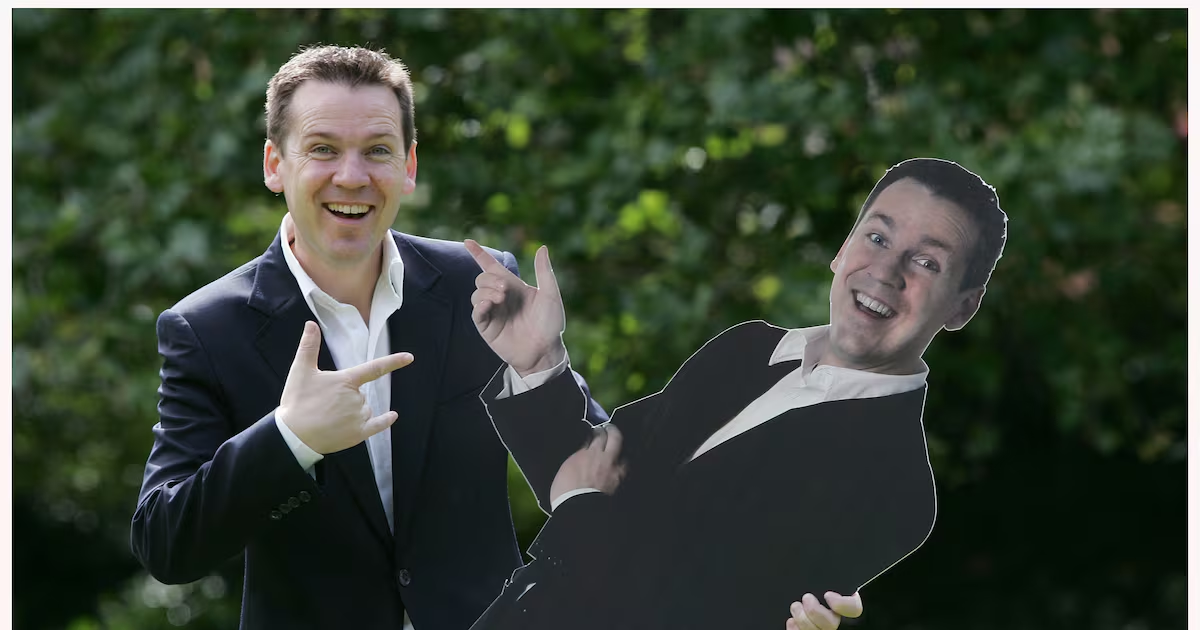
Just for a second, it sounds as if Derek Mooney is going to address, if you’ll excuse the inevitable wildlife-related metaphor, the elephant in the room. “I must tell you about an interesting experience I had earlier,” he says, chuckling, as he opens his nature show Mooney Goes Wild (RTÉ Radio 1, Monday) for the first time since the news that he’d been added to an amended list of RTÉ’s 10 best-paid presenters. Pray tell!Disappointingly, Mooney doesn’t go on to talk about how a reclassification of his role from producer to presenter catapulted him into the top-earners list, not to mention into the latest crisis to engulf RTÉ. Instead he relates seeing what he thought was a rat in the Montrose car park (insert your own joke here) only to realise it was actually a squirrel.As an anecdote it’s not entirely unrelated to Mooney’s wildlife remit – he wonders why we find some rodent species repellent and others cute – but you wouldn’t think it’s the kind of material you’d need to spend €200,000 or so on each year. In fairness, he also covers a wide range of topics about Ireland’s natural world, from bird behaviour to whale watching, as he has done throughout his broadcasting career, and presumably his producing one too.Rather than adopt the benignly omniscient tone of the centenarian naturalist David Attenborough, Mooney takes a more casual and collective approach to proceedings. There are amiable discussions with his rotating panel of wildlife experts – in this case the zoologist Richard Collins and the ornithologist Niall Hatch – as well as contributions from listeners, as when Henrietta asks why a honeybee was pacing in circles in her Galway garden. (Turns out that the bee is unlikely to return to a hive.)Accordingly, listening to the show is akin to eavesdropping on a meeting of amiable obsessives chatting about their shared passion, a format that speaks of connection with the wider wildlife community. Mooney presides over this with conspicuous knowledge and enthusiasm – “The best place for whale watching is the Strait of Gibraltar,” he informs us – even if his demeanour can also have the slightly manic cheerfulness of a gameshow host.It’s a persona that will be familiar to those who remember Mooney’s lengthy, if lightweight, tenure on Radio 1’s weekday midafternoon slot before his replacement by Ray D’Arcy in 2015. The weekly wildlife show is a better fit for Mooney, drawing as it does on his area of speciality, even if it doesn’t dispel doubts about value for money.RTÉ host Cormac Ó hEadhra For all that, however, Mooney’s high salary seems more a symptom of RTÉ’s malaise than a cause. At the same time, the network appears to use such arrangements for its own benefit rather than that of its employees when it suits, as emerges on Saturday with Cormac Ó hEadhra (RTÉ Radio 1). The Labour TD Marie Sherlock raises the matter of how the late Seán Rocks, long-time host of Radio 1’s arts show Arena, was designated as a producer rather than a presenter by RTÉ, which has had significant financial implications for his widow, Catherine Bailey.It’s a shabby matter, especially considering the esteem and affection with which the much-missed Rocks was held by listeners and artists alike. It’s to Ó hEadhra’s credit that the issue gets raised on the airwaves. It’s not a good look for an already battered RTÉ, however.It’s unfortunate that all this brouhaha coincides with an underwhelming six-month report card on Radio 1’s relaunch last November, in the form of disappointing results from the latest JNLR listenership survey. All the main shows across the station’s overhauled weekday schedule have suffered a drop in audience numbers. Some perspective is required. The dips, averaging about 10,000-15,000 listeners, are hardly calamitous – Radio 1 remains the most popular station in the country by some distance – and possibly to be expected after a makeover that introduced new presenters and altered time slots.On its own terms, the refreshed line-up has been working pretty well. David McCullagh has made Today (RTÉ Radio 1, weekdays) his own, his doleful humour and analytical acuity making him a versatile host, and if the partnership of Katie Hannon and Colm Ó Mongáin on Drivetime (RTÉ Radio 1, weekdays) occasionally has an awkward chalk-and-cheese quality, they also bring rigour and nous to their slot, even if it ends at the bafflingly early hour of 6pm.Broadcaster Oliver Callan. Photograph: Bryan Meade Most notably, having gone off the boil somewhat, Oliver Callan (RTÉ Radio 1, weekdays) is bubbling away nicely again – as well he might be, given the admission of RTÉ’s director general, Kevin Bakhurst, that the presenter-cum-impressionist receives an additional payment for his satirical series Callan’s Kicks. But Callan is performing well in his chatshow role, too, gauging the mood astutely as he toggles between celebrity chats and more ruminative conversations.[ David McCullagh is a drawler whose sensitivity training needs a tweak, but it worksOpens in new window ]He’s wittily deferential towards the jazz venture of the Hollywood star Jeff Goldblum, comparing his guest’s speaking voice to a double bass and his singing one to a cello, while palpably enjoying the irreverent company of the comic actor Dawn French. But he also sounds genuinely interested in exploring the religious faultlines of the past, as he hears the author Julie Parsons describe her life as a Protestant teenager in 1960s Catholic Ireland: “The Irish we were wasn’t the Irish that everyone else was.” [ Jeff Goldblum: ‘Imelda May is one of my favourite people on Earth’Opens in new window ]Shifting seamlessly between such different guests isn’t as easy as Callan makes it sound. Mooney, for one, never quite mastered the art during his chatshow-host days.But, for all that, the sum of the parts in Radio 1’s schedule is somehow less than the whole. Perhaps it’s because audiences are still getting used to the changes. But just as the latest pay controversy at RTÉ is more likely to elicit jaded eye-rolling than apoplectic outrage among the wider public, so too loyal Radio 1 listeners may feel less inclined to stay faithful to a station if it appears to take them for granted.Certainly, the decision to replace decades-old theme tunes with a generic sound across the station’s output seems like a corporate answer to a question that neither audiences nor staff were asking. Even as the new Radio 1 jingles portentously trumpet about RTÉ being “your public-service media” at every opportunity, the national broadcaster’s actions give off the opposite impression, undermining the work of its hard-pressed personnel, regardless of whether they’re presenters or producers.Moment of the weekMultiplatform sports juggernaut it may be, but Off the Ball (Newstalk) also yields engaging moments for the general listener, as when its host John Duggan talks to the footballers Eoin Doyle and Chris Forrester on Saturday. Between analysis of the FA Cup final, the two players share anecdotes from their time with English and Scottish soccer clubs. Forrester talks poignantly about struggling with homesickness, as well as recounting a cautionary tale about the perils of learning to cook. “I nearly burned the house down trying to make a stir-fry,” he says, recalling how he threw a flaming wok out of his apartment window, mercifully not hitting anyone: “It was like a meteor.” It’s that rare occasion when a footballer is happy to miss the target.
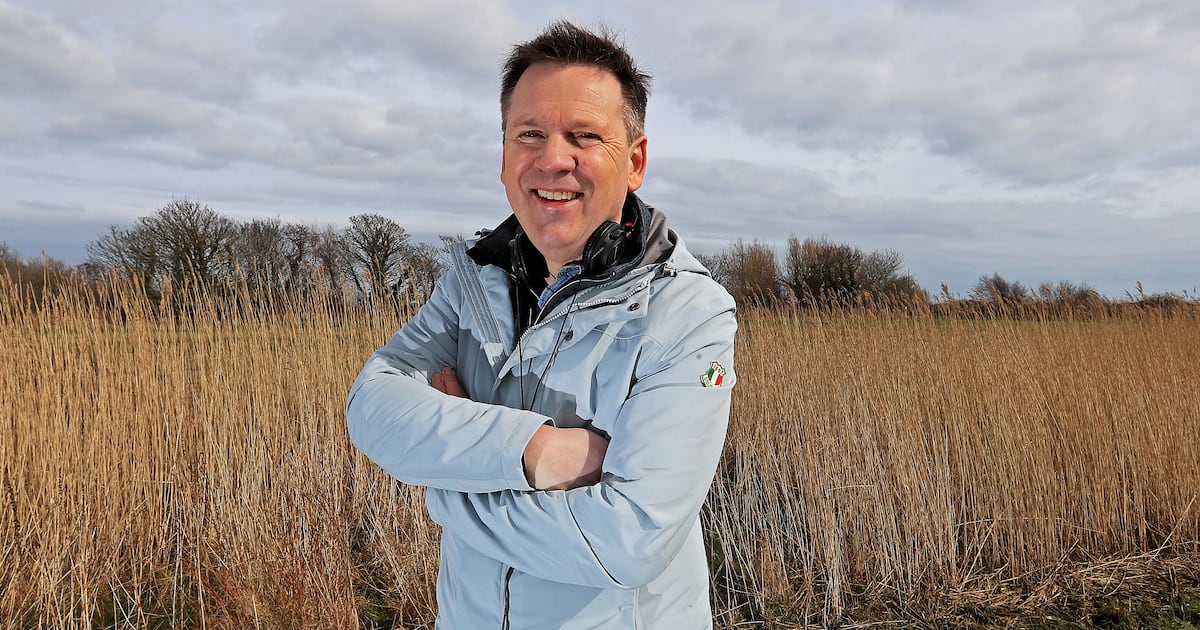
Derek Mooney spots a rat in the RTÉ car park. Insert your own joke here
Radio: Controversy about wildlife host’s pay comes at an awkward time for Radio 1 as its new schedule fails to gel
1,226 words~6 min read