CHICAGO -- Use of GLP-1 receptor agonists in patients with four solid tumor types was significantly associated with lower rates of progression to metastatic disease over a 5-year period, a propensity score-matched analysis found.
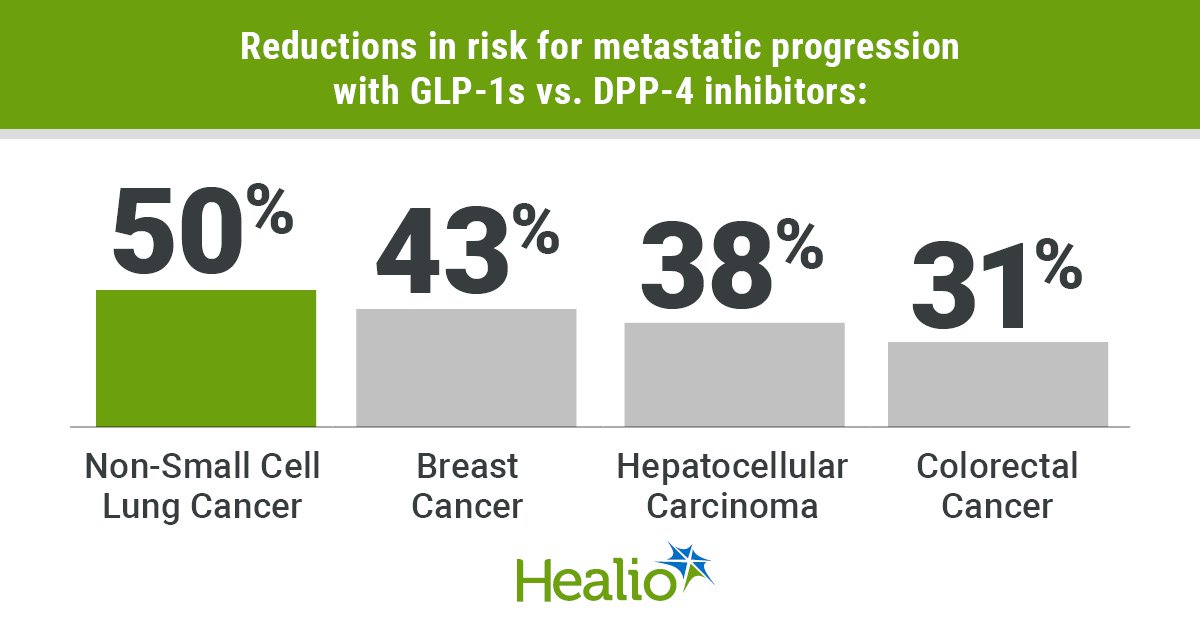
In patients with stage I-III colorectal, liver, breast, or lung cancers, those who started a GLP-1 drug after their cancer diagnosis had a 31% to 50% lower risk of progression to stage IV disease compared with patients who initiated another class of antidiabetic drug, DPP-4 inhibitors, reported Mark David Orland, MD, of the Cleveland Clinic Taussig Cancer Institute.
For two of the other three cancers examined -- prostate, pancreatic, and kidney -- rates of progression to metastatic disease in the GLP-1 drug group were numerically lower, but the differences were not statistically significant, he said at a press briefing ahead of the American Society of Clinical Oncology (ASCO) annual meeting.
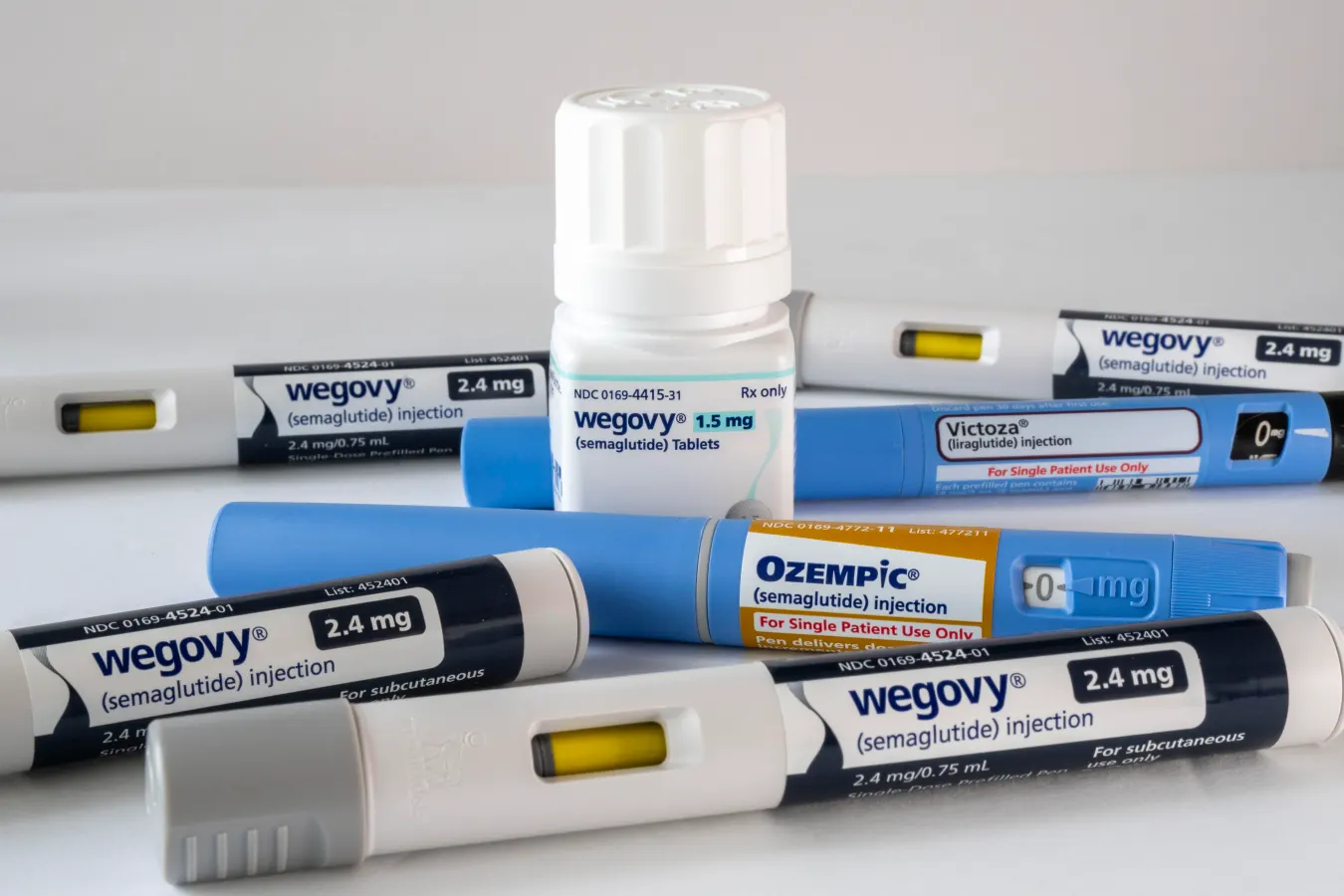
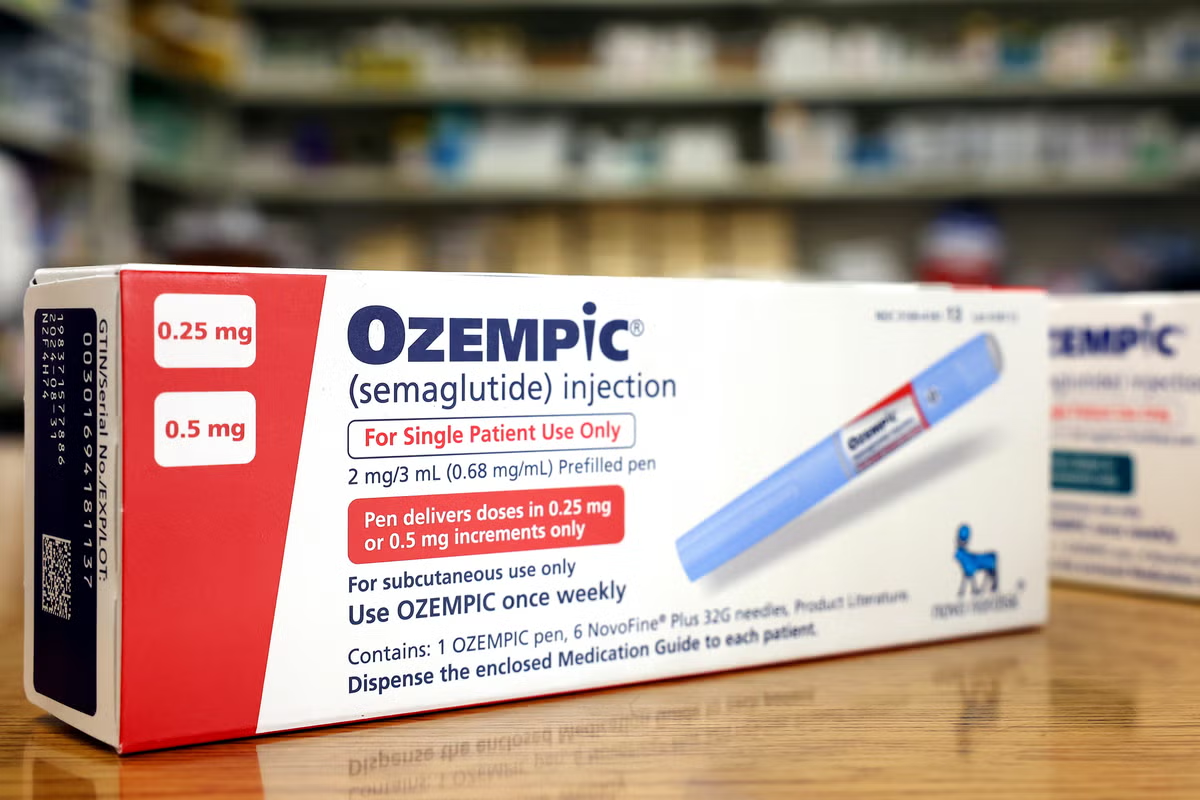
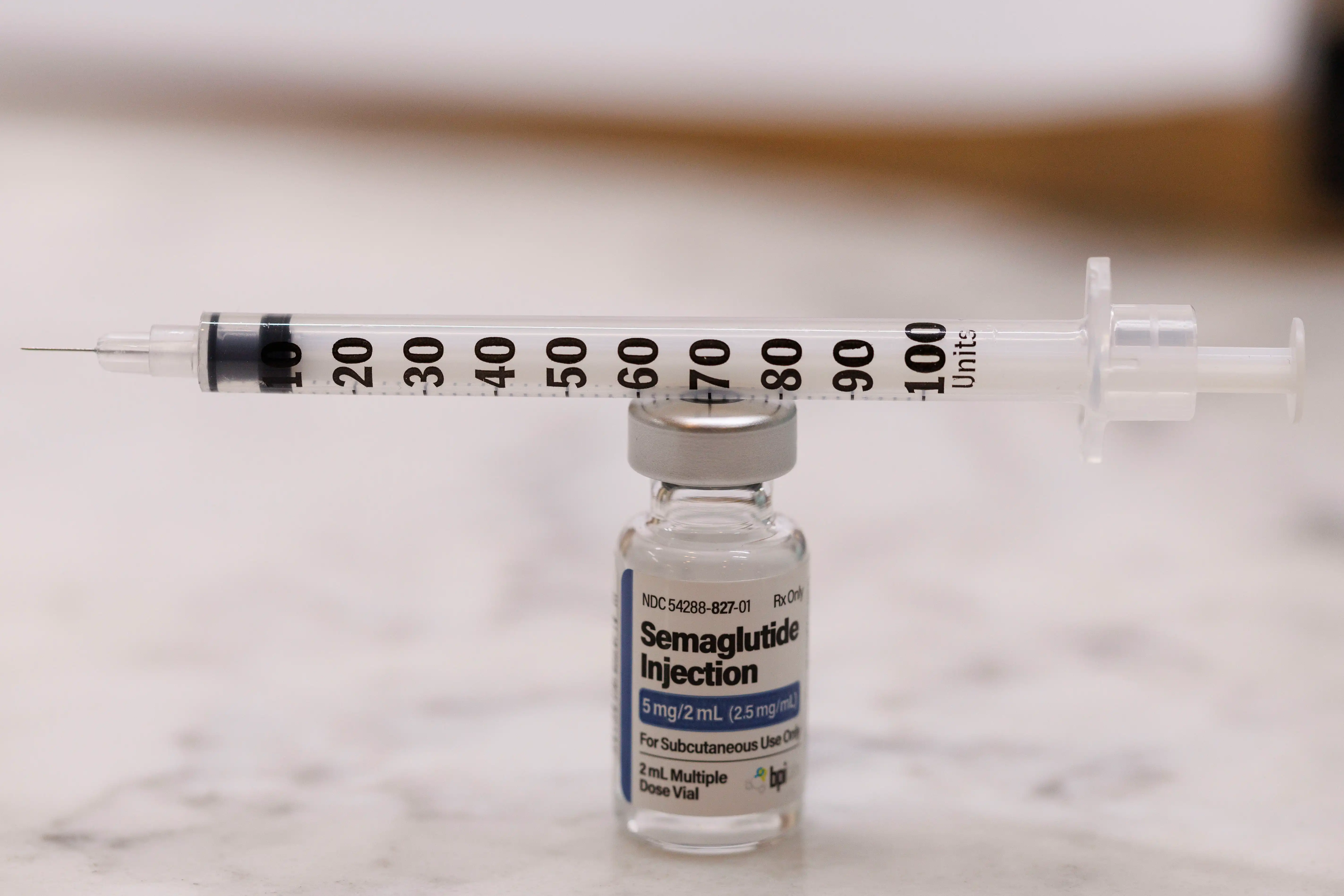
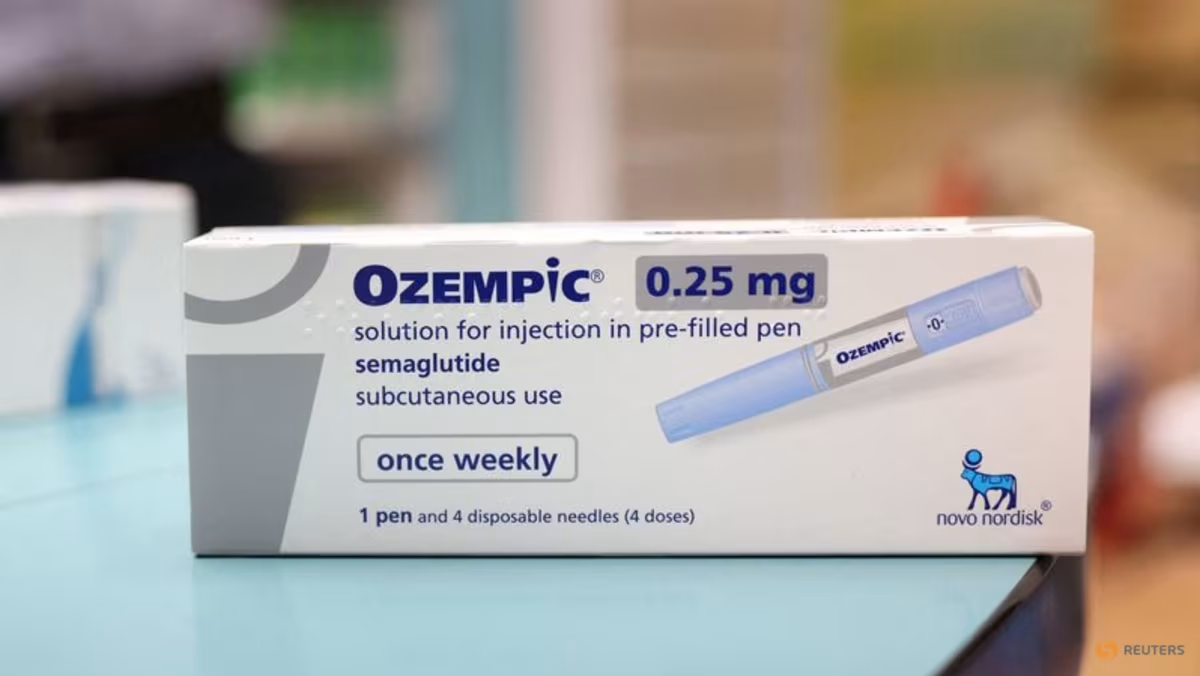
Initially approved for type 2 diabetes and obesity, GLP-1 drugs now carry indications in cardiovascular disease, chronic kidney disease, steatotic liver disease, and more, with an estimated 20 million Americans taking the blockbuster medications that include semaglutide (Ozempic, Wegovy) and tirzepatide (Mounjaro, Zepbound).