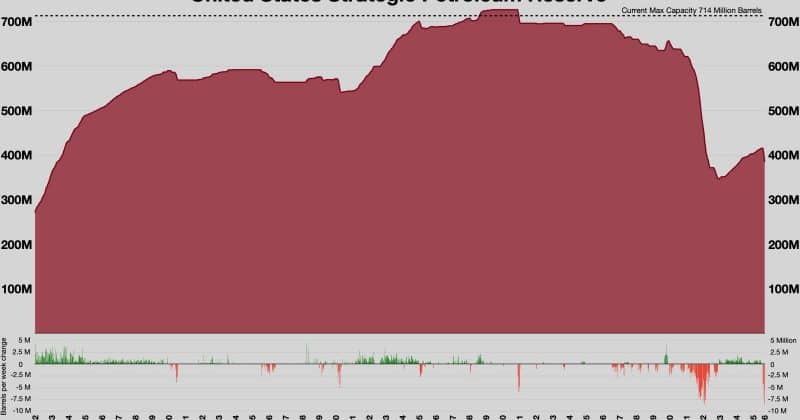
The oil market still looks surprisingly calm for a system that has spent nearly three months absorbing the largest supply disruption in modern history.That should probably make people nervous.Because underneath the headline inventory numbers, the market has gone from adding barrels to burning through them. And lately, it has been using emergency reserves to help keep the machinery running.The inventory picture still looks comfortable if you zoom out far enough.According to Oilprice.com's analysis of weekly API data, U.S. commercial crude inventories excluding the Strategic Petroleum Reserve remain up roughly 25 million barrels year-to-date.That sounds reassuring until you zoom back in.Over the last five weeks, commercial U.S. crude inventories have dropped by roughly 25 million barrels. The entire year's build effectively disappeared in a little over a month, and it was limited to “just” 25 million barrels only because the market had serious help.The Strategic Petroleum Reserve now sits at just 374.2 million barrels. Recent withdrawals have been enormous. The week ending May 15 saw a draw of roughly 9.92 million barrels. The prior week lost another 8.61 million barrels. Those back-to-back releases are the two largest weekly SPR withdrawals ever recorded. It kept the 25 million barrel loss from reading like a 55 million barrel one.Related: UK Adds New Tax Pressure as Energy Security Concerns GrowSo, How Bad is “Bad”?The 25 million barrel drop in commercial US crude oil inventories over the last five weeks was supported by 30 million barrels from the nation’s emergency reserve. So for brevity’s sake, let’s just say that commercial US crude oil inventories would have fallen by 55 million barrels over the last five weeks. That supplemental crude has helped create the impression that the market has adapted. Inventories, however, are not an adaptation. They are borrowed time. It also means that the Strait of Hormuz fallout hasn’t reached full impact yet.But make no mistake, it’s coming.Commercial inventories reflect normal market conditions. Lately, SPR barrels have started looking suspiciously like commercial inventory.And that has bought time, but someday, it will need to be put back, placing an even larger burden on supply.What About Beyond the US?Interestingly enough, the US is positioned quite well compared to its foreign peers. Still, the global market has managed to compensate for a staggering amount of missing supply. Reuters columnist Ron Bousso noted this week that the system has already absorbed roughly 13 million barrels per day of lost supply through inventory drawdowns and emergency releases of reserves.There are only a handful of other options available for making up for lost supply: production growth and demand destruction. Yes, the current adaptation has been quite impressive, but it has come at a cost. Crude inventories in nearly every part of the globe are now functioning as the system's primary shock absorber. It has kept some traders and everyday end consumers from thinking that the crisis isn’t so much of a crisis after all.The reality is that shock absorbers eventually wear out.The Crisis Spills Over Into Products Distillates may be where the picture starts getting uncomfortable.Distillate inventories have crashed, while the four-week average supplied data continues holding relatively firm. Demand destruction—the thing that everyone assumes will eventually arrive to save the market—has not really shown up. Yet.Prices have spiked, and consumers have adjusted around the margins.Nevertheless, people are still driving. Freight is still moving. Diesel demand has been resilient. Economic activity has not rolled over in a way that remotely matches the scale of lost supply.What now?The market needs barrels, but no one, including the U.S., is looking eager to volunteer to lift crude production.Shale is not riding over the hill to save the day like it did during the Saudi Arabia/Russia oil price war.U.S. production growth has been largely flat. The Baker Hughes rig count report has been mostly uneventful. Public operators spent years getting punished by investors for chasing volume growth. The old model of oil rising and everyone flooding the market doesn’t really exist anymore.Discipline has replaced growth. Wall Street made sure of that.Globally, inventory drawdowns are becoming increasingly aggressive.EIA data cited by Reuters showed global crude and fuel inventories falling at a pace of 5.27 million barrels per day in March and accelerating to 8.62 million barrels per day in April.Veteran analyst Paul Horsnell sees an even steeper trajectory. According to his estimates, cumulative inventory losses could approach 1.2 billion barrels. At that pace, some commercial systems could approach minimum operating levels as soon as August.The “minimum operating level” refers to the point when storage systems reach levels at which barrels become difficult to move, deliver, or use.The market usually responds before it reaches that point. Prices move first. Buyers reject prices when they become too much to bear. Demand drops. Prices ease. The cycle is repetitive, predictable, and often painful.What if the Strait Opens Quickly?Even if the Strait of Hormuz reopened tomorrow, the market cannot simply snap back to normal.Tankers displaced from Gulf routes have to reposition. Ships sent elsewhere have to return. Cargo schedules need rebuilding. Producers that curtailed supply because storage filled up still have to restart operations.Physical systems move more slowly than financial markets. Much more slowly.A tanker heading back toward Gulf loading zones may spend weeks repositioning before loading even begins. Then cargoes still have to travel toward Asia or Europe. Depending on the destination, this can add another month.The barrels do not magically reappear because somebody announces a reopening.The market has spent nearly three months borrowing time from inventories. The problem with inventories is that it is finite and has a bottom. The market will sooner or later need actual supply, including enough to replace what the world has stripped from its SPRs.By Julianne Geiger for Oilprice.comMore Top Reads From Oilprice.comIndonesia Tightens Grip on Key Commodity ExportsOil Could Enter Red Zone by July/August: IEAUK Eases Some Russian Oil Sanctions as Fuel Prices Soar
Why Oil’s Supply Crunch Could Arrive Late | OilPrice.com
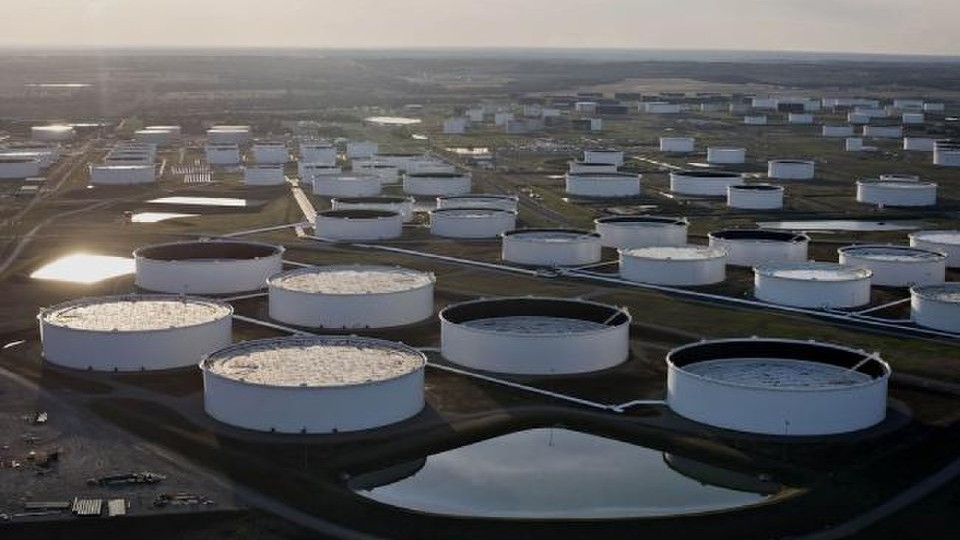
U.S. commercial crude inventories have erased their entire 2026 build in just five weeks, with massive Strategic Petroleum Reserve releases masking what would otherwise be a far steeper supply drawdown.
972 words~4 min read