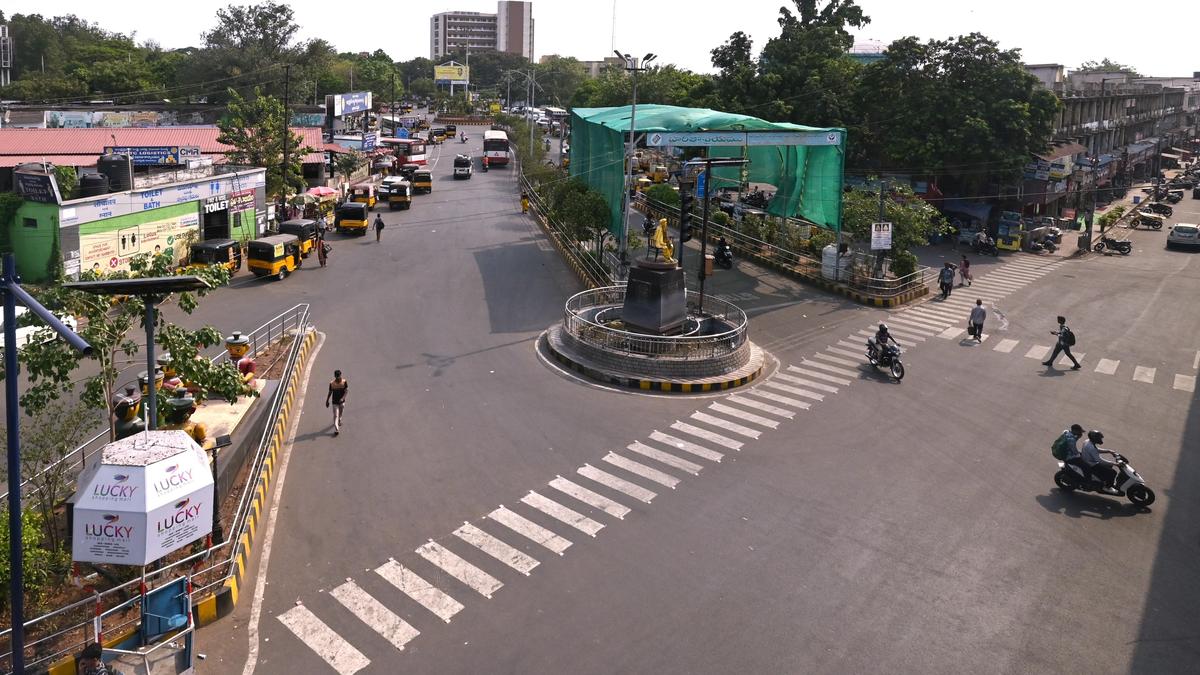
A normally bustling Dwaraka Nagar junction in Visakhapatnam wears a deserted look during the peak afternoon hours as residents stay indoors.
| Photo Credit: V RAJU
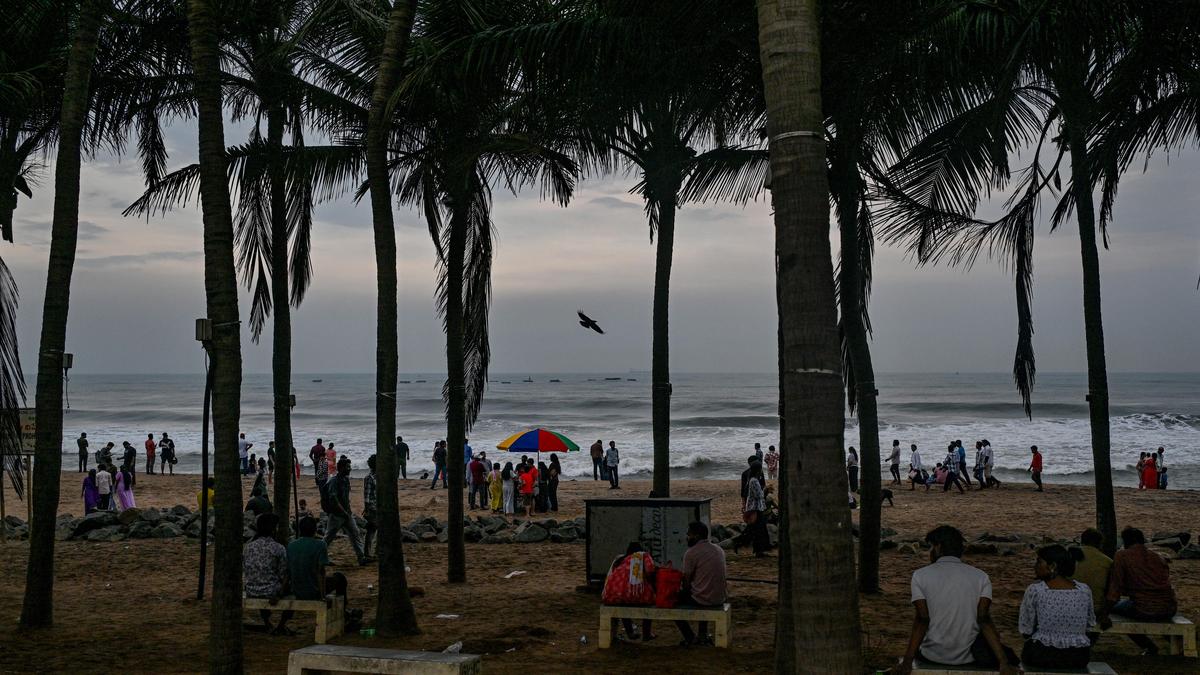
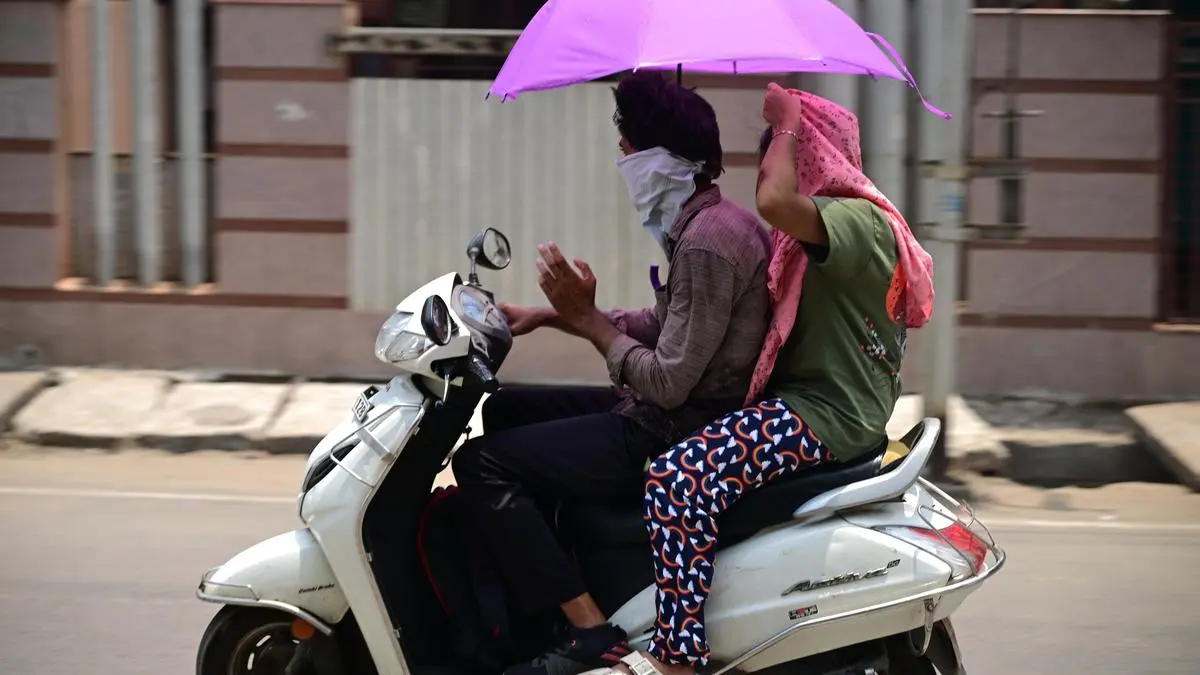
The city has been experiencing intense discomfort over the past week as relative humidity (RH) levels have risen sharply, according to historical data from the Visakhapatnam Cyclone Warning Centre database.On Thursday (May 21), Waltair registered 86% RH level while the Vizag Airport recorded 82%.Despite ambient temperatures remaining within normal seasonal thresholds, residents are enduring severe heat related stress due to the moisture-laden winds flowing from the Bay of Bengal.Meteorological tracking reveals a notable divergence between the coastal pocket of Waltair and the inland area surrounding the Visakhapatnam Airport, with Waltair consistently recording higher moisture retention.Understanding Relative HumidityAccording to Prof. CV Naidu of the Andhra University Meteorology & Oceanography Department, relative humidity represents the percentage of water vapor present in the air compared to the maximum amount of moisture the air can hold at that specific temperature. When temperatures rise, the capacity of the air to hold water vapor increases. In a coastal environment like Visakhapatnam, constant maritime winds push moisture into the urban landscape. A reading of 80% relative humidity implies that the atmosphere is nearly saturated, leaving minimal capacity for further evaporation. This metric directly dictates the heat index, which calculates how hot the weather actually feels to the human body by combining air temperature and moisture levels.Impact on Human HealthThe primary consequence of elevated relative humidity is the disruption of the natural cooling mechanism of the human body. Under normal conditions, the body releases sweat, which evaporates into the surrounding air and cools the skin. When the ambient air is already saturated with moisture, this evaporation slows down significantly or ceases altogether. As a result, sweat pools on the skin without providing thermal relief, causing the internal body temperature to rise. This condition leads to lethargic behavior, heavy sweating, dehydration, and increased cardiovascular strain. Prolonged exposure under these conditions can cause heat cramps, exhaustion, or severe heat exhaustion, particularly among outdoor labourers, traffic police, and delivery personnel.Consequences for Infrastructure and IndustryBeyond human biology, the persistent dampness impacts public infrastructure, electronics, and local industries. High moisture levels accelerate chemical corrosion on metallic structures, bridges, and industrial installations across the port area. In domestic and commercial spaces, heavy moisture loads force air conditioning units to consume more energy, as these systems must work twice as hard to extract water vapor from the air before lowering the room temperature. Electrical grids also face challenges as moisture accumulation on insulators, combined with peak cooling demands, increases the risk of local transformer trips and distribution faults, said AU Electrical Engineering department Prof. P.Mallikarjuna Rao.Divergence in MicroclimatesThe localized data underscores a distinct microclimatic variation within the city limits. Waltair, situated directly on the coastline, receives the immediate, unmitigated impact of the sea breeze, causing its relative humidity to touch 86 percent by May 21. Conversely, the Visakhapatnam Airport zone, located roughly 12 kilometers inland, benefits from a slight terrestrial buffering effect, keeping its moisture levels lower by 3 to 4 percent throughout the week. This difference explains why residential zones near the beach feel significantly stickier and more oppressive than the interior suburbs, even when thermometer readings are identical. Published - May 21, 2026 11:13 pm IST