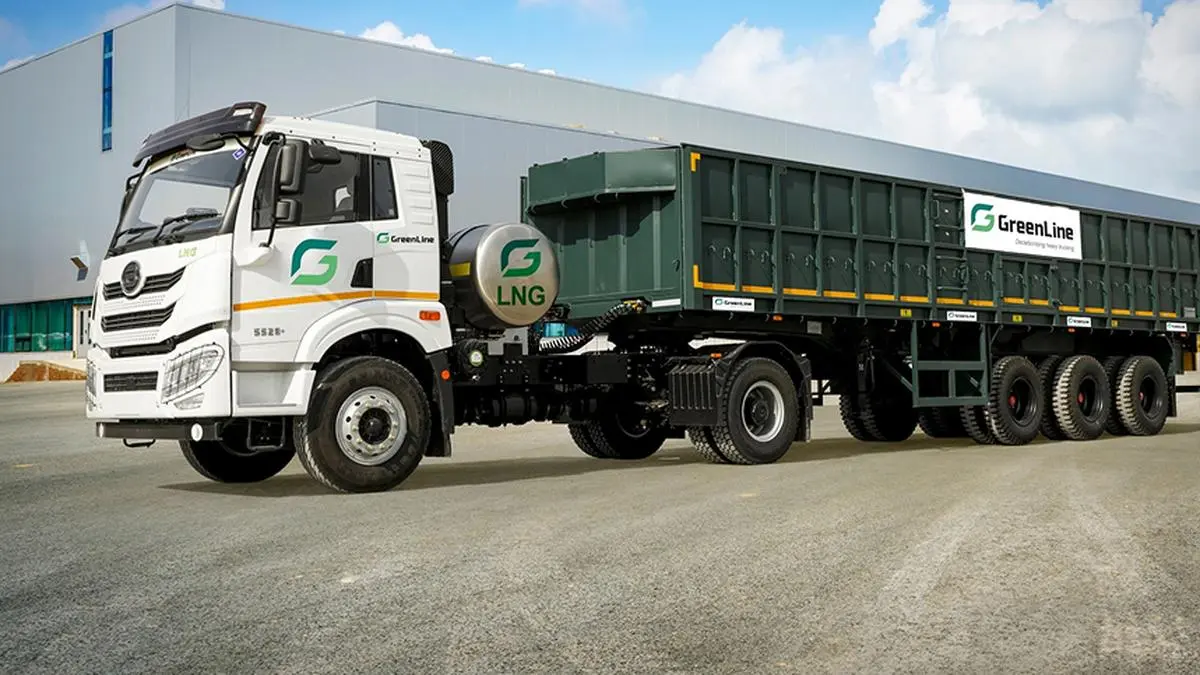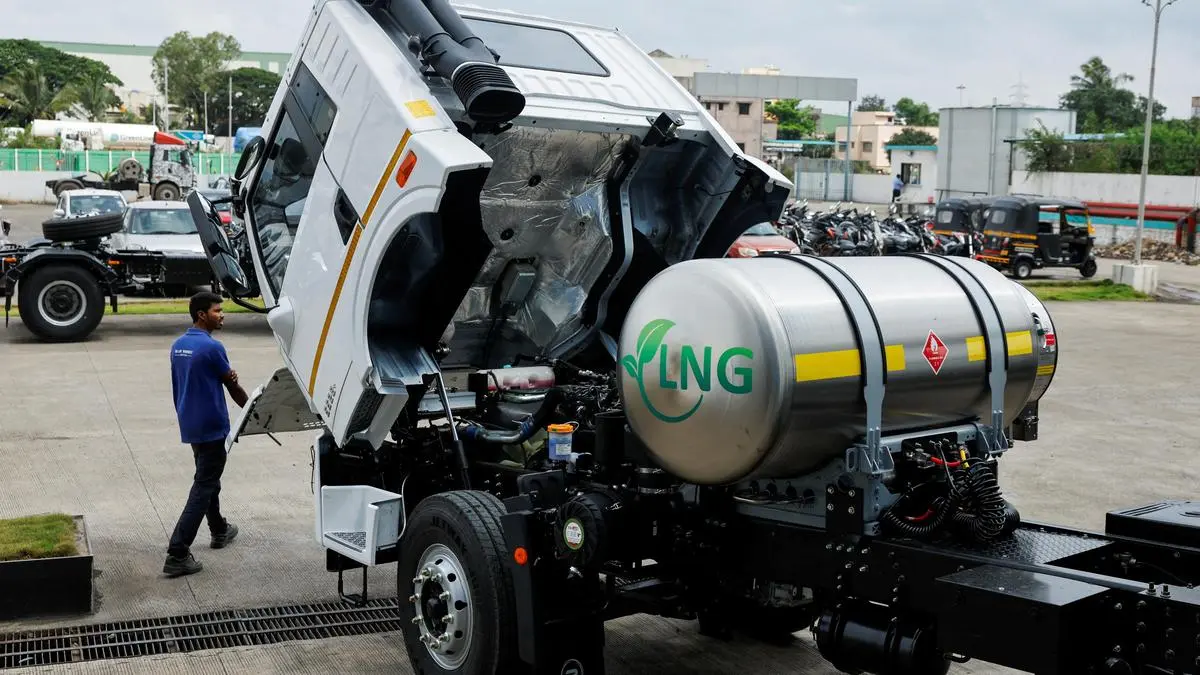
LNG trucks can offer a driving range of up to 1,200 km on a single fill and reduce CO₂ emissions
| Photo Credit:
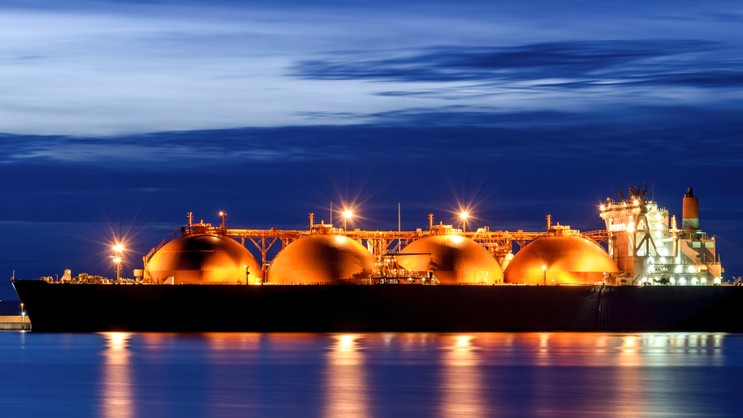
New Delhi, May 21: The conflict in West Asia has again highlighted India’s dependence on diesel imports and the need to scale up various energy options to balance risks. Against this backdrop, LNG is emerging as a near-term bridge fuel for long-haul trucking and a transitional option for heavy-duty transport.India’s logistics sector, which contributes nearly 12 per cent to GDP, remains heavily reliant on around 4 million diesel trucks that account for nearly 70 per cent of freight movement, making it a major source of fuel import dependence. With freight demand expected to double over the next five to seven years, alternative fuels are gaining relevance. Diesel accounts for over 40 per cent of India’s refined products demand.Infrastructure Backbone“India’s freight sector will require a robust multi-fuel infrastructure backbone to reduce dependence on imported crude and its products like diesel and ensure energy security. This includes a nationwide network of LNG refuelling stations alongside integrated capabilities for electric vehicle charging and battery swapping. Our focus is on developing this infrastructure along key freight corridors to support the transition in commercial transport,” Maqsood Shaikh, MD & CEO of Ultra Gas & Energy, told businessline.Ultra Gas & Energy (UGEL), an Essar Group venture, is building a pan-India network of Green Fuel Hubs such as LNG stations catering to industries and transporters. It currently operates seven stations and plans to expand this to 100 stations over the coming years. Each hub is designed to be future-ready, with capabilities for EV charging and battery swapping.Among corporate players driving the shift towards LNG mobility, GreenLine Mobility has emerged as one of the largest LNG fleet operators in the country. Also an Essar Group venture, it currently operates over 1,000 LNG-powered heavy-duty trucks for long-haul logistics and has also begun deploying electric heavy-duty trucks for short-haul operations.GreenLine also plans to scale up its fleet to 10,000 LNG-fired trucks over the next 3–4 years. To support this transition, its subsidiary UGEL is building out an LNG refuelling network along key freight corridors.Evolving LogisticsMadhur Taneja, CEO of GreenLine Mobility, said “The freight transition in India will likely be driven by multiple technologies. LNG currently offers the closest operational and commercial equivalent to diesel for heavy-duty trucking, given its long driving range, payload efficiency and faster refuelling capability, while EVs are better suited for short-haul and urban operations at present.”According to industry sources, LNG trucks can offer a driving range of up to 1,200 km on a single fill and reduce CO₂ emissions by up to 40 per cent compared with diesel, while also lowering particulate matter, Sox, NOx and CO emissions. Replacing just 10 per cent of India’s diesel trucking fleet with LNG could potentially save nearly $3 billion annually in foreign exchange outflows.LNG SourcingLNG also provides a major strategic energy-security advantage over diesel because LNG can be sourced from a significantly wider and more diversified global supplier base. This becomes more pertinent in the backdrop of the conflict in West Asia, which has severely mauled around 48 per cent of India’s LNG imports (from Qatar).India is dependent on crude oil for almost 50 per cent of its requirement in normal times or before the fresh conflict in West Asia on February 28, 2026.LNG can be imported from multiple regions including the US, Australia, Oman, Russia, Africa, Southeast Asia and emerging North American and Atlantic Basin suppliers.India has already made significant investments in gas infrastructure, such as laying over 24,000 km of gas pipeline infrastructure, expanding LNG terminal capacity and city gas distribution coverage extending to almost the entire country. This also sets the stage for a rapid expansion in LNG use.Published on May 21, 2026