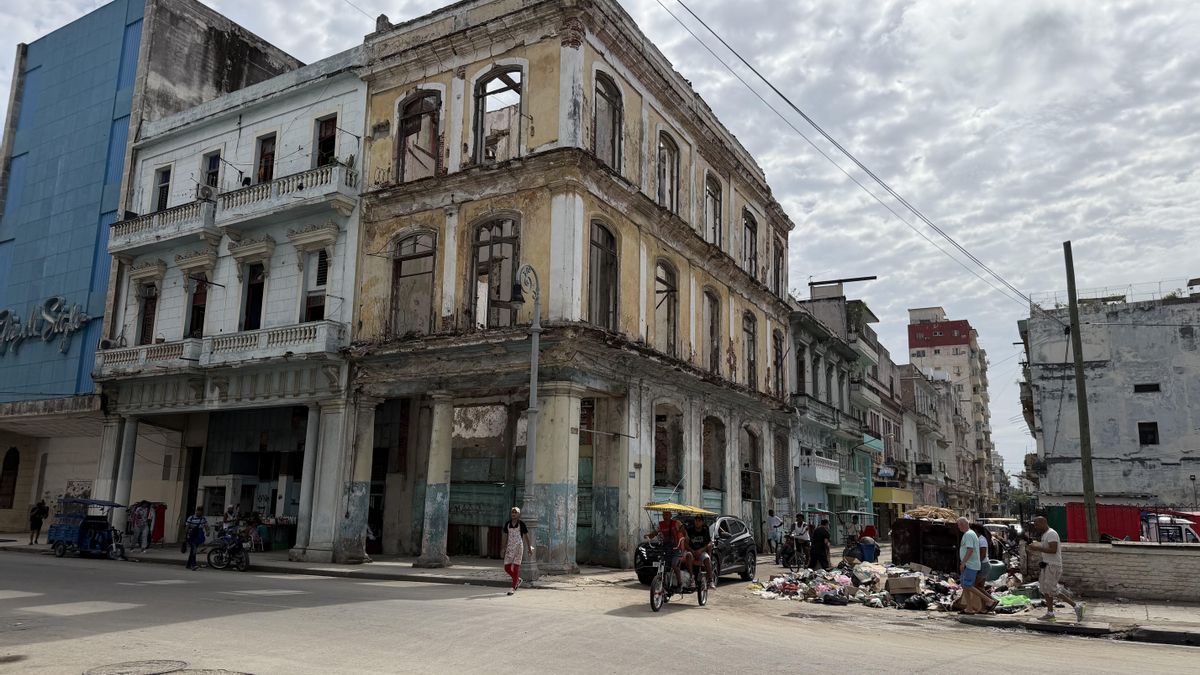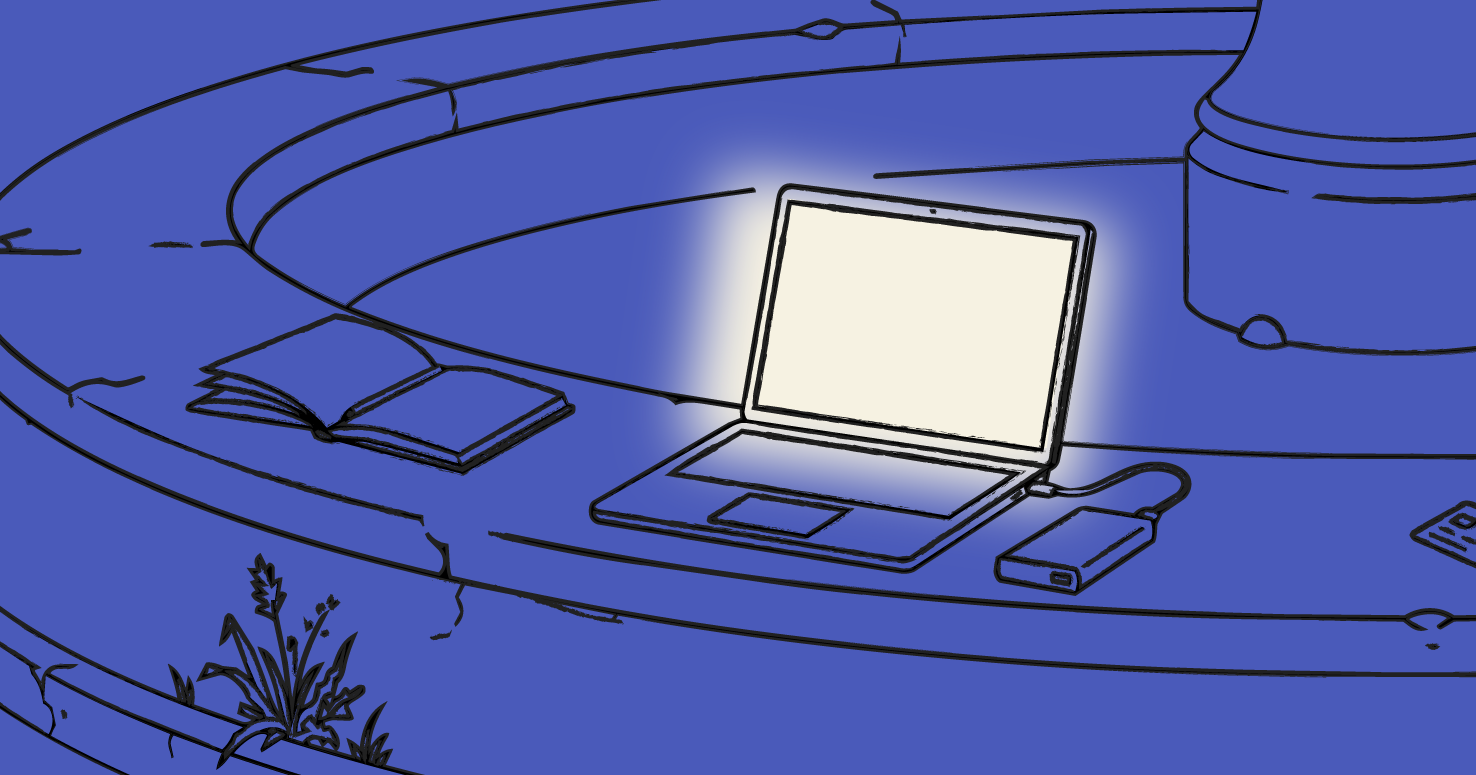
One day in the middle of 2014, my friend Carlos Manuel Álvarez asked me to join him on the newsroom’s balcony. From there we could see the Malecón, the roof decks of El Vedado, the old cars and shrunken vendors circulating nine stories beneath us. Wind gusted in our eyes. Elbows on the railing, we stared at the sea as we talked.We were killing time because neither of us had a computer to work on. All of them were in use. At OnCuba, the magazine where we worked, only editors got their own computers. The rest of us had to share, which sometimes meant waiting an hour. Several of my college friends and I had lucked into contributing roles at OnCuba, and even though we weren’t on staff, we were always in the newsroom. It was a way to keep our group together.Sometimes, over beers, we dreamed aloud about a newsroom coup. We wanted to topple Hugo Cancio, the publisher, and turn his resources — a giant office with multiple rooms and the balcony with its view of the sea; computers and internet; money; connections — into the media outlet we wanted. Something with our imprint. Our dream was, really, wishful thinking: We were a bunch of broke recent college graduates. We had no chance of launching a publication like OnCuba. It was a game. But we were all playing together, turning an idea into a collective ambition, building a character and then imagining its life.We agreed that our primary mandate would be investigative journalism. We’d give up breaking news. Instead, we’d dig, analyze, identify, reconstruct, reveal — and, above all, narrate. Storytelling would be our baseline and our distinctive trait, our flag and our seal. And it would be our kind of storytelling. Nothing short; no squibs. We thought reporting without depth was pointless. Our country’s history is dying because nobody’s telling it, we’d say.It’s a truism that if a place is especially challenging to write about, then journalism is urgently necessary there. In our case, this was absolutely correct. Six decades of Cuban history were festering under the country’s blanket of silence, giving us a collective identity crisis.Our second mandate emerged from the first. We’d write features. We read, dissected and envied every single piece in the major Latin American magazines of the time: Malpensante, Gatopardo, Etiqueta Negra, SoHo, Anfibia. We were sure that rigorous longform journalism, work that mixed reportage, essay and criticism, could untangle the knots of contemporary Cuban life.Every night, the dream ended when we got in bed and remembered the reality waiting for us in the morning. In order to carry out the social service required of us after graduation, Carla Colomé worked at the state theater magazine, Tablas; Jorge Carrasco at the website of Radio Reloj, a station that broadcast the time; Maykel Gonzalez at Granma, the newspaper of the Communist Party and Cuba’s main outlet, again online; Carlos Manuel Álvarez at the Ministry of Culture’s communications office; and I at the Ministry of the Interior. OnCuba gave us a chance to express ourselves, but as it changed, we became obsolete. We criticized Cuban reality, which no longer suited Cancio, the publisher, who wanted to maintain an office in Havana. We started to clash with our editors. I covered sports, and one day I was informed that if I wanted to continue to do so, I had to concentrate on teams and athletes in Cuba, not abroad.“Why?” I said.“We want to concentrate on the players who are still here,” I was told. “They’re the ones who matter.” The explanation stank of the government. I quit the magazine.I left OnCuba only a few weeks after my conversation with Carlos Manuel on the balcony. He’d just gotten back from Colombia, where he’d gone for a journalism workshop at the Fundación Gabo. He’d never left Cuba before. Along with another friend who drove us in his father’s car, I’d accompanied him to the airport for his early-morning flight.Carlos Manuel came home with a virus. At the Fundación Gabo, he caught the idea that there’s no such thing as a good time and place to be a journalist. He got it by listening to writers from across Latin America describe working under conditions at least as adverse as ours, people drawn to the profession because they wanted to be the custodians of truth in their countries. The region’s turmoil was producing a new generation of independent media. New outlets like Brazil’s Agência Pública, Venezuela’s Efecto Cocuyo, and Mexico’s Periodistas de a Pie were pioneering an untraditional way of reporting. They didn’t relay the news coolly, without getting their hands dirty. They judged the powerful, held them accountable, sank their teeth — stylishly, of course — into flesh. They abandoned tact and, with it, the fallacy that journalism must be objective. Objectivity was going in the garbage. They were out to defend human rights, and if they could do it, so could we. This was what Carlos Manuel had proposed on the OnCuba balcony. The question was where to publish.It’s a truism that if a place is especially challenging to write about, then journalism is urgently necessary there. In our case, this was absolutely correct. Six decades of Cuban history were festering under the country’s blanket of silence, giving us a collective identity crisis. In all that time, only a handful of journalistic initiatives — it’s hard to know precisely how many; I’m aware of fewer than 10 — managed to rebel against these conditions without leaving the island. The most successful were in the 1990s, after the collapse of the Soviet Union. Cuba Press, a news agency with six typewriters located in the house of the poet Raúl Rivero, managed to report on the national hangover, as did Habana Press, an agency directed by Joaquín Torres, who dictated his articles over the phone to the exiles running Cubanet and Radio Martí.Without a free press, Cuba’s history and memory were at the mercy of power. Living there as a journalist was like being a zombie who knows he’s dead. I ruminated constantly on one idea: If, in the future, somebody tried to reconstruct early-21st-century Cuba from a press archive, what they would find would be the story of a country that didn’t exist. Our mission was to bring reality back. We wanted to hold a mirror up to Cuba, show the island what the hell it was. Otherwise, what had we gone to college for? Sat through all those lectures? Did we just do it to hang diplomas on our walls? We’d been so rebellious, so anti-establishment. Were we going to let our dreams of change die? If not, we needed to build our own home for the work we wanted to do.The arrival of widespread internet made us try our luck. Without that event, which transformed the nation, we wouldn’t have had a chance. In 2015, the government installed Wi-Fi hotspots in 33 public plazas. In those parks, an hour of internet cost two dollars. For the first time in their lives, Cubans could go outside and get online. The high price meant choosing between internet and clothes or food, but before, you could only use it in hotels — which cost even more — or job centers.Cuba’s constitution declares that the Communist Party, which is the only legal political organization, has regulatory jurisdiction over all radio, TV and print media. It also prohibits journalism outside this sphere. Starting an independent magazine meant declaring war on the government.What stories would we tell, and how would we tell them? We decided that, as an inviolable rule, we would be neither pro- nor anti-Castro. Instead, we’d be militant about rigorous reporting and clean writing. We’d look in the cobwebby corners where the already-existing media — on both sides — chose not to sweep. We had no office, no money, and no internet connection of our own. Our idea of what launching a publication really meant was hazy. But we had energy and determination, and that was what counted. If we couldn’t get an office, then the 33 public plazas with Wi-Fi would be our offices. If we couldn’t get money, we’d work for free until we could attract underwriters outside Cuba. If the hotspots in the parks weren’t strong enough to get our words, images and videos online, then we’d ask our friends who had emigrated or had jobs with decent internet to do us favors. We’re going to take on all this work, we told ourselves, because the stories matter and the stories are here. They’re waiting for us. All we have to do is go out, get them and tell them well.We had our first meeting at Rafael Escalona’s house, two blocks from OnCuba. Plotting our own publication so close by was a kind of revenge. We sat on the floor with the windows open, listening to the murmur coming from other apartments. The building was a block of condominiums connected by an interior hall. Rafael’s was on the ground floor at the back. We sat in there and swore to each other that we’d take our audio recorders out to the street and report. It was the only promise we could make.What stories would we tell, and how would we tell them? We decided that, as an inviolable rule, we would be neither pro- nor anti-Castro. Instead, we’d be militant about rigorous reporting and clean writing. We’d look in the cobwebby corners where the already-existing media — on both sides — chose not to sweep. We’d deconstruct clichés, not avoid them. We’d give voice to those who had been silenced for decades.How often would we publish? Ideally, one feature a week. If we assumed reporting and writing one would take each of us a month, we could set up a rotation. Beyond features, Carlos Manuel said he’d get two acquaintances of his to be columnists: Iván de la Nuez, an art critic who lived in Barcelona, and Juan Orlando Pérez, a journalism professor at the University of Roehampton, London who’d been fired from Tribuna de La Habana because he wrote a piece criticizing the government for raising taxes in order to print textbooks about José Martí, Cuba’s national poet and intellectual lodestar. I suggested a section we wound up calling “Las Píldoras,” in which we told ordinary Cubans’ life stories in short, first-person narratives that gave the magazine a burst of emotion. Lastly, we thought, we could have some photo-only stories. It would be nice if our features had a visual element, too.What would we name our magazine? No one had a convincing pitch. Mine was El escape, which was pretentious and seemed obvious, even though it had no real background. We decided to vote, but it was a tie: Everyone picked their own idea. As we brainstormed, some people coming up with new names and others advocating for their original suggestions, we heard a street vendor outside. We couldn’t see him, but his voice floated in from the hall, calling, “Come on out, everyone, come down and get my lemon and honey! It’ll keep you warm, help your cough, fight your colds, stop your sneeze.”Sneeze. That was it. Jumping, rebelling, expelling, reacting, acting. That street vendor, whose face we never saw, gave us a concept. We were going to be the country’s unavoidable physical reaction. El Estornudo: the sneeze.The next months were devoted to the technical side of things. We invested our only capital — friendship — in web development. Mayle González, the editor who’d recruited us to OnCuba, had left for Miami, and we had a programmer friend who’d moved to Mexico. Between them, they helped us design our site: a basic, unflashy interface that prioritized reading. Kalia Venereo, the sister-in-law of the friend who drove Carlos Manuel to the airport, had just gotten a degree in graphic design. She created the magazine’s logo and banners, giving us a visual identity.We raised the curtain on El Estornudo on March 14, 2016. Only that day did we realize that in New York, exactly 124 years earlier, the Cuban national hero José Martí founded the newspaper Patria, with the goal of liberating Cuba from Spain.The first text we published was a declaration of our principles. We started by saying, “Journalists are athletes and journalism is a marathon — and we’re getting arthritis from old media and its rules. We’ve decided to go back to the starting line. So here we are, independently founding an online magazine of longform reporting about Cuba.” Another part of the statement reads, “We’re interested in every subject there is, but, for the moment, only one form: the feature. We’re going to rummage through the vices and virtues of our society, describe regular people’s regular lives, show you how our discoveries differ from what the powerful tell us. We hope these stories will eventually become small pieces in the puzzle of our time.”El Estornudo changed my routine. I took up residence in a park near my house. It was a square plaza full of trees and metal benches, with a dry water fountain in the middle and a church on one side. If I wasn’t out reporting or writing at home, I was there. It was my office. We couldn’t have chosen a better moment to launch. Not just because Cubans could get online, but also because Cuba and the United States had reestablished diplomatic relations, ending decades of cold war, and the news attracted foreign media attention to the island. Cuba was trending, and all kinds of international outlets wanted us for local color. The BBC, Al Jazeera, Vice, Univisión, Internazionale, and others paid to republish our content. That sporadic income, which wasn’t enough for us to pay ourselves monthly salaries, was the only money we made for two years, until we started to get funding from international organizations that support independent journalism.El Estornudo changed my routine. I took up residence in a park near my house. It was a square plaza full of trees and metal benches, with a dry water fountain in the middle and a church on one side. If I wasn’t out reporting or writing at home, I was there. It was my office. I went in the morning, the evening, the middle of the night. It was the only way I could be in contact with the rest of the team and up to date on what was happening outside Havana.As soon as I woke up, I’d splash some water on my face and, still groggy, walk the three blocks to the park. In my head it was as if I had a home office and was going there from my bedroom. I’d sit in the shade of a leafy tree, on a bench or the ground or one of the enormous roots breaking through the soil. Sometimes, though, the tree dropped little brown fruits, inedible berries that stained everything and drove me into the glaring sun. If I had to, I’d work standing, sweating in shorts and sandals.I was never alone in the park. The internet dealers kept me company. In order to get online, you bought cards at post offices and newsstands. Every park was swarming with young people who hoarded the cards, then split their connections using apps and Bluetooth. Renting their illegal services cost a dollar per hour, half the price of state internet. Just like drug dealers, the internet dealers roamed the parks selling their product in whispers, avoiding police persecution. Without them, many Cubans couldn’t have afforded to talk to their relatives abroad, and as independent journalists, we certainly couldn’t have spent so many hours online.I befriended the dealers in my park. It would have been impossible not to, since they spent as much time there as I did. We saw each other at the oddest hours: 11 p.m., 4 a.m. That park was our outdoor coworking space. They often helped me out with free internet, though they always asked the same question: I claimed I was a journalist, so how come nobody knew who I was?“That’s life,” I’d always say. When it rained, I’d huddle under to the awning of a building that was close enough to a hotspot that I could work. When I had to upload a photo or video, I’d wait until after 11 p.m., ideally much later, when the park was almost empty. The connection was faster then. At peak hours— mid-morning, or any time in the afternoon or evening — the park got so crowded the network collapsed.I loved to sit in the empty water fountain at night and watch the hundreds of people who crowded around me, eyes locked on their smartphones and laptops and tablets. A hum drifted through the park. It was people talking to the family members they hadn’t hugged in years, asking for clothes and food and soap, staring with eyes like soccer balls at the world beyond their island, speeding into modernity after so much time stuck in the past. Faces in the dusk, illuminated by screens. The park was dark, like the country, and the devices’ lights were little tunnels to the future.The magazine began to concentrate on the new society emerging along with the internet in Cuba. Our detailed reporting agitated the government, which went from ignoring our existence to breathing down our necks. We discovered this change when they blocked our website on the island. From that moment on, people in Cuba have been unable to access El Estornudo except through technological tricks like VPNs and proxies that alter their geolocation. We lost a lot of readers that way, but we also got confirmation that our work was important. We went on reporting our stories.I hadn’t written about sports since OnCuba, but that year, 2017, the Houston Dodgers and L.A. Dodgers were in the World Series, and each team had a Cuban: Yulieski Gurriel and Yasiel Puig. Both had played for Cuba, but, because they’d then gone to the U.S., the government had declared them traitors and erased them from history. And yet the whole country was thrilled that Gurriel and Puig were playing each other for the biggest trophy in baseball, our national game. I wanted to talk about our shared exaltation, our refusal to forget our stars. It struck me as a great chance to get back to covering sports.I set my alarm for 5 a.m. and, when it woke me up, started to write. My goal was an unusual type of text for us: a vignette, something short rather than sweeping. I poured myself a cup of coffee and worked until 7 a.m., when I realized the fan wasn’t turning. My idea was to watch Game 7 surrounded by fans. I had two options: go to a hotel bar where everyone has to pay to enter, then meet the expensive obligation to eat and drink, or go to one of the many homes that had an illegal satellite, something the government forbade because they picked up international TV stations. I chose the second.In Havana Vieja, I found a cluster of poor, crumbling buildings with an abundance of secret satellites. Fans packed into poky rooms to watch Game 7, and I squeezed in with them. I didn’t get home until 2 a.m. I’d promised to write a feature about my night, but I was exhausted and smelled like a nightclub. I took a bath to get the cigarette smoke off me, then thought: If I start to write now, I’ll crap out halfway through. I should just get a couple hours of sleep.I set my alarm for 5 a.m. and, when it woke me up, started to write. My goal was an unusual type of text for us: a vignette, something short rather than sweeping. I poured myself a cup of coffee and worked until 7 a.m., when I realized the fan wasn’t turning. I was sitting in the dark, and my laptop was chirping. My power was out. Whenever my neighborhood lost electricity early in the day, we didn’t get it back until 4 p.m. or 5 p.m., and I’d said I would file as quickly as possible. I gathered my things and went to my mom’s house in Central Havana to write.I got in an empty 1957 Chevrolet shared taxi. On the way, an unknown number called me. “Hello, Abraham,” the caller said. “This is Major Roberto Carlos.”“I don’t know any Major Roberto Carlos.”“I need to see you.”“But who are you?”“Where are you?”“I’m out. I can’t talk today. Tomorrow would work, but who are you?”“I know you’re out. I knocked on your door and nobody answered. Tell me where you are.”“I’m telling you I’m busy.”“Abraham, you seem to be missing the point. This is a police summons. Tell me where you are and I’ll be there.”“But why? What’s the issue?”“Tell me where you are and I’ll explain.”I arrived at my mother’s house, curious about what the call could mean. Ten minutes later, I saw a white Lada with the Ministry of the Interior’s crest park outside the building next door. I stuck my head out the window and saw Major Roberto Carlos in hiking boots and greenish, corroded jeans that were worn at the thighs and patched at the crotch. He was small and fat, but didn’t have a double chin, which made him look like a teddy bear. He had stumpy hands, a birthmark on his face, and short hair without sideburns. He seemed as if he’d been compressed. Accompanying him was a young, toothy man, 25 at the most, with an oblong head, trimmed beard and visible pores. A henchman. Over the next hours, he didn’t speak a word.I watched them talk for half an hour before I got sick of it. I got up from my chair, picked up the backpack with my laptop in it, and told my father and Major Roberto Carlos that I wanted to get this over with. I was ready to go where they wanted, answer their questions and be done.The only people at home were my grandparents. My mother was at work, my little sister was at the university, and my older sister, who was very pregnant and on maternity leave — in Cuba you get six weeks before the birth — had gone to spend a few days with my dad. Rather than wait anxiously upstairs, I went down to the street.“Abraham, we need you to answer some questions at the station. We need to look at your laptop and cell phone, too, so if you don’t have them here, we’ll have to go get them right now,” Major Roberto Carlos said calmly. “Let your grandparents know everything’s all right. Make something up for them and then come with me.”When Major Roberto Carlos called me, he didn’t ask my mother’s address. All I’d said in the Chevy was that I was on my way to my mother’s house. Now here he was, and he knew that my mother and sisters were out.“Do you have a warrant?” I said. “What’s this about?”“I said we need you to answer some questions. Do you want us to talk to your grandparents so they don’t get upset?”“All right.”I took my chance to go upstairs and call my father, who had retired from the Ministry of the Interior months earlier. I explained the situation, and he said not to let them take me. He’d be right there with my sister, who worked at the Ministry of the Interior too. Her boss had called that morning to say he and two of their colleagues wanted to see how she was doing. She was about to give birth, and not once in her leave had her boss called to check on her, let alone asked to drop by. His visit was connected to me.My sister’s boss said I’d been under surveillance for months and was now going to be detained. He said they’d proved that I, her brother, was heading down the wrong path, that I was part of a subversive project, that I earned my living freelancing for foreign media when I should be writing for Granma, that I wrote harshly about the government and then went out to dinner with foreign friends and diplomats. He said I’d become dangerous.My father and sister arrived quickly. I came downstairs when I heard them arrive. They asked me what I’d done, and I said, “Nothing.” My father then went to Major Roberto Carlos and asked whether I’d committed a crime, what was happening, where they wanted to take me. He said, again, that they had to ask me some questions, and that I’d be back in a few hours. My father replied that he’d spent 39 years working for State Security and was well aware of how often they said one thing and did another. He knew many cases of people who were told they were just going to clear something up, then didn’t see daylight for years. He knew that could happen to me.I watched them talk for half an hour before I got sick of it. I got up from my chair, picked up the backpack with my laptop in it, and told my father and Major Roberto Carlos that I wanted to get this over with. I was ready to go where they wanted, answer their questions and be done.The silent henchmen opened the Lada’s back door and got in beside me, leaving the passenger seat empty. The Soviet car’s windows were shut and it was stifling. Out of the corner of my eye I saw my father, sisters and grandparents standing in front of the house as we pulled away. I waved as if I were leaving the country for a long time.We drove to a police station at the edge of Havana, at Calles 100 and Aldabo. Major Roberto Carlos told the silent henchman to sit me down at the back of the building, where another agent came and took my phone and laptop with him down a long hall. Fifteen minutes later, Major Roberto Carlos came back. “Come with me,” he said, and escorted me to a very small room with two armchairs, a sofa he sat on, a Hanel desktop perched on a glass table, and a huge air conditioner that claimed it was set to an unobjectionable 23 degrees Celsius, though the room was so cold I felt like I’d just arrived in Alaska.I spent my 11 hours of detention listening to threats, blackmail and gibberish. Major Roberto Carlos made it clear that if I kept writing, the state would prosecute and incarcerate me. He also demonstrated how much they knew about me: every step I took, every word I spoke. It was humiliating. I felt naked. People paid lip service to this sort of surveillance; now I knew the stories were real. Major Roberto Carlos knew the name of the girl I was casually dating. He knew what texts I sent to which people. He knew who I’d had lunch or dinner with six months earlier, meals I couldn’t even remember. He knew the agendas of our magazine meetings. He knew what time I worked out. He knew absolutely everything.When I entered the police station, I had to surrender my watch. Inside, where there was no natural light, it was impossible to tell how much time had passed. Eventually the interrogation devolved into a monologue about the Revolution and its historical enemy the United States, Fidel and Raúl, the great humanity of the Ministry of the Interior, never mind its repressive goals. He told me to think of my mother and father, my sisters, my relatives. My attitude wasn’t good for them. I came from a revolutionary family. Why did I have to be the black sheep?But it wasn’t over. Nor was it enough for them to confiscate my laptop and cell phone, rifle through my digital life, presumably record me in secret. They also made me write the record of the moral outrage they had subjected me to: every ultimatum, every bit of extortion, every second of those 11 naked hours. It’s illegal for a detainee to write his own statement. It’s also an ingenious workaround for a lazy, resource-poor repressor with a broken computer, or maybe a printer without ink.I left exhausted and paranoid. I knew I had no privacy and no shelter from the arbitrary regime. It was destabilizing. For the first time in my life, I felt defenseless and abandoned. It was my first interrogation, first detention, my first time seeing the eyes and tentacles of State Security, Cuba’s jailer.That day was a watershed in my life. It broke something inside me. From then on, I behaved differently, distancing myself from my family, friends and colleagues. I became a lone wolf. I was protecting my life, my work and my privacy, but I also couldn’t walk more than a few feet without looking both ways and behind me. I rarely answered calls and avoided unnecessary conversations in person, even with the rest of the magazine staff. I decided not to have relationships after a few went badly because I was so uncommunicative and closed off. I bought a bicycle to avoid buses and taxis. When I was reporting, I told sources to wait for my calls, since I had no phone. I never even used the same public telephone. That was my strategy for defending myself from State Security.At night, unknown numbers called my cell and landline. If I picked up, for the most part, all I heard was a person breathing loudly enough that it was clear this wasn’t a wrong number. Sometimes I called back. I’d hear a robotic voice with music in the background: This number is out of service.It became a pattern that one day I’d try to take out the trash or buy groceries and plainclothes agents would bar me from the street. I never got an arrest warrant, but I couldn’t leave my house. A police cordon kept me indoors. Occasionally, the caller spoke, asking if Abraham was there. “Who is it?” I’d say, and they’d hang up. During my infrequent cell-phone conversations with the few people I still permitted to call me, I heard noises, interference, conversations, and often we got cut off. Suzuki motorcycles and Geely cars — State Security’s preferred makes — followed me on the street.By the end of 2018, the only Estornudo founders left in Cuba were me and Maykel González. The others hadn’t quit the magazine, but they’d all emigrated. Just like most Cubans who leave, they wanted better lives, hope for the future. We’d added three young reporters to our staff; despite the harassment we faced, Mario Luis Reyes, Darío Alemán and Javier Roque, decided to join us, bringing a welcome breath of fresh air.After that year, our situation worsened. The government extended internet access so that, rather than clustering in parks, Cubans could go online on our phones. The internet swiftly became a vector of change, connecting activists and opposition groups from communities across the island and in exile. In order to counter this unwelcome side effect — freedom of thought — the regime cranked up its repressive tactics to an absurd degree.It became a pattern that one day I’d try to take out the trash or buy groceries and plainclothes agents would bar me from the street. I never got an arrest warrant, but I couldn’t leave my house. A police cordon kept me indoors. I never knew how long my confinement would last, and to ensure I wouldn’t denounce it, the government cut off my internet, cell phone and landline. I was isolated and monitored by cops who watched me through the windows. I couldn’t visit sick relatives; if I didn’t have food at home, then I didn’t eat.I didn’t make all of these house arrests public. I didn’t want to normalize my shocking new situation, or bore the people who cared. Sudden arrests and arbitrary interrogations had become so standard that if everyone denounced every human rights violation, I worried, then journalists, NGOs and the few foreign governments with an eye on the Cuban situation would get tired of our monotonous suffering. And so my surreal day-to-day, a regular life broken up by suspensions of my rights, stopped mattering.The Washington Post made me a columnist in 2020, though I’d been writing for them since 2019. I was buoyed by their prestige, but it irritated the regime. One morning, a cop knocked on my door with a summons. I had to report to a police station in 24 hours to be interrogated. I’d just woken up, and I didn’t bother asking for a reason. It was always a useless question, of course, but usually I still asked it to show that I had a spine. The cops, who had impunity, just laughed at me, but challenging them let me be at peace with myself.The next day, I got up, tried to relax with a cup of tea on the balcony, got dressed, and left without my phone, keys, wallet, or anything else the cops could steal or confiscate. I got to the station half an hour early and sat on the curb down the street. After 20 minutes, two cars pulled up, and so I approached. To my surprise, through the windows I saw that the building was full not of cops but construction workers. I checked the warrant: I hadn’t mixed up the address. I was in the right place. I went in.Behind me, a man asked, “Abraham?”I turned. Five men were watching me. “Go ahead,” one said. I walked through cement dust, broken blocks, sacks of gravel, scattered tools scattered over the floor. My legs were shaking. They directed me to a room with a single window. One of the men drew the blinds.The cold metal handcuffs dug into my wrists. I didn’t know where we were going. I tried my best to relax my body until, 15 minutes into the drive, the car suddenly braked and began spinning on its axis. “Hold tight,” the enforcer said.“Sit down,” another said. They surrounded my chair. The room was airless. No one spoke. They watched me. I was intensely nervous. Eventually, the oldest man, who I assumed was the boss, said, “Clothes off. We need to be sure you’re not wearing a wire.”“That’s not going to happen,” I managed to say. “It’s a violation of my rights.”“It’s happening,” said the man I thought was the boss. Then he signaled one of his colleagues, a heavily muscled Black man over six feet tall. When the enforcer took a step toward me, the others fell back. He looked me hard in the eyes. I made myself hold his stare. Then he put on a pair of nitrile gloves.“What are those for?” I asked.“Clothes off,” he said. I saw the anger in his eyes and obeyed.It was the worst humiliation of my life. I felt like shit, like meat, like a corpse washed up on the beach. Once I was naked, the other four men watched as the enforcer ordered me to put my hands against the wall and spread my legs. My nose, mouth, and eyes brushed the concrete wall. I wanted to weep, or die. Then I felt the enforcer’s hand in my hair. He searched everywhere he wanted.“Get dressed,” he said when he was done, “but don’t sit down.” As I put my clothes on, he took out handcuffs. When I was done, he said, “Turn around,” then roughly shackled my hands behind my back and led me, with the other agents, to one of the cars I’d seen earlier. The boss got in the passenger seat. The enforcer rode with me in the back. Before we pulled out, he said, “If I were you, I’d put my head down and not pick it up until someone told me to.” Then he shoved my neck down so I had to hunch.The cold metal handcuffs dug into my wrists. I didn’t know where we were going. I tried my best to relax my body until, 15 minutes into the drive, the car suddenly braked and began spinning on its axis. “Hold tight,” the enforcer said.I don’t know whether the donuts were to make me carsick, disorient me, make me vomit — no idea. It didn’t work. When we began driving again, we didn’t stop until we got to Villa Marista, the mythical headquarters of State Security.✺ State Security is the regime’s political police force. It’s a shadowy parastatal institution that was designed to protect the regime, though legally, it doesn’t exist. Like the Mafia, it works in secrecy, and yet its power and reach are easy to see. No one knows how many agents are on its payroll, but any Cuban can tell you its real roster of workers is endless. One of State Security’s main goals, as well as a central source of its strength, is turning civilians into informers.State Security is in every municipality, every province, every job center, and every public employee is a potential collaborator. It surveils everyone from government ministers to street vendors. It’s Fidel Castro’s monster, created in the image of the Stasi and KGB to maintain the conditions he wanted, but like any monster, it outgrew the need for a master. No one tells it what to do anymore. It gobbles up every scrap of freedom in Cuba of its own accord.Even though State Security’s body is invisible, everyone knows its head is at Villa Marist, just as everyone in the Soviet Union knew the Lubyanka Building was KGB headquarters. Before 1959, Villa Marista was a private school and seminary for future Marist teachers, run by Spanish brothers who’d come to Cuba from Santander. Castro nationalized their land in 1961. They left the country, and not long after, their classrooms became prison cells, home not to pedagogical training but harassment and torture.Villa Marista generates more fear than anywhere else in the country. No one wants to go there or hear about it. Cubans say that there, “even mutes talk.”✺ I knew I was in Villa Marista because I’d been there before. My uncle, my mother’s older brother, spent three months in one of its cells. He was the director of the Asia and Oceania department of the Ministry of Foreign Trade. A few days before he was supposed to go on a business trip to Vietnam, two State Security officials, pretending to be members of his delegation, presented themselves in his office and claimed they had to meet with him last-minute. On the way out, they identified themselves as security agents and said they needed his help clarifying an investigation, then put him in a Lada and left the city.My uncle was kidnapped for a full weekend, subjected to interrogations, threats and coercions he never told the family about. Everyone was terrified. He’d vanished. My mother went to his work to explain what had happened, and the Ministry of Foreign Trade receptionist handed her the phone. “Go home,” my uncle said. “Everything’s okay. I’ll be in touch soon.” A few hours later he called to say he’d been taken to Villa Marista.Thursday was visiting day. Once I went with my mother and maternal grandmother. We were allowed to bring him a box of food, a Thermos of coffee and a book. The book could contain no markings of any kind: no inscription, no notes, no underlining. At the front desk, they checked every page. You had to show them your ID and explain how you were related. The policewoman, on learning I was the nephew, said I couldn’t come back. Only parents, siblings and children were allowed. “I’ll make an exception because you’re already here,” she said.They took us to a small room with armchairs, a small sofa, a table with a phone, and a horrible painting on the wall, then brought him in. Our visit lasted 10 minutes. A policewoman was there the whole time.After three months, my uncle was taken to a maximum-security prison on the outskirts of Havana to await trial. My mother was his lawyer. He was sentenced to six years of incarceration for the crime of taking bribes: A Vietnamese diplomat had given him a Christmas basket with wine, nougat, a cake, a cell phone, and a lace dress for his granddaughter.The enforcer led me through an entryway I recognized from visiting my uncle. Then he uncuffed my wrists and left me alone in a room for 10 minutes. A very young agent, maybe 20, came in, along with Lieutenant Colonel Kenia. She was infamous. Two gold chains dangled outside her uniform. Her nails were long pink claws, and her hands were loaded with more gold. For years, she had interrogated any dissident or artist who challenged the regime. She was despotic, aggressive, always trying to get a rise out of her victim. She looked at me as if she wanted to slit my throat. Her manner made it clear that she loathed me and found me repulsive. Likewise, ma’am, I thought.Then the interrogation began. It was a farce. The agents rotated, one repressor giving way to the next. Each of them had their own strategy — good cop or bad — but the questions never changed, nor did their central allegation: that I was a U.S. asset recruited by The Washington Post.Eventually, I was left alone for long enough to fall asleep. Four agents woke me up. Now they’re bringing in gangs, I thought. They shouted, insulted me, twisted my words. I started to think I was going to wind up in jail like my uncle, but then Lieutenant Colonel Kenia got out a document and said, “Sign and you can leave.”A few days later, at home one night with nothing to do, I turned on the TV and saw my face on the screen. The evening news was broadcasting my interrogation. State Security had clandestinely recorded it, and now they were showing it to the island.The statement declared that if I ever wrote for the Post again, they’d initiate the process to declare me an “enemy propagandist.” I read it several times before refusing to sign.Kenia exploded. She got in my face, yelling and slashing at me with her swordlike nails, threatening, “Your family’s done for.” I made myself remain silent and still. “You’re going to prison,” she spat eventually, then stormed out and slammed the door. Three other agents followed in her wake, and I was alone again.After a while, the enforcer and his colleagues from the morning returned. The enforcer handcuffed me and shoved me into the same car, again forcing my head between my knees. They returned me to the construction-site station and let me go.I walked home, decimated. My hands were shaking. I was sweating. I had marks on my wrists. Now what? I asked myself.I wrote a column for The Washington Post, “If This Is My Last Column Here, It’s Because I’ve Been Imprisoned in Cuba,” that night. It ran the next day. In it, I described what had happened to me and explained the reason to my readers: “The accounts of life in Cuba that I publish every month are part of what the Cuban government wants to keep under lock to protect the progressive image that it tries to cultivate worldwide. Part of the essence of totalitarian regimes is to silence the voices that narrate the most subversive aspects of daily life.” I was one of those voices, and I knew they could imprison me if I didn’t shut up. “What would be the charge?” I wrote. “It doesn’t really matter: State security has been building legal cases against innocent people for more than six decades. If they decide to carry out their threat, they will find a crime and smear me with some interpretation of the law to criminalize my actions.”A few days later, at home one night with nothing to do, I turned on the TV and saw my face on the screen. The evening news was broadcasting my interrogation. State Security had clandestinely recorded it, and now they were showing it to the island.I’d been on national television once before. It was when I played baseball as a boy. An American team came to play mine as part of the Pastors for Peace Caravan. I was an outfielder, but for some reason I spent that game on first base. My first time at bat I struck out. My second time I got a hit to right field, but that’s not what was on TV.I still remember the exact order of events from watching it later. A blond American kid hit a grounder to third. The shot tracked the ball to my friend Ernesto’s glove, then to mine, and the game ended. The camera stayed on me as I sprinted to the batter’s box to celebrate with Eloy — a great southpaw pitcher; I lost track of both him and Ernesto — and the rest of the team. The broadcast ended on a shot of us clutching a Cuban flag that our coach, Máximo García, a legend of Cuban baseball, ran to bring us.I knew I was being filmed that day. I was completely conscious that I was participating in a public event with cameras, and later I sat on my grandfather’s feet to watch myself on the news. The second time I was on TV, that same news program broadcast my image without my consent. I looked at the screen without recognizing myself. It wasn’t me; it was my body. My gestures and my voice made clear that I was under duress. Under interrogation, no one can be their true self. Certainly not if you haven’t committed a crime, or if you know every word you say will be used against you.The government wanted to kneecap my reputation. It wanted to convince the Cuban public that I was a CIA agent. The news crawl under my image said so. When the show ended, I went out to the balcony. I hadn’t prepared myself for that. That broadcast put my sources, family and friends in danger. From that moment on, speaking to me meant speaking to a national enemy. I was a political leper. I’d just been condemned to civic death.
I Started Cuba’s First Independent Magazine. Then My Problems Began. — The Dial
“We wanted to hold a mirror up to Cuba, show the island what the hell it was.”
7,740 words~35 min read