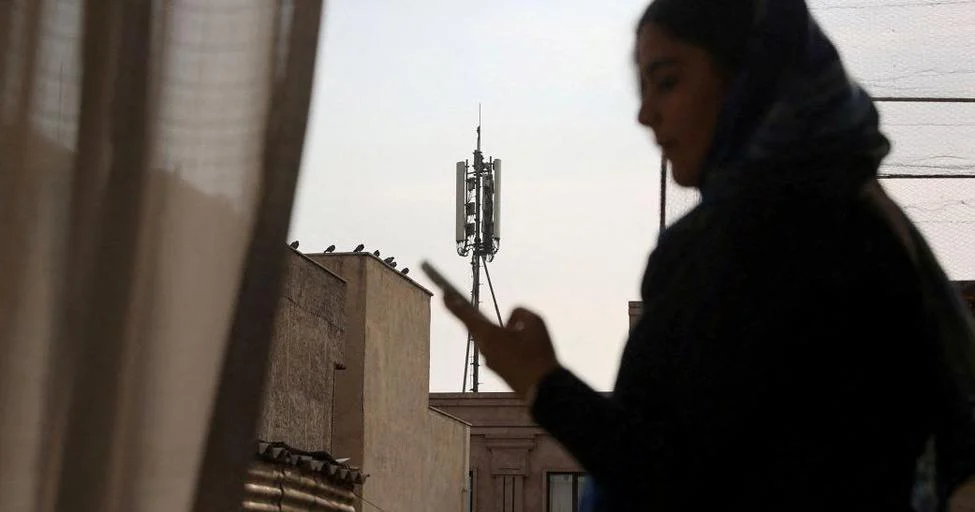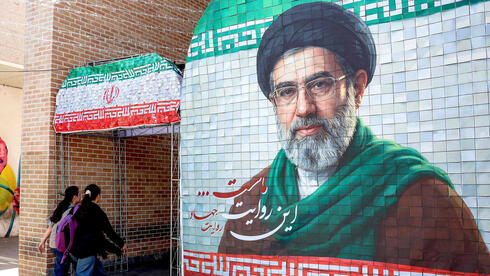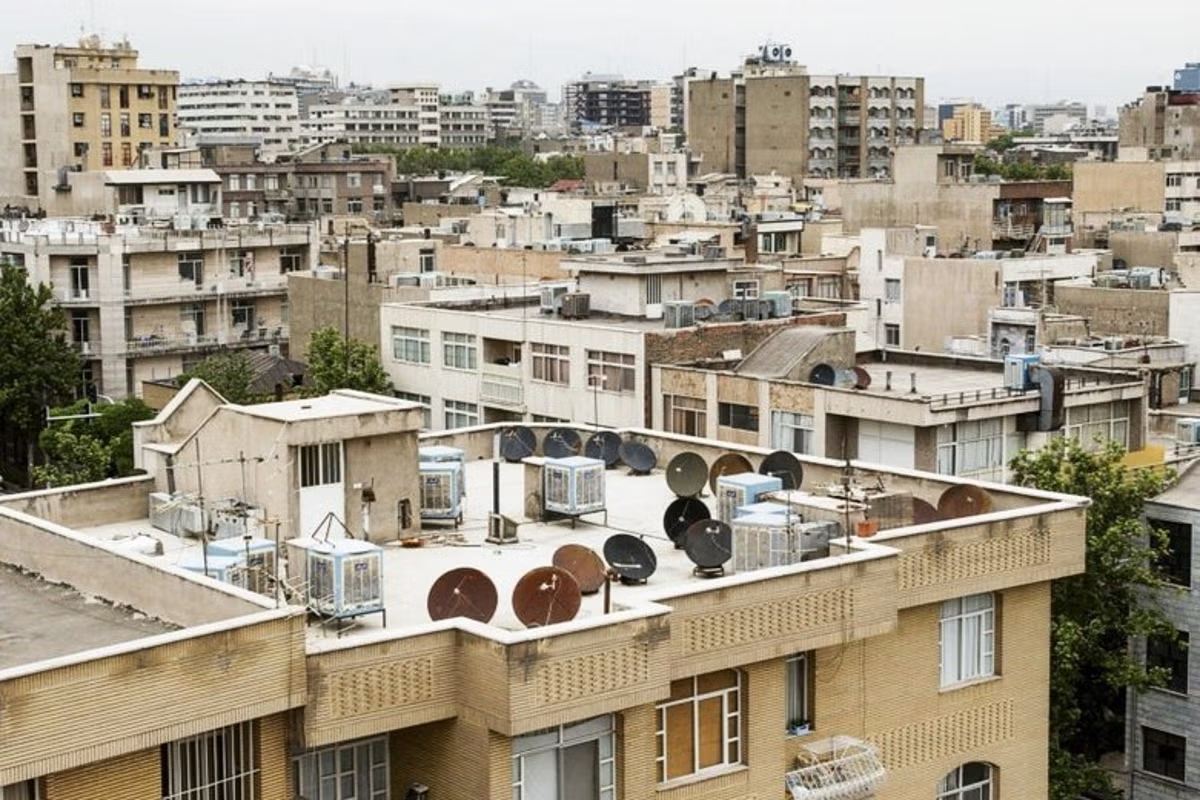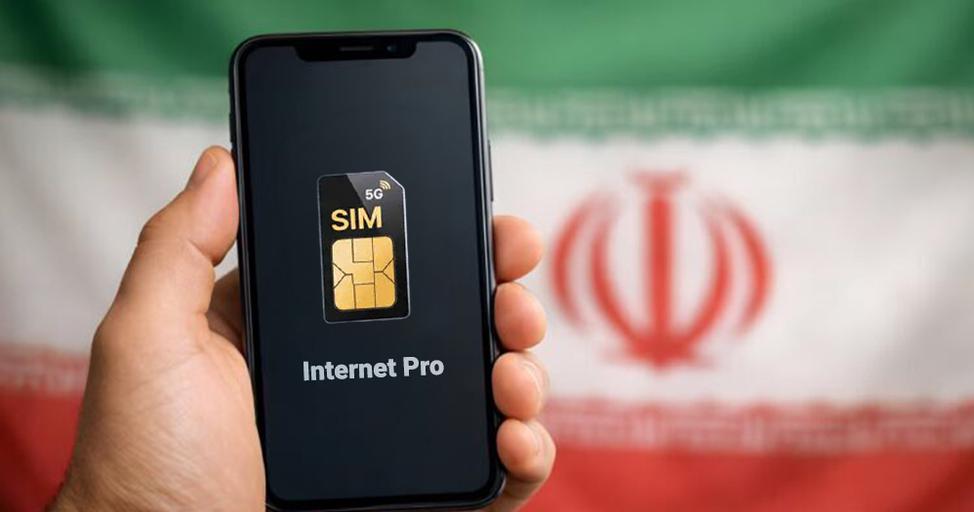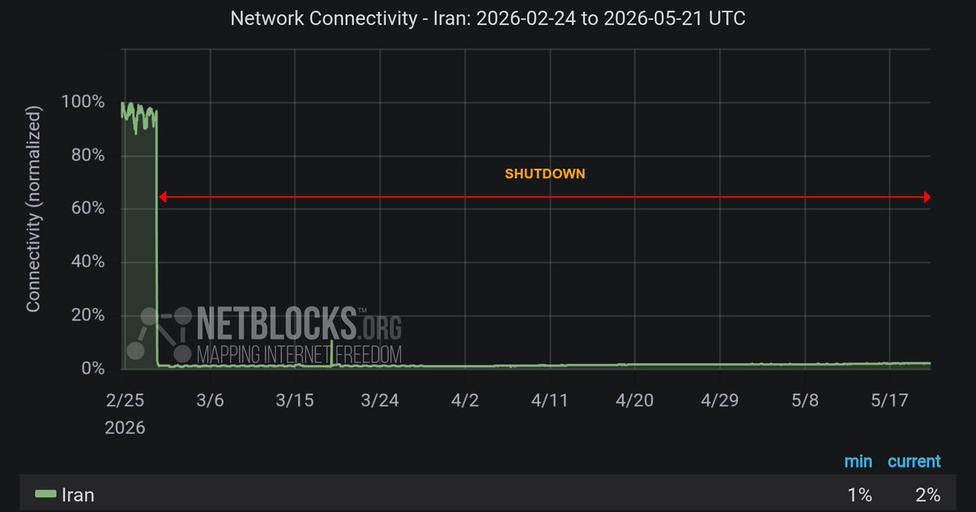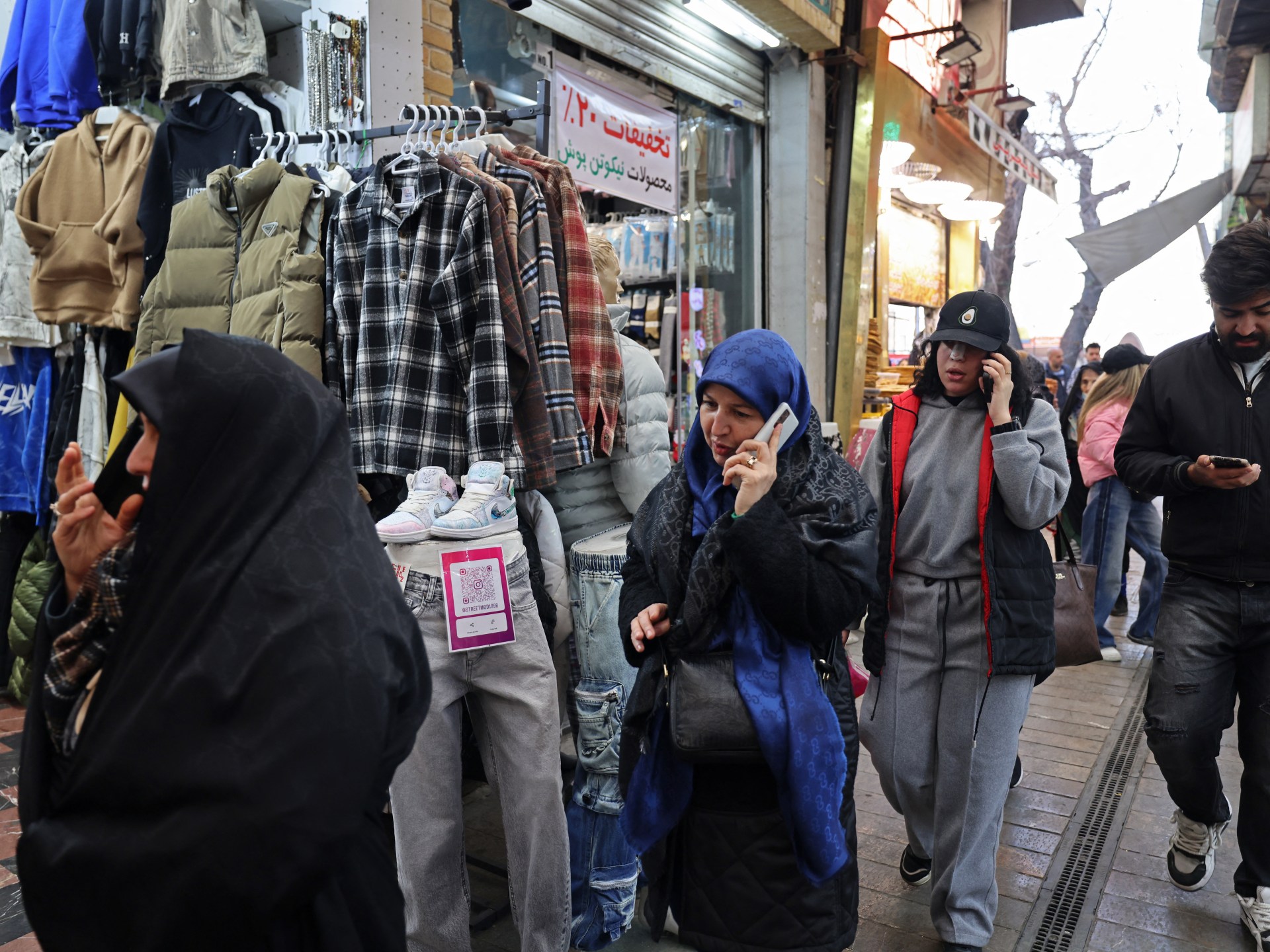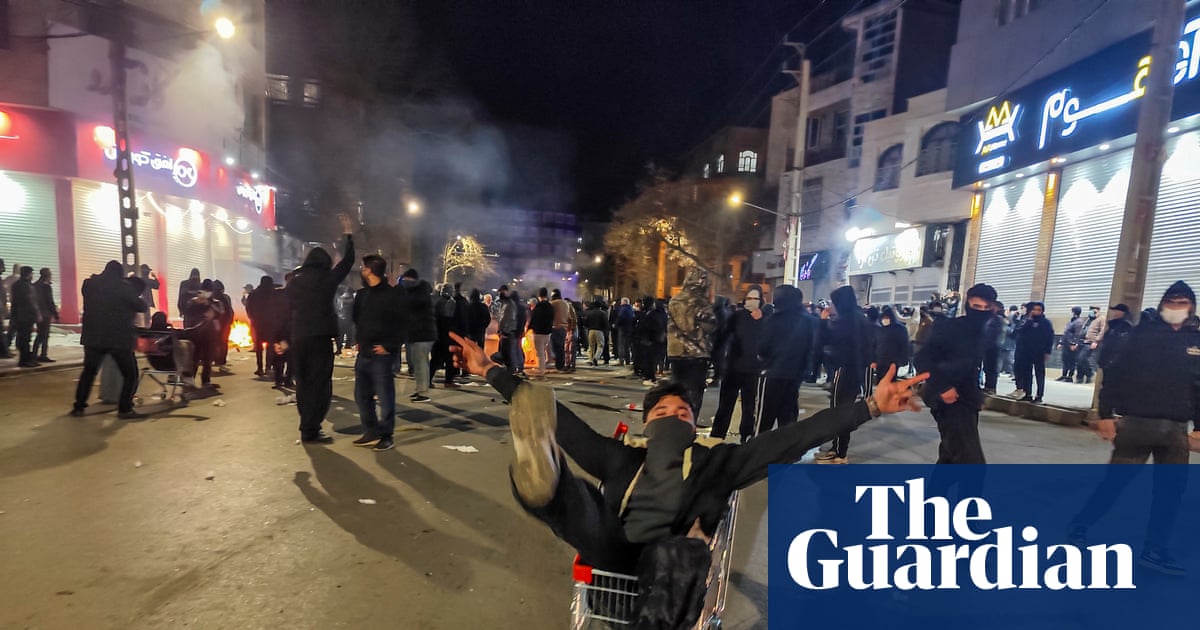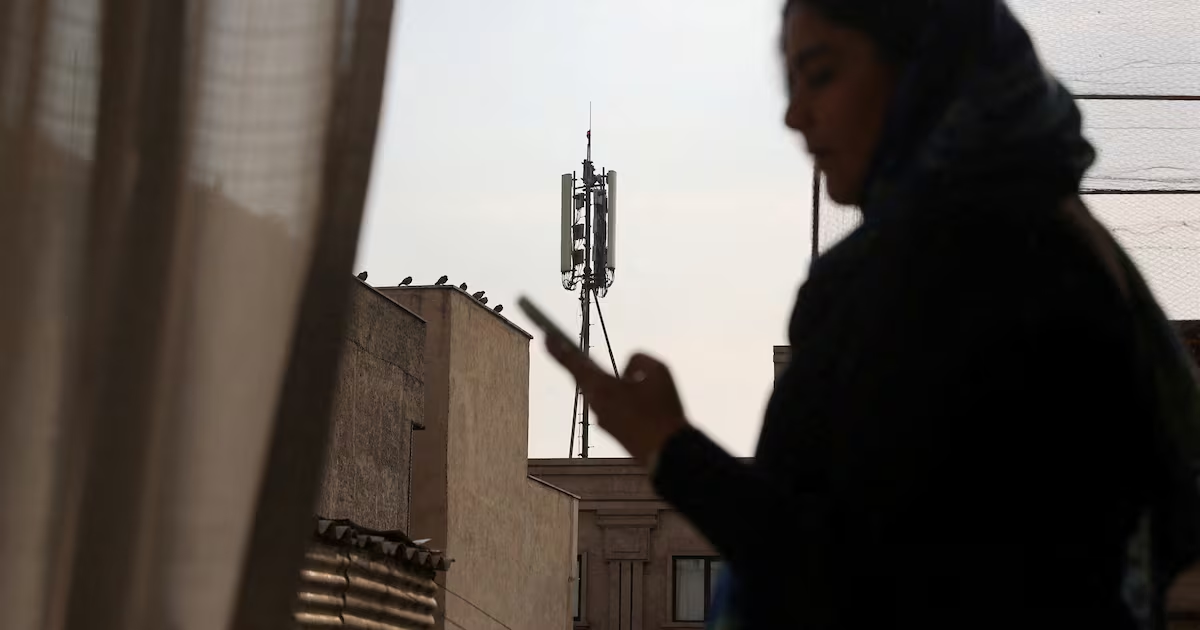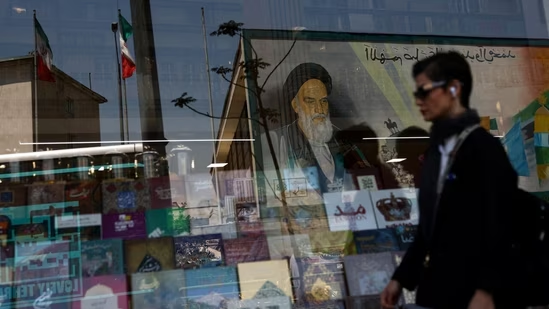
The government’s shutdown has been in place for nearly three months, threatening millions of jobs. Iranians are enduring the longest and most intense internet blackout in history, compounding an economic crisis that sparked nationwide protests in December.A mural depicting the late leader Ayatollah Ruhollah Khomeini is reflected in a book store’s window in Tehran.For nearly three months, businesses have been disconnected from clients and suppliers. Merchants have struggled to work with longstanding international business partners. Many businesses have closed, hurling more Iranians into unemployment.Iran was already experiencing economic turmoil before this year’s internet blackout and war. A compounding financial crisis sparked mass protests in the country in December 2025. Thousands of demonstrators were killed in the ensuing government crackdown, with the regime also choking off the internet to try to keep the world in the dark.The blackout is “the most severe, by extent and duration, that we’ve tracked in the history of modern internet connectivity,” said Alp Toker, founder of digital watchdog group NetBlocks. “Even for Iran, it is an extreme measure.”Heavy internet restrictions in response to the protests began on Jan. 8 and were eased on Jan. 23, before being reinstated on Feb. 28, the day the U.S. and Israel first attacked Iran. Network connectivity in Iran has hovered around 1% to 2% of total capacity for weeks, compared with between 90% and 100% before the protests, according to NetBlocks.The blackout compounds the heavy cost the war has had on Iran’s economy. More than a million people are out of work, food prices have soared and the national currency has spiraled to record lows. The U.S. blockade of Iranian ports, a tit-for-tat response to Iran’s chokehold on the Strait of Hormuz, has left Tehran relying on alternative routes for regional trade via rail and road connections with neighboring countries.“Around 10 million jobs are estimated to be directly or indirectly tied to Iran’s digital economy,” said Mohammad Reza Farzanegan, an economist specializing in the Middle East at Philipps-Universität Marburg in Germany. “Restricting access on this scale damages productivity, weakens business confidence and increases inequality, since only wealthier or better-connected users can secure reliable connectivity.”A public bus in Tehran last month. More than a million people in Iran are out of work and food prices have soared.Beyond losing work, Iranians in interviews say they are unable to complete ordinary tasks like telling family members where they are, obtaining medical records after doctor visits or updating their car’s software. As the U.S. and Israel bombed Iran, and Tehran fired projectiles across the Persian Gulf, many Iranians couldn’t access news from sources that weren’t aligned with the government.Iran’s Foreign Ministry didn’t respond to a request for comment. Iran’s communications minister, Sattar Hashemi, told Iranian state media earlier this month that the restrictive internet measures were a response to wartime conditions imposed on the country.Before the shutdown, Iran’s internet was heavily filtered, though not quite to the extent of China’s “Great Firewall.” Despite censorship and periodic restrictions, the internet was deeply embedded in everyday Iranian life. Millions of Iranians routinely relied on circumvention tools like virtual private networks, or VPNs, to access blocked foreign websites and social-media platforms.Businesses used apps like Telegram, Instagram and WhatsApp to communicate with customers, advertise products, process orders and maintain contact abroad. Freelancers and programmers worked remotely for clients both inside and outside the country, while many small online sellers depended almost entirely on social media for income.Recently, however, the Islamic Republic has moved beyond temporarily blocking individual platforms to completely restricting connectivity.A 25-year-old in Tehran who works in software development said he hasn’t worked since the latest restrictions were enacted, as companies have downsized or shut down entirely because of the internet restrictions. Projects to build up data centers and artificial-intelligence capabilities are dormant, he said.“A lot of businesses in the tech and IT field are slowly being eliminated, which is disastrous,” he said. “Myself and colleagues who were working on projects to improve technology in this country are now hopeless and completely unemployed.”Much of the tech equipment imported before the war, including hard drives and other computer components, came from Dubai. Those shipments have been disrupted, sending prices for those things skyrocketing.There are a few ways around the blackout, though some options carry risk. The U.S. covertly sent thousands of Starlink satellite terminals into Iran after the regime’s crackdown on demonstrations earlier this year. Tens of thousands of Iranians use them to connect with loved ones domestically and abroad, and to share information outside the control of government firewalls and censors.Owning a Starlink terminal is illegal in Iran. Authorities have searched homes and roofs in the hunt for users of the terminals, who face multiple years in prison if caught.Heavy internet restrictions in response to the protests were reinstated the day the U.S. and Israel attacked Iran.An online teacher working on her laptop at home in Tehran during the January internet shutdown.The government has rolled out a tiered system known as “Internet Pro,” which grants select users exemptions from some controls, but at a price many can’t afford. Applicants are required to upload extensive personal information and documentation justifying their need for wider internet access.The service is provided through so-called white SIM cards. The state-affiliated Mobile Communications Company of Iran began advertising it in March, offering unfiltered internet and international IP addresses for around 2.2 million tomans upfront—roughly $17 according to currency-data platform Xe—with access to blocked websites costing an additional 40,000 tomans, around 30 cents per gigabyte.At the same time, the Islamic Republic is accelerating the development of a nationally centralized, heavily-regulated internet network designed to tighten state control over web access even without a full blackout. The expansion of these restricted-access schemes reserves uncensored internet for a small group of registered users and businesses able to pay the cost.One cryptocurrency trader who took part in the antiregime protests in January said he now has no choice but to register for the government-filtered internet to keep working in his fast-paced industry. Knowing that his communication is heavily monitored, he said he no longer criticizes the government through telecommunications.“We are entering a new era of digital authoritarianism, which is that access to the internet in Iran is no longer a right—it’s a privilege,” said Amir Rashidi, director of digital rights and security at the Miaan Group, a rights organization based in Austin, Texas. “When you look at how the government is granting different layers of access to different social strata, this becomes clear.”The effects of the internet blockage could linger beyond the war, according to Farzanegan of Philipps-Universität Marburg.“A country where internet access can be suddenly restricted becomes a higher-risk environment for investment and trade,” he said.In a post marking World Communication Day on Sunday, Iranian President Masoud Pezeshkian praised communication workers for maintaining stable services during the war.“People’s high-quality and sustainable access to digital services is part of the peace, progress, and right to a decent life for the dear people of Iran,” he said.That day, Iran’s internet blackout was past its 11th week.Get the latest headlines from US news and global updates from Pakistan, Nepal, UK, Bangladesh, Russia, and get all the latest headlines in one place on Hindustan Times.See Less
The Longest Internet Blackout in History Is Crippling Iran’s Economy
The government’s shutdown has been in place for nearly three months, threatening millions of jobs. | World News
1,196 words~5 min read