Myanmar’s National Unity Government (NUG) has spent years arguing that the country’s junta is a pariah – one that is too unstable to survive and too brutal and illegitimate to engage. Morally, that case remains persuasive. Politically, however, it is colliding with the reality that international patience is finite, and regional diplomacy rewards stability and national interests above all.
Given its foundation of “non-interference,” it is no surprise that the Association of Southeast Asian Nations (ASEAN) is drifting toward re-engagement with the generals. The real question is why the NUG appears insufficiently prepared for this shift when the signs have been visible for years.
This is not an argument that the NUG is not a legitimate representative of the Myanmar people. The junta has carried out airstrikes on villages, systematic torture, arbitrary executions, and mass displacement. The NUG, which derives from the government elected in the 2020 election, has not. That moral asymmetry should not be overlooked in the name of false balance.
But legitimacy alone does not guarantee victory.
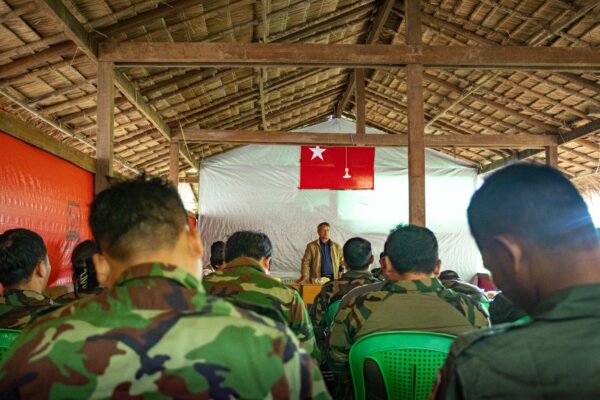
On May 5, the fifth anniversary of the founding of the People’s Defense Force (PDF), the tone from NUG leaders was notably sober. Acting President Duwa Lashi La described the revolution as “two steps forward, one step back,” while Defense Minister Yee Mon called for “unflattering criticism” of the NUG’s weaknesses and disciplinary failures.