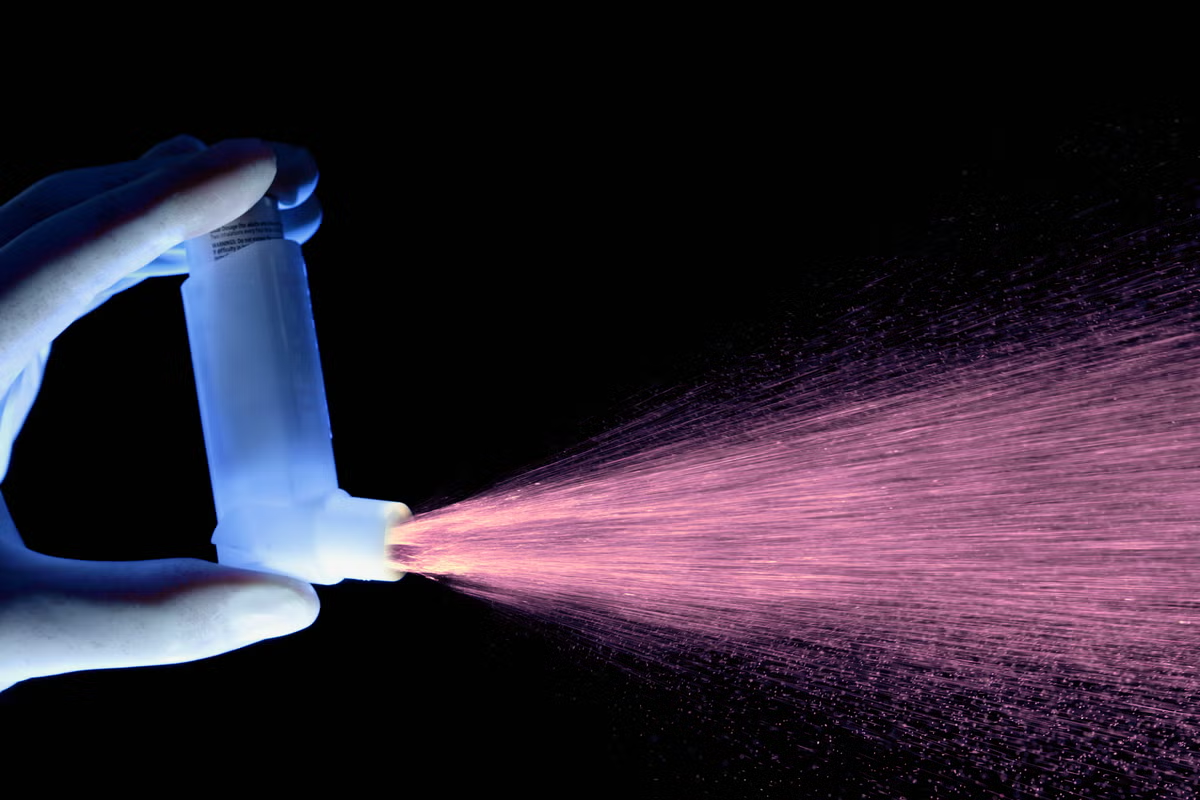
Asthma affects more than 260 million people worldwide and causes over 450,000 deaths every year. Yet many people still treat it as something that only needs attention during an attack.
Frequent wheezing, waking up at night struggling to breathe, or relying on a reliever inhaler too often may be signs that asthma is not as controlled as it should be. Ignoring these warning signs can increase the risk of serious flare-ups and hospital visits.
As the world marked World Asthma Day earlier this month, healthcare experts are urging people to rethink how they manage the condition. This year’s global theme, “Access to anti-inflammatory inhalers for everyone with asthma is still an urgent need,” shines a spotlight on the importance of long-term asthma control, not just quick relief when symptoms strike.
Asthma affects more than 260 million people worldwide and causes over 450,000 deaths every year. Yet many people still treat it as something that only needs attention during an attack.
“Asthma is not only about tightness in the chest or difficulty breathing. Before an asthma attack happens, the airways become inflamed and swollen, muscles tighten around them, and mucus can build up, making it harder for air to move in and out of the lungs,” Dr Dwayne Koot explained.