Every production database eventually faces the same question: what happens when the machine running it dies? An EC2 instance gets retired with three minutes’ warning. A data center loses connectivity to its peers. The database keeps the company’s data, and the company cannot wait for someone to drive to a colocation facility. So databases learned to replicate themselves. To keep more than one copy of the data, on more than one machine, ready to take over when something breaks.
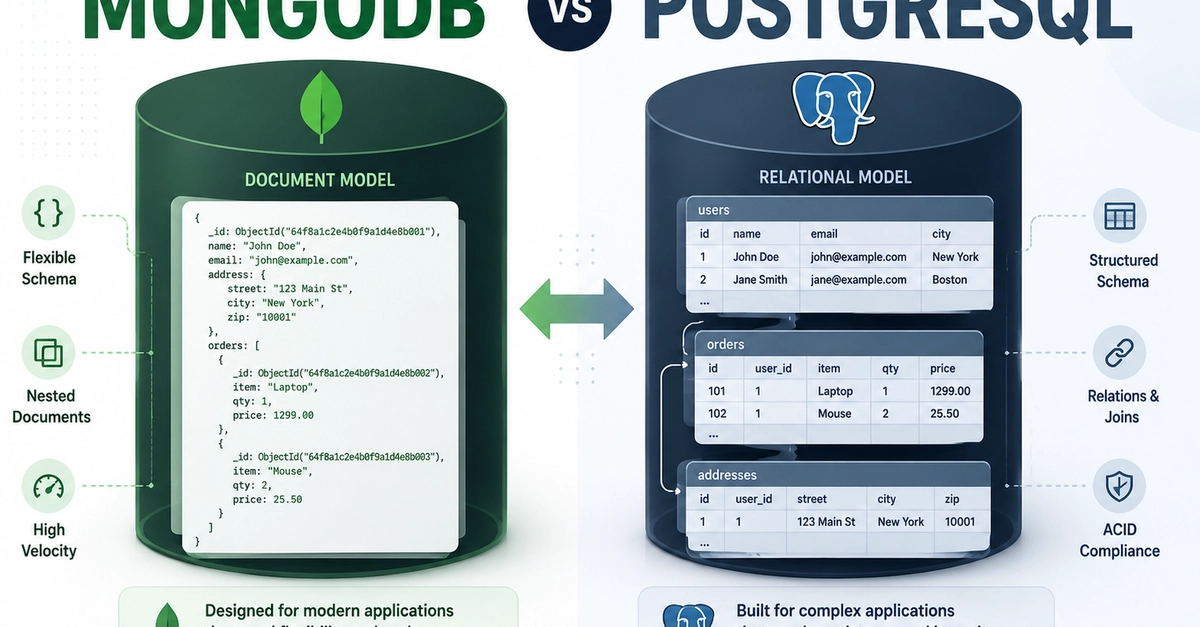
PostgreSQL and MongoDB both solve this problem. They both replicate data. They both promote a new primary when the current one fails. But they took radically different paths to get there, and those paths reflect when each system was born and what its designers believed about how databases should work. PostgreSQL grew out of an academic project in the 1990s, in an era when high availability meant a tape backup and a phone call to a DBA. MongoDB was conceived in 2009, after a decade of internet companies discovering that machines fail constantly and recovery cannot involve humans. Their replication systems carry that history in their bones.
This article carefully walks through both systems. You will learn how PostgreSQL streams write-ahead logs to standby servers and how MongoDB tails its operation log on every secondary. You will see why PostgreSQL needs Patroni or repmgr to fail over automatically, while MongoDB has Raft consensus built into its replica set protocol. You will understand why a transaction in flight on a PostgreSQL primary simply dies during failover, while a prepared transaction on a MongoDB primary survives and resumes on the new primary. By the end, you will have a clear framework for choosing between them. Not based on marketing pages, but on which trade-offs actually fit your system.