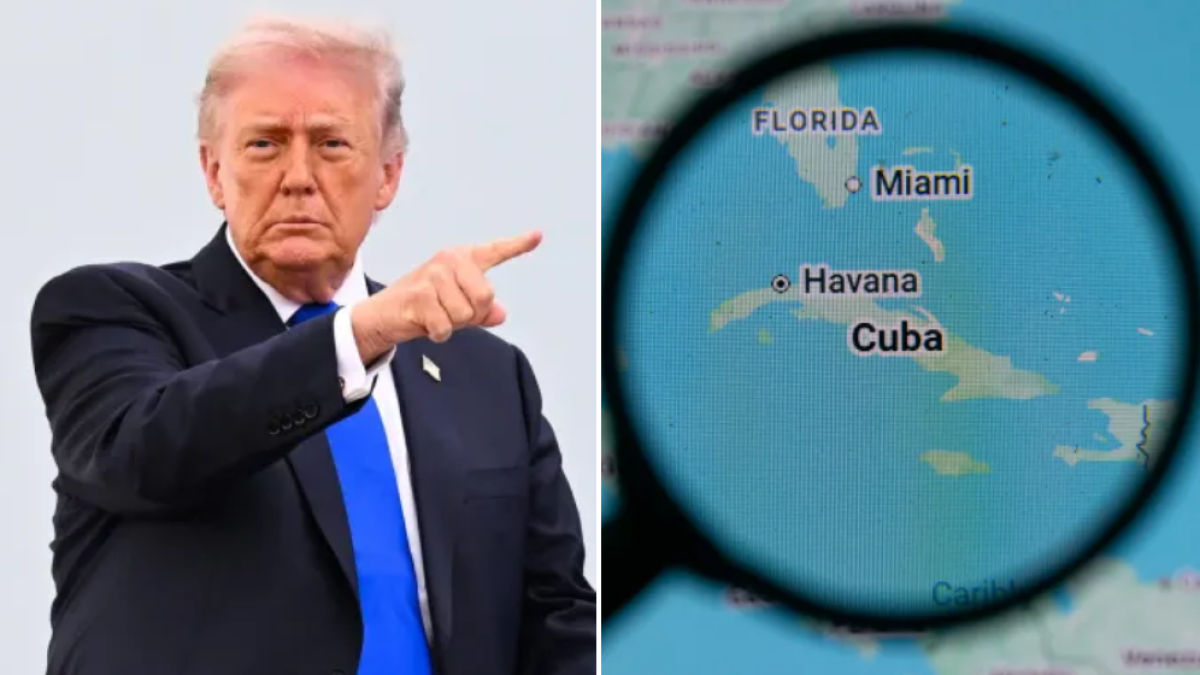
"I think I could do anything I want with it": That's what Donald Trump said about Cuba mid-March. Yet he is hardly the first US president with such expansionist desires, notes historian Michael Zeuske, a professor at the Center for Dependency and Slavery Studies at the University of Bonn. Zeuske says the US had already set its sights on the island as early as the mid-19th century.More than just classic cars and soft power: The US has long tried to exert direct control over CubaImage: Eric Kruszewski/Design Pics/picture alliance
Cuba is not for sale
Back then, Cuba was still a Spanish colony. In 1820, Thomas Jefferson, who had served as the third president of the nascent United States from 1801-09, declared that his country should seize the first opportunity to annex Cuba.
Three years later, then-Secretary of State John Quincy Adams remarked: "There are laws of political as well as of physical gravitation; and if an apple severed by the tempest from its native tree cannot choose but fall to the ground, Cuba, forcibly disjoined from its own unnatural connection with Spain, and incapable of self support, can gravitate only towards the North American Union, which by the same law of nature cannot cast her off from its bosom."