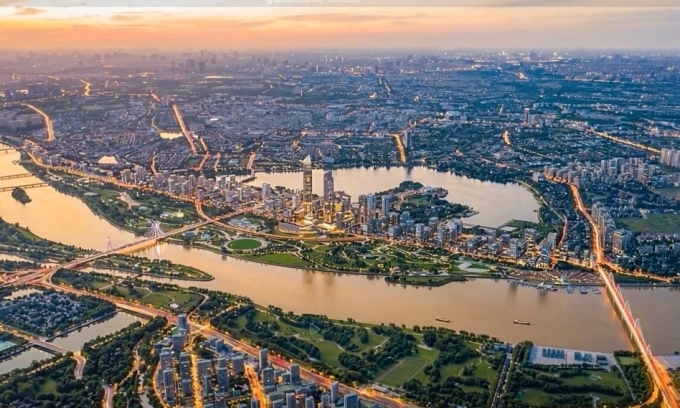
Hanoi's 100-year master plan is set to mold the capital into a "Smart – Green – Multi-polar – Multi-center" city, with artificial intelligence (AI), transit-oriented development (TOD), and a 1,153 km metro system serving as strategic growth pillars.
Previously, Hanoi ran two parallel planning frameworks, including capital planning under the 2017 Planning Law and a general capital plan under the 2024 Urban and Rural Planning Law. The duplication bred conflicts between socio-economic goals and spatial design, leaving traffic jams, flooding, and pollution unsolved and development resources squandered.Under a National Assembly's Resolution granting pilot special mechanisms and policies to the city, Hanoi was authorized to merge both planning systems into a single integrated master plan, signed off by Chairman of the Hanoi People's Committee on May 13, 2026.
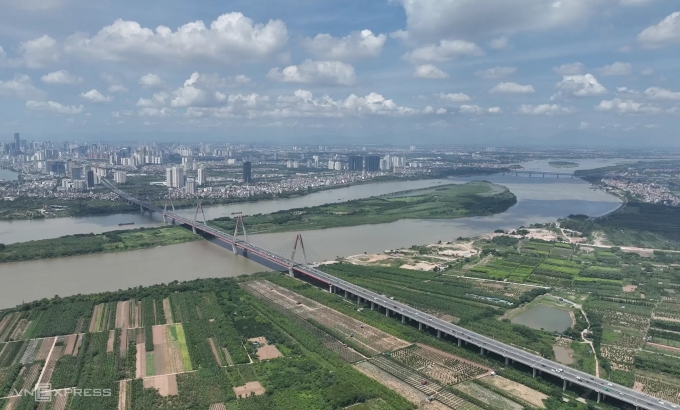
The Red River landscape boulevard project. Photo by the Hanoi People’s Committee
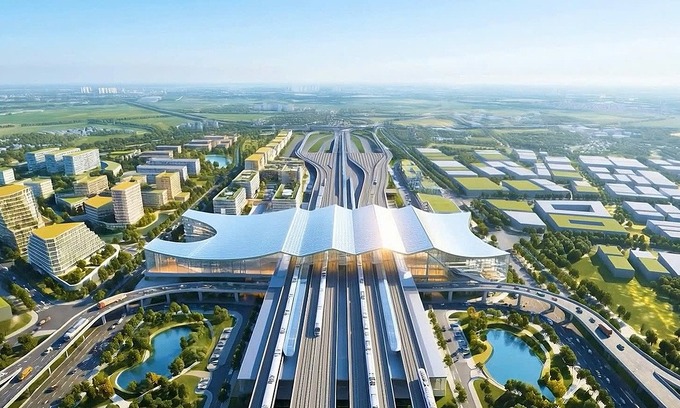
According to the master plan covering roughly 3,359.84 sq.km, the Red River will act as the primary ecological and cultural landscape spine.Hanoi will pursue a "compact-green" growth model, densifying built-up areas while rigidly safeguarding green belts, green corridors, and ecological spaces.The plan’s flagship proposal is a 1,153 km urban and inter-regional rail grid. Metro lines will link ring roads, radials, growth poles, and major urban centers, while knitting the capital more tightly with the surrounding Capital Region and Red River Delta.