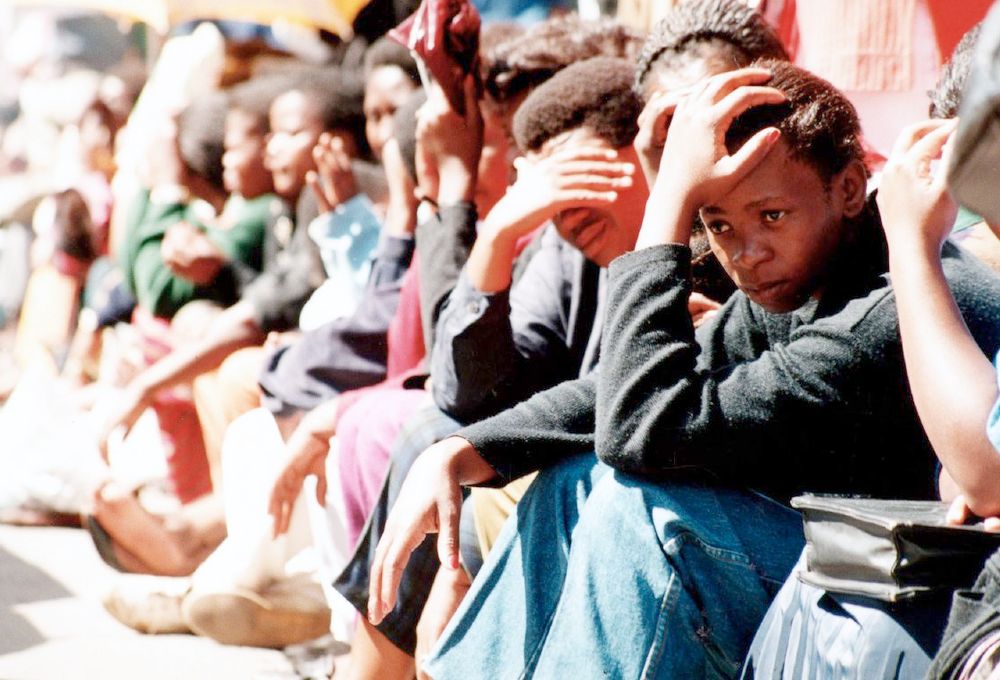
The first quarter labour force statistics for 2026 are both revealing and concerning. They indicate that the economy is stuck, hindered by internal issues and external geopolitical challenges. The number of discouraged job seekers has increased by 171,000 to 3.7-million. Unfortunately, 345,000 workers lost their jobs in the first three months of this financial year. These figures represent households that will need to explore new economic solutions to put food on the table and meet their basic needs. They will join the ranks of economic outcasts, as they cannot meaningfully participate in the economy. Data from historically poor provinces and metropolitan areas do not suggest any recovery.Although agriculture remains a positive aspect nationwide, Limpopo’s seasonal gains were erased by a decline in informal retail and community services. In the Northern Cape, despite mining adding some jobs the loss of 30,000 positions in the national transport sector has had a significant effect on the province’s supply chain. The manufacturing sector in the Eastern Cape is facing challenges due to deindustrialisation. Nationally, the manufacturing sector lost 127,000 jobs year-on-year, with the Eastern Cape’s auto hub being the main casualty. As the Just Energy Transition progresses, coal-dependent towns in Mpumalanga are witnessing local economies shrinking. Volatility in mining has contributed to the loss of 5,000 jobs in this sector nationwide.Metropolitan areas also reflect a grim picture. Joburg and Ekurhuleni are suffering from the decline of the community and social services sector, which saw a loss of 206,000 jobs nationally. The spatial mismatch in Gauteng means some workers spend more on transportation than they earn. Cape Town continues to excel in tradable services like tech and finance but is reaching its limit due to an influx of internal migrants from provinces lacking economic opportunities. eThekwini is relatively resilient compared to Gauteng’s metros, partly due to a slight recovery in port activities and manufacturing. The unemployment rate in the Eastern Cape, especially in Nelson Mandela Bay, has surged to 63.1%, straining the automotive hub as it faces global changes and local political instability. Mangaung struggles with infrastructure projects that are frequently delayed or abandoned due to vandalism and irregularities, leaving thousands of blue-collar workers without jobs.In the public sector, 206,000 jobs were lost in the first quarter. This is a direct result of the National Treasury’s approach to fiscal management. The state is no longer acting as the employer of last resort, causing a dramatic rise in the discouraged worker category, which now stands at nearly 4-million people. In construction, despite discussions of growth fuelled by infrastructure investment, high interest rates and delayed municipal tenders have halted residential and commercial projects. This represents a classic retreat by private sector investment. In manufacturing, while South Africa saw a slight quarterly increase, it has lost 127,000 jobs year-on-year. Thus, community and social services, along with construction, which lost 110,000 jobs, were the most affected sectors in the first quarter.This indicates a fiscal cliff, reinforcing the idea that the state can no longer be the sole primary employer while the private sector fails to fill the gap. The initial shock from the conflict in the Middle East and ongoing tariffs from the US also affected the economy. Rising fuel prices and inflation are burdening the employed, making job-hunting increasingly costly for the unemployed. Most concerning is the rise in youth unemployment to unacceptable levels.These alarming unemployment trends are closely linked to government failures since the dawn of democracy and are built on three pillars: government’s strict adherence to fiscal prudence, trade liberalisation and inflation targeting.Government has prioritised debt reduction and deficit control above all else. In the first quarter of the year we are seeing the “rewards” from these policies. Public sector job losses of 206,000 occur because the state is trying to balance the budget while the economy suffers. Since 1994, South Africa has aggressively reduced tariffs to integrate into the global economy.Jobless growthEven with the economy showing marginal stabilisation at annual growth of 1.6%, it is still jobless growth. The neoliberal model assumes that fixing the macroeconomic environment will lead to private sector hiring. The unemployment rate of 32.7% demonstrates that this trickle-down approach is nonexistent in a structural crisis.The economy has shifted from production to capital movement. While the financial sector gained 32,000 jobs this quarter, production sectors like manufacturing and construction are collapsing. Neoliberalism relies on market forces to dictate where people work and live. In South Africa, this has left provinces such as the Eastern Cape with a staggering 44.6% unemployment rate, situated in labour reserves with no industrial prospects.For 32 years the political offer has been based on redistribution through the state, which is a good idea but is not implemented aggressively enough. The expectation was that a growing state would employ people, provide grants and manage the economy. Provinces like the Eastern Cape, with a 44.6% unemployment rate, illustrate the failure of this model. Economic outcasts must demand a new political offer that emerges from the periphery rather than the centre. This new offer should promote economic freedom as the next step toward liberation.The new political offer should shift from centralised industrial policies to localised economic zones. If a municipality in the North West is struggling, the new offer would allow it to establish its own minimum wage or tax incentives to attract investment, enabling competition with other provinces. Economic outcasts must demand a new political offer that emerges from the periphery rather than the centre. Currently, participating in the economy requires state permission for licences, zoning and complex labour laws. The new social contract must recognise the right to trade as a fundamental human right and include a security agreement. The construction mafia poses a significant threat to economic outcasts, as it undermines projects that could provide entry-level jobs.The Government of National Unity (GNU) since its formation in 2024 has been defined by a fundamental paradox: it has achieved significant macro-stabilisation and institutional “cleaning”, but has remained largely stuck in the same neoliberal gear that is failing to stop the bleeding in the labour market. It can be argued that the GNU has saved the state from collapse, but it hasn’t saved the citizen from exclusion. The new political offer should shift its trajectory from fixing the state to people.• Cengani is operations officer for Lawula Investments. He writes in his personal capacity.
LUBABALO CENGANI | Stats show economy mired after SA sheds 345,000 jobs in three months
Labour force stats reveal full extent of challenge faced by SA's economic outcasts
1,053 words~5 min read