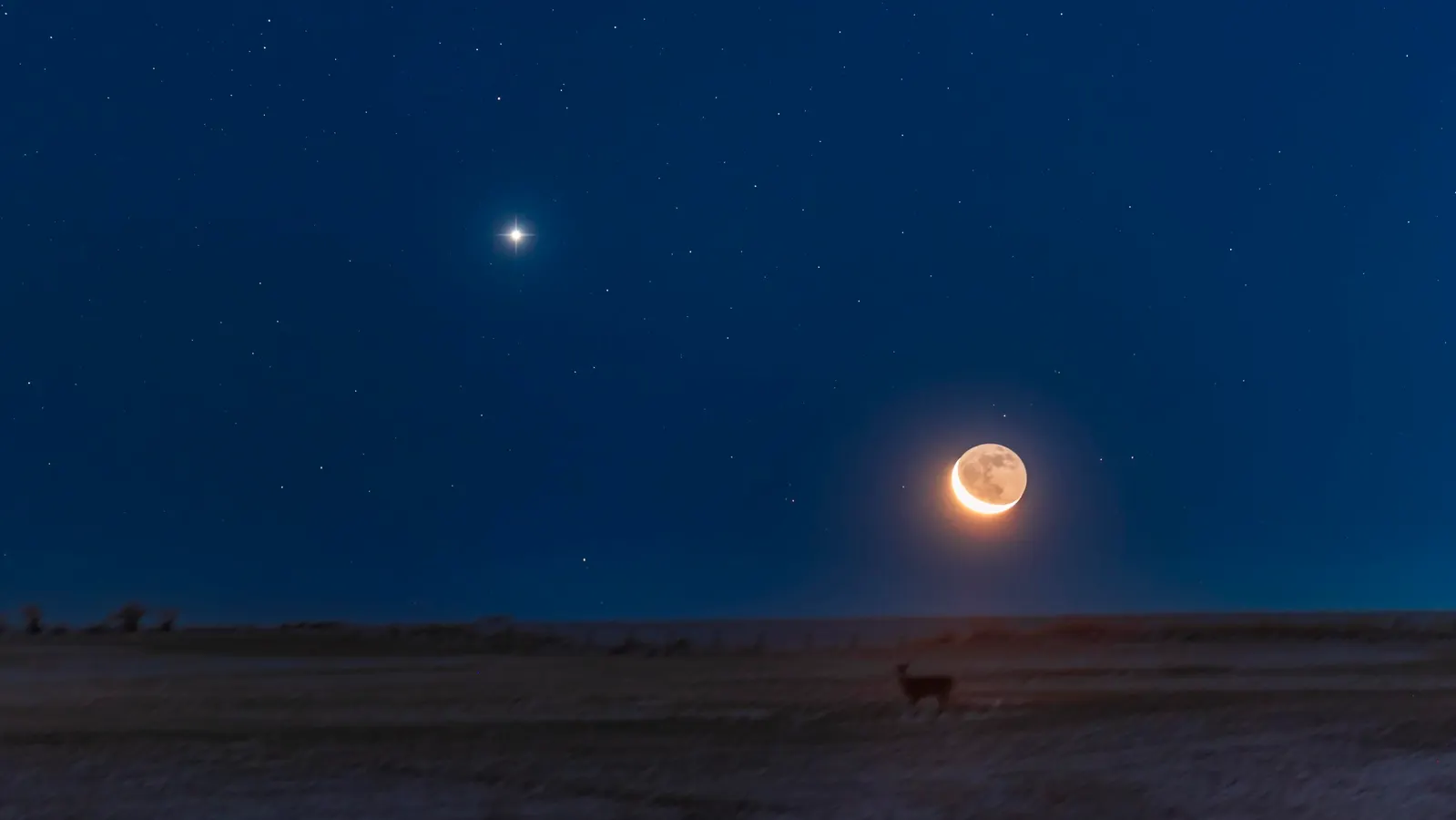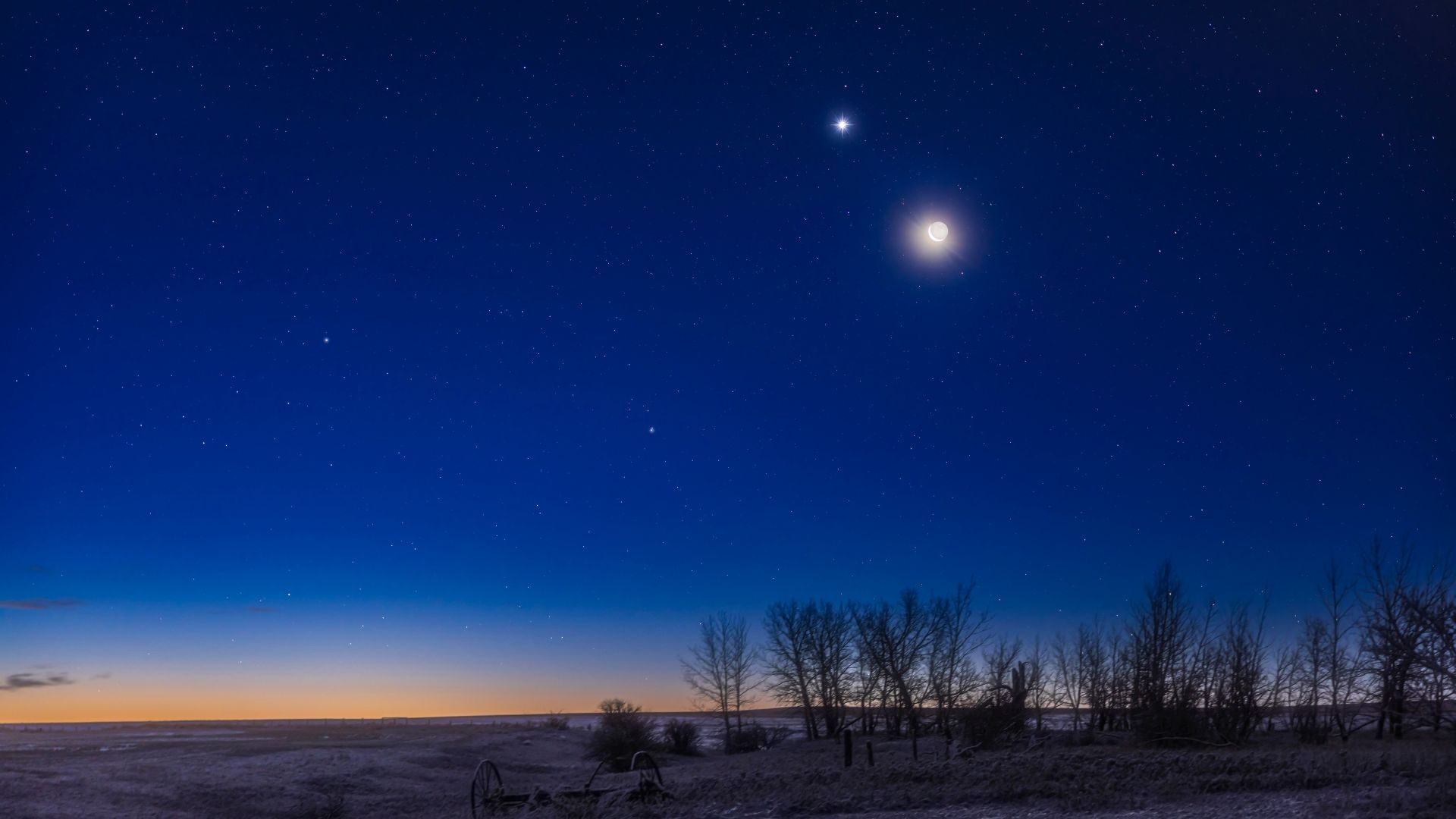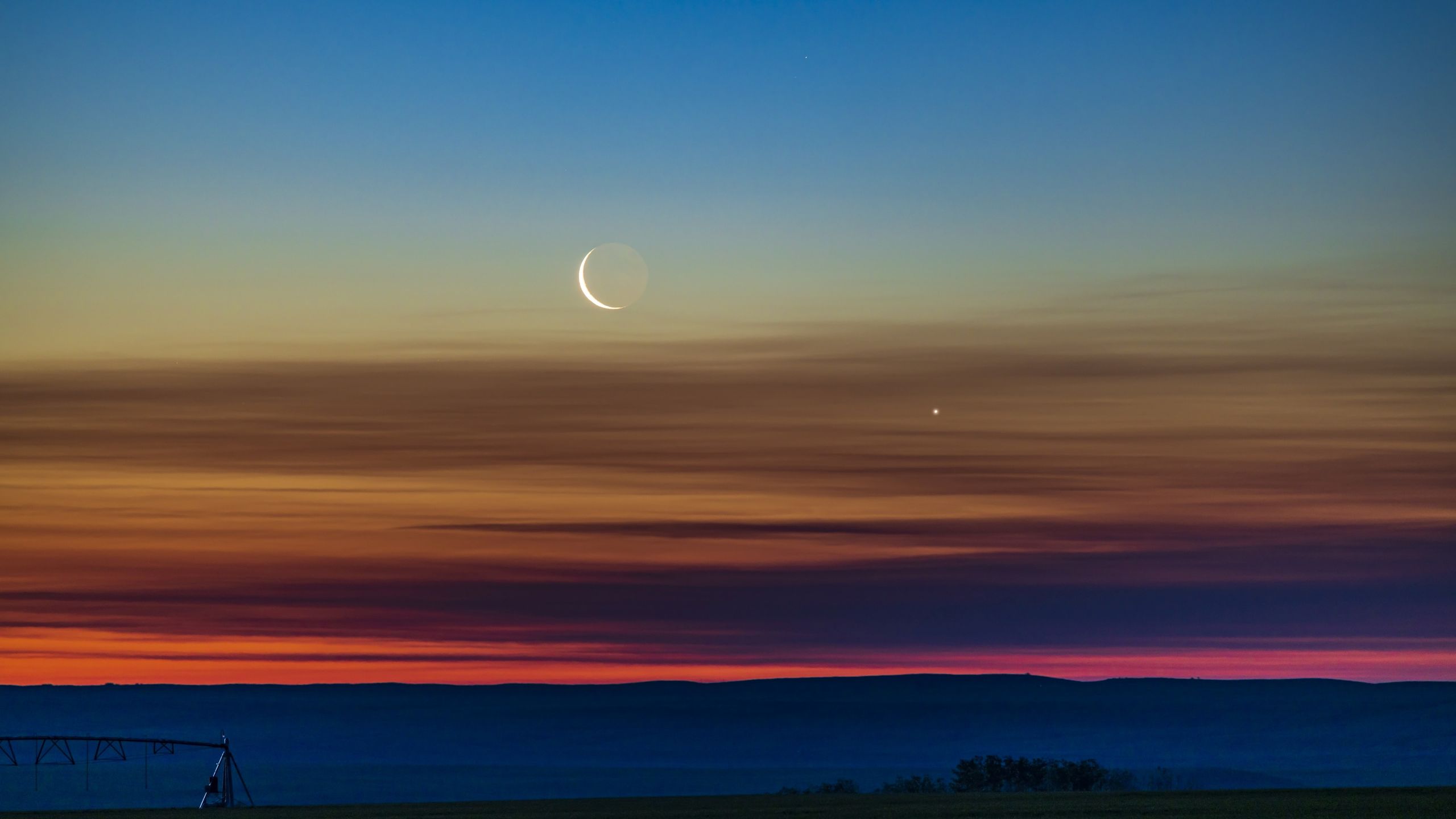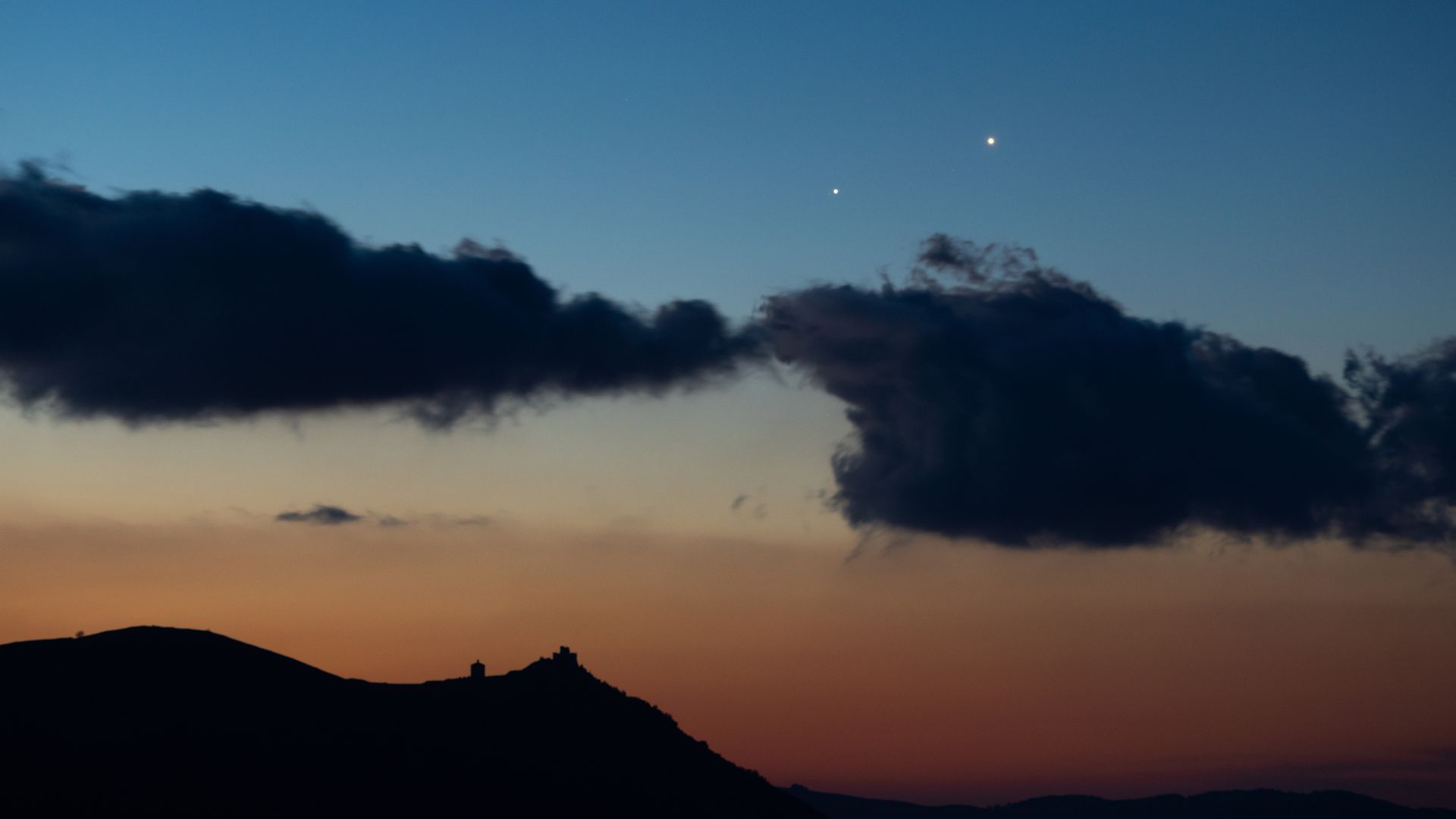
The waxing moon shines next to Messier 44.
(Image credit: Alan Dyer/VW PICS/Universal Images Group via Getty Images)
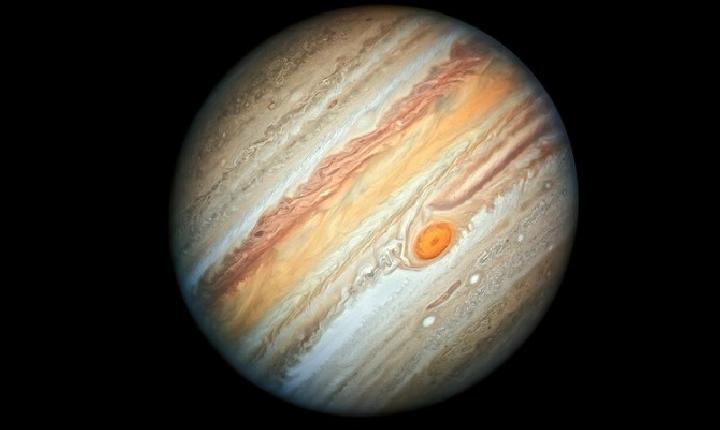
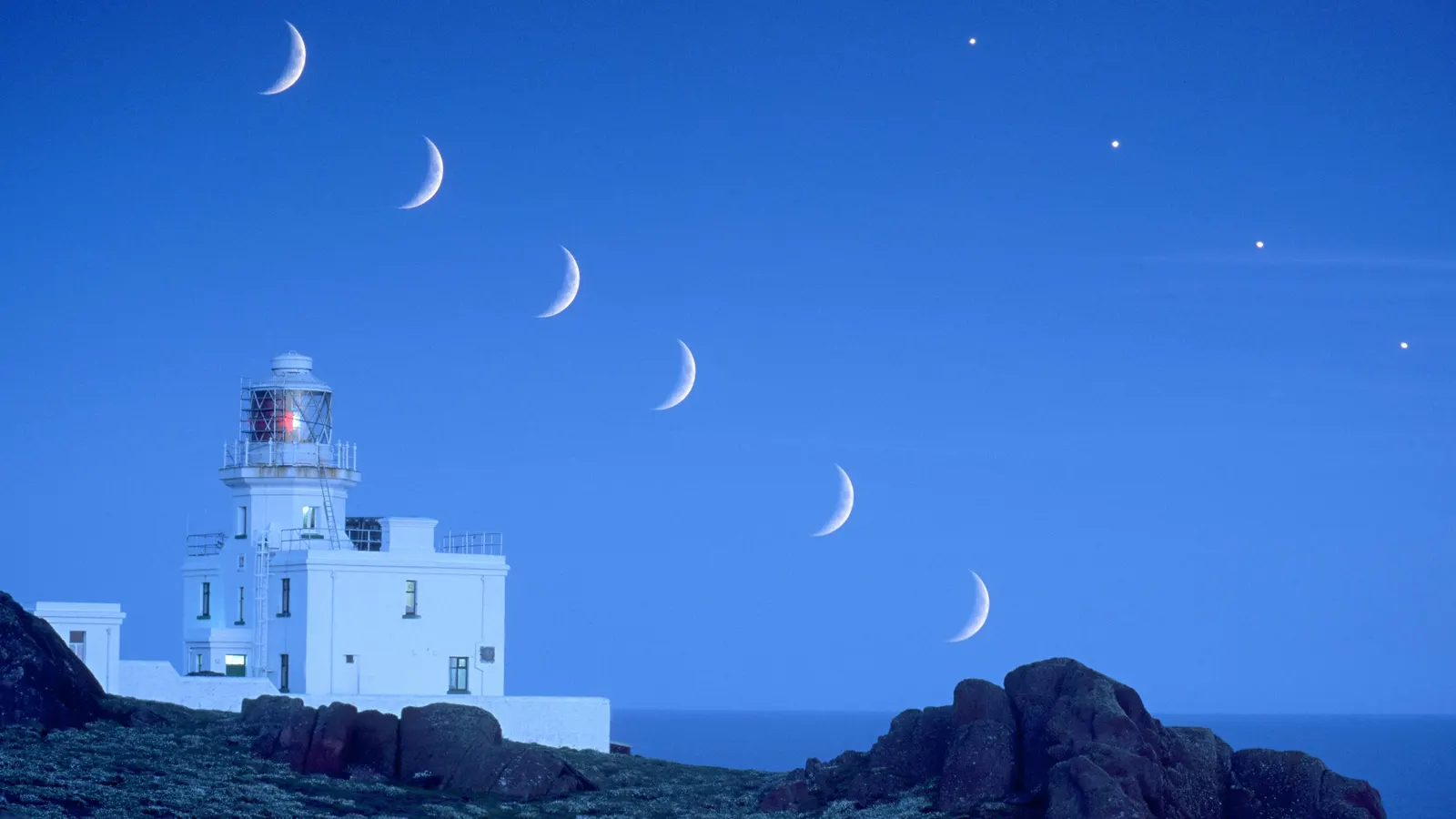
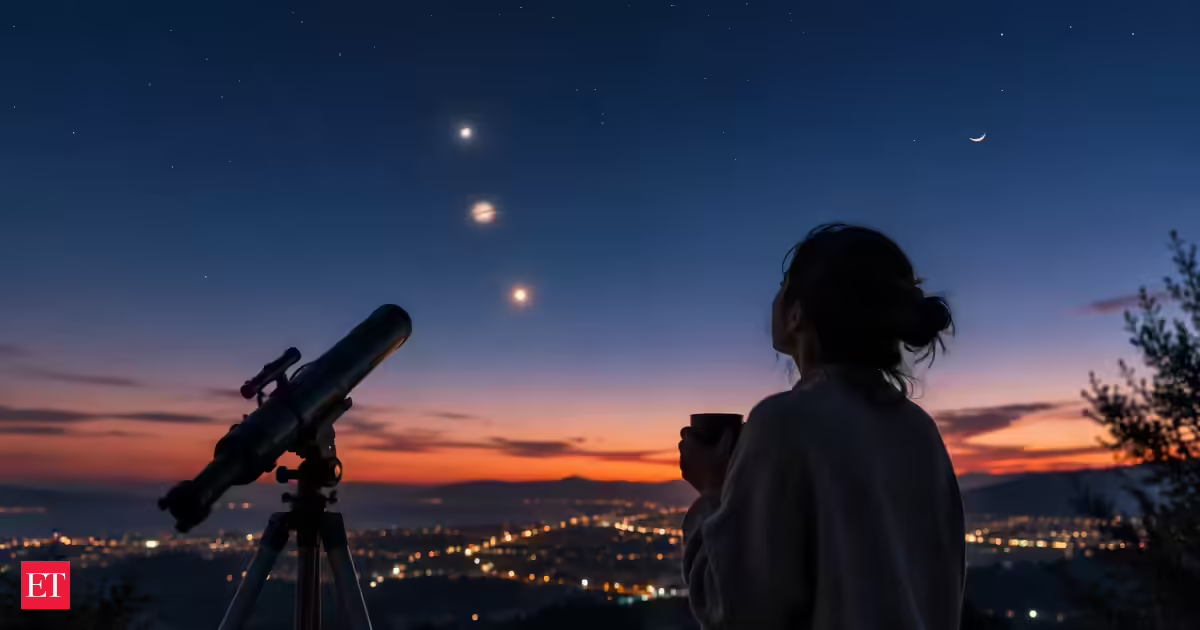
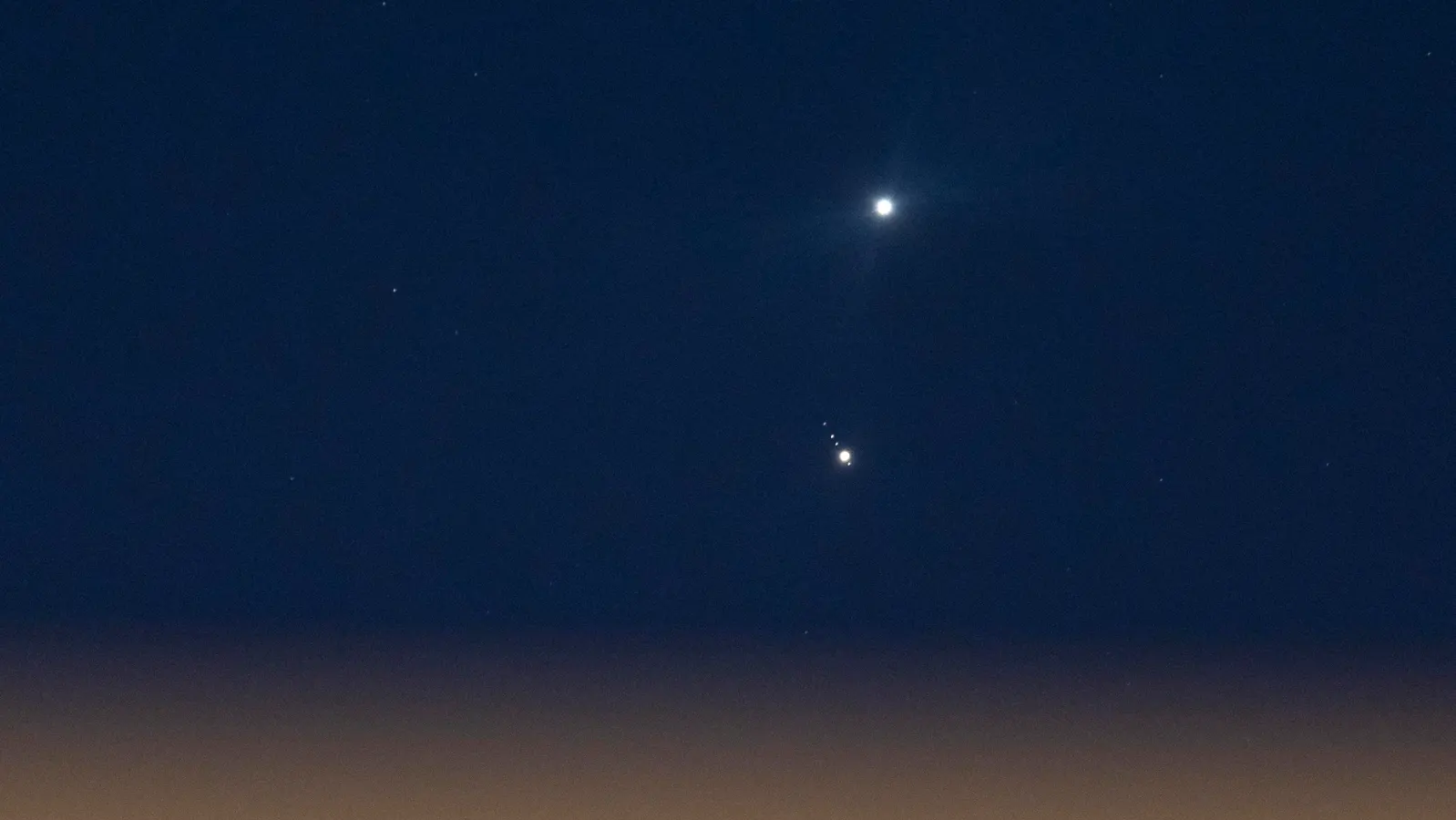
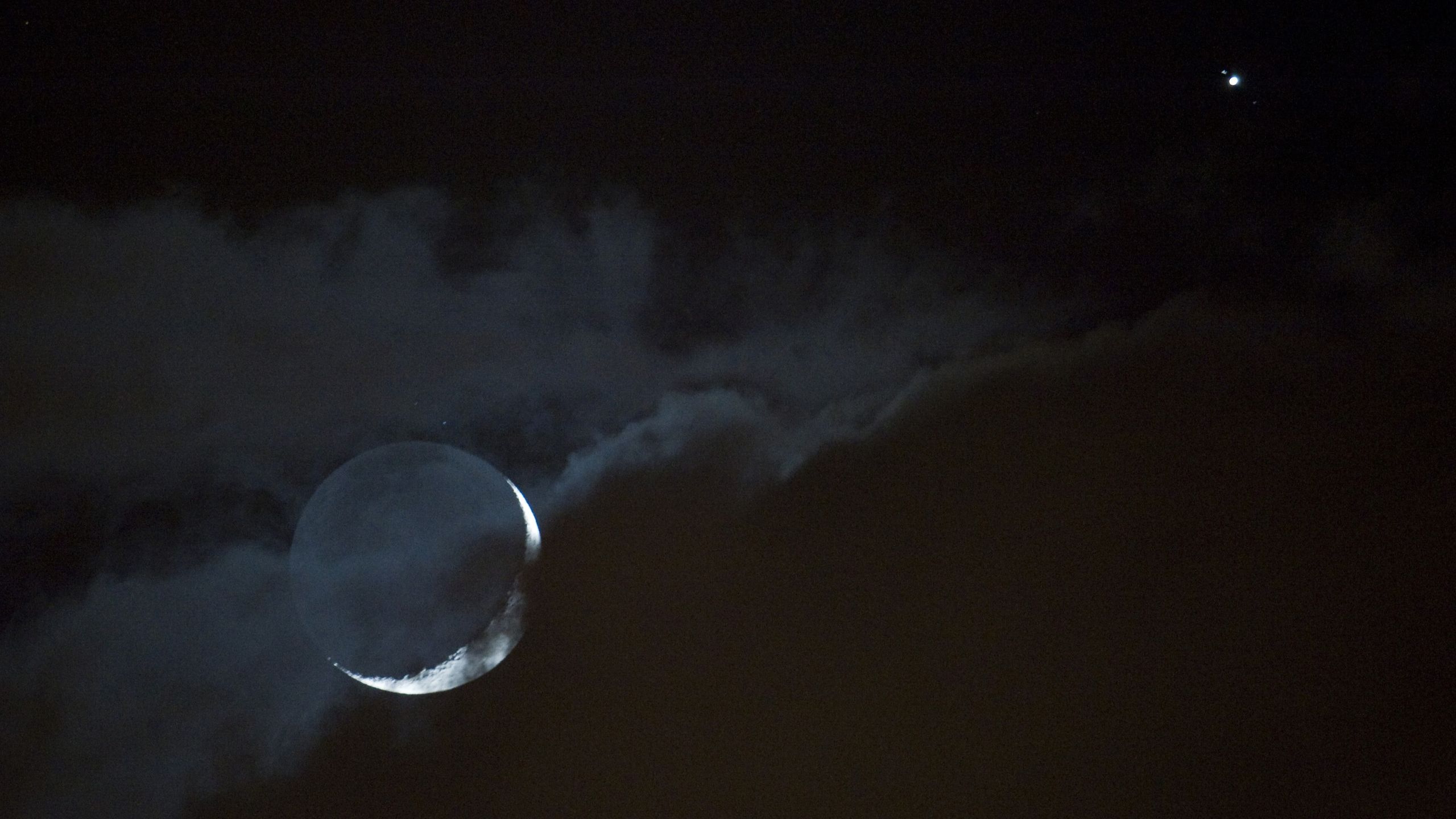
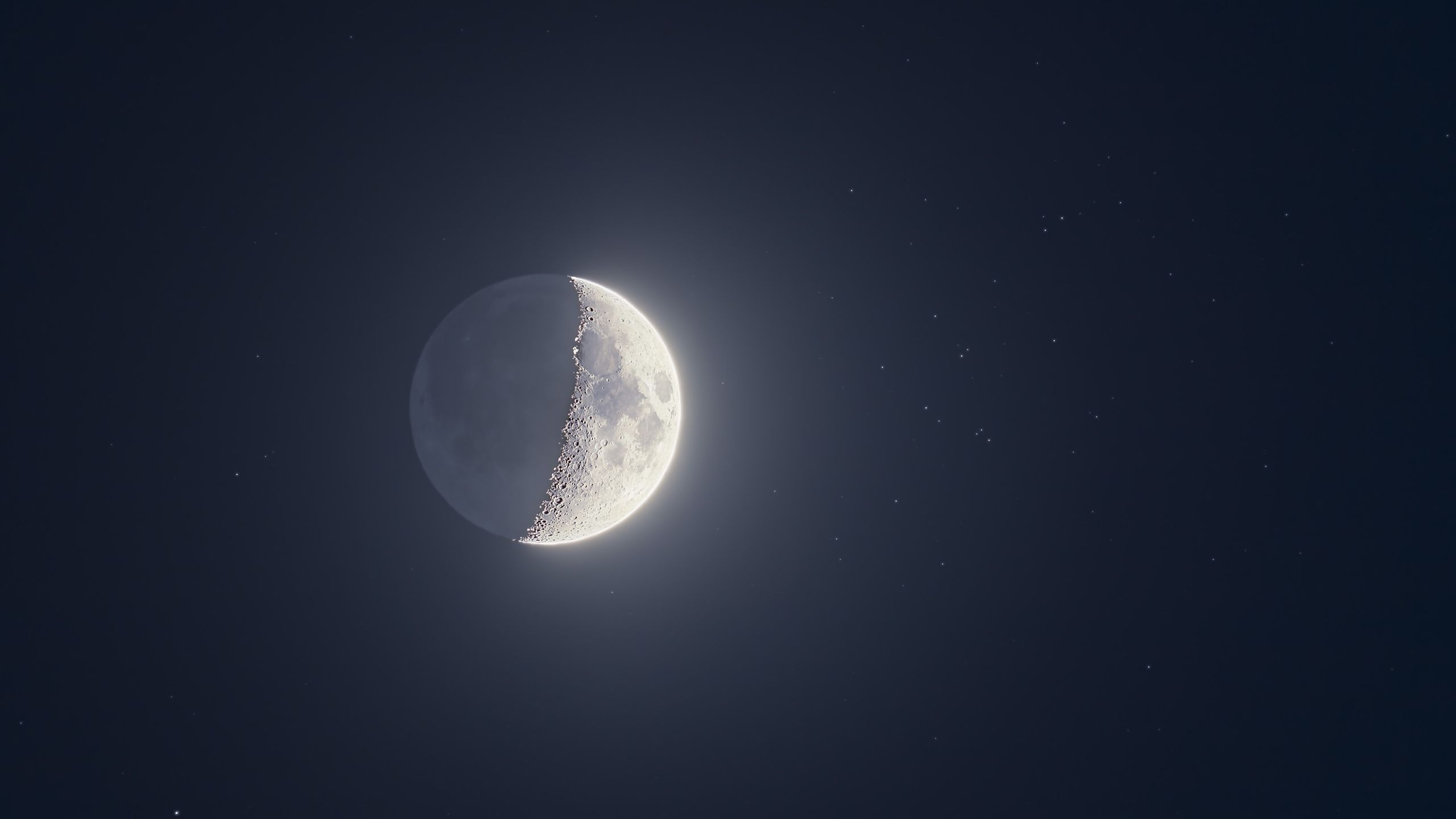
Look west after sunset on May 21 to see the crescent moon shining alongside the Beehive Cluster in the constellation Cancer, while Jupiter, Venus and elusive Mercury line up nearby in the evening sky.Jupiter will shine brightly about 20 degrees to the lower right of the moon, while Venus and Mercury form a diagonal line beyond. Mercury — the lowest of the planetary trio — will sit less than 5 degrees above the horizon. You'll need a clear view to the west, but even then you may struggle to spot it in the yellow glow of the retreating sun.Both the moon and the Beehive Cluster will fit neatly in the field of view of a pair of 10X50 binoculars, which help reveal the brightest of its young stars in the waxing glow of the 36%-lit lunar disk.
The location of the moon and Beehive Cluster on the night of May 21 (Image credit: Created by Anthony Wood in Canva. Moon imagery: NASA Scientific Visualization Studio.)A small backyard telescope will bring a plethora of diverse craters and dark lunar seas into view. Look out for Theophilus crater, which sits close to the line separating night from day — known as the terminator — and the Piccolomini impact site, which scars the lunar surface further to the south.