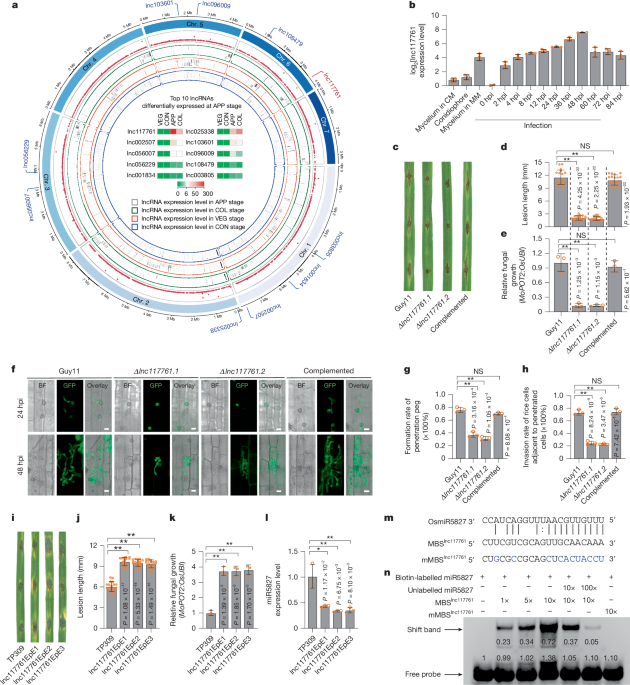
AbstractPlants and animals respond to pathogens through pattern recognition receptor and Nod-like receptor proteins1. Pathogens commonly use protein effectors to suppress host immunity for successful infection2. However, the existence of non-protein effector classes remains comparatively understudied. Here we report an RNA–RNA recognition mechanism governing pathogen–host interaction, mediated by a regulatory RNA-encoding DNA sequence that separately generates two complementary regulatory RNAs. Specifically, a long non-coding RNA transcribed from this DNA region in the fungal pathogen Magnaporthe oryzae translocates into host rice cells and sequesters a complementary microRNA (miRNA), derived from a distinct host DNA region, thereby subverting host immunity. In turn, this rice-derived miRNA promotes disease resistance by repressing the expression of PKR1, a gene that encodes a negative regulator of host immunity. Sequestration of the host miRNA by the fungal long non-coding RNA releases PKR1 expression to facilitate fungal infection. We discovered that this regulatory RNA-encoding DNA sequence is probably widely present across diverse life species, mediating interactions between pathogens and their plant hosts. Collectively, our findings provide an approach for effective disease control using miRNAs derived from this important DNA region.
A pathogen lncRNA secreted into rice sequesters a host miRNA for virulence - Nature
A fungal long non-coding RNA from Magnaporthe oryzae translocates into rice cells to sequester a host microRNA that normally represses PKR1, a negative immunity regulator, thereby facilitating infection and revealing a widespread RNA-based pathogen–host interaction mechanism.
16,144 words~73 min read