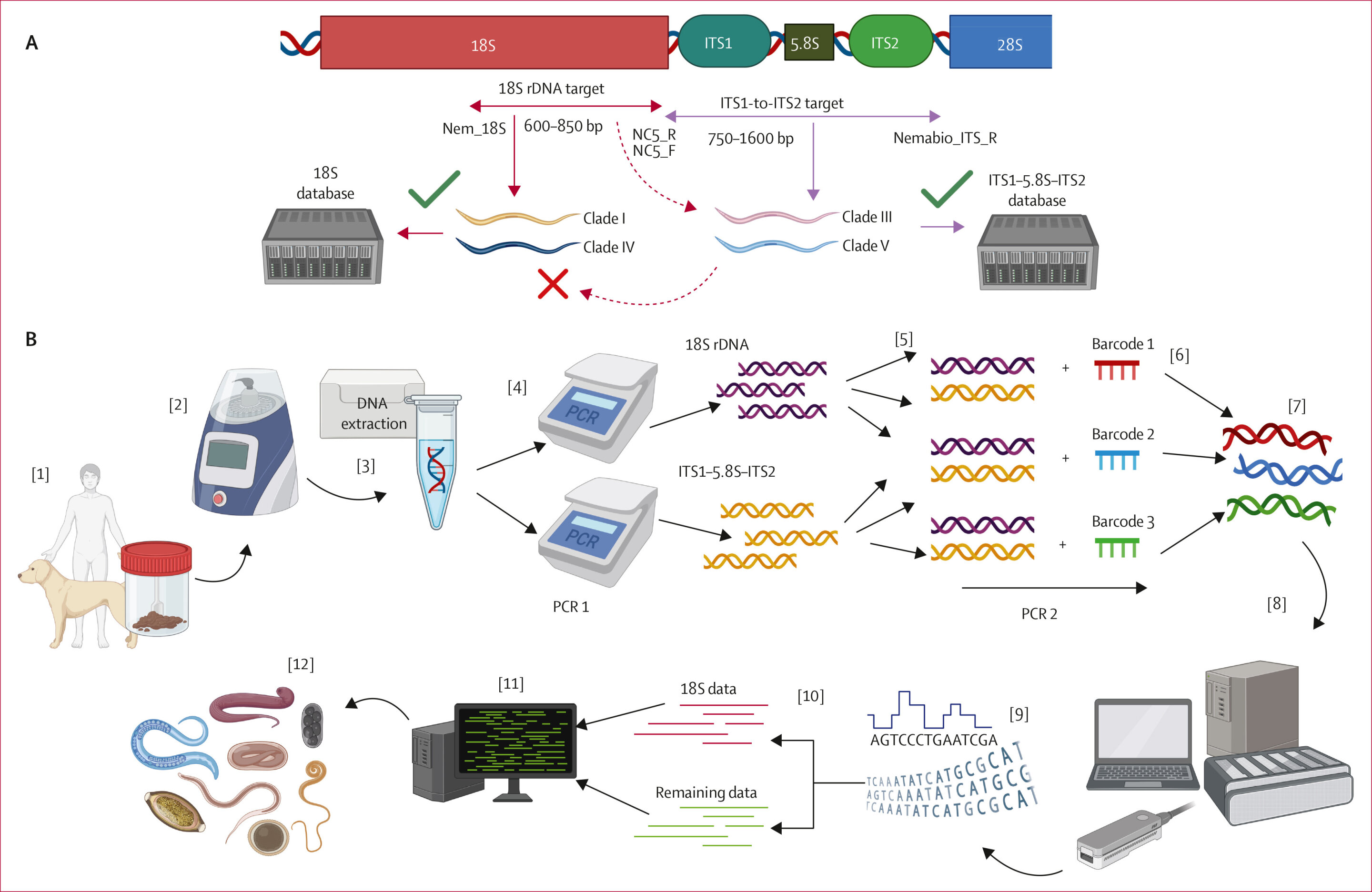
Overarching structure of the nemabiome assay showing nuclear rDNA targets and taxonomic classification (A) and the proposed laboratory and bioinformatic pipeline (B). Credit: The Lancet Microbe (2026). DOI: 10.1016/j.lanmic.2026.101349
Parasitic nematodes (commonly known as roundworms) are a large, diverse and poorly studied group of disease-causing organisms that severely impact the health of humans and animals. They infect almost one-quarter of the global population and significantly impair child growth and development. Diagnosing these parasites is challenging as many species look identical, meaning common identification techniques typically miss species.
A new publication in The Lancet Microbe by researchers from the University of Melbourne and the University of New South Wales details the development of a novel diagnostic test capable of detecting the entire parasitic nematode community from stool samples of humans and animals.
The authors have leveraged novel sequencing technology to develop this breakthrough test which will enhance our understanding of parasite diversity and improve ways through which parasitic worms can be controlled.
The global burden of nematode infections