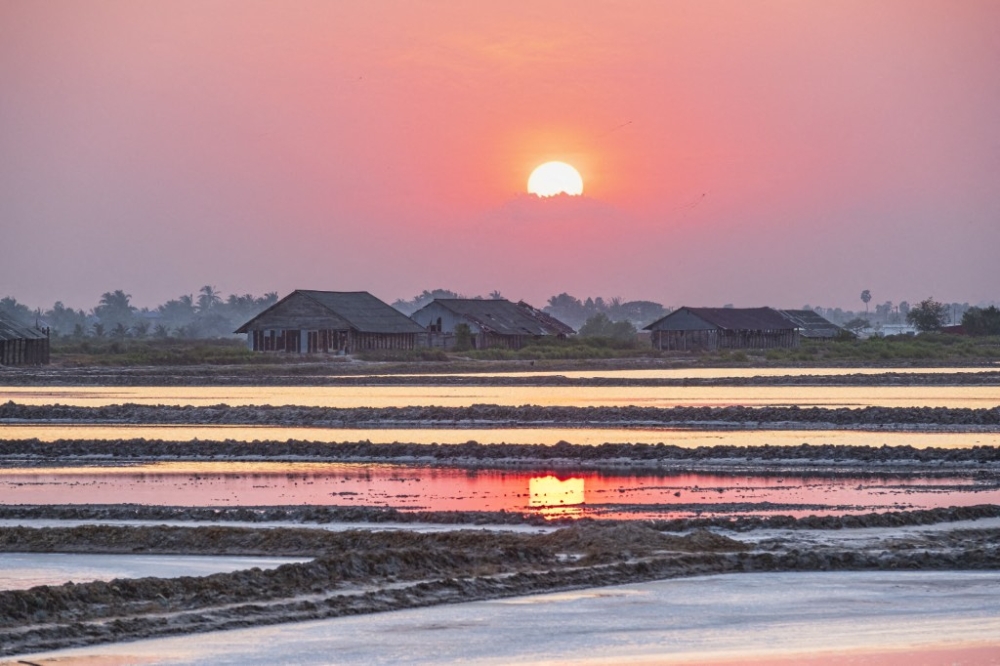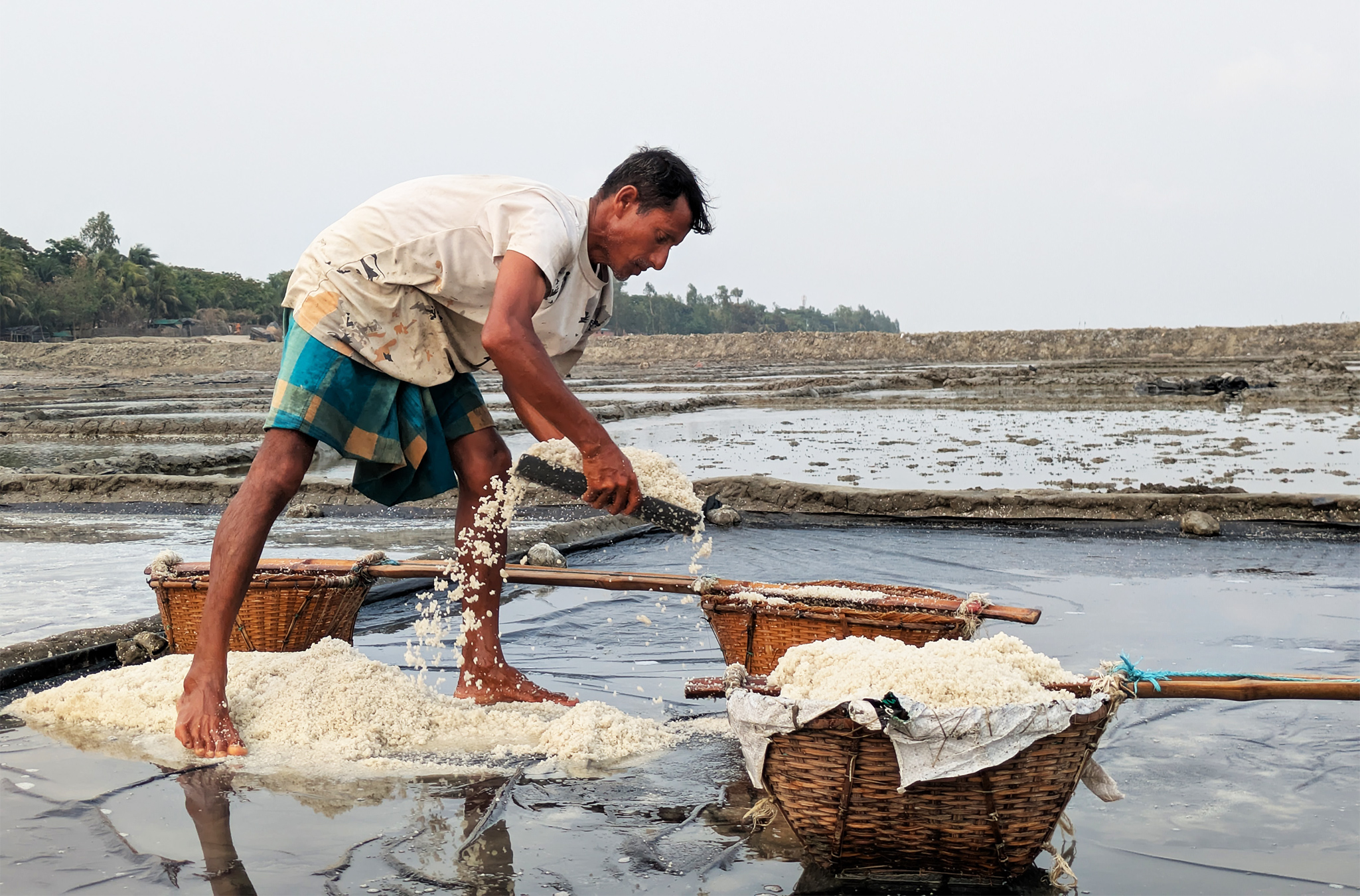
Salt farming is one of the largest seasonal livelihood sources in Bangladesh’s southeastern part. About 40,000 farmers are engaged in salt farming on around 27,520 hectares (68,000 acres) of land across Cox’s Bazar district this year.However, in recent years, unpredictable weather — such as increased rainy days and cold waves — has been disrupting salt production, forcing farmers to quit their generational livelihoods.Usually, salt production depends on dry weather, strong sunlight and high temperatures to crystallize salty water into salt.Experts caution that changing weather patterns could undermine both production stability and economic resilience of salt farming communities without adaptation measures.
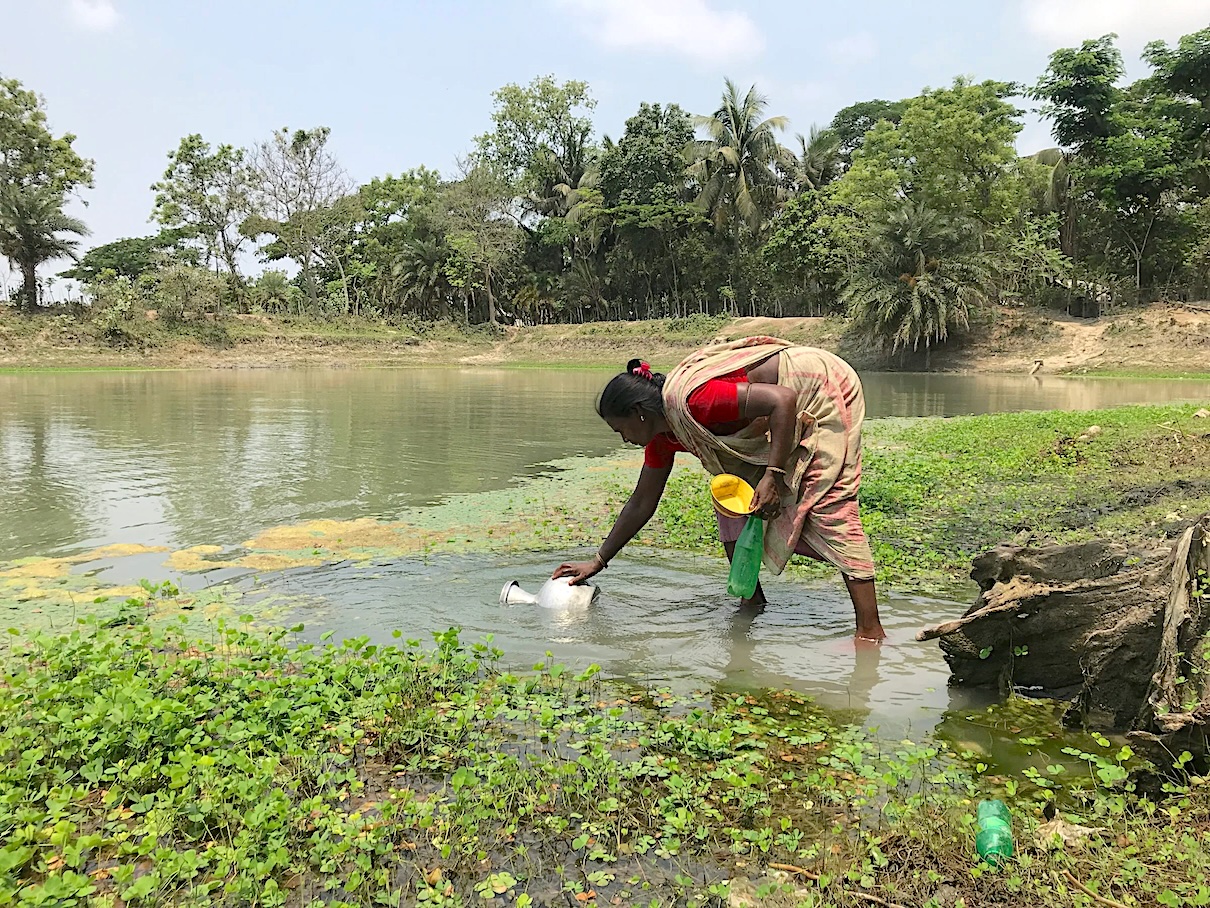
Bent over a salt bed, a 55-year-old farmer, Nasir Uddin, was scooping up and throwing out water with a hand-made pot His field was flooded by a few hours of heavy overnight rain.
On his 0.5 hectares (1.2 acres) of salt plot located in southeastern Bangladesh, nearly 18 maunds of salt (each maund is equal to 40 kilograms, or 88 pounds) had been washed away just a day before harvesting.
“I was expecting to collect salt today [April 16]. But the rain has damaged all the salt,” said Nasir, a farmer from Moulabir Gona village of Kutubdia subdistrict in Cox’s Bazar district.