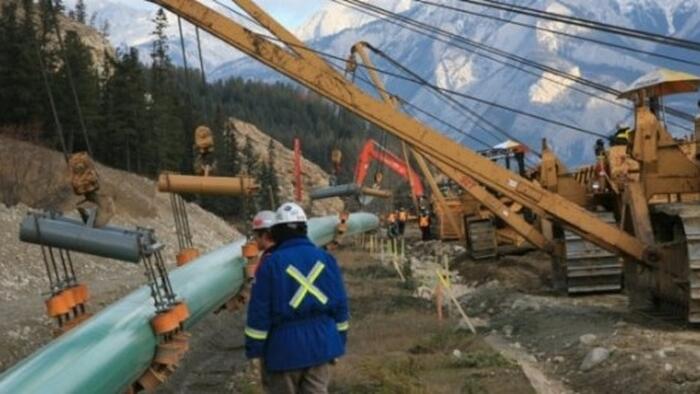
Skip to Content News Archives Economy Energy Oil & Gas Renewables Electric Vehicles Mining Commodities Agriculture Real Estate Mortgages Mortgage Rates Finance Banking Insurance Fintech Cryptocurrency Work Wealth Smart Money Wealth Management Investor Personal Finance Family Finance Retirement Taxes High Net Worth FP Comment Executive Women Puzzmo Newsletters Financial Times Business Essentials More Innovation Information Technology FP500 Podcasts Small Business Lives Told Tails Told Shopping Financial Post Store Obituaries Place a Notice Advertising Advertising With Us Advertising Solutions Postmedia Ad Manager Sponsorship Requests Classifieds Place a Classifieds ad Working Profile Settings My Subscriptions Saved Articles My Offers Newsletters Customer Service FAQ News Economy Energy Mining Real Estate Finance Work Wealth Investor FP Comment Executive Women Puzzmo Newsletters Financial Times Business Essentials HomeEnergyHere’s how fast you need to be to outrun crude oil — and other facts about pipelines you probably didn't knowHow do they actually work? Why do they move so slowly? And how do they get around mountains?Last updated 4 hours ago You can save this article by registering for free here. Or sign-in if you have an account.Buried beneath the politics, economics and permitting of Alberta’s push for a new oil pipeline to the Pacific Coast is a basic question: what does it actually take to transport bitumen?Subscribe now to read the latest news in your city and across Canada.Exclusive articles from Barbara Shecter, Joe O'Connor, Gabriel Friedman, and others.Daily content from Financial Times, the world's leading global business publication.Unlimited online access to read articles from Financial Post, National Post and 15 news sites across Canada with one account.National Post ePaper, an electronic replica of the print edition to view on any device, share and comment on.Daily puzzles, including the New York Times Crossword.Subscribe now to read the latest news in your city and across Canada.Exclusive articles from Barbara Shecter, Joe O'Connor, Gabriel Friedman and others.Daily content from Financial Times, the world's leading global business publication.Unlimited online access to read articles from Financial Post, National Post and 15 news sites across Canada with one account.National Post ePaper, an electronic replica of the print edition to view on any device, share and comment on.Daily puzzles, including the New York Times Crossword.Create an account or sign in to continue with your reading experience.Access articles from across Canada with one account.Share your thoughts and join the conversation in the comments.Enjoy additional articles per month.Get email updates from your favourite authors.Create an account or sign in to continue with your reading experience.Access articles from across Canada with one accountShare your thoughts and join the conversation in the commentsEnjoy additional articles per monthGet email updates from your favourite authorsSign In or Create an AccountorTo put it crudely, oil moves just a little faster than a light jog. Large, high-strength steel pipelines such as Trans Mountain push millions of barrels of crude oil at six to eight kilometres per hour.That doesn’t sound terribly fast — and it’s not. For context, record-smashing sprinter Usain Bolt can run more than 40 km/h.Get the latest headlines, breaking news and columns.By signing up you consent to receive the above newsletter from Postmedia Network Inc.A welcome email is on its way. If you don't see it, please check your junk folder.The next issue of Top Stories will soon be in your inbox.We encountered an issue signing you up. Please try againUnlike high-octane Olympic events, when it comes to pipelines, the key is how much oil they can ship per day, not necessarily how fast the oil is moving, according to Yong Li, an associate professor of civil and environmental engineering at the University of Alberta.“Regarding the speed, to be honest with you, we never look at the oil pipeline from this perspective,” Li said.The Financial Post, in partnership with the Calgary Herald, sought to answer some of those rarely considered questions about oil pipelines that may not normally make headlines. How do they actually work? Why do they move so slowly? And how do they get around mountains?On Friday, more than two weeks past their self-imposed deadline, Alberta Premier Danielle Smith and Prime Minister Mark Carney inked a deal that may clear the path for a new bitumen pipeline to the West Coast.Certain conditions still have to be met — Canada’s largest oilsands producers have to sign off on a multibillion-dollar carbon capture project — but last week’s deal marked a significant step forward for the potential project.Under the deal, a new one-million-barrel-per-day pipeline could be operational as early as 2033. Still, crucial details such as the pipeline’s route and a construction start date are yet to be revealed.Some things are clear: any new pipeline would have to traverse the ups and downs of Alberta’s foothills and the Canadian Rockies to reach British Columbia’s coast.“Sometimes you’ll go right through the hill, depending on the terrain,” Ron Hugo, director of the University of Calgary’s pipeline engineering centre, said in an interview.The pipeline would likely follow valleys through the mountains, much like a highway or existing pipes such as Trans Mountain and Coastal GasLink, Hugo noted.“Sometimes there are passes that you have to go over, and it would be the same sort of challenge that you’d have with the road system,” Hugo said. “But (pipelines) don’t go straight: they kind of work their way through.” This Aug. 5, 2020, image courtesy of Trans Mountain Corporation shows pipeline construction work on the Calgary Trail Horizontal Directional Drilling (HDD) near Edmonton, Alberta, Canada. Trans Mountain Corporation handout/AFP via Getty ImagesBoring machines, which can carve holes through solid rock, have improved in recent years. Hugo adds that maintaining pressure in the pipes themselves involves careful calculation during the design phase.“(In) river crossings, they basically do directional drilling now, where they can bore deep under the river, just like they were going to do with the CTrain coming through downtown Calgary at one point,” Hugo said.Hugo said once a pipeline’s right of way is determined, crews dig trenches where massive steel tubes — anywhere from three inches to 48 inches in diameter — are later buried.How deep they’re buried depends on the line, but Hugo said it’s often four feet or more underground.The systems that move oil and water in underground pipes are actually similar — using things such as pumps and valves — but oil lines need much closer monitoring, according to Hugo. And, since oil is thicker, it requires higher pressures to move and sturdier pipes to contain it.Pump stations, he said, are strategically placed along the route to give oil the momentum it needs to reach its destination.What makes pipelines the ideal mode of shipping oil is that they operate around the clock, unlike trucks or trains, Li said.“That’s why oil pipelines are considered the most efficient and cost-effective way (of) transporting oil, especially for long distances,” Li said. The Trans Mountain Expansion Project pipe is seen on the ground near Highway 60 and 628 prior to construction in December 2019. Ed Kaiser/Postmedia fileWhile oil spill prevention and response have improved in Canada over the past several decades, incidents still happen.Earlier this year, an Imperial Oil Ltd. pipeline spilled 843,000 litres of bitumen emulsion northwest of Cold Lake. At the time, the Alberta Energy Regulator and the company said there were no effects to wildlife or waterbodies.“I don’t think any transportation system can be risk-free,” Li said. “We have to accept some risk.”Coastal First Nations, along with some environmental groups, are not willing to take that risk. They worry a potential spill could cause significant environmental harm to coastal waters.“There is no technology that can clean up an oil spill at sea, and one spill could destroy our way of life,” Coastal First Nations, an alliance of Indigenous groups along the northern B.C. coast, said in a news release.“Our nations understand the economic challenges Canada is facing, and we want national projects to succeed based on strong partnerships with First Nations that recognize the need to protect our marine ecosystems and the sustainable economies we have built together, for the benefit of all Canadians.”In an interview long before Friday’s announcement, Li said pipeline steel is specifically designed to withstand the internal pressure of oil while taking geological hazards into account.“We have a relatively large safety margin,” he said.Hugo added that pipeline operators are required to install equipment capable of monitoring for cracks and corrosion.“Once it starts to approach a limit, then they would have to do remedial repair that could involve digging up a section of the line and repairing that section,” Hugo said.Telecommunications equipment also allows for lines to be operated and monitored remotely, he said. A tanker sits in dock at the Trans Mountain Pipeline expansion Westridge Marine Terminal in Burnaby, B.C. Photo by Trans Mountain Corp.Another factor that’s taken into account in design is people. Hugo said lines are often buried deep enough that vandalism is not an issue.“Places where they come to the surface, they’re always protected with fencing and other types of security measures to ensure that you don’t have people disrupting the service,” Hugo said.As part of the pipeline deal, the federal and Alberta governments agreed to increase the province’s industrial carbon price to an effective rate of $130 per tonne by 2040. It’s above the current rate of $95 per tonne, but below the previous federal target of $170 per tonne by 2030.The Carney government has always maintained that Alberta must agree to climate concessions to get Ottawa’s blessing for a pipeline.The apparent compromise has been met with some skepticism in the oilpatch, with several industry leaders arguing any carbon price would put their businesses at a disadvantage.Meanwhile, some environmental groups are also up in arms, arguing the price is a backpedal from previous government commitments and may harm Canada’s economic future.B.C. Premier David Eby accused the federal government of rewarding Alberta’s “bad behaviour.” Join the Conversation This website uses cookies to personalize your content (including ads), and allows us to analyze our traffic. Read more about cookies here. By continuing to use our site, you agree to our Terms of Use and Privacy Policy.
Here’s how fast you need to be to outrun crude oil — and other facts about pipelines you probably didn't know
Beneath complexities of Alberta’s push for a new Pacific Coast oil pipeline lies a basic question: what does it take to transport bitumen?
1,670 words~8 min read