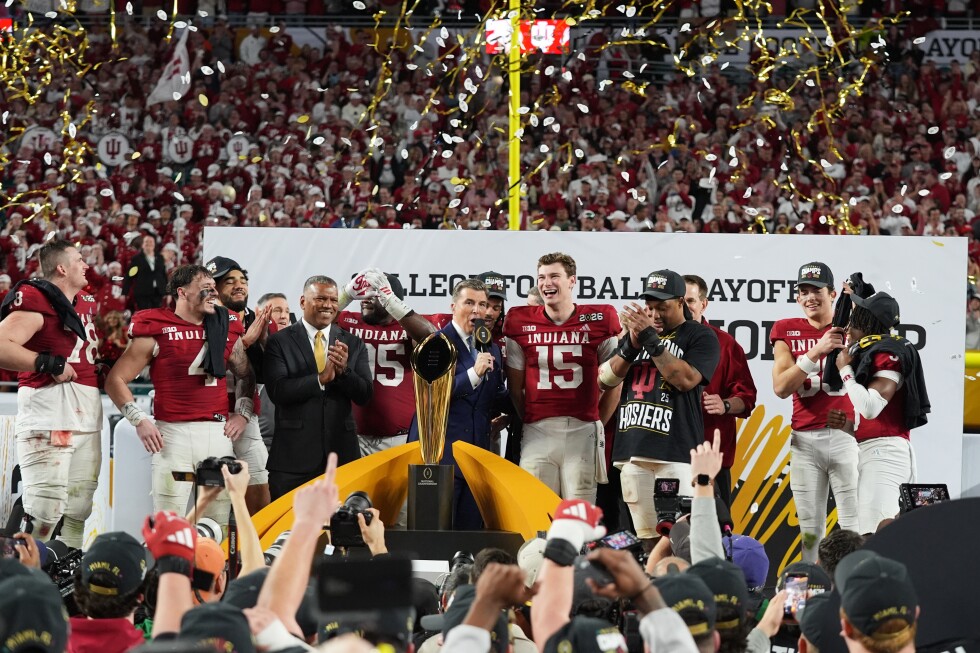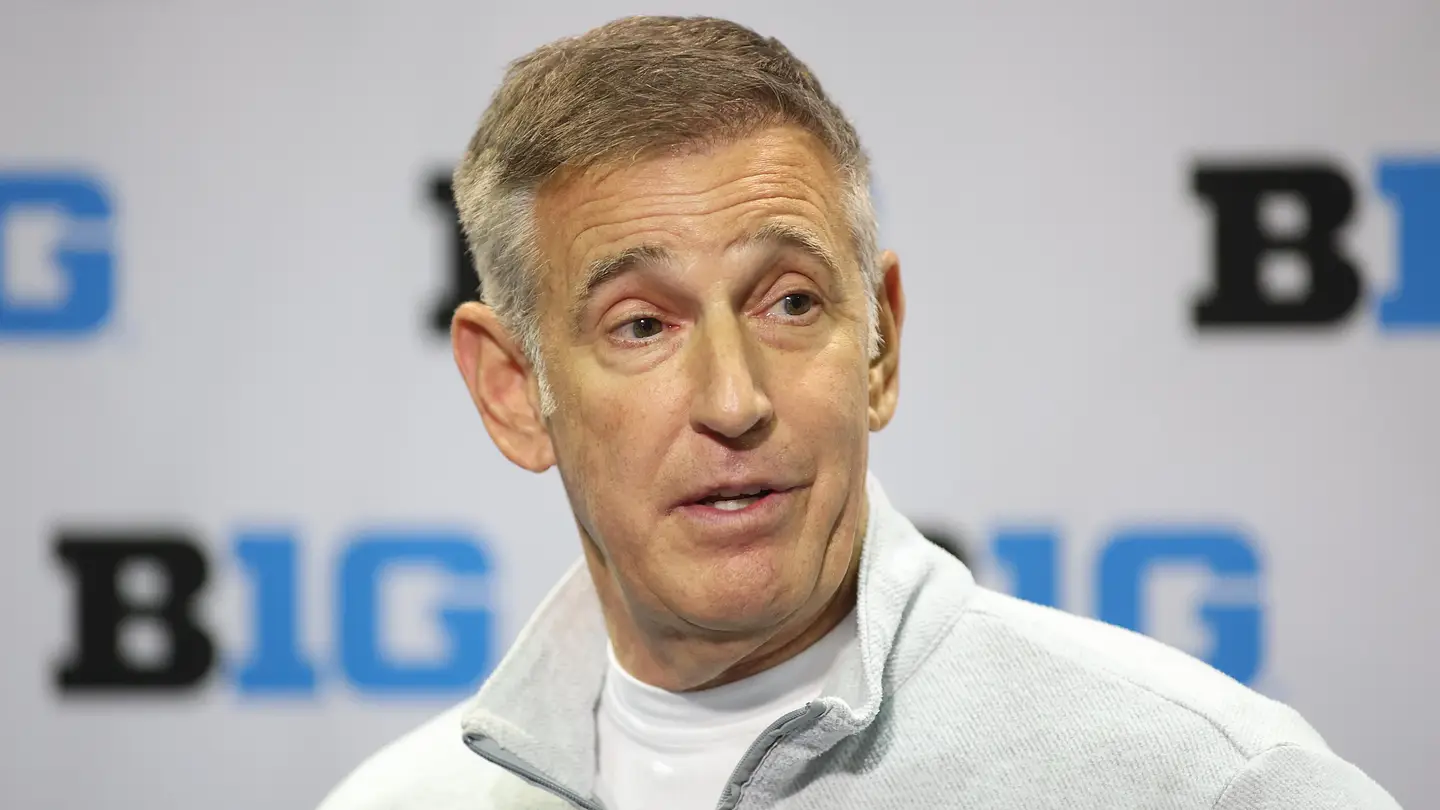
RANCHO PALOS VERDES, Calif. — Big Ten commissioner Tony Petitti and his 18 universities are unanimous in their support of a 24-team College Football Playoff and bullish on what additional access would mean for their football programs in a larger tournament structure.“That’s having been incredibly successful in the 12-team format,” said Petitti, who spoke to reporters for nearly an hour at the Big Ten meetings at the Terranea Resort. “The willingness to make a change and consider giving up our championship game to get to the right postseason, I think our coaches and our administrators understand that trade-off.”The league’s backing of a 24-team Playoff field has yet to sway fans and critics, but Petitti and the league’s schools are undaunted. The ACC and Big 12 also support the larger CFP, and the SEC has yet to offer an official position, which creates an obstacle to expansion. The Big Ten and SEC must agree on a new structure, or it will remain at its current 12-team format.“We feel strongly about it, and we’re working really hard with our colleagues and the other conferences,” Petitti said. “Obviously, the way this is structured, we understand that the SEC and the Big Ten have to come to an agreement, and we’re working hard to figure out ways to get to a solution. But inside our league, there is a deep commitment to 24 and the access.”So, why is the Big Ten rapidly changing a system that featured a four-team CFP that concluded the 2023 season to a 24-team model it hopes can be implemented for the 2027 season? To provide more hope and opportunity for all of its members.The Big Ten has won the last three CFP championships: Michigan in 2023, followed by Ohio State in 2024 and Indiana last season. Six current members have qualified for the CFP semifinals over the last three years. But in an 18-team conference with only nine competitions against one another, the scheduling disparity impacts win-loss records and the CFP selection process. A team with a difficult schedule could be better than a team with a much easier slate, yet the win-loss record consistently trumps the eye test.Michigan State coach Pat Fitzgerald identified Iowa last season as an example. Fitzgerald’s son Ryan plays quarterback for the Hawkeyes, who lost 20-15 to national champion Indiana and 18-16 to CFP semifinalist Oregon, and the decisive scores took place inside the final two minutes of both games. Iowa also lost on a 54-yard field goal at Iowa State and dropped a 26-21 decision at USC. Yet, the Hawkeyes won nine games by an average of 20.7 points per game, including a 34-27 victory against 10-win Vanderbilt in the ReliaQuest Bowl. A different schedule might have nudged Iowa into the 12-team CFP, Fitzgerald said.“Go to that Indiana game or the Oregon game in Kinnick (Stadium). Those are Playoff-level games,” Fitzgerald said. “Those were as good of football games as I’ve ever seen, two really good teams going at it. If Iowa would have got in there, nobody would want to play them.”CFP access is what coaches and administrators see as the primary benefit. Since the CFP began in 2014, 14 of the league’s 18 programs would have qualified at least once in a 24-team Playoff with a total of 72 spots. Ohio State would have made it all 12 years, and Oregon, Michigan, USC, Penn State and Iowa would have earned trips in at least half of the tournaments. More important to the aggregate, Minnesota and Illinois would have qualified at least once.“I don’t think we like the 24-team playoff; we absolutely love the 24-team playoff, especially at the University of Minnesota,” Gophers coach P.J. Fleck said. “It allows us to have a way better chance to be able to play in the College Football Playoff every single year, based on the resources that we have and the challenges that we have.”There are complaints that an expanded field would devalue the CFP or its regular season. Some critics suggest teams could rest starters in rivalry games just to prepare for the Playoff. That theory prompted immediate laughter from coaches and administrators alike.“Do you think Ohio State-Michigan, either of those teams are gonna rest their starters?” Indiana coach Curt Cignetti asked. “Come on.”“I can’t envision a world where that would happen,” Michigan athletic director Warde Manuel said.Petitti argues the Playoff would enhance the regular season, particularly in the final month. With three weeks left in the 2025 regular season, 35 power-conference teams — 51.4 percent — had three or fewer losses. Of the teams ranked in the selection committee’s final 24 rankings, Iowa would have been the only qualifier with more than three losses.Minnesota athletic director Mark Coyle said if the Gophers, who were 6-3 with three games remaining, were on the CFP bubble, interest would soar, as would ticket sales. That’s an uncalculated benefit to CFP expansion, Petitti said.“All of a sudden, your November content, your competitiveness is way up, your stadiums are looking great, and everybody’s jumping around. Like, that’s a big piece of it,” Petitti said. “You’ve got real value there, so I think there’s more than one way to think about this from a value proposition — not just every dollar that we capture in the CFP, but also, what does it mean for the short term of the regular season, and what’s the long-term value?“I’m just in a very different place, but those who feel like it hurts the regular season, I have a hard time understanding.”Should the SEC and Big Ten agree to a 24-team field, there are challenges before its implementation. The leagues would end their conference championship games, which Petitti said would cost about $200 million to the conferences collectively. With 12 additional CFP games on campus — up from four — gate revenues alone would reach about $80 million, Petitti said. Media rights fees and other income sources are undetermined.“It’s clear that when you look at all 18 teams, that they’re going to feel like Week 9, Week 10, Week 11, Week 12, that they’re fighting for a chance to get this Playoff, and that engages their fanbase,” Ohio State coach Ryan Day said. “It’s hard to walk out of that room and not support what Tony’s thoughts are on this.”
Big Ten, Tony Petitti all in on 24-team CFP: ‘We feel strongly about it’
"Inside our league," the Big Ten commissioner said, "there is a deep commitment to 24 and the access."
1,047 words~5 min read